
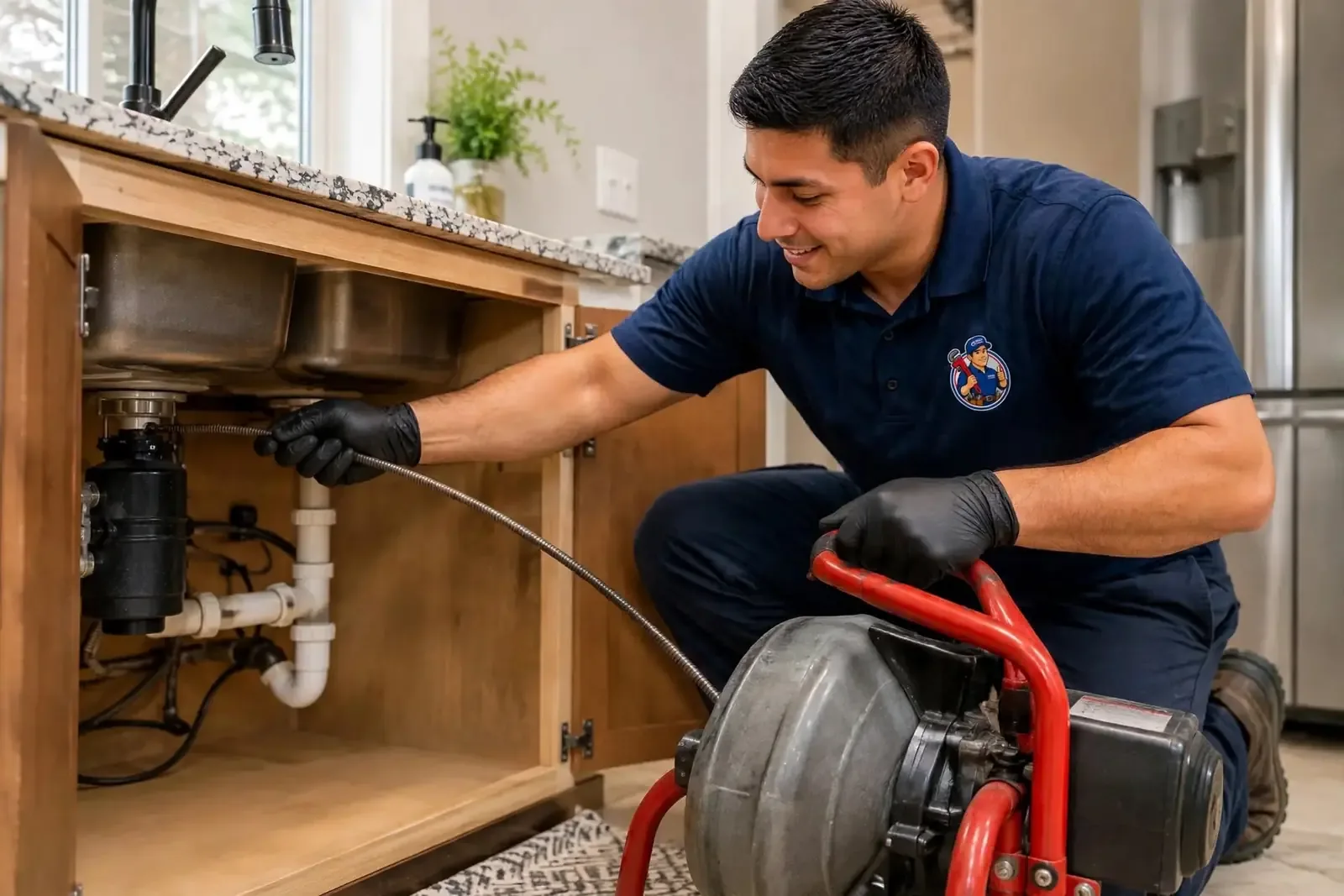
The five causes behind almost every blocked drain are grease and cooking oil, hair bound together with soap scum, food waste, wipes and other foreign objects, and deeper pipe problems such as tree roots or a sagging line. Kitchen drains are dominated by the first, bathroom drains by the second, and repeat blockages by the last.
Almost all of them build gradually. The drain runs slower and slower for weeks before it stops, which means a clog that seems sudden usually was not. Recognising which cause you are dealing with is what tells you whether this is a ten-minute job or a sign of something structural in the line.
What's In This Guide
How Clogs Actually Form
Debris catches on something - a rough patch, a joint, the bend of the P-trap - and each new piece of grease, hair or food sticks to what is already there. The passage narrows over weeks or months until water slows to a trickle and then stops. That gradual build is why the warning signs come well before the blockage: a slow drain, a gurgle, or a faint smell.
It also explains why clearing a blockage and changing nothing else tends to produce the same blockage again. The clog is the symptom; whatever is being put down the drain is the cause.
1. Grease, Fats and Cooking Oil
The Main Cause of Kitchen Clogs
Fats, oils and grease go down the drain warm and liquid, then cool and harden inside the pipe into a waxy layer that catches everything passing afterwards. Over time it builds into a solid plug.
Hot water and detergent do not solve this. They move the grease further down the line, where it cools and sets somewhere less accessible.
Let grease cool, scrape it into the bin, and wipe greasy pans before washing them.
2. Hair and Soap Scum
The Main Cause of Bathroom Clogs
Loose hair washes in and tangles on any rough spot, while soap leaves a sticky scum that binds it into a dense mat. Bar soap is worse than liquid for this.
Hard water makes it worse again, because mineral scale gives the scum more to cling to. Supply in this region runs roughly 7 to 16 grains per gallon, so bathroom drains here mat up faster than they would in a soft-water area.
A hair screen in every shower, tub and bathroom basin, cleared regularly, prevents most of it.
3. Food Waste and Coffee Grounds
Including Things a Disposal Will Not Save You From
Coffee grounds settle and compact rather than washing through. Starchy foods such as rice and pasta swell. Fibrous items like celery and onion skins wrap around the disposal impellers and pass through in strands that catch further down.
A garbage disposal grinds waste but does not change what happens to it downstream. Ground food still has to travel the full length of the drain line.
Scrape plates into the bin first. Keep grounds, starches and fibrous peelings out of the drain entirely.
4. Wipes and Foreign Objects
The One That Causes Sudden Blockages
Wipes labelled flushable do not break down the way toilet paper does. They stay intact, snag on anything irregular in the line, and then collect everything behind them.
The same applies to cotton buds, dental floss, sanitary products and the small items that go into a toilet by accident. This is the one cause that genuinely does produce a sudden blockage rather than a gradual one.
Nothing down the toilet but waste and toilet paper - regardless of what the packaging claims.
5. Pipe Problems and Tree Roots
The Cause Behind Repeat Blockages
Root intrusion is the leading cause of lateral blockages across Los Angeles. Roots follow moisture to a joint that has opened slightly, then widen it. Street trees are the usual source, with ficus and sycamore the common culprits locally.
The other structural causes are a bellied pipe that has sagged and now holds standing water, and old cast iron that has scaled internally until the bore is a fraction of its original size. Most of the local housing stock dates from 1940 to 1969, so cast iron and clay laterals are common.
This is the group that needs a camera inspection rather than repeated clearing.
One Drain or the Main Line?
This is the single most useful distinction to make before calling anyone, because it changes the scope of the job completely.
| What you see | What it usually means |
|---|---|
| One fixture slow, everything else fine | Local clog in that branch - usually simple |
| Several fixtures backing up together | Main line or lateral - not a single drain |
| Toilet gurgles when the sink or bath runs | Main line - air being displaced past a blockage |
| Lowest fixtures in the house back up first | Main line - waste finding the lowest exit |
| Water appears at a cleanout | Main line - the blockage is downstream of it |
Why Chemical Cleaners Make It Worse
Store-bought chemical drain cleaners work by a caustic reaction that generates heat. On old cast iron and on plastic waste pipe alike that is not harmless, and most of the local stock is old. They also tend to melt a narrow channel through the clog rather than removing it, so the drain runs briefly and blocks again within days, with the mass still in place.
Drain Blocking Again After Clearing?
Repeat blockages usually have a structural cause that clearing does not touch. We provide drain cleaning and sewer camera inspection across the harbor area, and we are licensed, bonded and insured.
Call (424) 402-3428How to Prevent Clogs
- Never pour grease, fat or oil down any drain. Cool it and bin it. This alone prevents most kitchen blockages.
- Fit screens on every drain. A hair catcher in the shower and a strainer in the sink stop the bulk of what causes clogs.
- Scrape plates before washing and keep coffee grounds, rice, pasta and fibrous peelings out of the disposal.
- Flush only waste and toilet paper. Wipes stay intact in the line whatever the label says.
- Run plenty of cold water while the disposal is working and for a few seconds afterwards, so ground waste is carried well down the line rather than settling at the first bend.
- Get repeat blockages camera-inspected rather than cleared for a third time.
What Clearing Costs
Los Angeles ranges for 2026, given so you can sanity-check a quote rather than as an estimate for your property.
| Work | Typical LA range |
|---|---|
| Simple clog | $100 - $300 |
| Snaking a drain | $140 - $360 |
| Main line clearing | $500 - $860 |
| Hydro jetting | $350 - $600, above $1,000 where roots are established |
| Sewer camera inspection | $100 - $300 |
| After-hours or emergency call-out | $200 - $400 (typically 1.5x to 2x standard) |
Frequently Asked Questions
In kitchens it is grease, fats and oils that cool and harden inside the pipe. In bathrooms it is hair binding with soap scum into a mat. Both build up gradually, which is why drains slow down noticeably before they block completely.
Something structural is catching the debris - commonly tree roots at an open joint, a bellied section of pipe holding standing water, or heavy internal scale in old cast iron. Repeated clearing treats the symptom. A camera inspection identifies which of those it is.
They rely on a caustic reaction that generates heat, which is not kind to old cast iron or to plastic waste pipe, and they often melt only a channel through the blockage so it returns within days. If you have used one and the drain is still blocked, tell whoever opens the pipe, because caustic liquid will be standing in it.
Count the fixtures. One slow drain is a local problem. Several backing up at once, a toilet that gurgles when you run a sink, or the lowest fixtures in the house flooding first all point at the main line rather than any single drain.
No. It grinds waste but does not change what happens downstream - the ground material still has to travel the full drain line, and coffee grounds, starchy foods and fibrous peelings still cause problems after grinding. Run plenty of cold water during and after use.
They clear the toilet, which is all the label really claims. They do not break down like toilet paper, so they stay intact in the line, snag on anything irregular, and collect everything behind them. They are a common cause of sudden blockages.
A high-pressure water jet that scours the inside of the pipe rather than boring a hole through the blockage, so it removes grease coatings and root matter properly. It is the right tool for heavy grease and roots. Pressure should be matched to the pipe - lower for old cast iron and clay than for modern pipe.