Hawthorne is overwhelmingly a renting city, but its housing is far newer than that usually implies. That combination changes what actually goes wrong here - and it is not the rust and scale people expect.











There is an assumption worth correcting about Hawthorne. Around 72.8% of its 30,030 occupied housing units are rented, which leads people to expect the old, tired plumbing that usually accompanies a rental-heavy city. The build data says otherwise: the median construction year here is 1970, making Hawthorne comfortably the newest renter-majority place we serve. The practical effect is that the classic failures of the older harbour neighbourhoods - galvanized steel rusting inward, cast iron losing its bore to seventy years of scale - are comparatively uncommon. What we find instead is copper with isolated pinhole leaks, ABS drain line that is still the diameter it was installed at, and slab-on-grade construction that hides a supply leak until the bill announces it.
The one genuine hazard that comes with that build era is polybutylene. Grey polybutylene supply pipe was installed from the late 1970s into the mid 1990s and degrades from the inside, failing at the fittings rather than along the run. With a 1970 median and substantial construction after it, a real share of Hawthorne sits in or near that window. The pattern that should prompt a look is several leaks arriving close together rather than one on its own - that is a system reporting its age, and in a multi-unit building it is worth establishing before repairing one flat at a time.
Utilities here are split, which catches people out. Hawthorne incorporated on 12 July 1922 and established its own Water Department the same year, and that department still supplies much of the city. But Golden State Water Company's Southwest system, which has served southwest Los Angeles County since 1929, covers portions of Hawthorne as well - so which of the two bills you depends on your service address rather than on the city you live in. Building and plumbing permits come from the City of Hawthorne, and regional wastewater treatment is handled by the Los Angeles County Sanitation Districts. As an incorporated city, none of the Los Angeles City programmes reach it.
Reliable Plumber Wilmington covers Hawthorne across the South Bay. We handle drain cleaning, sewer line repair, leak detection, water heater work, repiping and everything alongside them - diagnosis before price, camera evidence on sewer work, and the finding written down.
With more than seven in ten homes rented, a large share of our Hawthorne work runs through landlords, property managers and tenants rather than owner-occupiers, so findings go in writing in a form that can be passed along intact. Before discussing supply or billing we check which utility serves the address, since the city and Golden State Water each cover part of Hawthorne. California requirements apply throughout: SB 407 on fixtures during a remodel, the 80 psi pressure ceiling with a regulator above it, and seismic strapping on water heaters.
Hawthorne drain lines are largely ABS plastic from around 1970, which does not corrode or scale - so the pipe is still the diameter it was installed at, and a blockage here has an identifiable cause rather than being the symptom of a line that has closed in over decades. In the many multi-unit buildings across the city, a blockage showing in one flat is frequently a symptom of the shared line rather than something confined to that home.
Slow or blocked kitchen, bath, shower and laundry lines - and any drain that has already been cleared once and blocked again.

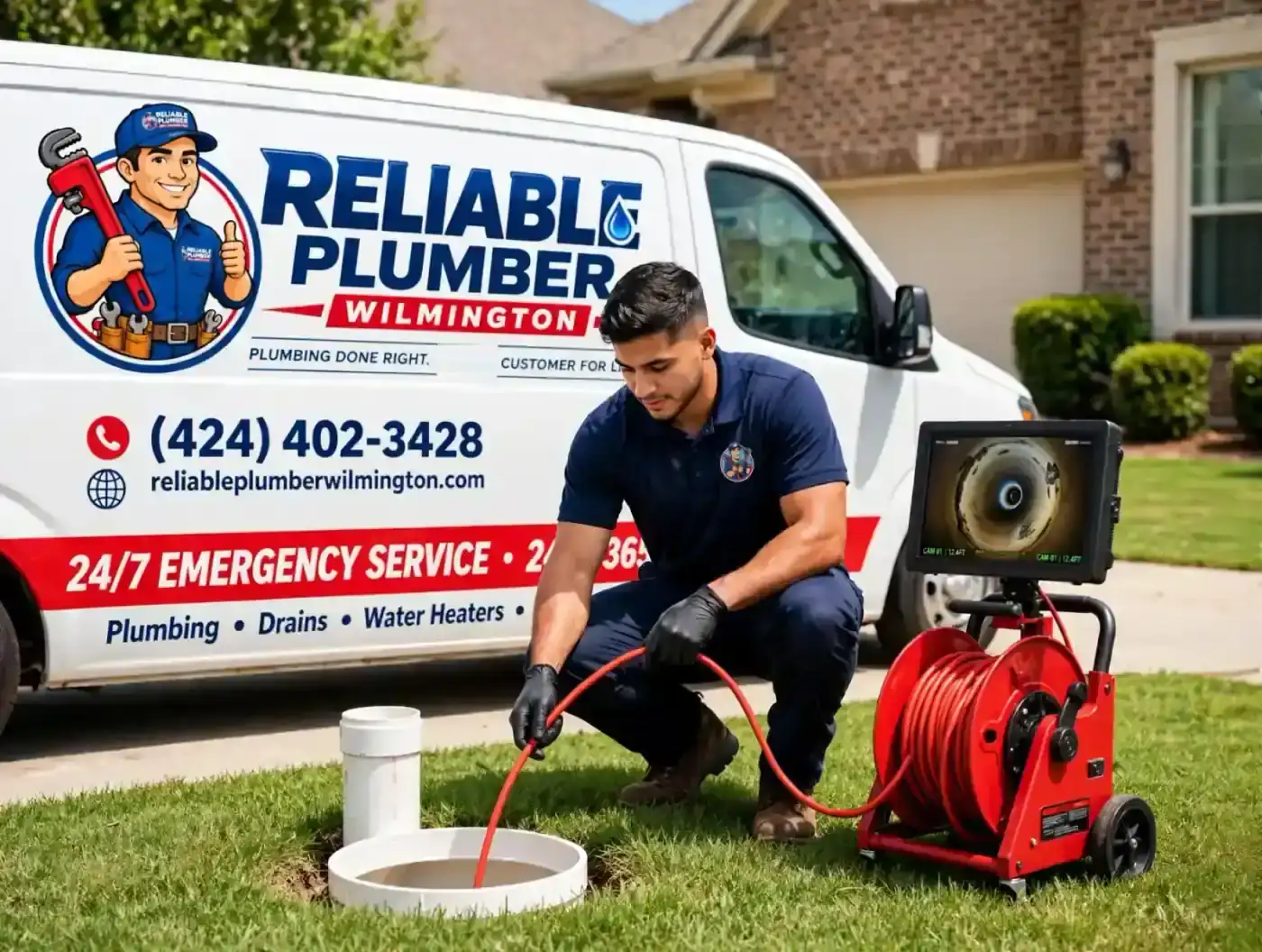
Permits come from the City of Hawthorne, with regional wastewater treatment handled by the Los Angeles County Sanitation Districts. Laterals here are young by the standards of most of our coverage area, so outright structural failure is uncommon - the usual findings are root intrusion at a joint, a single offset from ground movement, or a belly where a section has settled. A camera separates those quickly and cheaply.
Recurring backups, several fixtures slow at once, sewer odour, or a line a camera has shown to be cracked, offset or root-invaded.
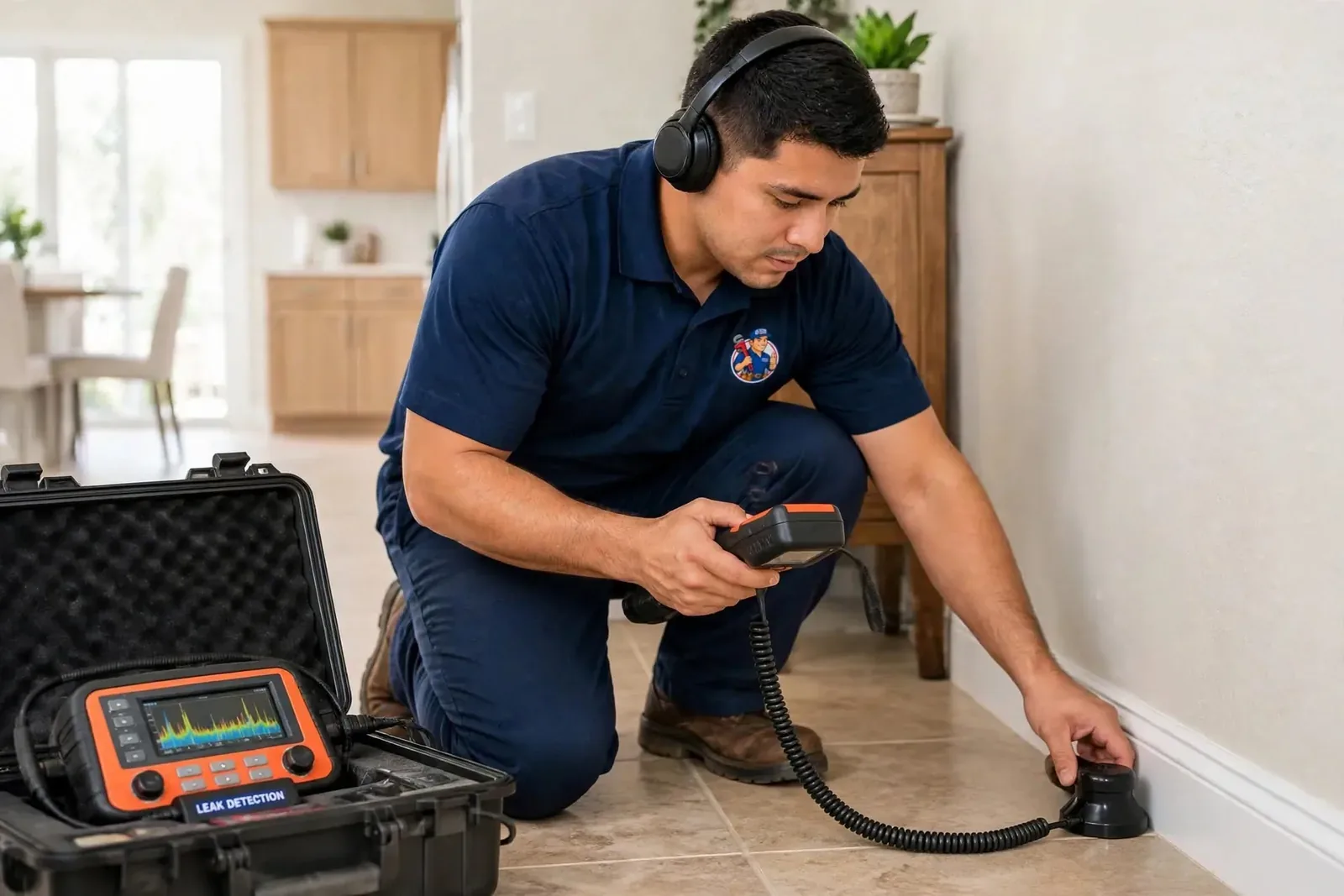
Two things shape the search in Hawthorne. The housing is slab-on-grade, so a hidden supply leak has no crawlspace to reveal it and needs thermal imaging for the heat signature of a hot line plus acoustic listening to narrow it down. And in properties from the late 1970s onward the pipe material is worth confirming first, because polybutylene fails at fittings inside walls rather than under the floor - a different search entirely.
A water bill that jumped with no change in use, running water with every tap closed, a warm patch on the floor, or a stain with no obvious source.
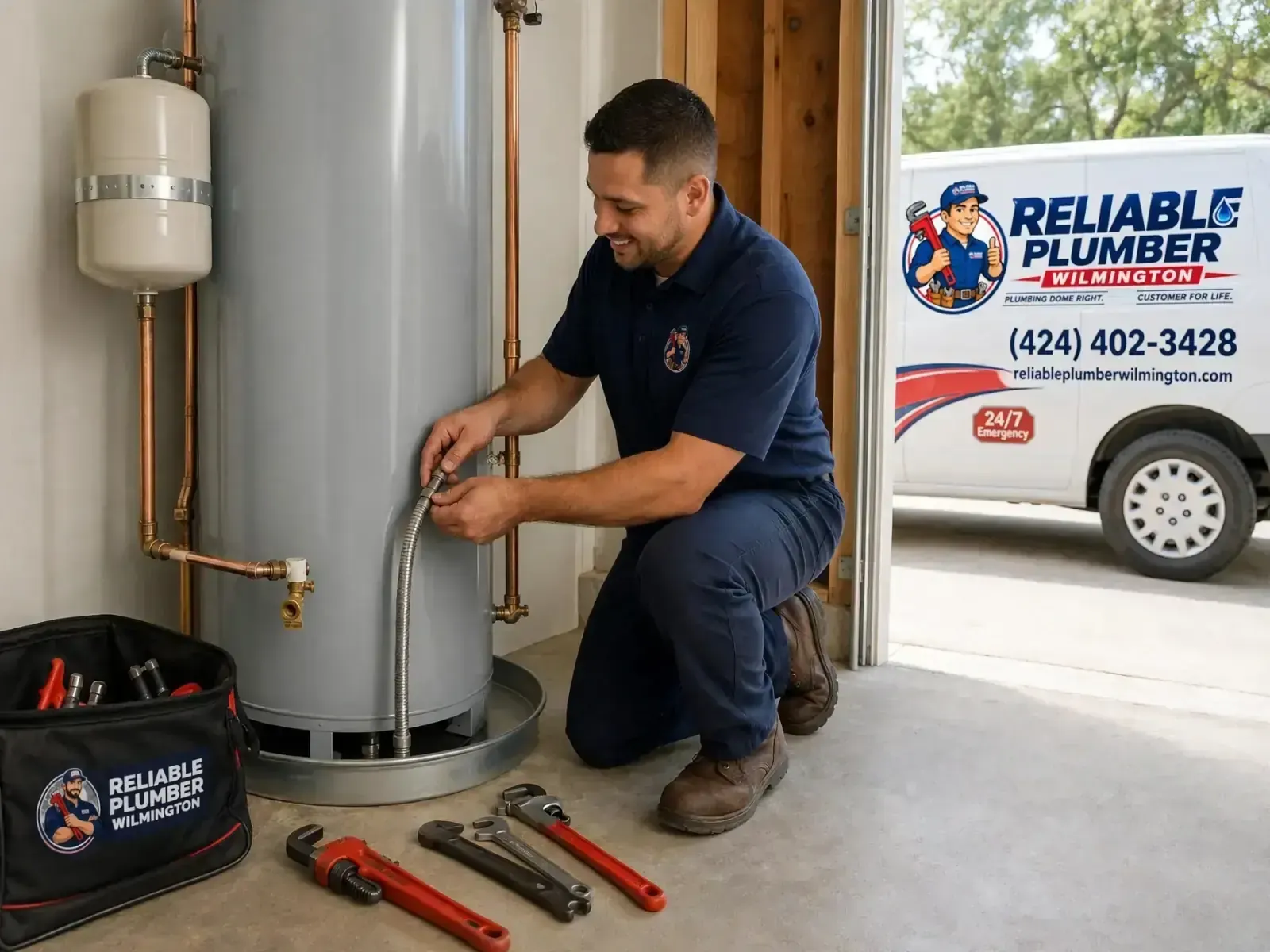
Permits come from the City of Hawthorne. Requirements are California state code and do not change: two seismic straps at the upper and lower third anchored into framing rather than drywall, with the lower strap at least four inches above the gas control. In apartment buildings the constraint is usually the closet - a 1970s water heater cupboard was sized for a 1970s tank, so clearance and venting need confirming before a replacement is ordered.
No hot water, rumbling or popping, water pooling at the base, or a unit past twelve years old that is worth replacing on your schedule rather than its own.
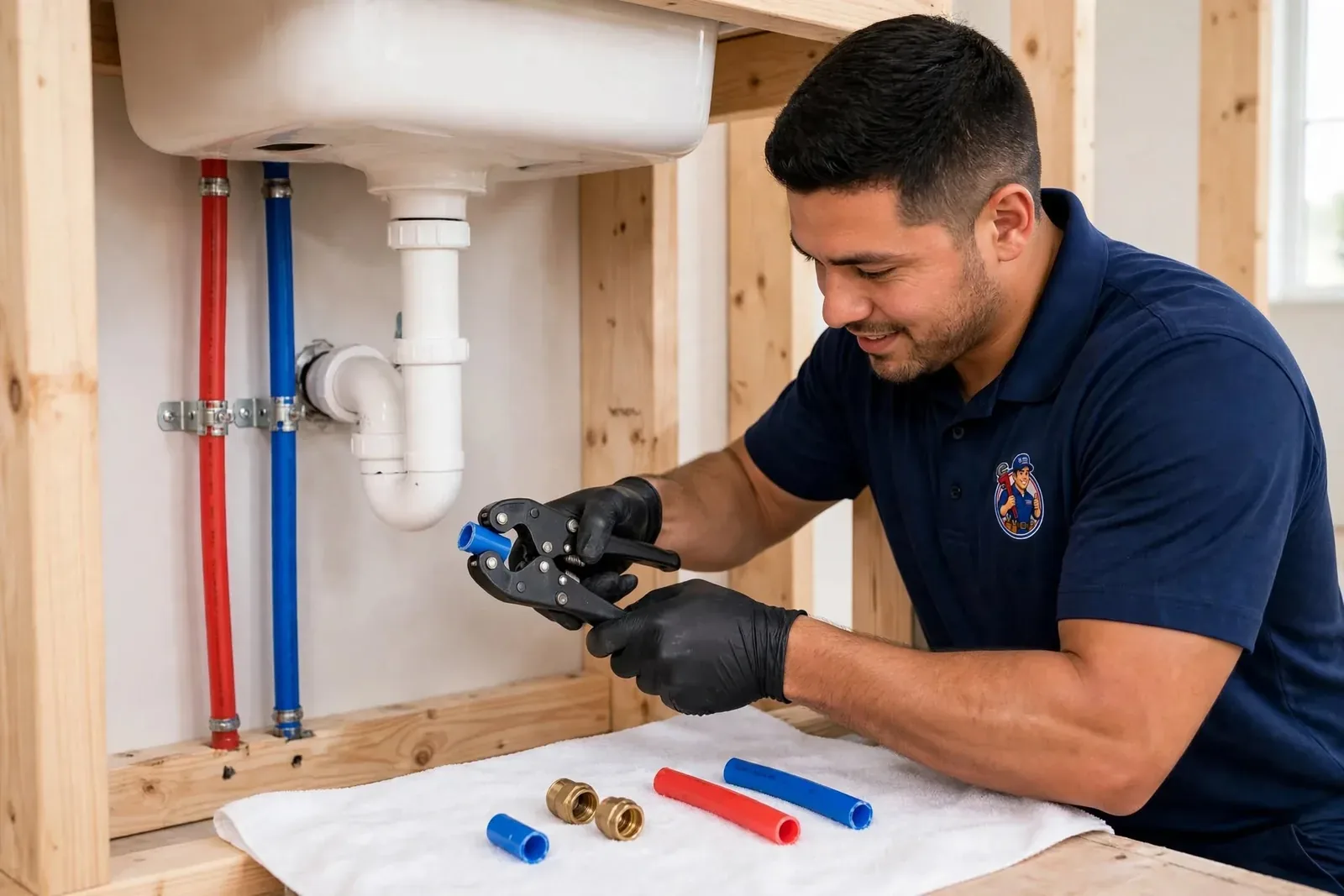
Hawthorne is one of the few places we work where a repipe conversation is more likely to be about plastic than metal. Galvanized steel is uncommon given the 1970 median, but polybutylene from the late 1970s into the mid 1990s is a real and documented failure mode. In a multi-unit building the work is generally planned at building level rather than flat by flat, which changes both the sequencing and the cost shared between units.
Rust-tinted water, pressure falling across the whole house, or a second and third leak on the same ageing supply system.
The 1970s tract and apartment construction that makes up most of Hawthorne is slab-on-grade, so supply lines run through concrete. Newer copper does not make a property immune - soil movement and chemistry find a weak point eventually. In a rented home, getting a suspected slab leak documented promptly matters, because a leak left running is expensive for whoever is paying the water account.
A warm patch on the floor, water audible with every fixture closed, or an unexplained bill increase on a slab-on-grade property.

ABS plastic takes jetting well, so a sound Hawthorne lateral runs at the full 2,500 to 3,000 PSI and genuinely returns to its original bore. In shared-drainage buildings the sequence matters as much as the pressure - clearing one branch without checking the line it feeds into simply relocates the blockage, so we camera the whole run before deciding where to work.
Blockages that keep returning, kitchen lines with a grease history, and scaled cast iron where cabling only bores a channel.

At roughly 72.8% renter-occupied, most fixture calls in Hawthorne arrive through a tenant, a landlord or a manager, so we document what we find and what it needs in a form that carries between them. Original 1970s fixtures still in service are flushing well above California's 1.28 gallon standard, and SB 407 brings replacement into scope during a remodel.
Running or phantom-flushing toilets, weak flush, water seeping at the base, or replacing a pre-1994 fixture using 3.5 gallons a flush.
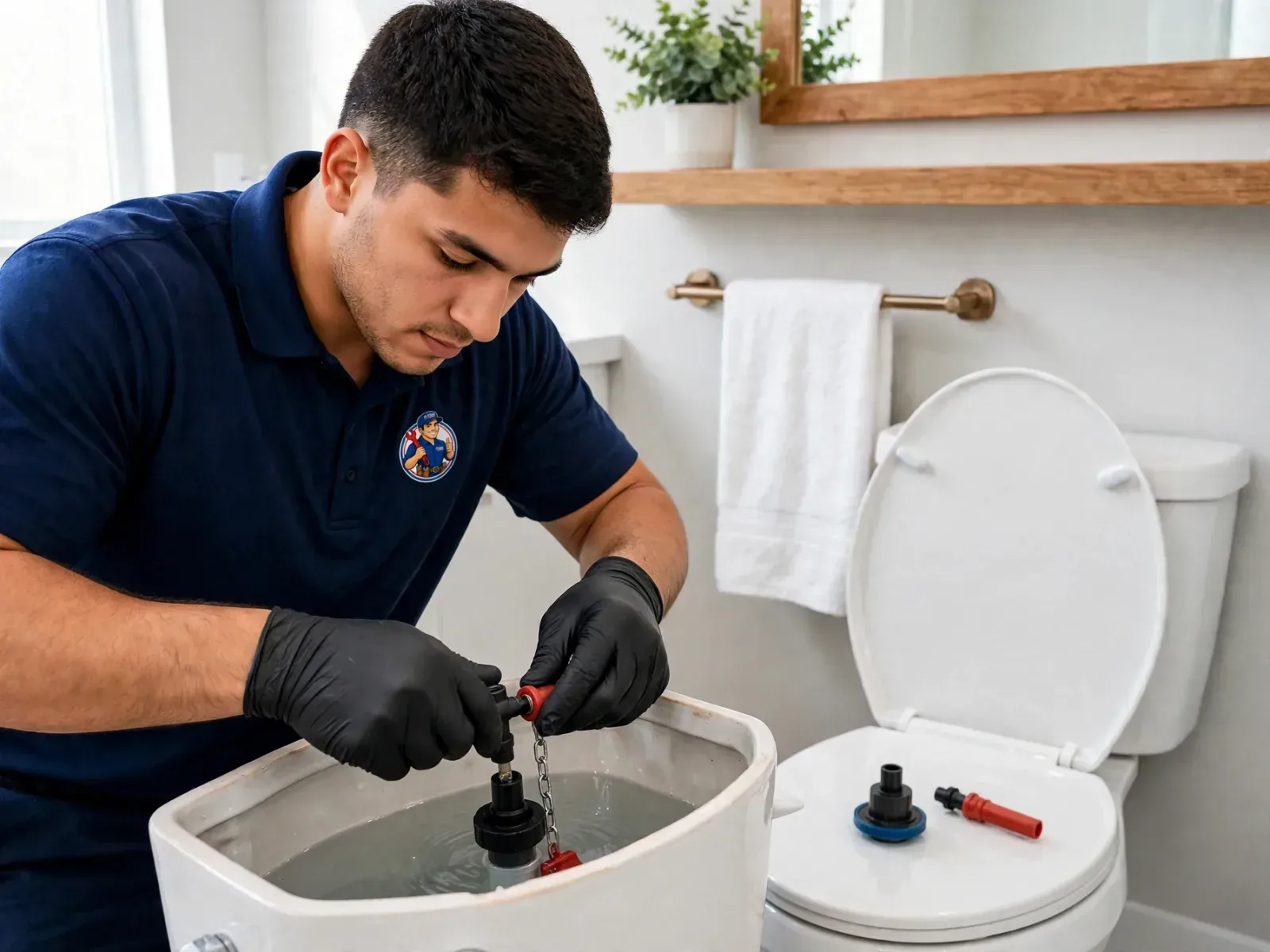
Whether the city's Water Department or Golden State Water supplies your address, the water in this part of the county carries dissolved mineral that shortens cartridge and valve seat life. In rental properties this is the most common small job we do, and replacing a worn cartridge properly rather than tightening a packing nut is the difference between a fix that lasts years and one that lasts weeks.
Dripping spouts, stiff handles, leaking handle bases, or flow that has dropped at one fixture while the rest of the house is fine.
Hawthorne sits within easy reach across the South Bay. Shut the main off first - on a slab-built house it is normally on the street side near the meter, while in an apartment there may be a unit isolation valve as well as a building main, and the building main is often the manager's to operate. Tell the dispatcher which of those you have.
Burst supply lines, sewage backing up, main line breaks, and water heater failures - anything where water is causing damage right now.

Covering a city properly means knowing what changes at its boundary. Here, several things do.
Hawthorne is over 72% rented but its median build year is 1970 - the newest renter-majority city we serve. That points the diagnosis at pinholes and slab leaks rather than the rust and scale people expect.
Median build year 1970A real share of Hawthorne falls in or near the late-1970s to mid-1990s window when grey polybutylene supply pipe was installed. It fails at fittings, so several leaks close together is the signal to look properly.
Multi-leak pattern checkThe City of Hawthorne Water Department has served the city since 1922, but Golden State Water covers portions of it too. Which one you are on decides who to ask about supply and billing - so we confirm before advising.
City water · Golden StateApartment stock is a large share of the city. We confirm whether drainage is shared and which unit a leak originates in, because in these buildings the problem is often not where the water appears.
72.8% renter-occupiedCamera footage on sewer recommendations, thermal and acoustic on hidden leaks, findings written down - which is what a landlord or property manager needs before authorising anything.
Camera · written findingsHawthorne runs through the middle of the South Bay, mixing residential streets with the aerospace and industrial corridors that shaped it.
Hawthorne's residential streets - Holly Glen, Ramona, Bodger Park and the blocks between the main corridors - carry the tract and apartment housing that gives the city its 1970 median construction year across 30,030 occupied units. Around 72.8% of those are rented, which makes Hawthorne one of the larger rental markets in our coverage area, and much of that stock is multi-unit rather than single-family, so shared drainage and building-level systems come up regularly. The aerospace and industrial corridors around Hawthorne Municipal Airport and along Aviation and Crenshaw reflect the manufacturing history that drove much of the city's growth. Supply is worth checking rather than assuming: the city's own Water Department covers much of Hawthorne while Golden State Water's Southwest system covers portions of it.
Licensed, bonded and insured · 24/7 dispatch · diagnosis before price · findings in writing
Five categories covering everything from a slow drain to a full repipe.
We reach Hawthorne from Wilmington 90744, and cover 30 cities across Los Angeles County and north Orange County. These are the communities closest to Hawthorne.
Coverage, permits, water and what is specific to this city.
Yes, across the city - Holly Glen, Ramona, Bodger Park and the corridors between them. Hawthorne sits centrally within our South Bay coverage.
It depends on your address, and this genuinely varies. The City of Hawthorne Water Department was established in 1922, the same year the city incorporated, and supplies much of it - but Golden State Water Company's Southwest system, serving southwest Los Angeles County since 1929, covers portions of Hawthorne as well. Check your bill before assuming.
Newer than most people expect. The median construction year is 1970, which makes Hawthorne the newest renter-majority city we serve. Galvanized steel and heavily scaled cast iron are comparatively uncommon here; copper pinholes, plastic drain line and slab leaks are the more typical findings.
It is worth checking if it was built from the late 1970s onward. Polybutylene is a grey plastic supply pipe used until roughly the mid 1990s that becomes brittle and fails at the fittings. Given the 1970 median and substantial building after it, a real share of the city falls in or near that window - and several leaks in close succession is the pattern to act on.
Get it written down. Around 72.8% of Hawthorne's 30,030 occupied units are rented, so most work here has to pass through an owner or manager before it is authorised. We put the diagnosis and what it needs in writing, which is usually what turns a repeated complaint into an approved repair.
Because water travels along framing and surfaces well away from its source, and in multi-unit buildings the drainage is often shared. That is why we confirm which unit a leak actually originates in before anything is opened up - repairing the flat where the damp appears frequently fixes nothing.
Building and plumbing permits come from the City of Hawthorne, and regional wastewater treatment is handled by the Los Angeles County Sanitation Districts.
No. Hawthorne has been its own incorporated city since 12 July 1922, so there is no LASAN sewer lateral rebate and no LADWP billing adjustment. Supply questions go to whichever of the two water utilities serves your address.