Westmont packs more than eighteen thousand people into every square mile, on drainage laid for 1950s single-family housing. That gap between what the pipe was built for and what it now carries explains most of what we find here.










Density is the defining fact. Westmont holds a population of around 33,913 at roughly 18,361 people per square mile, which makes it one of the most tightly occupied places in Los Angeles County - and it does that on infrastructure laid for a very different kind of neighbourhood. The median construction year across 10,329 occupied units is 1956, when these streets were built as single-family housing with one lateral per lot. Since then a great many of those lots have gained a converted garage, a back house, a second unit or a divided interior, and in most cases all of it still drains through the original connection. A lateral sized for one household in 1956 and now serving three is not defective, but it will block more often and recover more slowly, and no amount of clearing changes the arithmetic.
The pipe itself is at the end of its life independently of the load. A 1956 median means galvanized steel supply, which has a practical service life of about thirty to forty years and is therefore running some three decades past it, corroding inward until the bore is a fraction of what was installed. Cast iron and clay drains have been scaling for seventy years. Put heavier-than-designed daily demand through that and the familiar complaints follow: pressure that collapses when a second fixture opens, hot water that does not last, and blockages that return on a schedule.
Jurisdiction here is county rather than city. Westmont is an unincorporated community in South Los Angeles, immediately east of Inglewood, so permits and inspections run through Los Angeles County Public Works and County Building and Safety rather than any city hall - and none of the Los Angeles City programmes reach it, so there is no LASAN lateral rebate and no LADWP billing adjustment. Sewers fall under the Los Angeles County Consolidated Sewer Maintenance District, where County Code section 20.24.080 makes the property owner responsible for the lateral up to its connection with the public main, including the section beneath the sidewalk and street. Water comes from California Water Service. About 28.3% of homes here are owner-occupied and 71.7% rented.
Reliable Plumber Wilmington serves Westmont from the Harbor Area. We handle drain cleaning, sewer line repair, leak detection, water heater work, repiping and everything alongside them - diagnosis before price, camera evidence on sewer work, and the finding written down.
One thing worth telling us when you call: how many separate households are actually on the property. In Westmont that is frequently more than the building looks like from the street, and it materially changes what a recurring blockage means. It also matters that around seven in ten homes here are rented, so we write findings in a form a tenant can hand to a landlord or manager without anything being lost in the retelling. California requirements apply as everywhere: SB 407 on fixtures during a remodel, the 80 psi ceiling with a regulator above it, and water heater seismic strapping.
A drain that blocks every few months in Westmont is often not a maintenance failure. Cast iron and clay lines from around 1956 have lost most of their working diameter to scale, and many are now carrying the waste of more households than the lot was built for. A camera shows both problems at once - how much pipe is actually left, and whether the flow arriving is more than it was ever sized to take.
Slow or blocked kitchen, bath, shower and laundry lines - and any drain that has already been cleared once and blocked again.
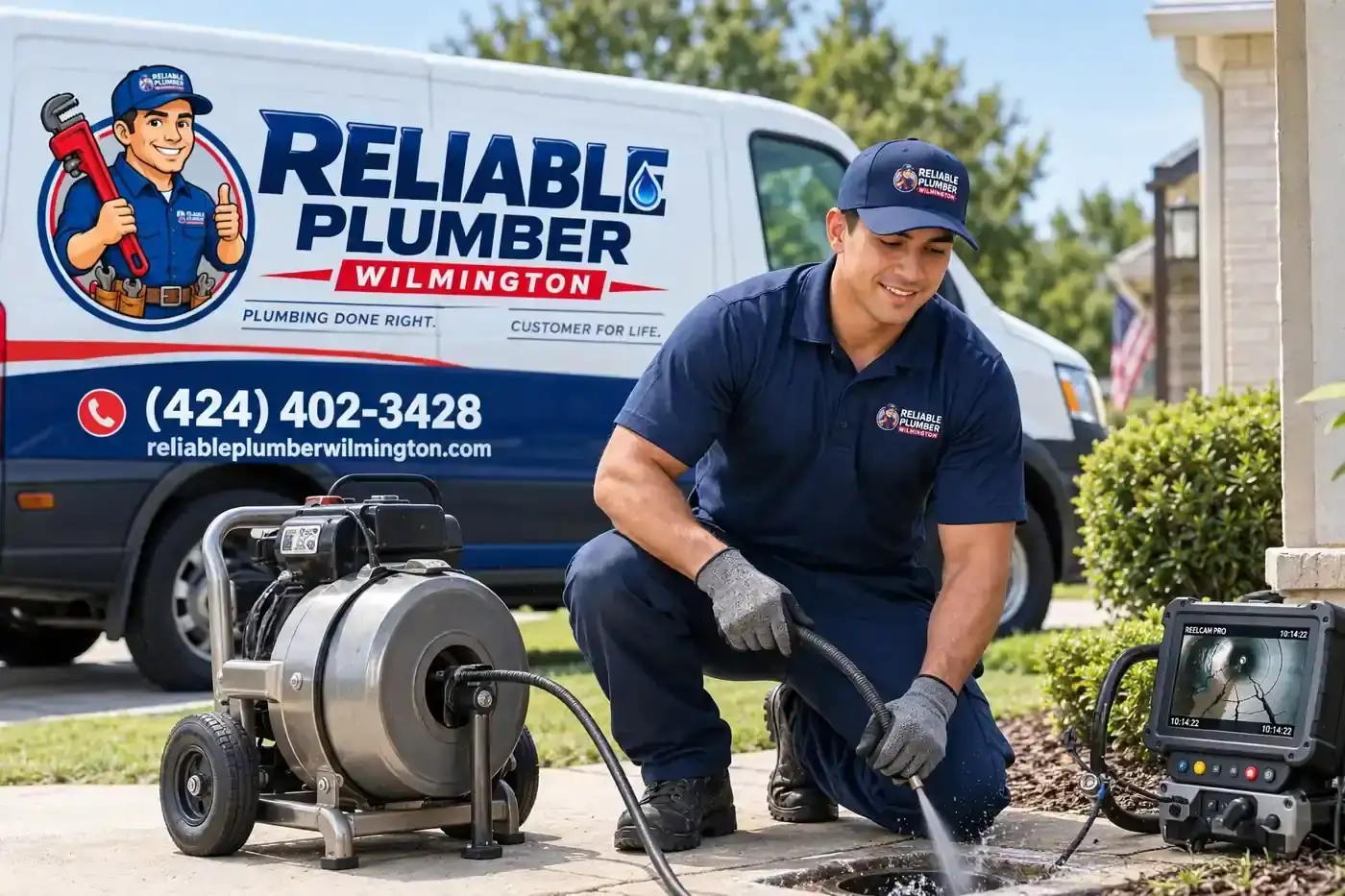
Sewers here fall under the Los Angeles County Consolidated Sewer Maintenance District, and County Code section 20.24.080 puts the lateral on the property owner right up to the public main, including under the sidewalk and street. Permits come through LA County. On a property with added units, the honest question is often whether the existing single lateral should be upgraded rather than simply repaired to the condition it was in.
Recurring backups, several fixtures slow at once, sewer odour, or a line a camera has shown to be cracked, offset or root-invaded.
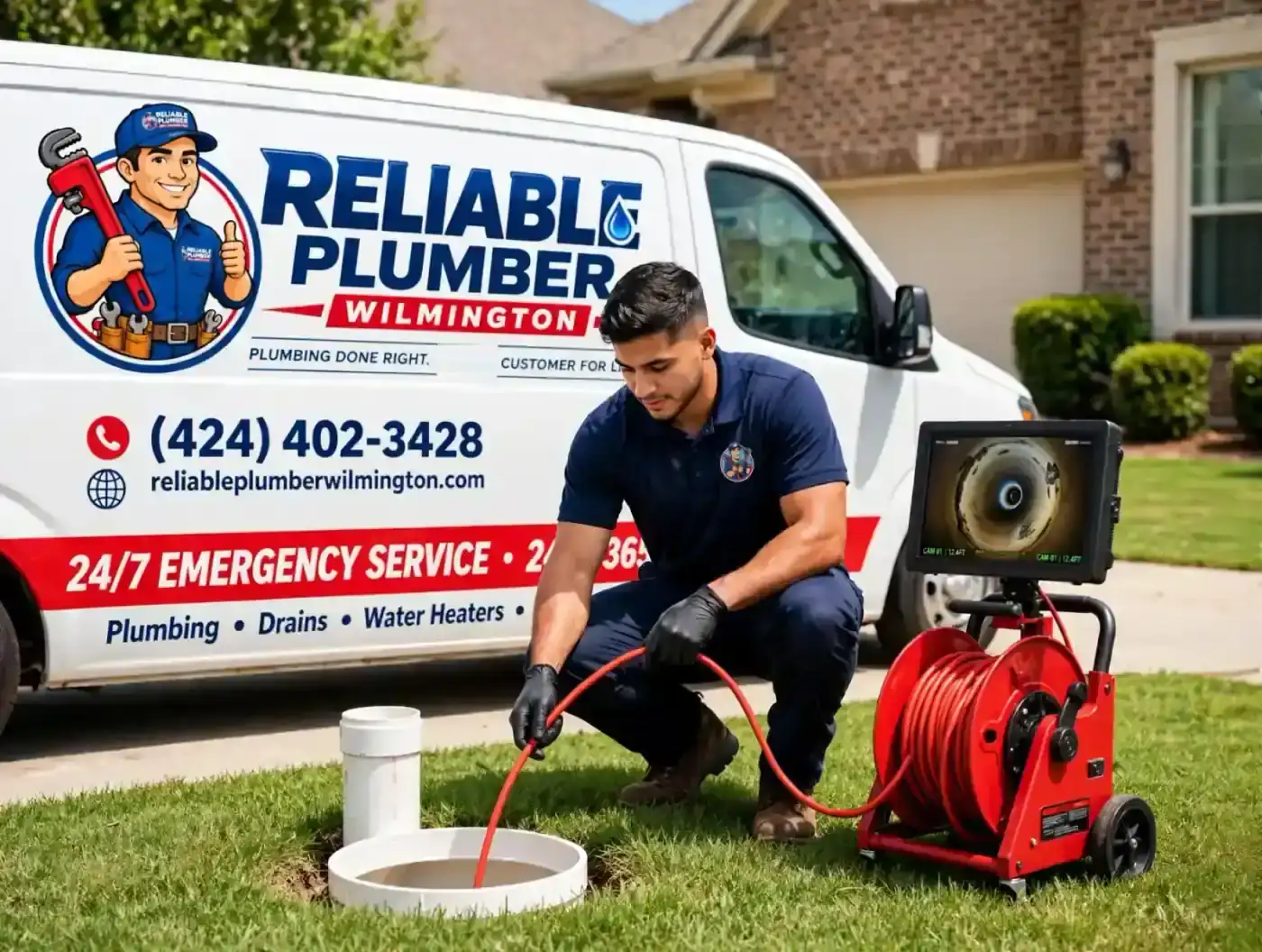
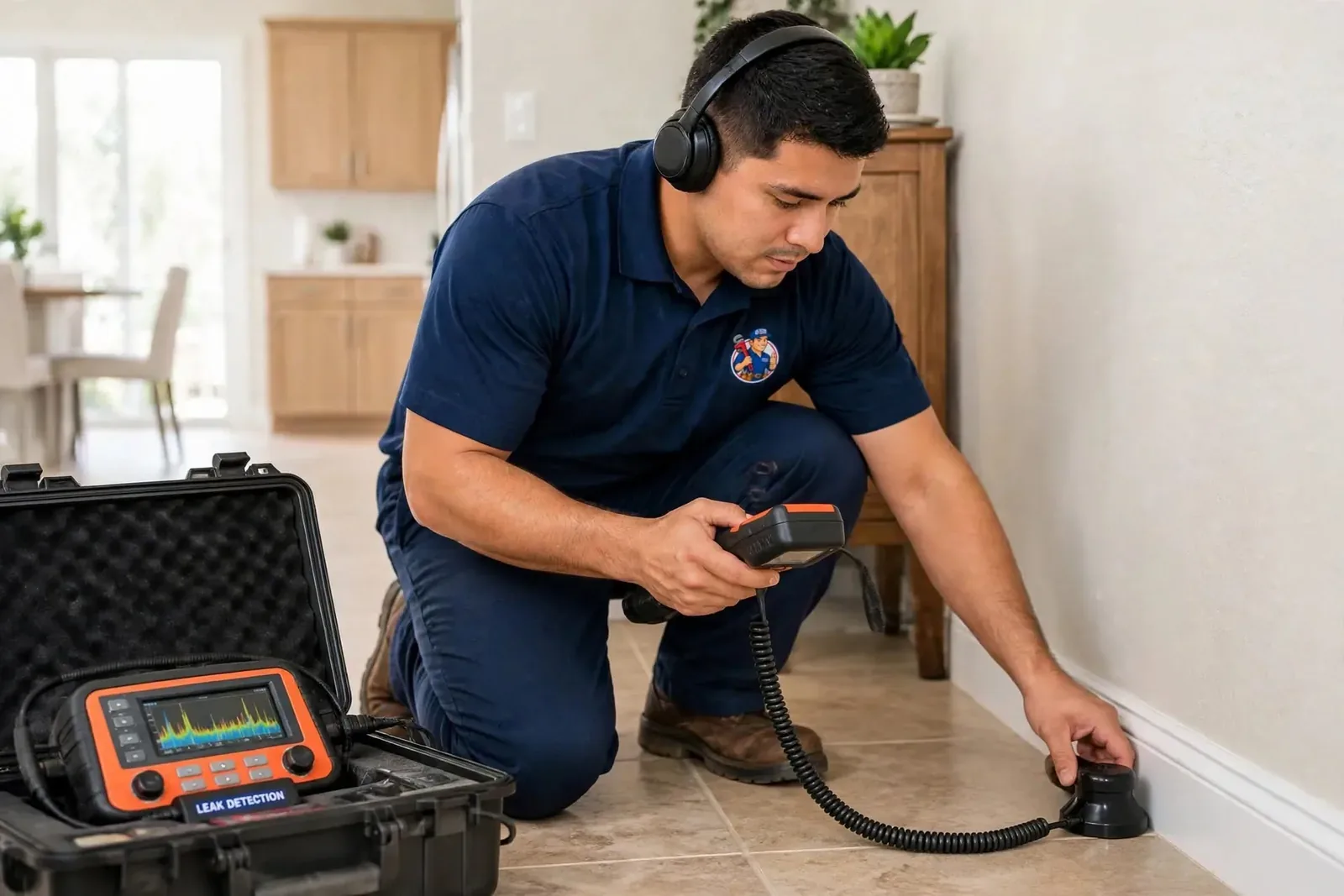
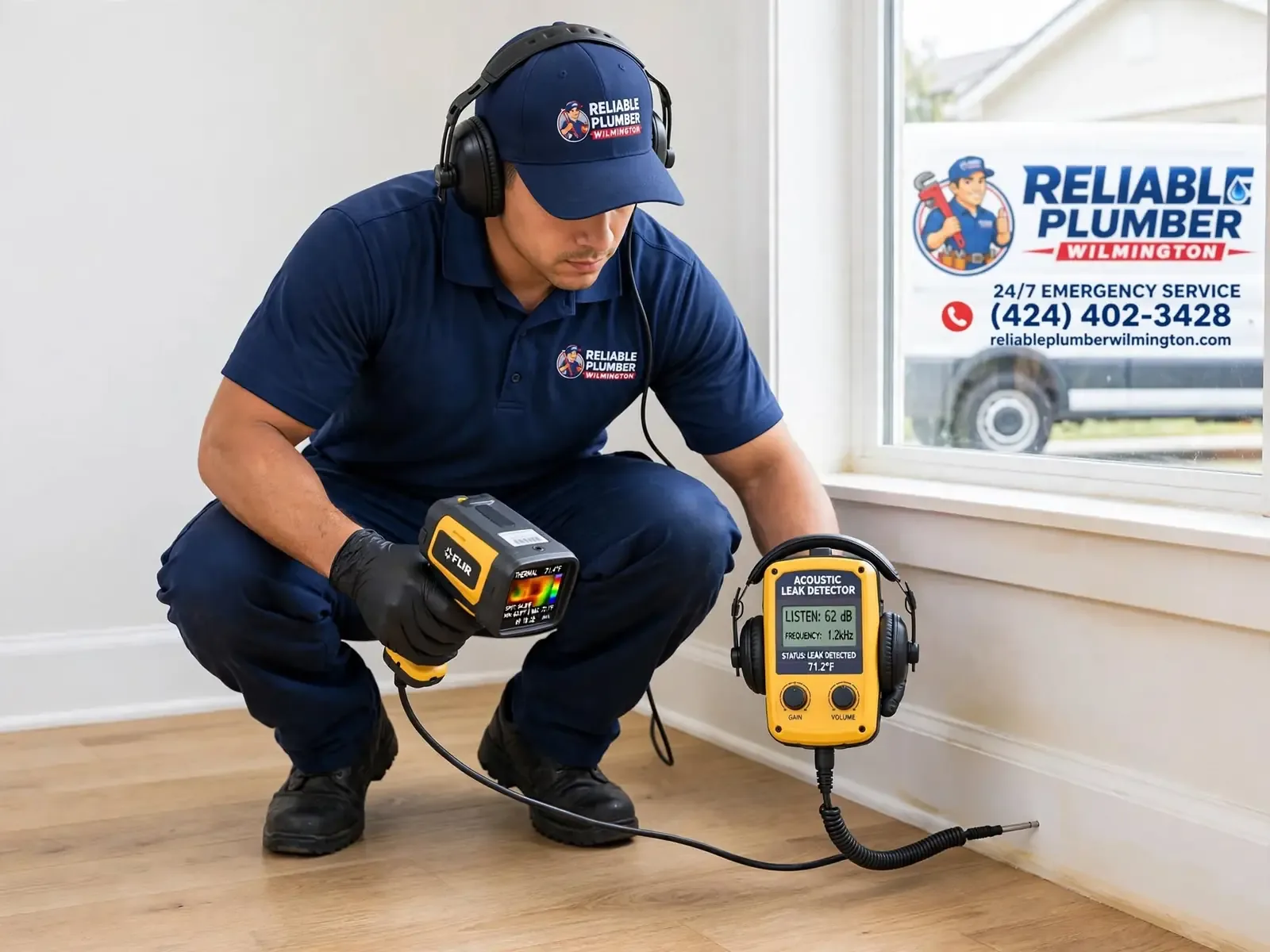
Galvanized supply from 1956 fails from the inside out, so leaks in Westmont typically start as slow weeps behind walls rather than as bursts. In a densely occupied property that is easy to miss, because damp gets attributed to use. The reliable signals are a bill that climbed without a change in routine and a meter that keeps moving with every tap closed. Acoustic and thermal work locates it without opening the whole run.
A water bill that jumped with no change in use, running water with every tap closed, a warm patch on the floor, or a stain with no obvious source.
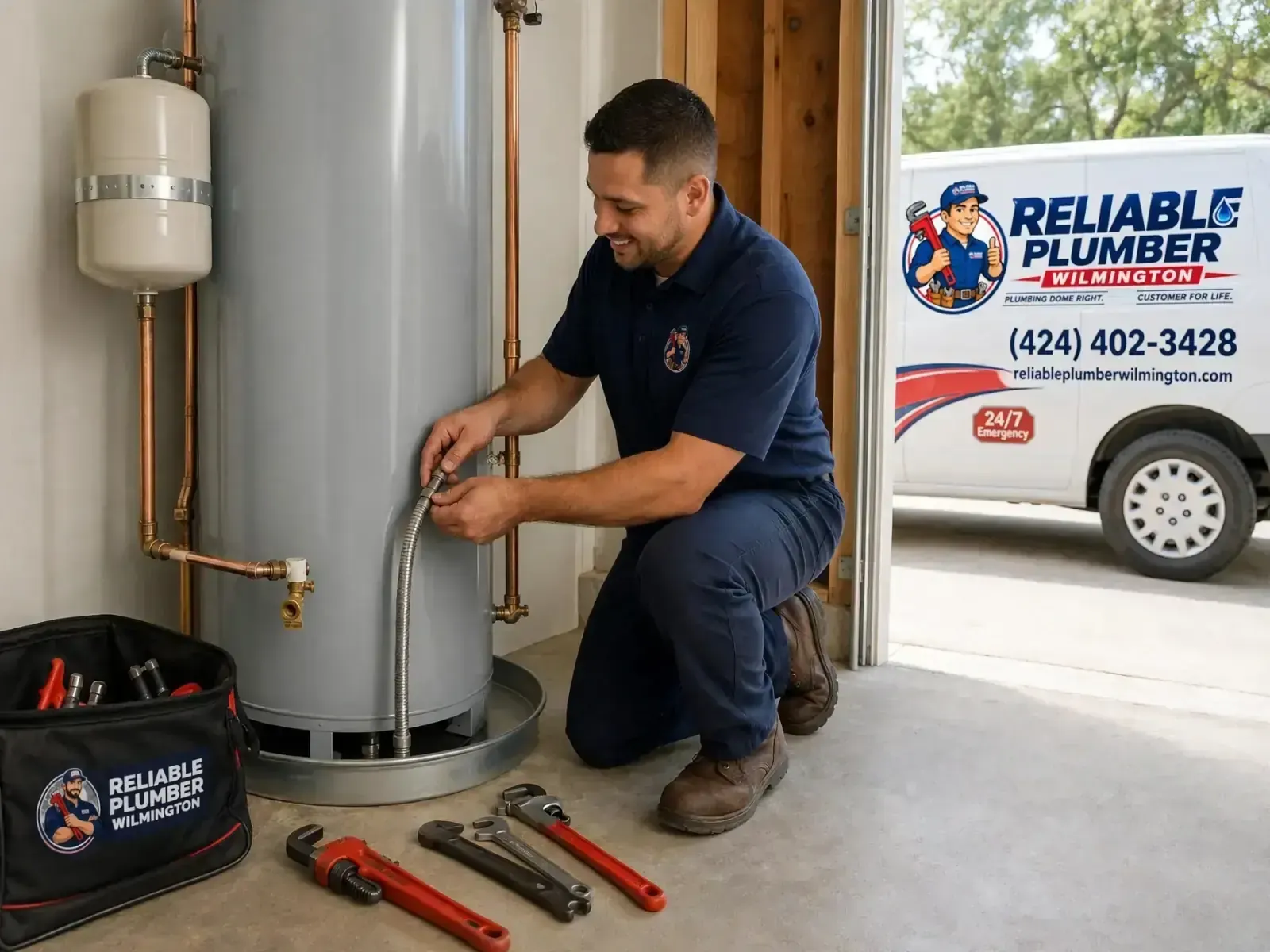
Permits come through Los Angeles County Building and Safety rather than a city department. The code is California state law regardless: two seismic straps at the upper and lower third anchored into framing, with the lower strap at least four inches above the gas control. In converted and subdivided properties the practical issue is usually clearance and combustion air, since a heater installed in a space that was not built to house one rarely has either.
No hot water, rumbling or popping, water pooling at the base, or a unit past twelve years old that is worth replacing on your schedule rather than its own.
Westmont is close to a textbook case. Original galvanized steel from around 1956 is running roughly three decades past its thirty-to-forty-year service life, and heavier-than-designed daily demand accelerates what corrosion started. Rust-tinted water at first draw, pressure down across the whole property, and a second and third leak arriving soon after the first are the point where patching costs more over time than replacing the run.
Rust-tinted water, pressure falling across the whole house, or a second and third leak on the same ageing supply system.
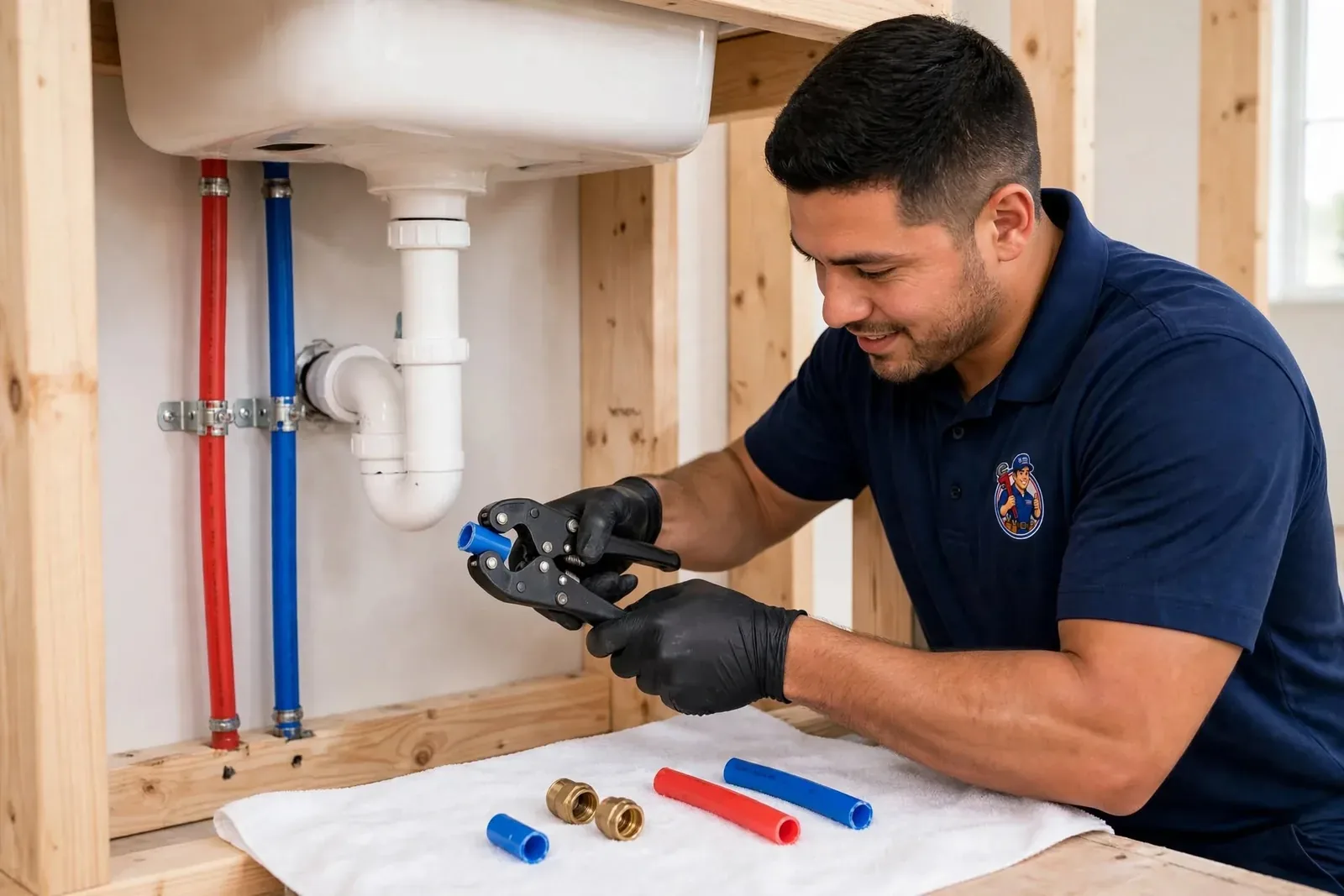
Mid-1950s construction here includes both slab and raised foundations, so we confirm which you have before anything else. Where it is slab, a warm patch underfoot or water audible with every fixture closed points to a supply line in the concrete - and with galvanized pipe of this age it is corrosion working through rather than ground movement, which means a second leak is more likely than not.
A warm patch on the floor, water audible with every fixture closed, or an unexplained bill increase on a slab-on-grade property.
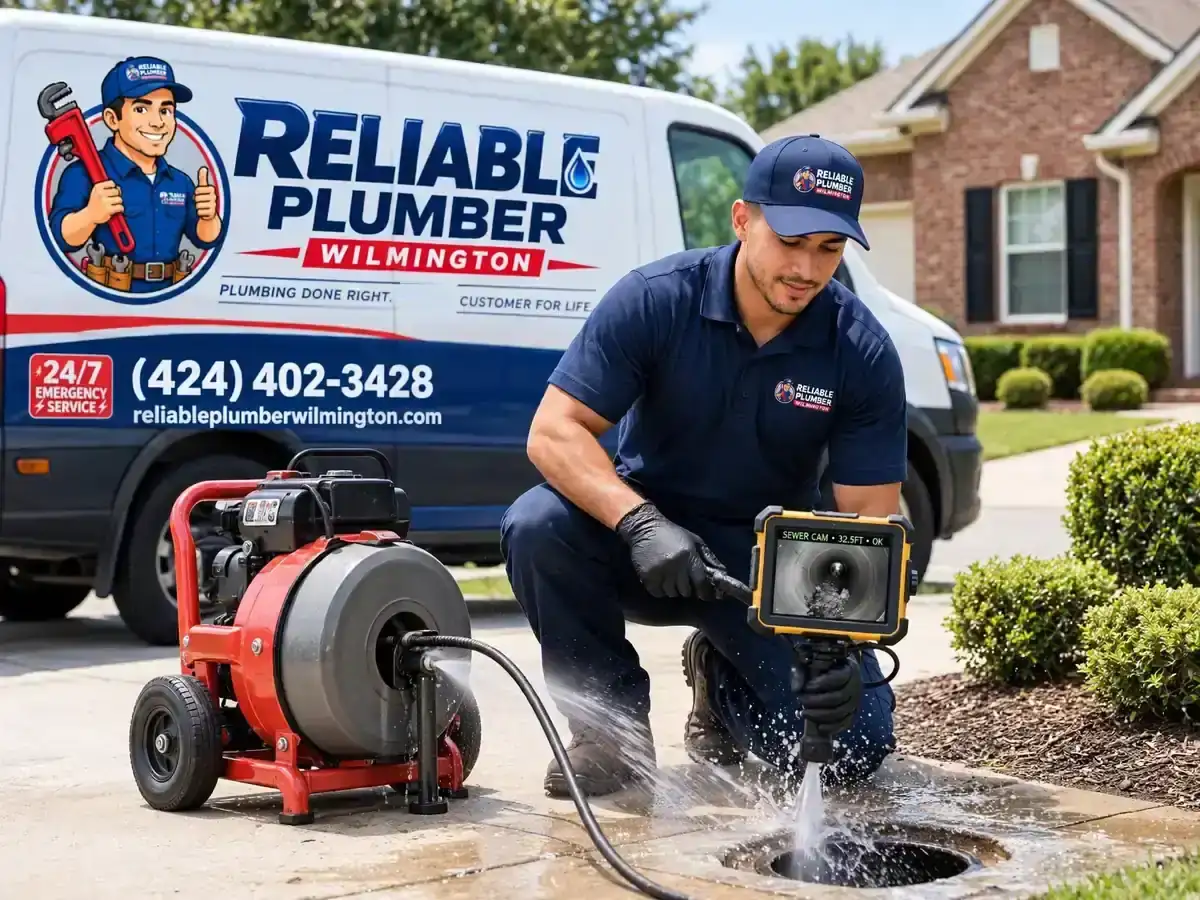
On lines this old the pressure has to be chosen carefully: seventy-year-old cast iron is run at 1,500 to 2,000 PSI rather than the 2,500 to 3,000 PSI a sound modern lateral takes. Jetting is worth more than cabling here precisely because the pipe has lost diameter - a cable makes a hole through the deposit, while jetting recovers bore, and bore is exactly what a heavily used line is short of.
Blockages that keep returning, kitchen lines with a grease history, and scaled cast iron where cabling only bores a channel.
Fixtures in Westmont work harder than average because properties carry more people than the original design assumed, so flappers, fill valves and supply lines wear out ahead of their expected life. With around 71.7% of homes rented, most of these calls come through a tenant or a manager, and we document what we find so the repair-or-replace decision can be made by whoever is paying for it.
Running or phantom-flushing toilets, weak flush, water seeping at the base, or replacing a pre-1994 fixture using 3.5 gallons a flush.

California Water Service supplies Westmont, and the mineral content wears cartridges and valve seats faster than manufacturer guidance assumes. Where the supply pipe is still galvanized there is a second cause layered on top, because corrosion products carried out of the pipe will chew through a new cartridge regardless of how good the part is.
Dripping spouts, stiff handles, leaking handle bases, or flow that has dropped at one fixture while the rest of the house is fine.
Westmont is a straight run north from our Harbor Area base. Shut the main off first - in this housing stock it is usually at the front of the lot near the meter, though on a property with added units there may be more than one isolation point. Tell the dispatcher how many households are affected, because that tells us what we are dealing with before we arrive.
Burst supply lines, sewage backing up, main line breaks, and water heater failures - anything where water is causing damage right now.

Covering a city properly means knowing what changes at its boundary. Here, several things do.
A 1956 lot was given one lateral. Many now carry a back house, a converted garage or a divided interior on that same connection. That changes what a recurring blockage means and what the honest fix is.
18,361 people per sq mileA median construction year of 1956 means galvanized supply roughly three decades past its service life and cast iron drains scaling for seventy years. These are the materials we work with daily in Wilmington.
Median build year 1956Westmont is unincorporated Los Angeles County, so permits go through County Public Works and County Building and Safety. There is no city hall, and no LASAN rebate or LADWP adjustment to claim.
Unincorporated LA CountyCounty Code section 20.24.080 makes the owner responsible for the lateral up to the public main, including under the sidewalk and street. You should know where that line falls before work begins.
LA County Code §20.24.080Around seven in ten homes here are rented. A clear written diagnosis is what a tenant can hand on and an owner can act on, which is usually what moves a recurring problem forward.
71.7% renter-occupiedWestmont sits in South Los Angeles just east of Inglewood, in unincorporated county territory hemmed in on several sides.
Westmont is one of the most densely occupied places in Los Angeles County, with around 33,913 residents at roughly 18,361 per square mile packed into 10,329 occupied units. The housing came up around 1956 as single-family streets, and the drainage was laid on that basis - one lateral per lot. What sits on those lots now is frequently more than that, which is why a great deal of our work here starts by establishing how many households a single connection is actually carrying. Only about 28.3% of homes are owner-occupied, the lowest share of the unincorporated areas we cover. The boundaries matter too: City of Los Angeles neighbourhoods and the city of Inglewood press against Westmont on several sides, so the applicable rules can change within a short walk.
Licensed, bonded and insured · 24/7 dispatch · diagnosis before price · findings in writing
Five categories covering everything from a slow drain to a full repipe.
We reach Westmont from Wilmington 90744, and cover 30 cities across Los Angeles County and north Orange County. These are the communities closest to Westmont.
Coverage, permits, water and what is specific to this city.
Yes. Westmont is a direct run north from our Harbor Area base, and its housing stock and pipe materials are close to what we work with in Wilmington every day.
Usually two causes at once. Cast iron and clay lines from around 1956 have lost much of their working diameter to seventy years of scale, and many properties now carry more households than the single lateral was sized for. Clearing the blockage addresses neither, which is why it returns.
No. Westmont is an unincorporated community in Los Angeles County, in South Los Angeles just east of Inglewood, defined as a census-designated place. Permits and inspections run through County Public Works and County Building and Safety rather than a city hall.
The property owner, and further than many expect. Sewers here fall under the Los Angeles County Consolidated Sewer Maintenance District, and County Code section 20.24.080 makes the owner responsible for maintaining and repairing the lateral up to its point of connection with the public main, including the portion beneath the sidewalk and street.
California Water Service. That is worth knowing because neighbouring unincorporated areas are served by different companies, so the right contact for a supply or billing question depends on exactly where you are.
It is a fair question on a property that has gained units since 1956. A single lateral sized for one household and now serving two or three is not faulty, but it will block more often and recover more slowly. Where that is what a camera shows, we will say so rather than repairing it back to a capacity that was never enough.
No. Westmont is unincorporated county territory, so neither LA Sanitation nor LADWP serves it and there is no lateral rebate or billing adjustment available. Neighbouring City of Los Angeles streets are a different matter, which is why we check the address.
Constantly - around 71.7% of occupied homes in Westmont are rented, the highest share of the unincorporated areas we cover. We write findings up plainly so a tenant can pass them on and an owner or manager can act on them without anything getting lost.