Cypress was farmland until comparatively late, so its housing went up in one concentrated burst. That makes it one of the more predictable cities we cover - most of it was built the same way, at the same time, with the same materials.











Cypress stayed agricultural longer than its neighbours, and its plumbing reflects that. The city was incorporated on 24 July 1956 under the name Dairy City - local dairy farmers formed it specifically to hold developers off and protect their dairies - and residents voted to change the name to Cypress the following year. The farms eventually gave way anyway, but the delay compressed most of the city's residential development into a later and narrower window. Across 16,920 housing units the median construction year is 1971, which makes Cypress unusually consistent: copper supply, ABS drain line and slab-on-grade foundations are the default rather than one option among several.
That consistency has one caveat worth taking seriously. Homes built from the late 1970s through the mid 1990s fall inside the period when grey polybutylene supply pipe was installed, and it degrades and lets go at the fittings rather than along the run. Given how much of Cypress was completed in and after the early 1970s, checking what material is actually behind your walls is a reasonable first step before assuming a single leak was bad luck.
Water comes from Golden State Water Company's Los Alamitos system, which serves roughly 30,100 customers across Cypress, Los Alamitos, Stanton and portions of Garden Grove, La Palma, Rossmoor and Seal Beach - so if you have moved within this part of north Orange County, you may well have kept the same water company. Wastewater is handled regionally by the Orange County Sanitation District, which serves around 2.6 million people. Permits come from the City of Cypress. Cypress is also the most owner-occupied city in this part of our coverage, at about 68.2% owner-occupied against 31.8% rented.
Reliable Plumber Wilmington covers Cypress across north Orange County. We handle drain cleaning, sewer line repair, leak detection, water heater work, repiping and everything alongside them - diagnosis before price, camera evidence on sewer work, and the finding written down.
None of the Los Angeles City programmes reach Cypress: no LASAN sewer lateral rebate and no LADWP billing adjustment, because this is Orange County and neither agency serves it. Billing and supply questions go to Golden State Water. California state requirements apply here exactly as they do everywhere else - SB 407 on fixture replacement during a remodel, the 80 psi pressure ceiling with a regulator required above it, and seismic strapping on water heaters.
Cypress drain lines are overwhelmingly ABS plastic, laid when the tracts went up around 1971. Plastic does not corrode or scale, so the pipe you have is still the diameter it was installed at - which means a blockage here is a real obstruction with a cause, not the slow closing-in that defines the older harbour cities. Finding the cause is usually more valuable than simply clearing it.
Slow or blocked kitchen, bath, shower and laundry lines - and any drain that has already been cleared once and blocked again.
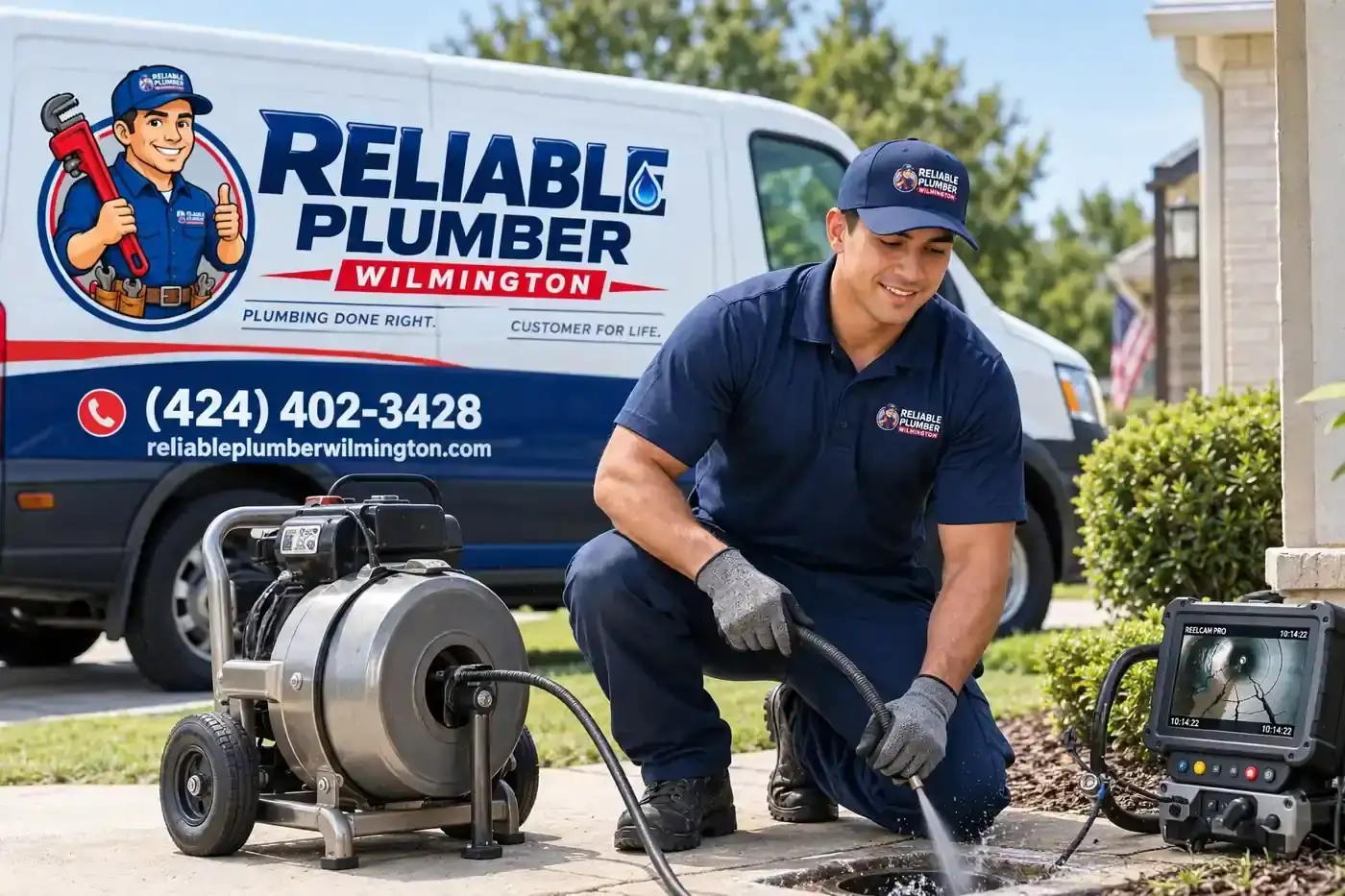
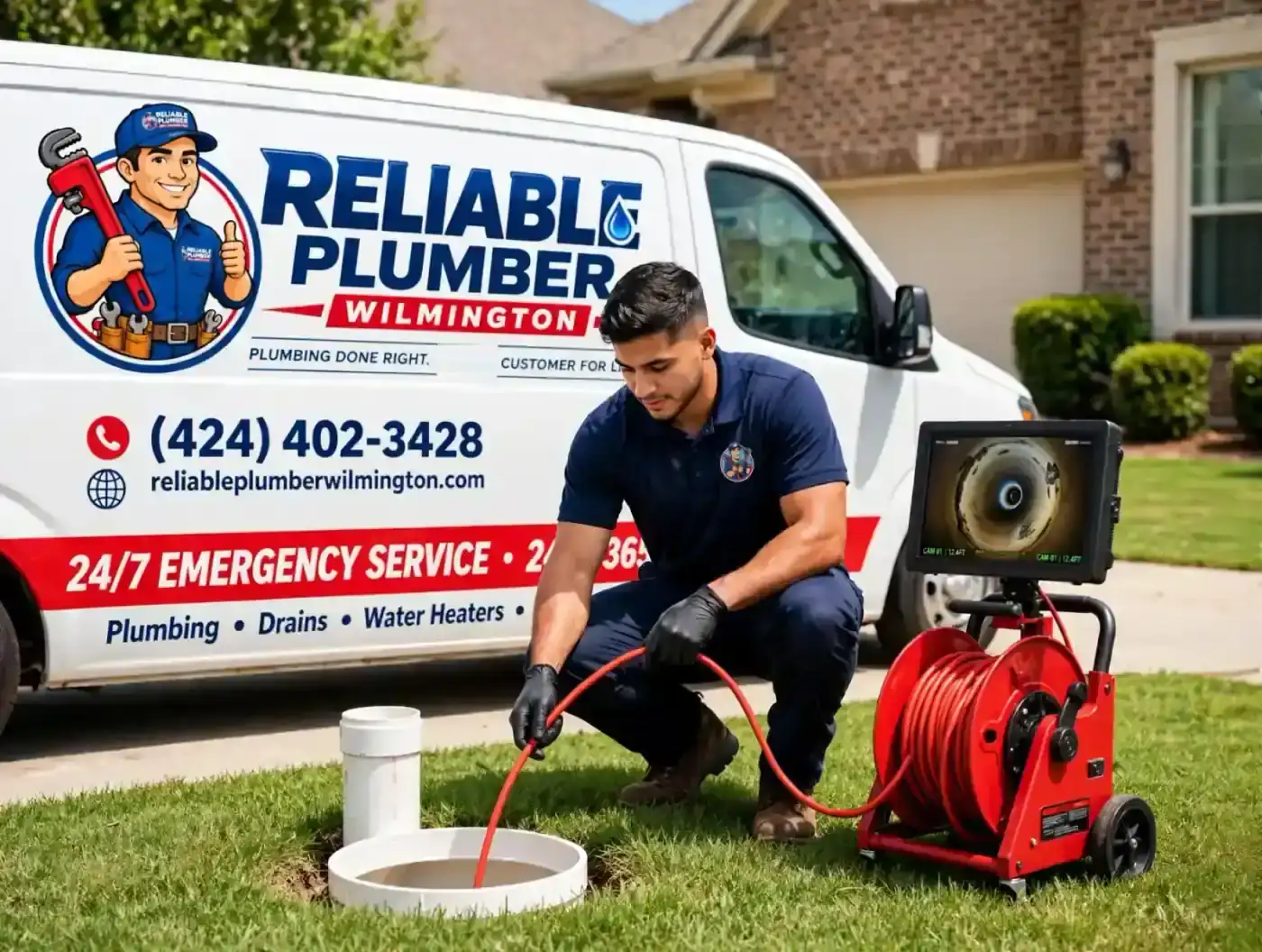
Wastewater in Cypress is handled regionally by the Orange County Sanitation District, with permits issued by the City of Cypress. Laterals here are relatively young by our standards, so outright structural failure is uncommon - the usual findings are root intrusion at a joint, a single offset from ground movement, or a belly where a section has settled. A camera separates those quickly.
Recurring backups, several fixtures slow at once, sewer odour, or a line a camera has shown to be cracked, offset or root-invaded.
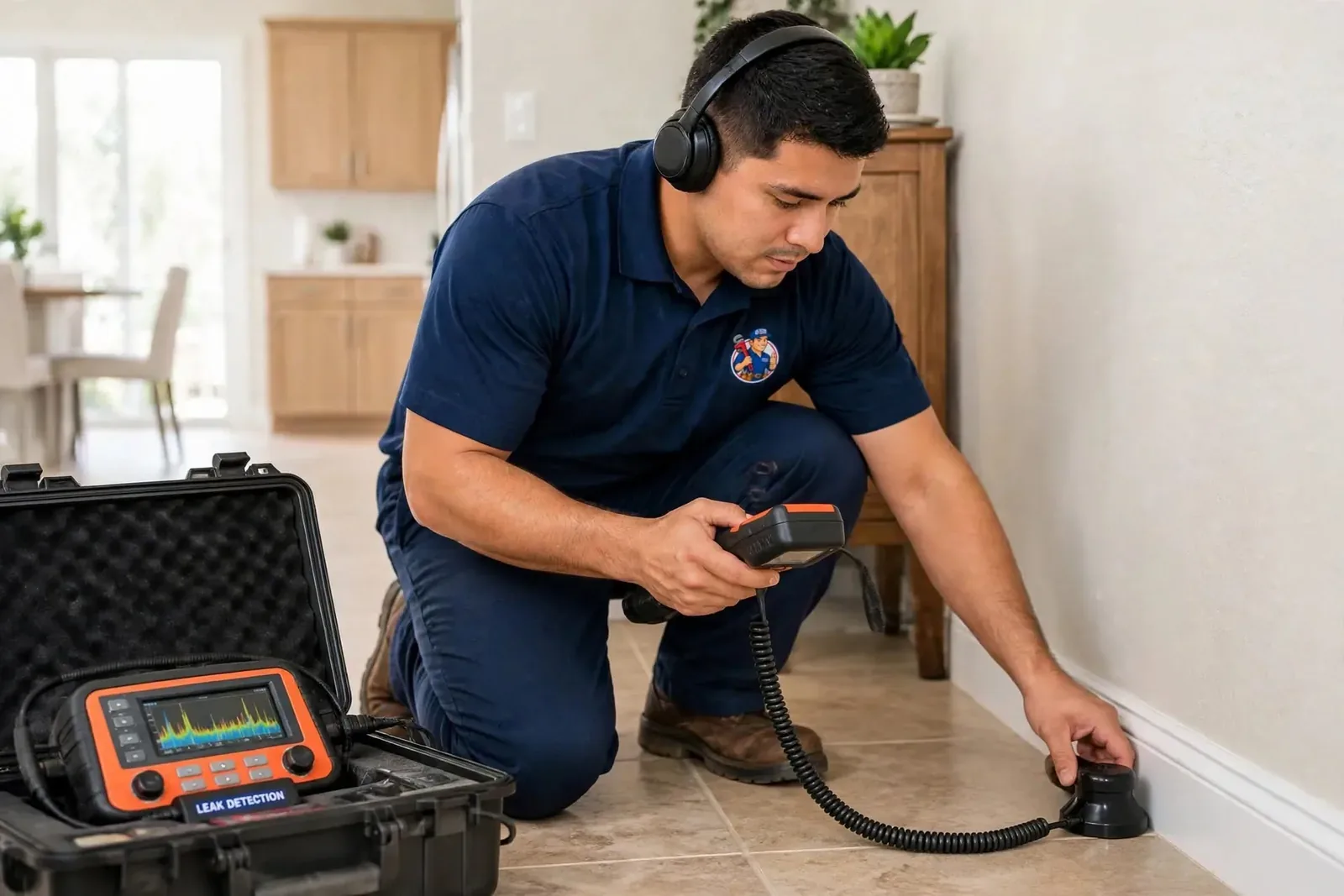
Two things shape leak detection in Cypress. The tracts are slab-on-grade, so there is no crawlspace to inspect and a hidden hot-water leak needs thermal imaging and acoustic listening to pin down. And in homes from the late 1970s onward the pipe material itself matters, because polybutylene tends to fail at fittings inside walls rather than under the floor. We establish which we are looking for before opening anything.
A water bill that jumped with no change in use, running water with every tap closed, a warm patch on the floor, or a stain with no obvious source.
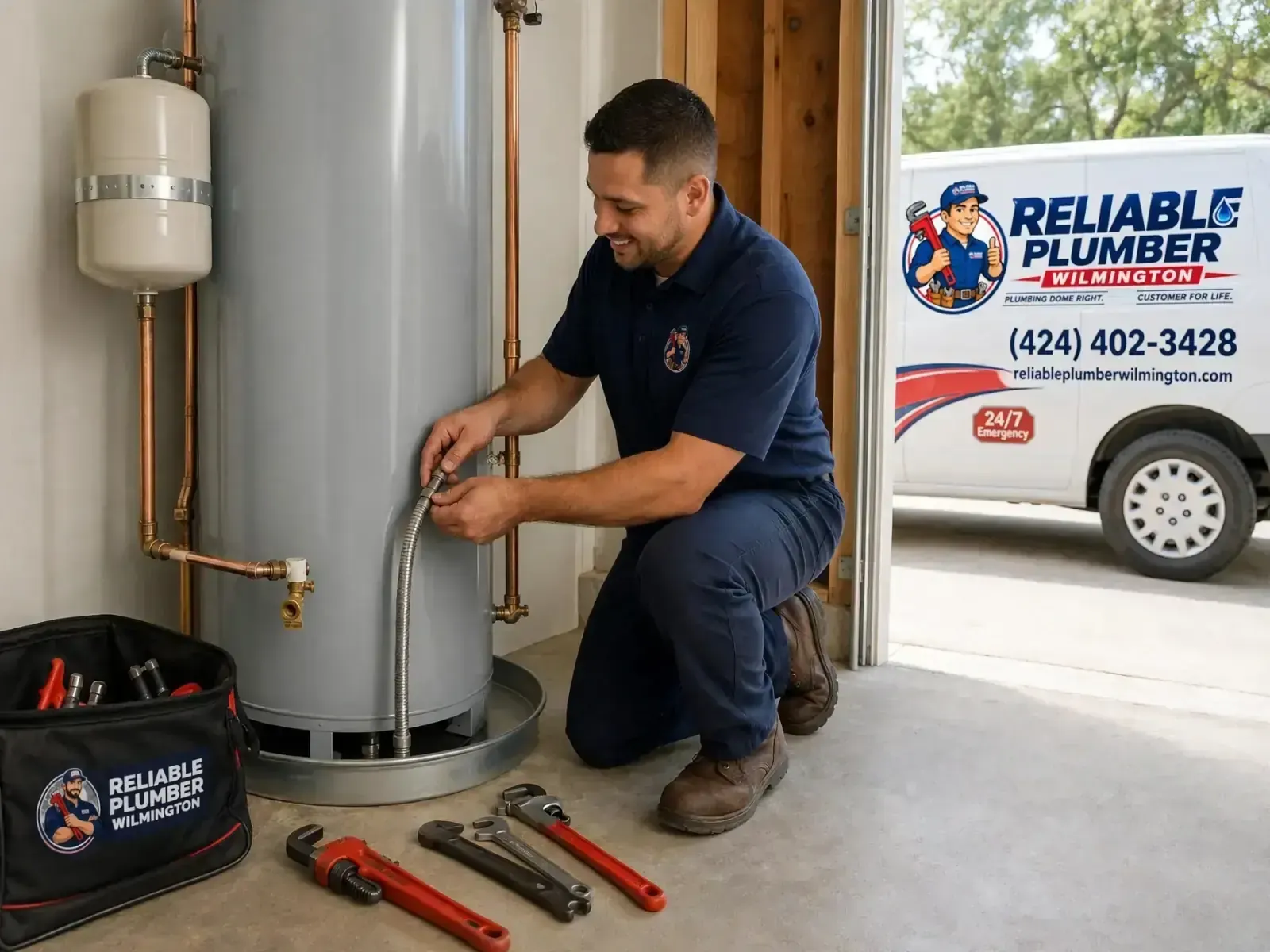
Permits come from the City of Cypress, and the code is California state law: two seismic straps at the upper and lower third anchored into framing rather than drywall, with the lower strap at least four inches above the gas control. The upside of Cypress's uniform 1970s housing is that garage installations with proper clearance are the norm, so replacements are rarely fought against the building.
No hot water, rumbling or popping, water pooling at the base, or a unit past twelve years old that is worth replacing on your schedule rather than its own.
Repiping in Cypress is rarely about galvanized steel - the city was built too late for that to be common. The material question here is polybutylene, used from the late 1970s to the mid 1990s, which becomes brittle and fails at the joints. The pattern that should prompt a look is several leaks arriving close together rather than one isolated failure, because that is how a whole system announces its age.
Rust-tinted water, pressure falling across the whole house, or a second and third leak on the same ageing supply system.
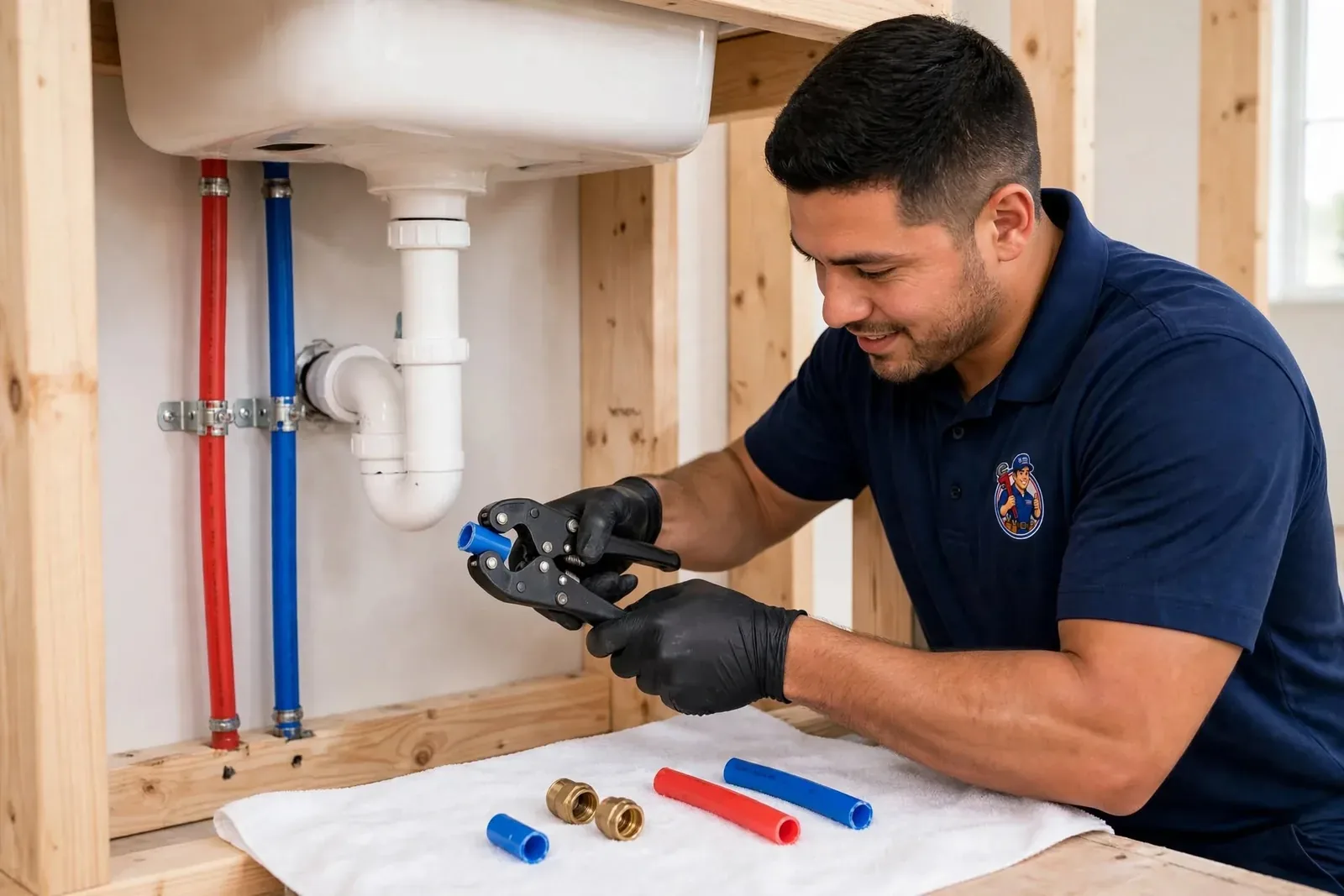
With the city built out on slab foundations from around 1971, a supply line failure under the concrete is one of the more common significant jobs here. Ground movement and soil chemistry will eventually find a weak point even in copper. A warm patch on the floor, a bill that rose without a change in habit, or water audible when everything is closed are the signals worth acting on early.
A warm patch on the floor, water audible with every fixture closed, or an unexplained bill increase on a slab-on-grade property.

ABS plastic takes jetting comfortably, so a Cypress lateral can generally be run at the full 2,500 to 3,000 PSI that a sound residential line will accept and genuinely come back to its original bore. That is not true everywhere we work, and it is one of the practical advantages of a city built in the 1970s. We still put a camera in first to confirm what we are dealing with.
Blockages that keep returning, kitchen lines with a grease history, and scaled cast iron where cabling only bores a channel.

At roughly 68.2% owner-occupied, Cypress has the highest ownership rate in this part of our coverage - so most fixture calls come straight from the person who decides. Original 1970s toilets still in service are flushing 3.5 gallons or more against California's 1.28 gallon standard, and SB 407 brings replacement into scope whenever a remodel touches them.
Running or phantom-flushing toilets, weak flush, water seeping at the base, or replacing a pre-1994 fixture using 3.5 gallons a flush.
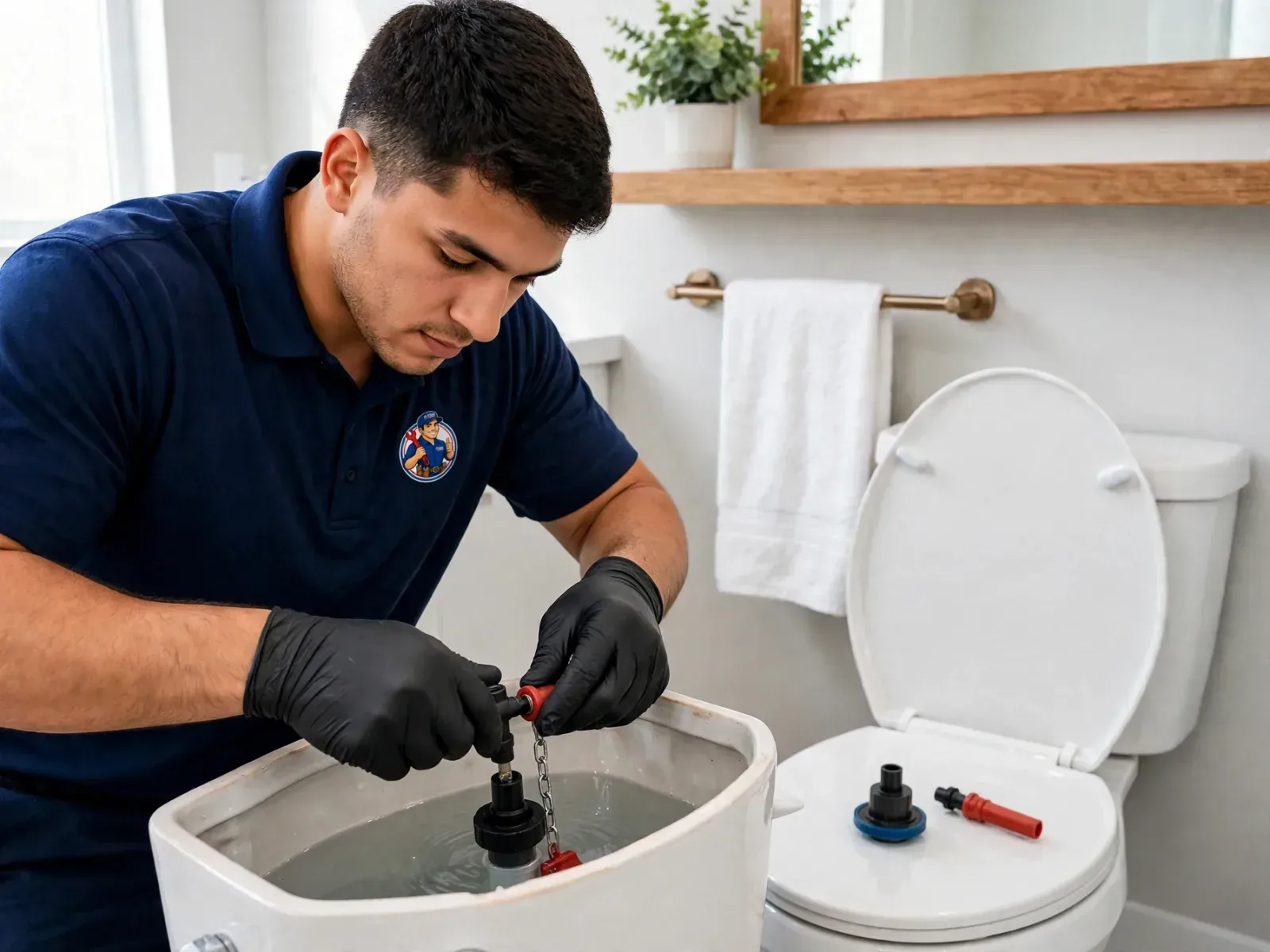
Golden State Water's Los Alamitos system supplies Cypress, and like every supply in this region it carries dissolved mineral that shortens the working life of cartridges and valve seats. Where a tap has been rebuilt once and started dripping again within a year or two, the water chemistry is doing the work rather than a fault in the repair.
Dripping spouts, stiff handles, leaking handle bases, or flow that has dropped at one fixture while the rest of the house is fine.
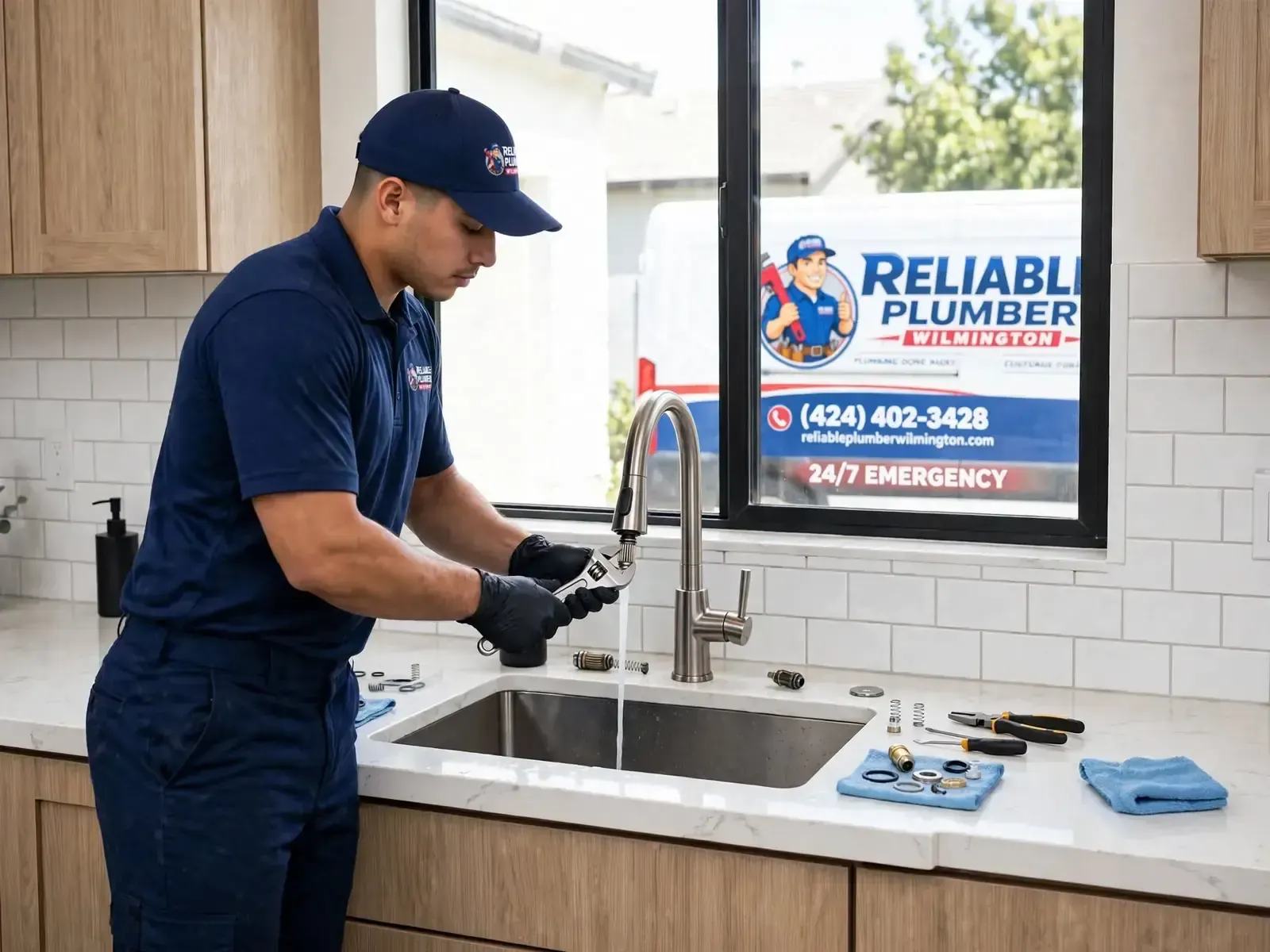
Cypress sits toward the northern edge of our Orange County coverage, so the more you can tell the dispatcher the better we arrive equipped. Shut the main off first - on a 1970s slab tract home it is normally on the street side near the meter - and keep everyone away from standing water anywhere near outlets or a panel.
Burst supply lines, sewage backing up, main line breaks, and water heater failures - anything where water is causing damage right now.

Covering a city properly means knowing what changes at its boundary. Here, several things do.
Much of Cypress was completed from the early 1970s onward, which overlaps the polybutylene era. It fails at fittings rather than along the run, so identifying it changes the repair plan entirely.
Median build year 1971Cypress incorporated as Dairy City in 1956 to keep developers out, which pushed most of its housing into one later burst. That means a consistent build era, and a diagnosis that usually starts from the same place.
Incorporated 1956 as Dairy CityGolden State Water's Los Alamitos system serves around 30,100 customers across Cypress, Los Alamitos, Stanton and parts of Garden Grove, La Palma, Rossmoor and Seal Beach. We work right across that footprint.
~30,100 customers servedAbout 68.2% of Cypress homes are owner-occupied, so you are usually the one deciding. We give you the diagnosis, the options and the price in writing rather than routing it through a chain.
68.2% owner-occupiedCamera footage on sewer recommendations, thermal and acoustic on hidden leaks, findings written down. You should be able to see what a repair rests on before agreeing to it.
Camera · written findingsCypress is compact and consistently built, which makes coverage across the city straightforward.
The defining feature of Cypress is how little the housing varies. Because the city held out as dairy land into the late 1950s, the tracts that replaced the farms went up in a comparatively short window, giving 16,920 units a median construction year of 1971 with slab foundations, copper supply and ABS drains as the standard package. That uniformity is genuinely useful in diagnosis: if one house on a street has developed a particular failure, its neighbours are often on the same clock. The corridors along Katella, Ball, Lincoln and Valley View carry most of the commercial activity, and Cypress College anchors the northern part of the city. Where variation does appear, it is usually in the later phases built from the late 1970s onward - the ones worth checking for polybutylene supply pipe.
Licensed, bonded and insured · 24/7 dispatch · diagnosis before price · findings in writing
Five categories covering everything from a slow drain to a full repipe.
We reach Cypress from Wilmington 90744, and cover 30 cities across Los Angeles County and north Orange County. These are the communities closest to Cypress.
Coverage, permits, water and what is specific to this city.
Yes, across the whole city. Cypress sits at the northern end of our Orange County coverage, and we work throughout the same footprint its water company serves.
Golden State Water Company, through its Los Alamitos system. That system serves roughly 30,100 customers across Cypress, Los Alamitos, Stanton and portions of Garden Grove, La Palma, Rossmoor and Seal Beach.
It is worth checking if it was built from the late 1970s onward. Polybutylene is a grey plastic supply pipe used until roughly the mid 1990s that becomes brittle and fails at the fittings. With a median construction year of 1971 and later phases beyond that, a real share of Cypress falls in or near that window.
Because the city resisted development longer than its neighbours. Cypress incorporated in 1956 under the name Dairy City, formed by local dairy farmers specifically to hold developers off, and only changed its name in 1957. When the tracts finally came they went up in a narrower window, which is why 16,920 units share a 1971 median build year.
To the Orange County Sanitation District, which provides regional wastewater collection, treatment and disposal for around 2.6 million people across central and northwest Orange County. Building permits come from the City of Cypress.
No. Cypress is in Orange County, so there is no LASAN sewer lateral rebate and no LADWP billing adjustment available. Supply and billing questions go to Golden State Water instead.
Yes, because effectively the whole city is slab-on-grade. Even copper will eventually find a weak point through soil movement and chemistry. The early signs are a warm patch underfoot, a water bill that rose with no change in use, or water you can hear with every fixture closed.
Generally less often than in the older harbour cities. Cypress drains are mostly ABS plastic, which does not corrode or scale, so the line is still the diameter it was installed at. Blockages here tend to have a specific cause worth identifying rather than being the result of a pipe closing in over decades.