Most of Lawndale's rental housing is houses rather than apartments, often owned by landlords who live elsewhere. That shapes what gets deferred, what gets reported and what we are usually called out to.










Lawndale is a renting city, but not in the way that phrase usually implies. Around 62% of households here rent against 38% who own, and the reason is documented: from the 1970s onward the city's comparatively low housing prices attracted absentee landlords, and a growing share of residents became tenants in what had been an owner-occupied town. The practical consequence is that a lot of the rental stock is converted single-family housing rather than purpose-built apartment buildings, and the decision-maker is frequently someone who has never stood in the property. That is the single biggest factor in what we get called to: problems that were reported some time ago, not acted on, and have since become larger and more expensive than they needed to be.
The housing itself hides something behind its average. The median construction year across 10,286 units is 1965, which would place the city on the boundary between galvanized steel and copper supply pipe. But roughly 6.3% of Lawndale homes predate 1940 and a further 10.1% were built by 1949 - so about one property in six is pre-1950 stock, decades older than the median suggests and running original pipe well past the end of its service life. Treating the citywide figure as a description of any individual house will point you at the wrong diagnosis often enough to matter.
The utilities are simple, which is a relief in an area where they usually are not. Golden State Water Company's Southwest system serves all of Lawndale - not portions, all of it - as part of a network of more than 54,000 connections across southwest Los Angeles County. Sewer maintenance operations and improvements are provided by the Los Angeles County Sanitation District. Building and plumbing permits come from the City of Lawndale, which incorporated on 28 December 1959 as a General Law city. As an incorporated city, the Los Angeles City programmes do not reach it.
Reliable Plumber Wilmington covers Lawndale across the South Bay. We handle drain cleaning, sewer line repair, leak detection, water heater work, repiping and everything alongside them - diagnosis before price, camera evidence on sewer work, and the finding written down.
Because so many decisions here are made off-site, the written finding does more work in Lawndale than almost anywhere else we operate. A clear description of what is wrong, what it will take to put right and what happens if it is left is what a tenant can send on and an owner can act on without a site visit. California requirements apply throughout: SB 407 on fixture replacement during a remodel, the 80 psi pressure ceiling with a regulator required above it, and seismic strapping on water heaters.
A drain problem in Lawndale has often been going on longer than the person calling has known about it, which changes what we look for. Rather than clearing the blockage and leaving, we camera the line to establish whether this is a one-off or the fourth instance of the same underlying fault - because in a rented house, a pattern is the evidence that gets a real repair authorised instead of another visit.
Slow or blocked kitchen, bath, shower and laundry lines - and any drain that has already been cleared once and blocked again.
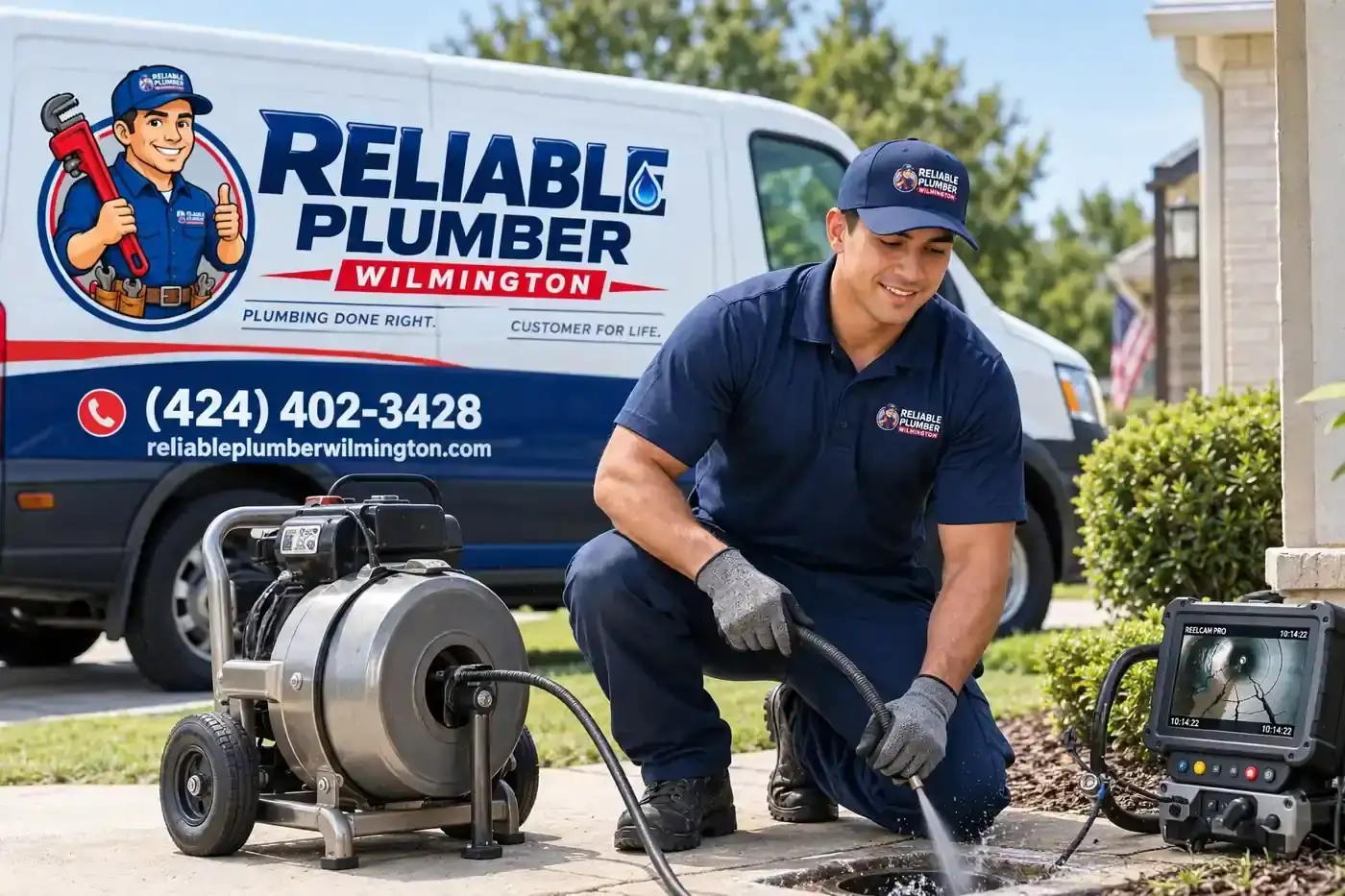
Sewer maintenance in Lawndale is provided by the Los Angeles County Sanitation District, and permits come from the City of Lawndale. Given roughly one property in six here predates 1950, we camera before scoping rather than assuming the 1965 median applies - the difference between a clay lateral at the end of its life and a sound one with a single failed joint is the whole cost of the job.
Recurring backups, several fixtures slow at once, sewer odour, or a line a camera has shown to be cracked, offset or root-invaded.
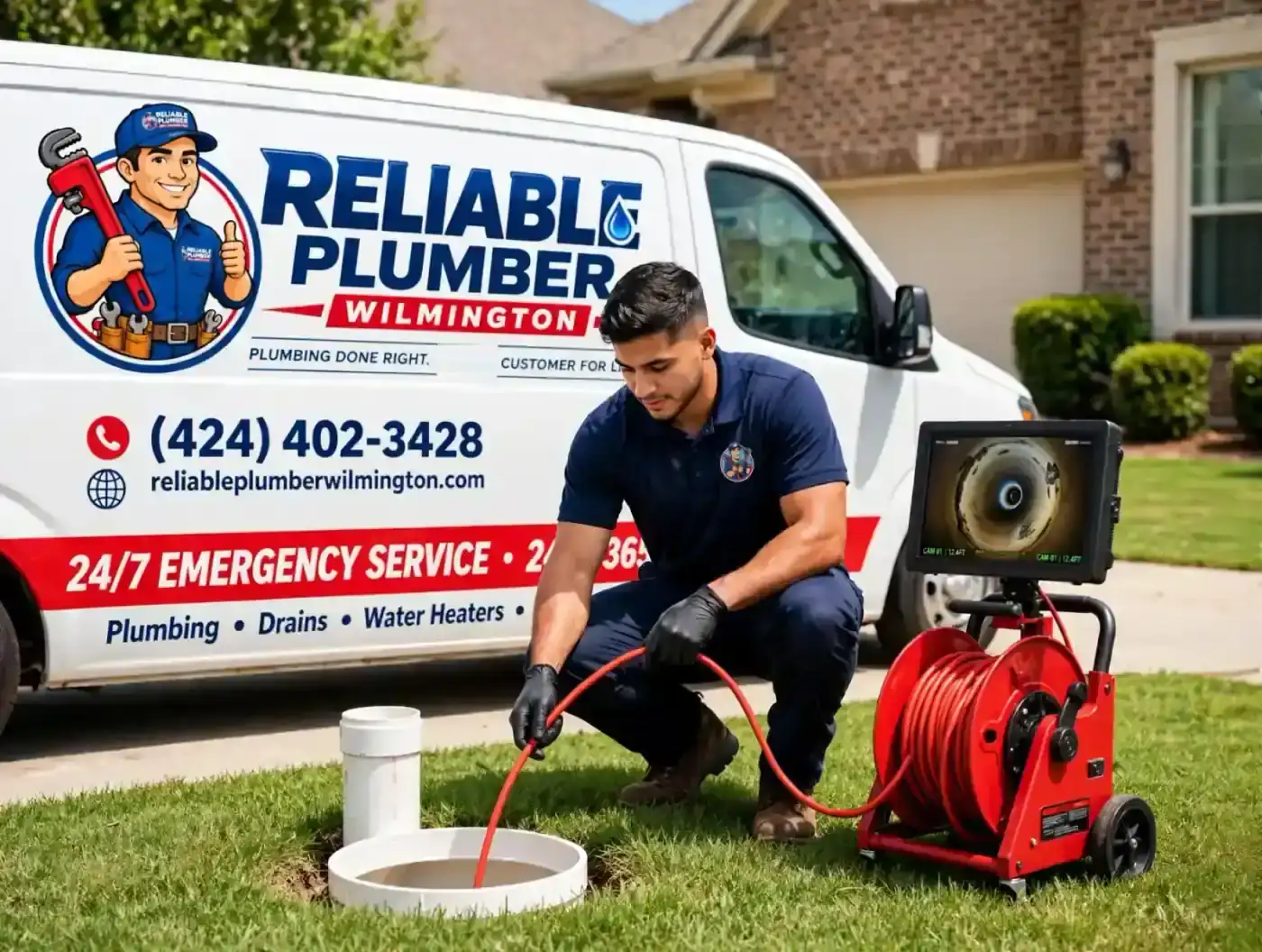
The older pre-1950 portion of Lawndale runs galvanized supply that fails from the inside out, so leaks start as slow weeps rather than bursts and can run for a long time in a rented property before anyone escalates them. A bill that climbed with no change in routine or a meter that keeps moving with every tap closed are the reliable signals. Acoustic and thermal work locates it without opening the whole run.
A water bill that jumped with no change in use, running water with every tap closed, a warm patch on the floor, or a stain with no obvious source.
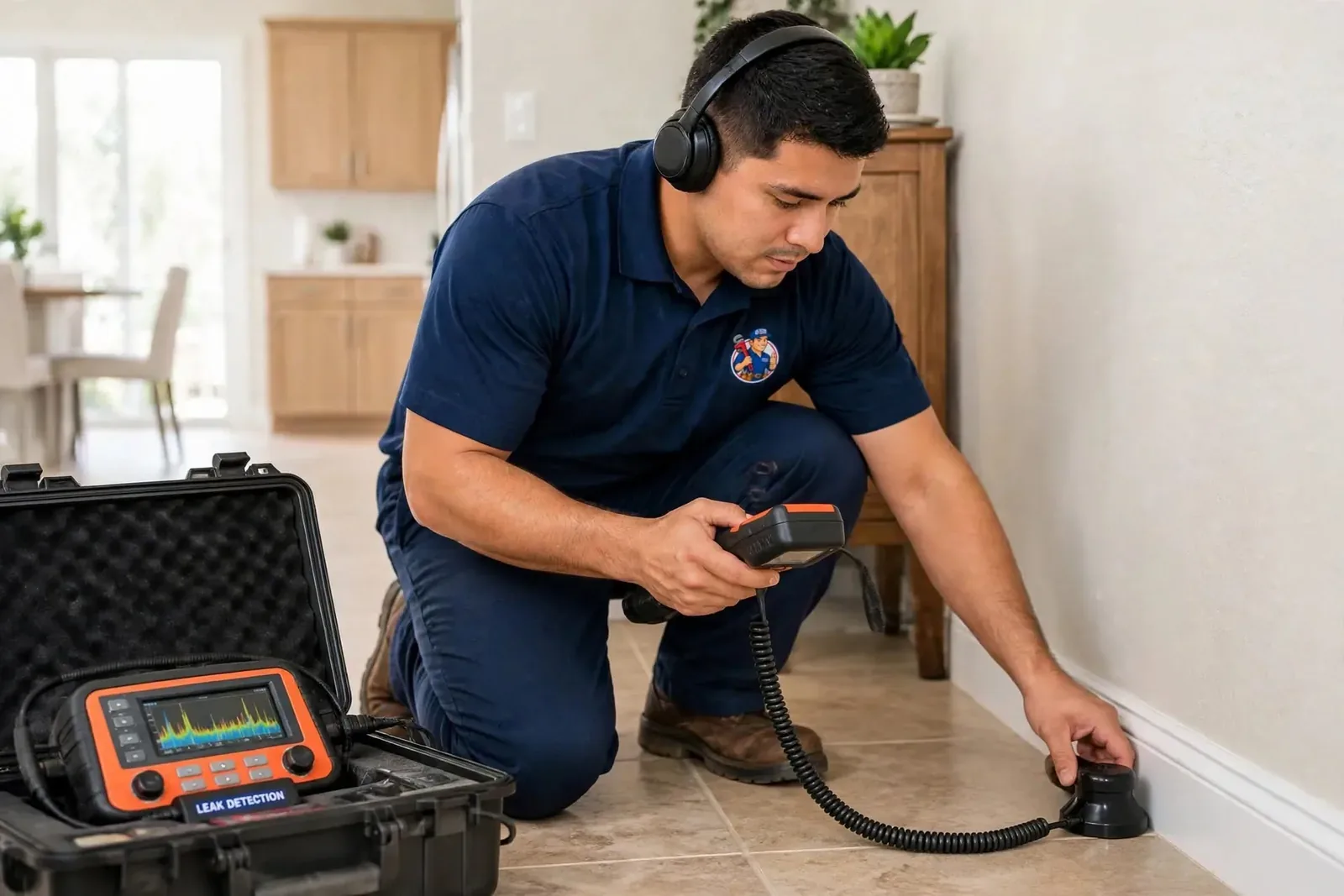
Permits come from the City of Lawndale. Requirements are California state code and do not vary: two seismic straps at the upper and lower third anchored into framing rather than drywall, with the lower strap at least four inches above the gas control. In converted rental properties the common problem is a heater fitted into a space never designed to house one, so clearance, venting and combustion air get checked as part of any replacement.
No hot water, rumbling or popping, water pooling at the base, or a unit past twelve years old that is worth replacing on your schedule rather than its own.
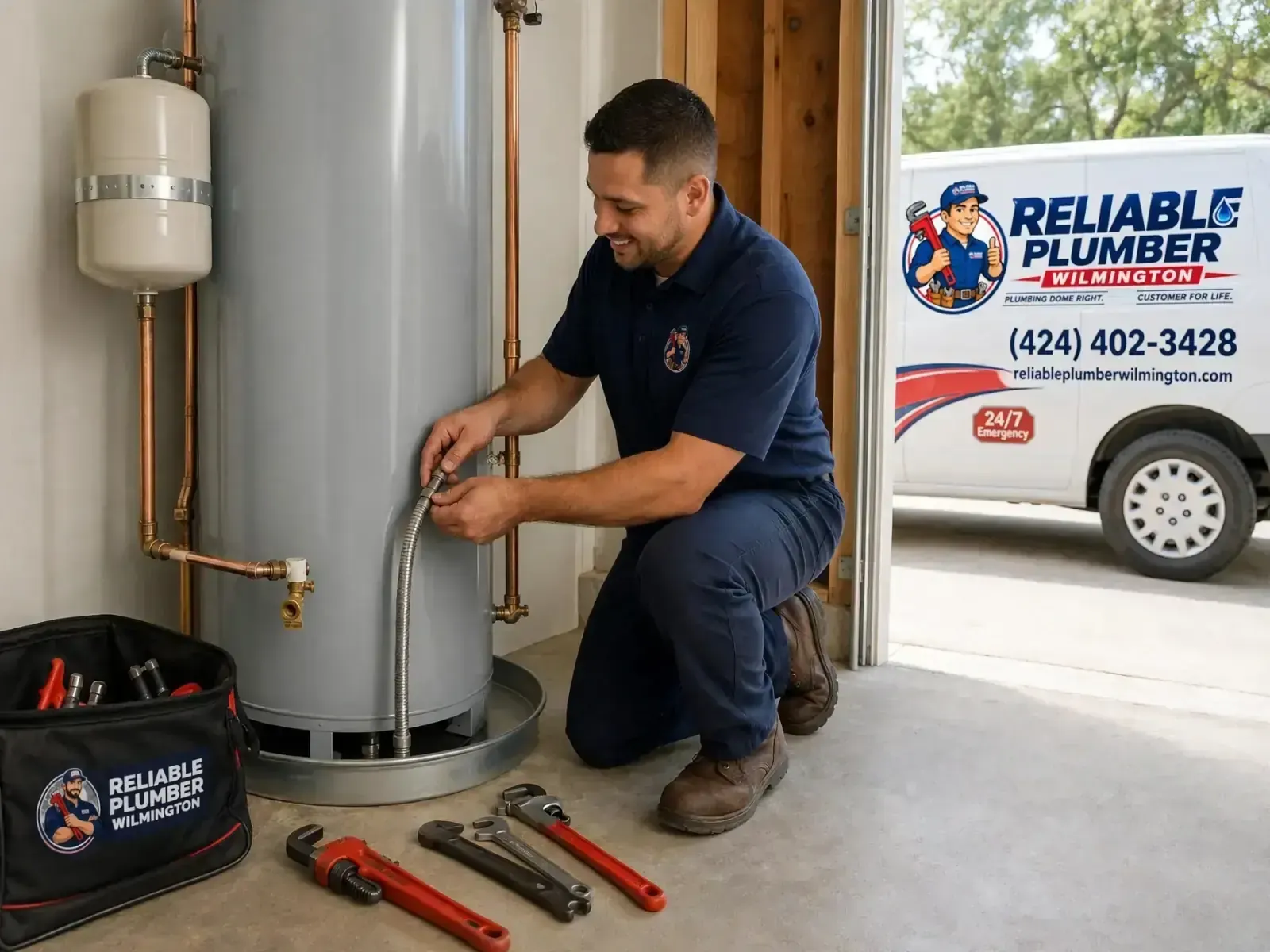
Which conversation applies depends on the era, and Lawndale holds both. In the pre-1950 sixth of the city, original galvanized steel is decades past its thirty-to-forty-year life and shows rust-tinted water with pressure down across the whole property. Around the 1965 median it is more likely copper with isolated pinholes. Identifying the material is what separates a targeted repair from a system replacement.
Rust-tinted water, pressure falling across the whole house, or a second and third leak on the same ageing supply system.
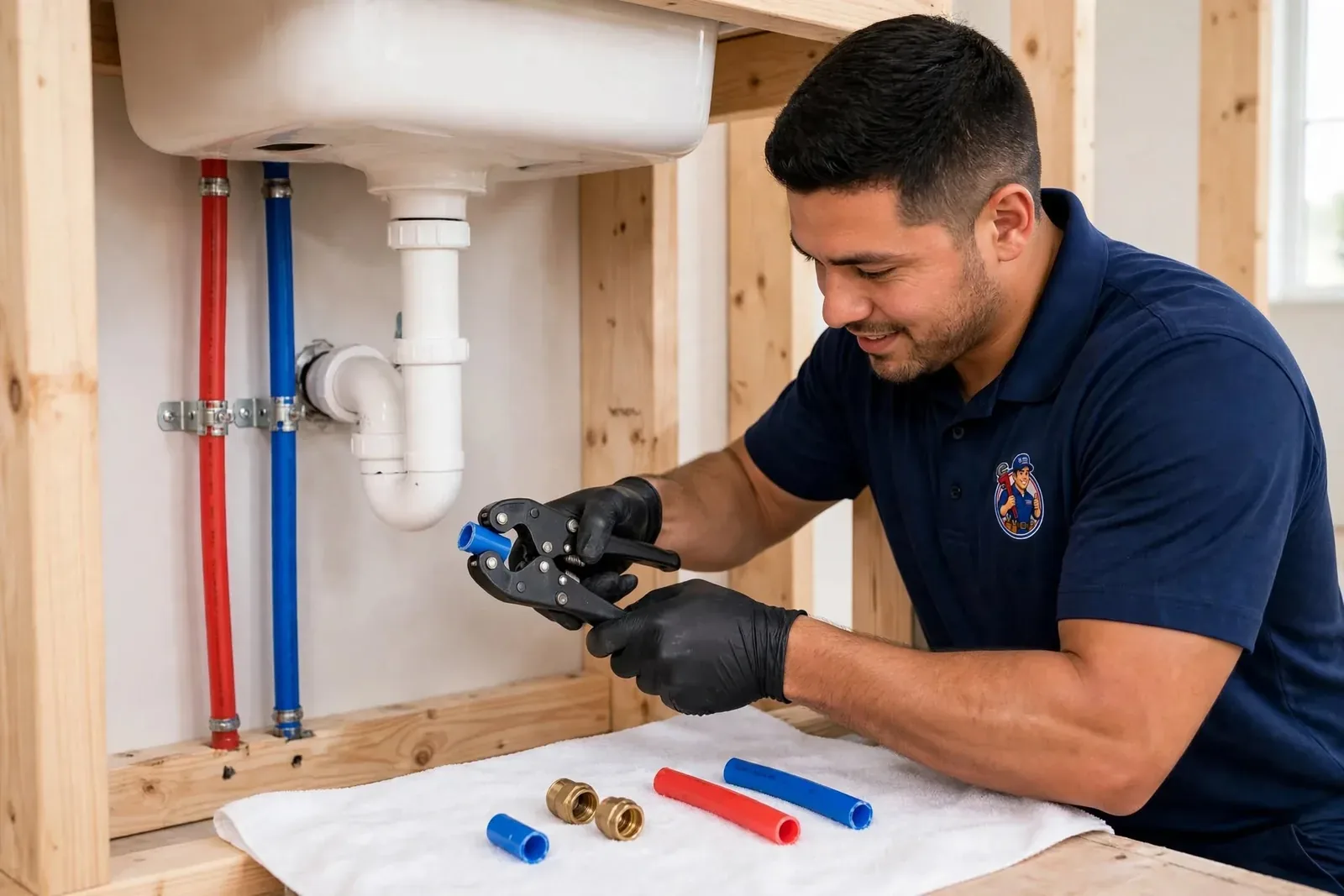
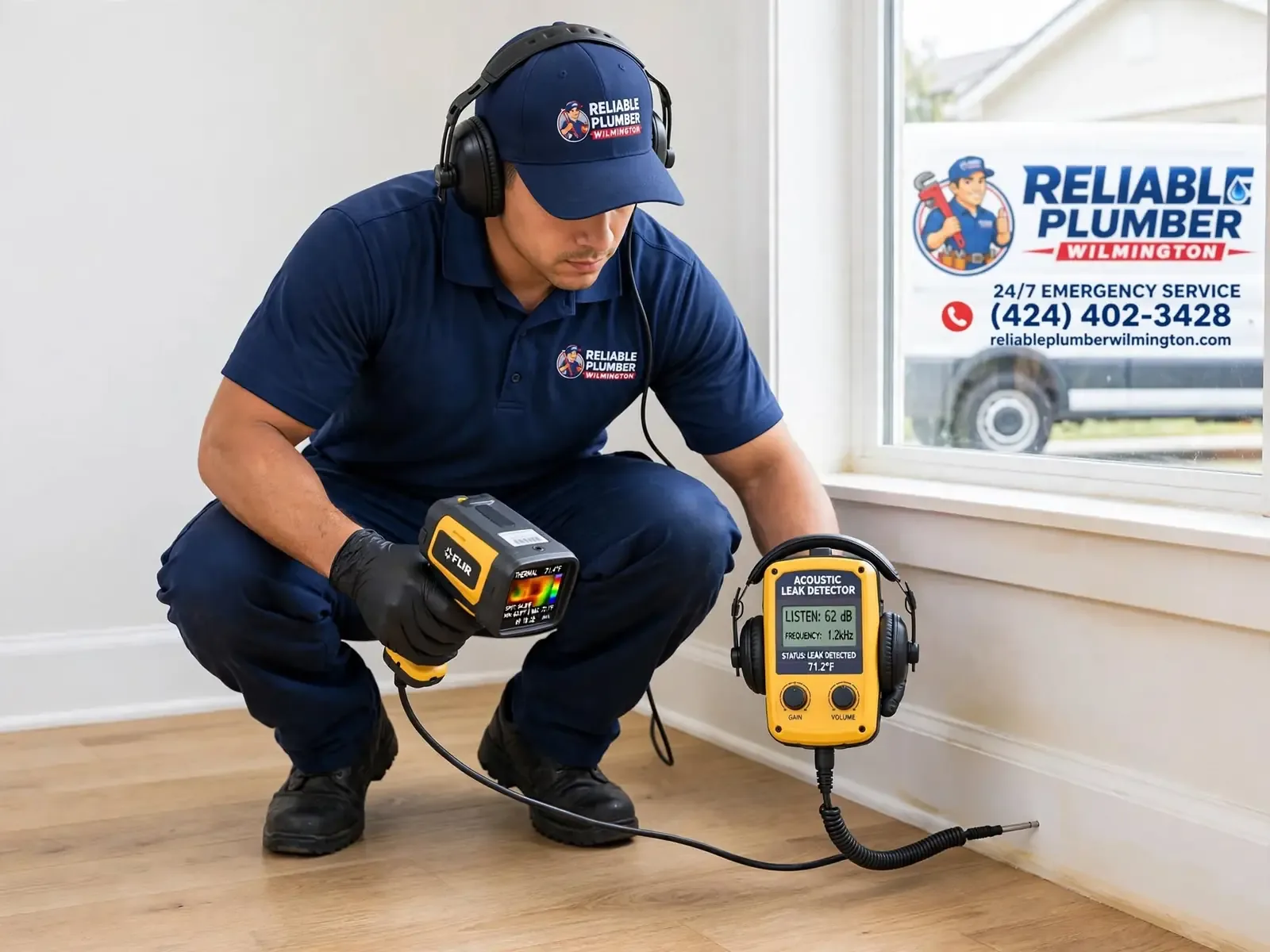
Foundation types vary here because the build eras do, so we confirm which you have before anything else - a good deal of the pre-1950 stock predates slab construction. Where a property is on slab, a warm patch on the floor or water audible with every fixture closed points to a supply line in the concrete, and precise acoustic and thermal location keeps the concrete work proportionate.
A warm patch on the floor, water audible with every fixture closed, or an unexplained bill increase on a slab-on-grade property.
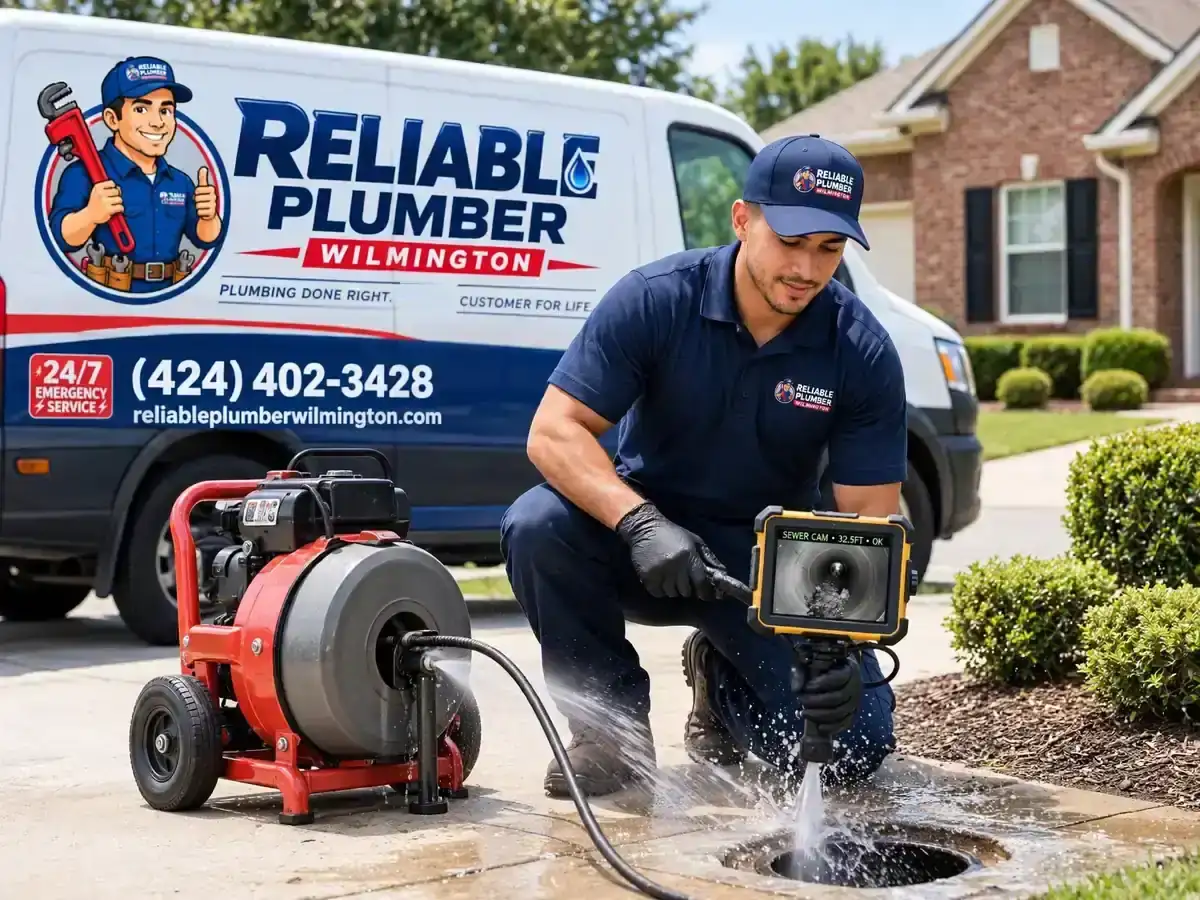
Pressure comes from the camera rather than the job type, and Lawndale spans a genuinely wide range. Sound modern lateral takes 2,500 to 3,000 PSI while the cast iron and clay under the older properties is run at 1,500 to 2,000 PSI instead. In a rented house, jetting properly rather than cabling is also what buys the longest interval before the next callout.
Blockages that keep returning, kitchen lines with a grease history, and scaled cast iron where cabling only bores a channel.
With about 62% of Lawndale rented and much of that converted single-family housing, most fixture calls come through a tenant and get decided by an owner elsewhere. We document the fault and the fix plainly so that decision can be made without a site visit. On anything predating 1994 there is also a straightforward case: 3.5 gallons a flush or more against California's 1.28 gallon standard.
Running or phantom-flushing toilets, weak flush, water seeping at the base, or replacing a pre-1994 fixture using 3.5 gallons a flush.
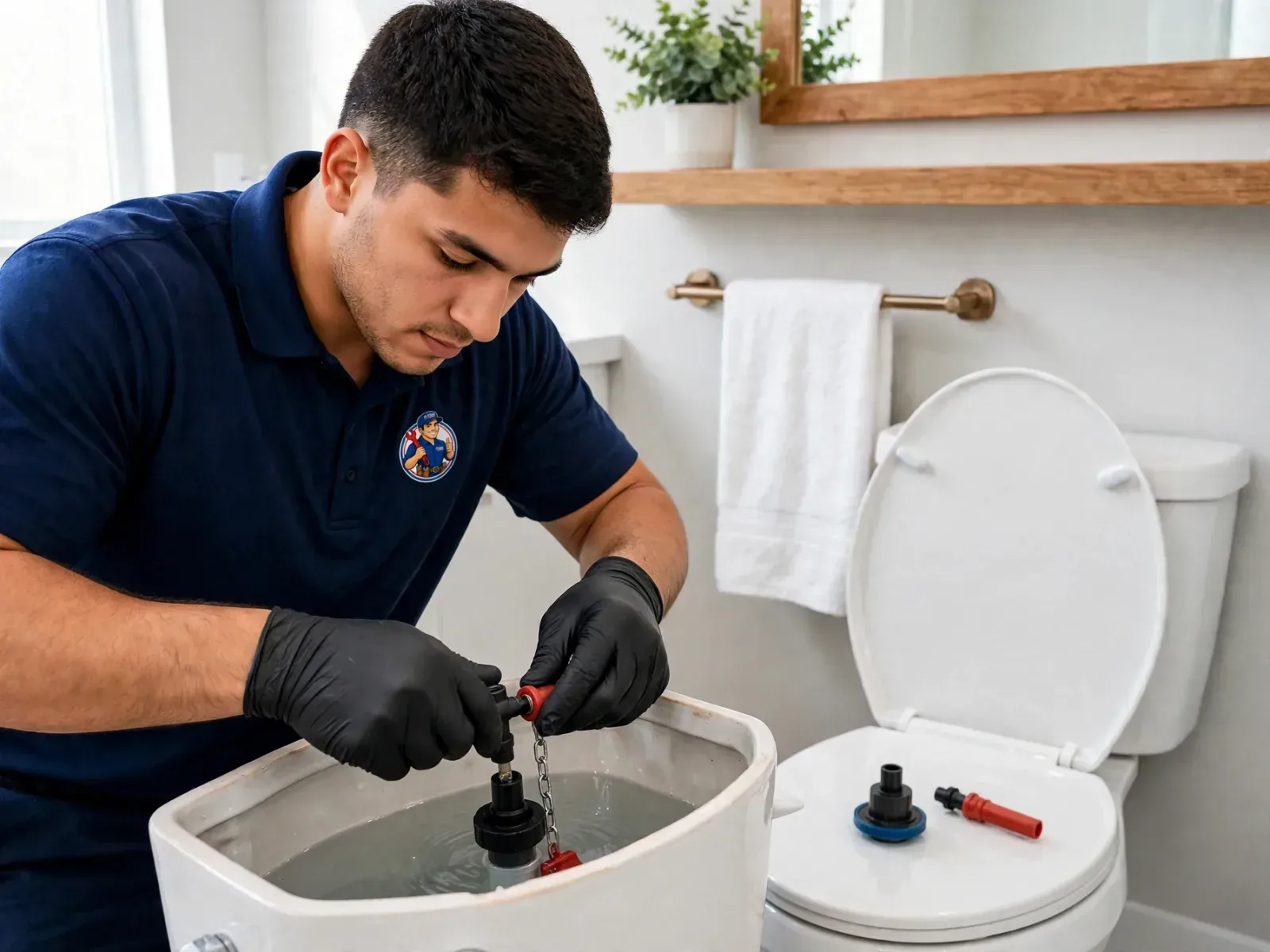
Golden State Water's Southwest system serves all of Lawndale, and its mineral content wears cartridges and valve seats faster than manufacturer guidance assumes. In the older properties there is a second cause on top, since corrosion carried out of galvanized supply pipe will wear through a new cartridge quickly. Replacing the cartridge properly beats tightening a packing nut, which buys weeks rather than years.
Dripping spouts, stiff handles, leaking handle bases, or flow that has dropped at one fixture while the rest of the house is fine.
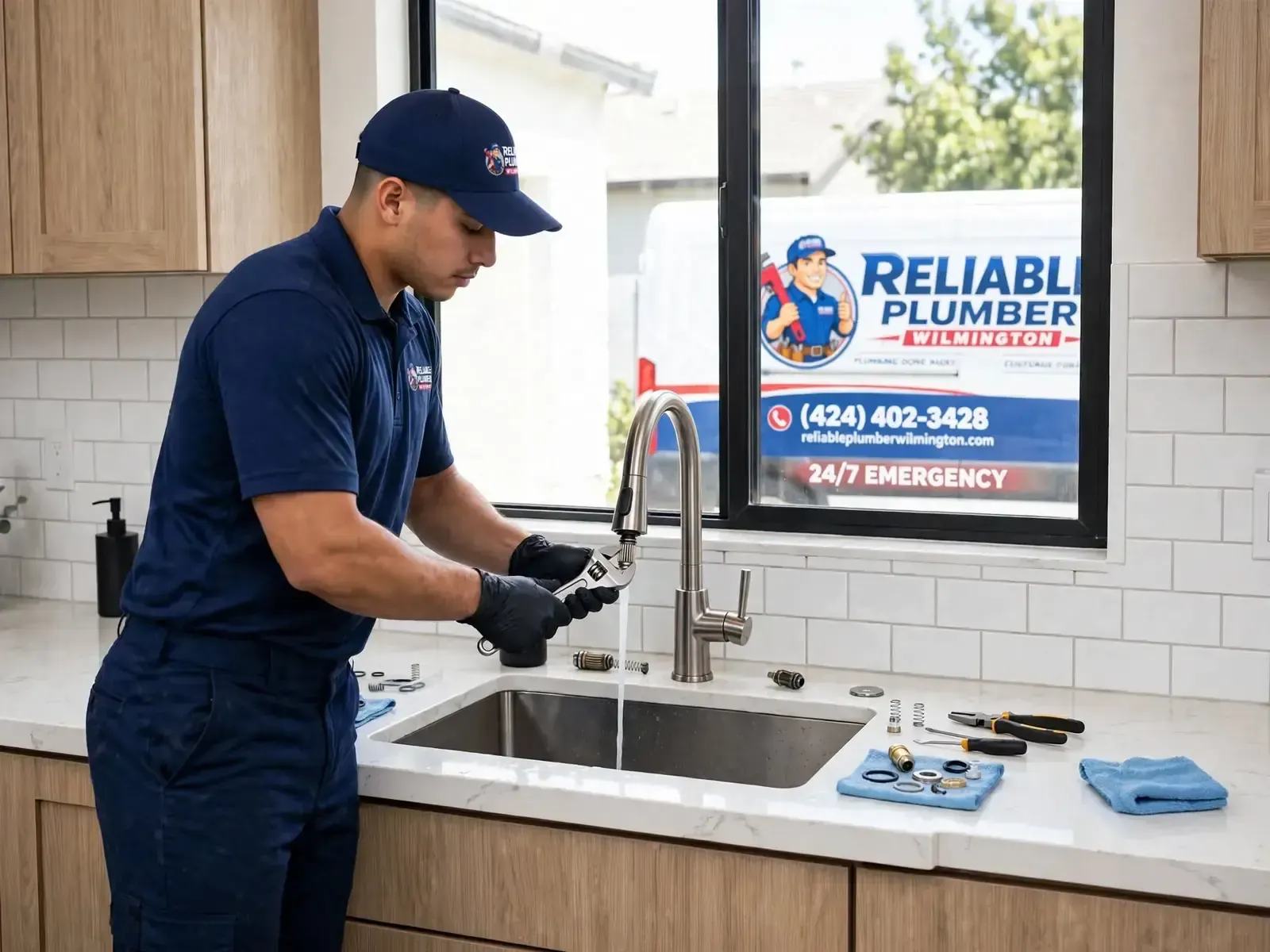
Lawndale is within easy reach across the South Bay. Shut the main off first - in this housing stock it is usually at the front of the lot near the meter. If you rent and cannot reach your landlord, say so when you call: we will still make the property safe and give you the written finding you need to escalate it afterwards.
Burst supply lines, sewage backing up, main line breaks, and water heater failures - anything where water is causing damage right now.

Covering a city properly means knowing what changes at its boundary. Here, several things do.
Around 62% of Lawndale rents, much of it houses owned by landlords who live elsewhere. A clear written diagnosis is what gets a real repair authorised without a site visit, so we write for that reader.
62% renter-occupiedThe citywide median is 1965, but about one property in six predates 1950. Pre-war galvanized and mid-1960s copper fail completely differently, so we identify the material rather than trusting the average.
~16% built pre-1950In rented housing a problem is often on its fourth visit before anyone calls it a problem. We camera to establish whether this is a one-off or a recurring fault, because the pattern is what justifies a proper fix.
Camera-confirmed historyGolden State Water's Southwest system serves all of Lawndale rather than portions of it - unusually straightforward for this part of the county. Sewer maintenance is LA County Sanitation.
GSWC serves all of LawndaleCamera footage on sewer recommendations, acoustic and thermal on hidden leaks, findings written down so tenant, manager and owner are all looking at the same information.
Camera · written findingsLawndale is compact and centrally placed in the South Bay, with build eras that vary more than its size suggests.
Lawndale incorporated on 28 December 1959, but a good deal of its housing predates that by decades - around 6.3% of the city's 10,286 units were built before 1940 and another 10.1% by 1949, which means roughly one property in six is considerably older than the 1965 median implies. That is the practical reason we identify materials on site rather than assuming from a citywide figure. The other defining feature is tenure: from the 1970s the city's low housing prices drew absentee landlords, and about 62% of households now rent, much of it in converted single-family homes rather than purpose-built apartment blocks. Golden State Water serves the whole city, and the main corridors - Hawthorne Boulevard, Inglewood Avenue, Prairie and Artesia - carry most of the commercial activity between the residential streets.
Licensed, bonded and insured · 24/7 dispatch · diagnosis before price · findings in writing
Five categories covering everything from a slow drain to a full repipe.
We reach Lawndale from Wilmington 90744, and cover 30 cities across Los Angeles County and north Orange County. These are the communities closest to Lawndale.
Coverage, permits, water and what is specific to this city.
Yes, across the city. Lawndale sits centrally in the South Bay between Hawthorne, Gardena, Torrance and Redondo Beach, all of which we also serve.
Golden State Water Company's Southwest system serves all of Lawndale - the whole city rather than portions of it - as part of a network of more than 54,000 connections across southwest Los Angeles County. Sewer maintenance operations and improvements are provided by the Los Angeles County Sanitation District, and permits come from the City of Lawndale.
More varied than the headline number suggests. The median construction year across 10,286 units is 1965, but around 6.3% of homes predate 1940 and a further 10.1% were built by 1949 - so roughly one property in six is pre-1950 stock with original pipe well past the end of its service life.
It goes back to the 1970s, when the city's comparatively low housing prices attracted absentee landlords and a growing share of residents became tenants in what had been an owner-occupied town. Today around 62% of households rent, and much of that stock is converted single-family housing rather than purpose-built apartments.
Get the problem documented properly. When the decision-maker has never seen the property, a clear written finding describing the fault, what it will take to fix and what happens if it is left is what gets a repair authorised without a site visit. We write our findings for exactly that reader.
In rented housing a blockage is often on its third or fourth visit before anyone treats it as a pattern. We camera the line to establish whether it is a one-off or a recurring underlying fault, because demonstrating the pattern is usually what turns another temporary clearance into a real repair.
It depends on the build era, and Lawndale genuinely spans both. Around the 1965 median it is more likely copper, showing isolated pinhole leaks. In the older sixth of the city it is likely original galvanized steel, showing rust-tinted water and pressure down across the whole property. We confirm on site rather than inferring from a date.
No. Lawndale has been its own incorporated city since 28 December 1959, so there is no LASAN sewer lateral rebate and no LADWP billing adjustment. Supply questions go to Golden State Water and permits to the City of Lawndale.