Torrance is really two housing stocks in one city - 1912 Craftsman bungalows on raised foundations and postwar tracts on slab - and they fail in different ways. The city also puts more of the sewer lateral on the owner than most of its neighbours.











Torrance has an unusually split housing stock, and it changes how we diagnose. The city was founded in 1912 by Jared Sidney Torrance and laid out by Frederick Law Olmsted Jr. on Garden City principles - 109 blocks of residential, commercial and industrial sub-districts, with the factories deliberately sited downwind of the houses. The residential blocks around El Prado, Gramercy and Andreo are still dominated by Craftsman and California bungalows, most between roughly 800 and 1,200 square feet. Those homes sit on raised foundations with crawlspaces. The rest of the city is postwar: the median construction year across all 59,411 units is 1963, and those tracts are slab-on-grade. A hidden leak in Old Torrance and a hidden leak in Southwood are not the same job.
The utilities are city-run but not uniformly so. Torrance Municipal Water was established in 1921, is a founding member of the Metropolitan Water District, and serves roughly 106,460 residents - buying about 89% of its supply from MWD, sourced from the Colorado River and Northern California, with the remaining 11% from one operating well in the West Coast Ground Water Basin and a groundwater desalination project. But it does not serve everyone in the city: California Water Service's Rancho Dominguez District covers portions of Torrance as well. Knowing which one bills you matters before anyone starts talking about leak adjustments.
Sewer is the detail worth reading carefully. The City of Torrance Public Works Department owns and maintains its own collection system - around 280 miles of pipeline, 6,171 manholes and nine lift stations across a 21-square-mile service area - and conveys flow to the A.K. Warren Water Resource Facility in Carson through Los Angeles County Sanitation Districts interceptors. The city's sewer lateral policy states that property owners are responsible for maintaining and repairing their lateral including the connection to the public sewer main. That means your responsibility does not stop at the property line, and work spanning both sides needs two permits rather than one.
Reliable Plumber Wilmington covers Torrance across the South Bay from our Harbor Area base. We handle drain cleaning, sewer line repair, leak detection, water heater work, repiping and the rest - diagnosis before price, camera evidence on sewer work, and the finding written down.
Two Torrance specifics shape most jobs here. First, permits: repair on private property between the building and the property line takes an "Alter Building Sewer" plumbing permit, while work in the public right-of-way from the property line to the main takes a Construction and Excavation permit, and a job crossing both needs both. Second, none of the Los Angeles City programmes apply - there is no LASAN lateral rebate and no LADWP billing adjustment, because neither agency serves Torrance. California state rules are unchanged: SB 407 on fixtures, the 80 psi ceiling with a regulator above it, and water heater seismic strapping.
Age decides the approach here. The Olmsted Tract bungalows still run original cast iron and clay drain lines where a century of scale has narrowed the bore, so blockages recur because the pipe is smaller than it was built. The 1960s tracts are cast iron and early ABS, where a blockage is usually just a blockage. A camera tells us which conversation we are having before anything gets quoted.
Slow or blocked kitchen, bath, shower and laundry lines - and any drain that has already been cleared once and blocked again.
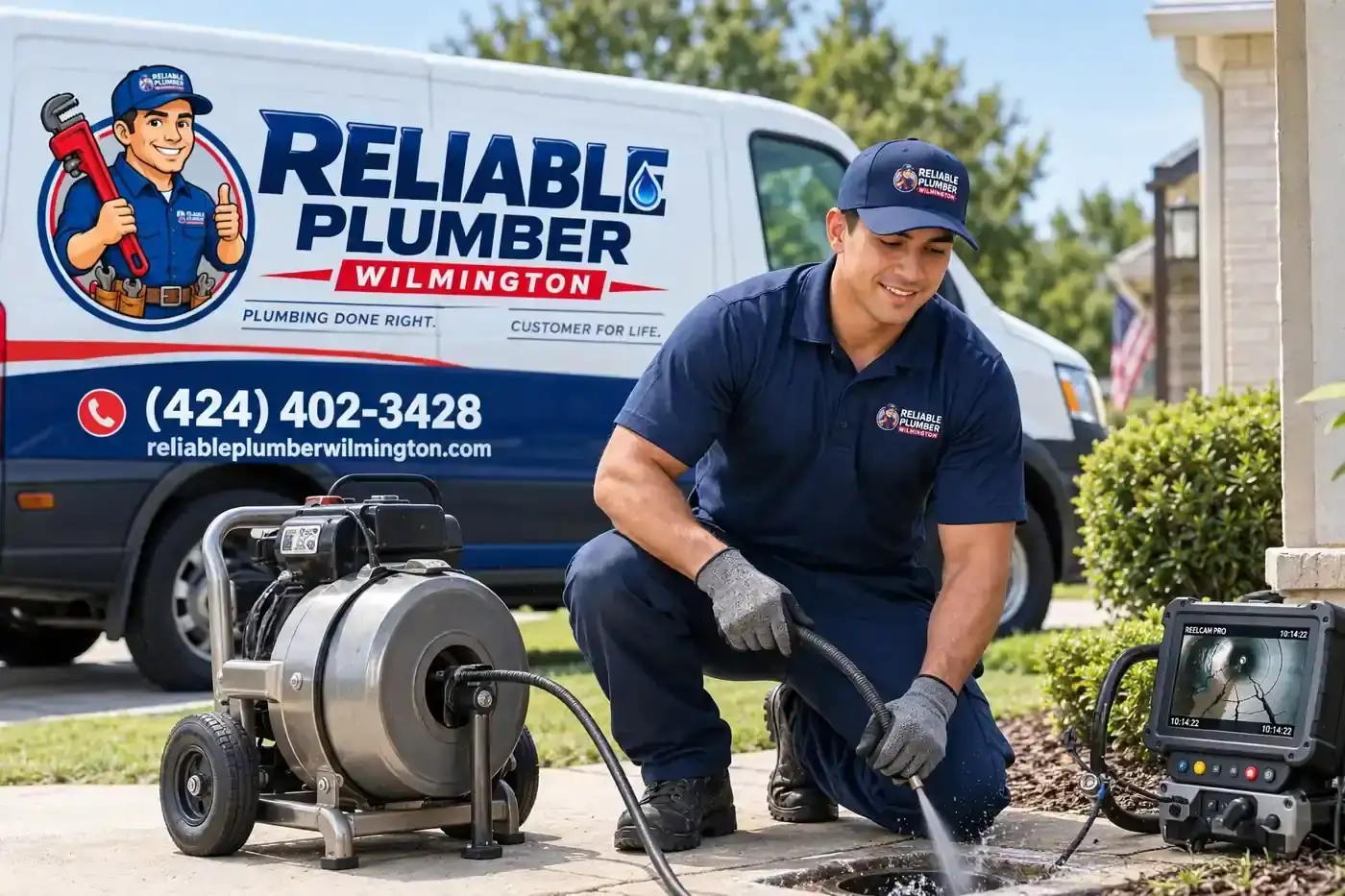
Torrance is stricter than most of its neighbours about where your responsibility ends: the city's policy makes the property owner responsible for the lateral including the connection to the public main, so a failure under the street is still yours. That also decides the paperwork - private-side work takes an "Alter Building Sewer" permit, right-of-way work takes a Construction and Excavation permit, and many repairs need both.
Recurring backups, several fixtures slow at once, sewer odour, or a line a camera has shown to be cracked, offset or root-invaded.
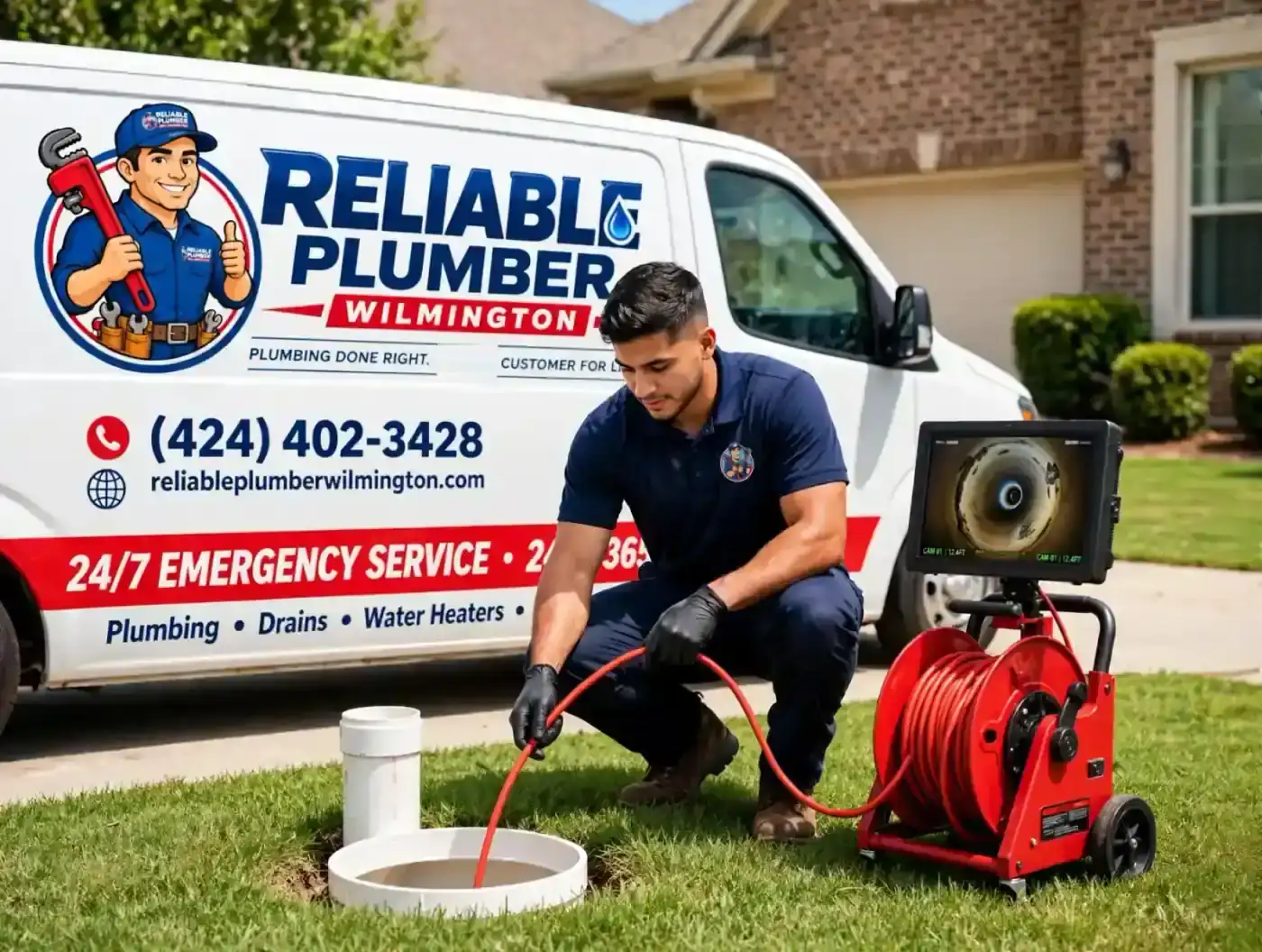
This is where the split housing stock matters most. A bungalow in Old Torrance has a crawlspace, so a hidden supply leak can often be seen and traced directly. A 1960s tract home is slab-on-grade with no access at all, and finding the leak means thermal imaging for the heat signature and acoustic listening to narrow it to inches before concrete is cut. Same symptom, two different jobs.
A water bill that jumped with no change in use, running water with every tap closed, a warm patch on the floor, or a stain with no obvious source.
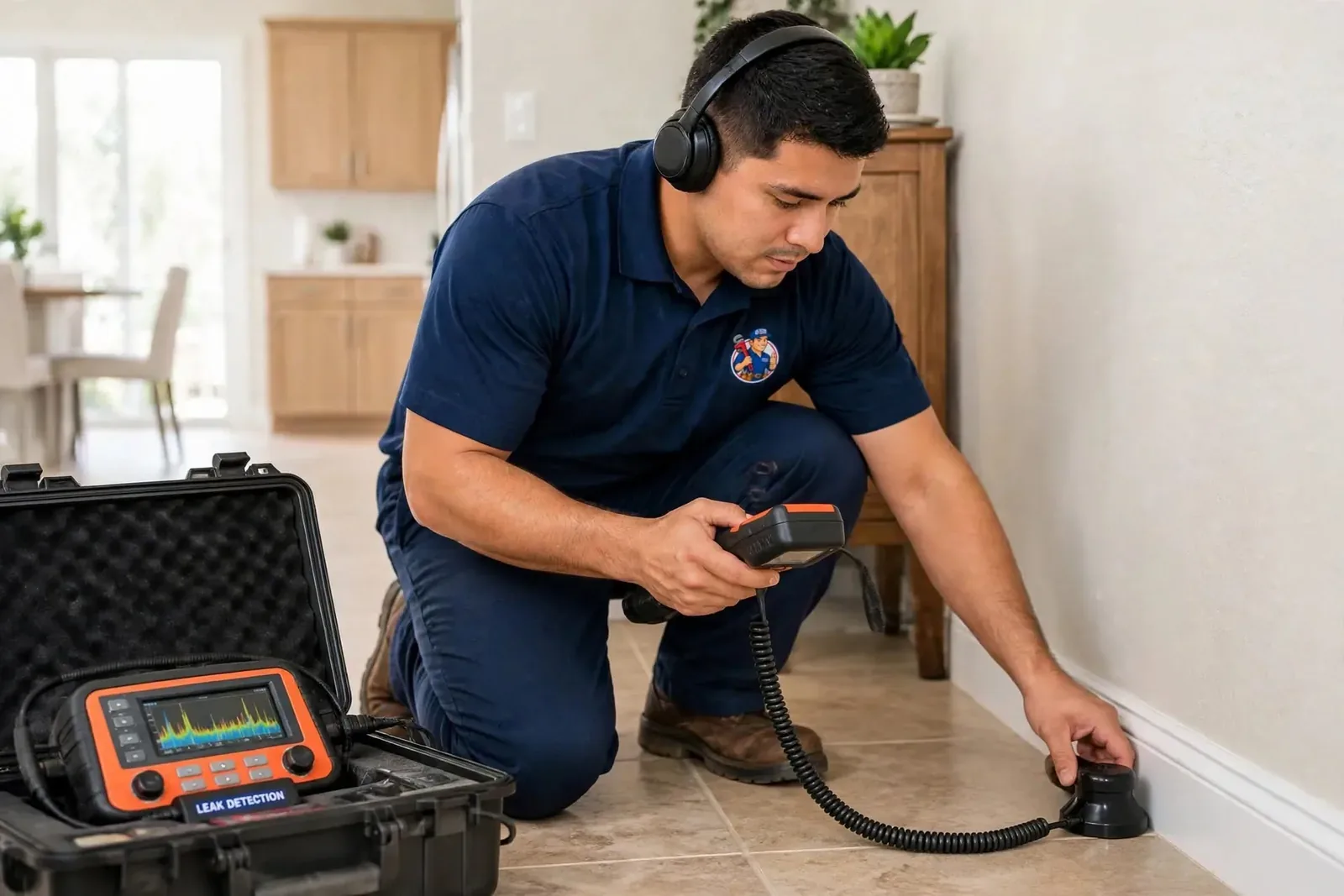
Permits here come from the Torrance Community Development Department rather than LADBS, though the requirements are California state code and do not change: two seismic straps at the upper and lower third, anchored into framing rather than drywall, with the lower strap at least four inches above the gas control. In Old Torrance the constraint is usually space - original bungalows were not built around a modern 50-gallon tank.
No hot water, rumbling or popping, water pooling at the base, or a unit past twelve years old that is worth replacing on your schedule rather than its own.
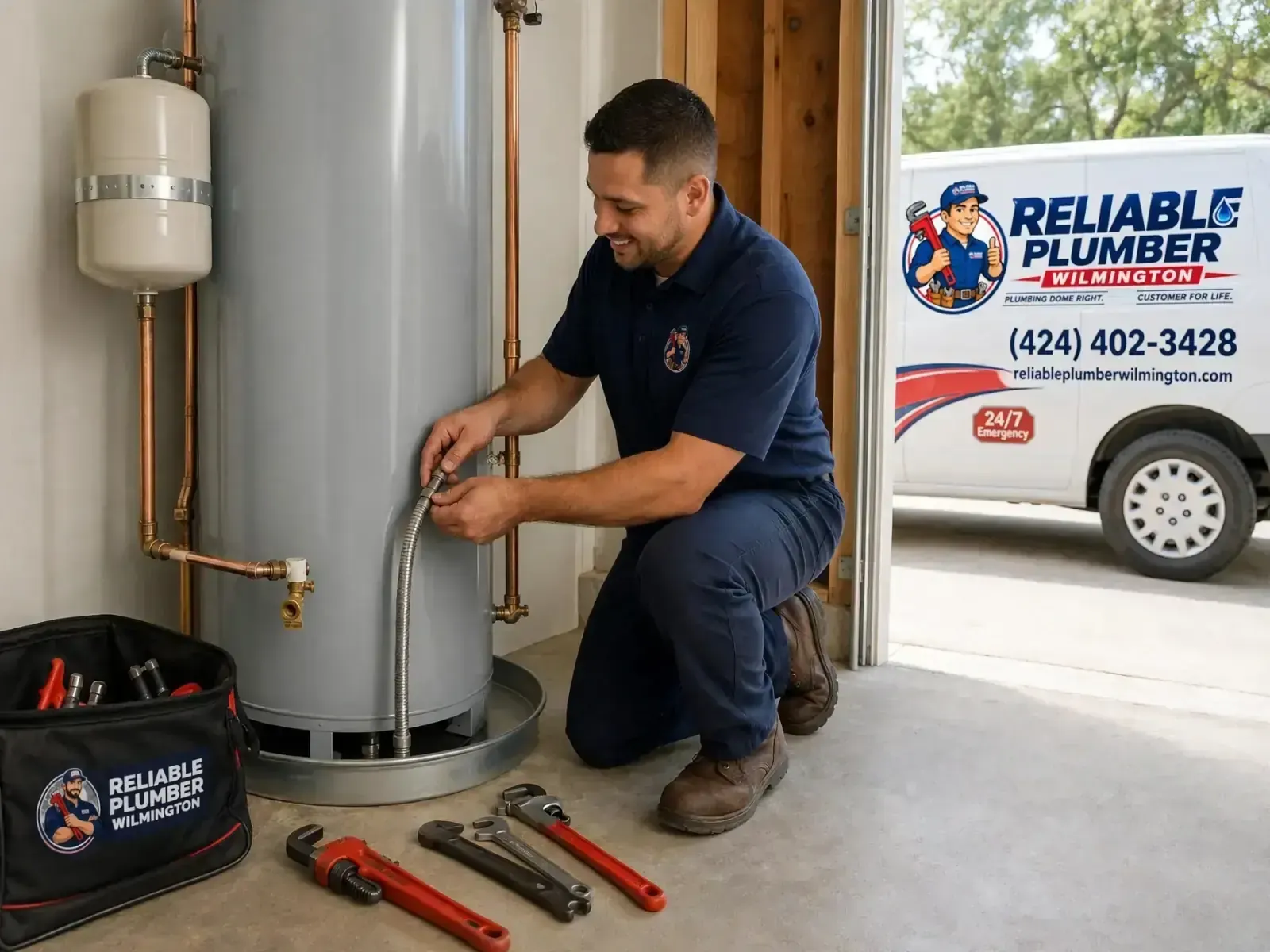
A citywide median build year of 1963 puts most of Torrance on the galvanized-to-copper boundary, and the Olmsted Tract sits well behind it. Galvanized steel past its 30-to-40-year life shows rust-tinted water and pressure that has fallen across the whole house; copper shows pinholes instead. In the older blocks the small footprint of an 800-to-1,200 square foot bungalow works in your favour, since there is simply less run to replace.
Rust-tinted water, pressure falling across the whole house, or a second and third leak on the same ageing supply system.
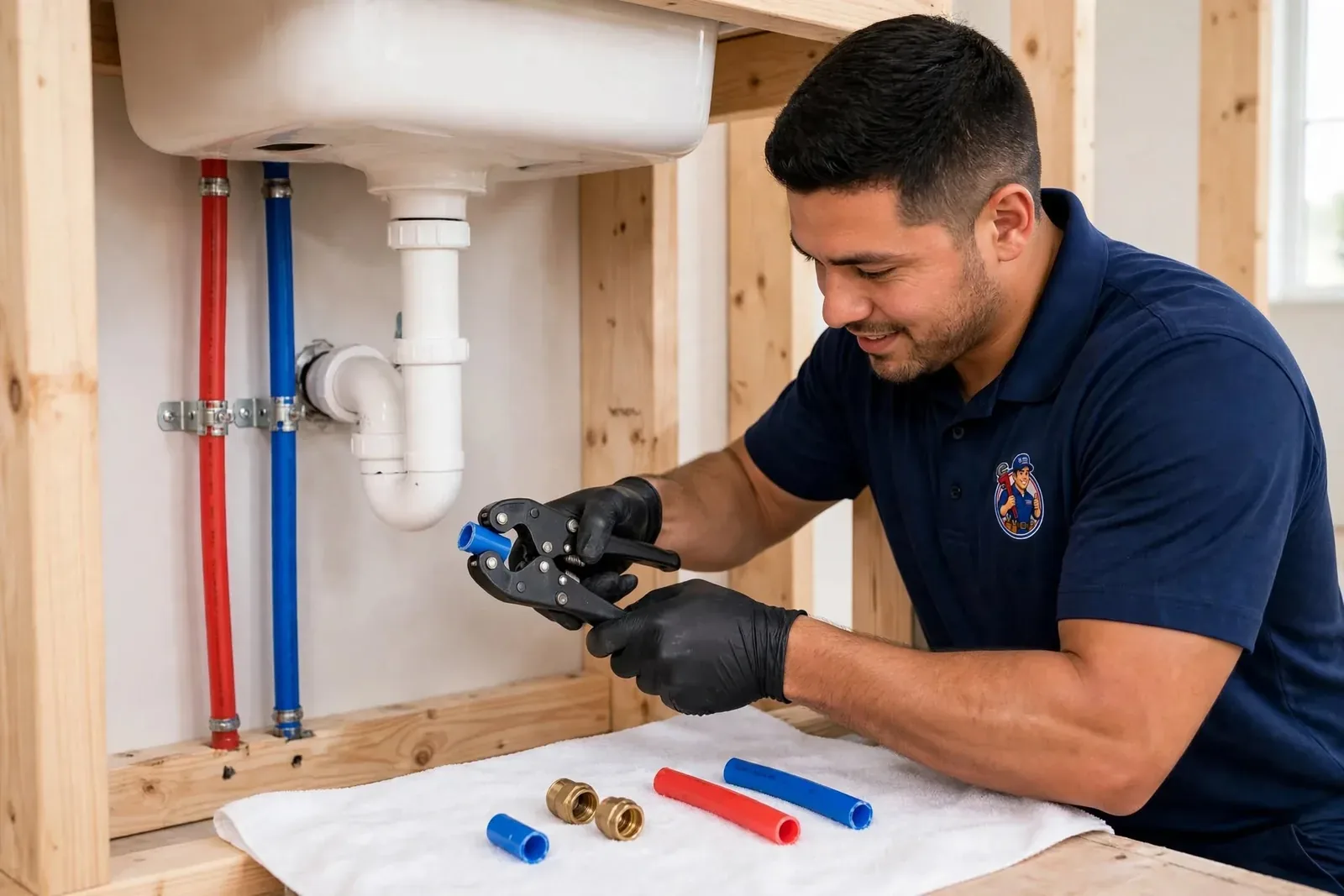
Slab leaks are a postwar-Torrance problem rather than a citywide one - the bungalows in the Olmsted Tract are on raised foundations and cannot have one. If your home dates from the 1950s or later, a warm patch on the floor or running water with everything closed points at a supply line in the slab, and locating it precisely is what keeps the concrete work proportionate.
A warm patch on the floor, water audible with every fixture closed, or an unexplained bill increase on a slab-on-grade property.

Pressure follows pipe condition, not the calendar. Sound residential lateral takes 2,500 to 3,000 PSI, but the century-old cast iron under Old Torrance is run at 1,500 to 2,000 PSI instead. Given the city holds you responsible for the lateral all the way to the main, clearing it properly rather than punching a hole through a blockage is worth the difference.
Blockages that keep returning, kitchen lines with a grease history, and scaled cast iron where cabling only bores a channel.

Torrance splits close to evenly between owners and renters - about 54.6% owner-occupied against 45.4% rented - so fixture calls come from both directions here. On anything predating 1994 the maths is simple: 3.5 gallons a flush or more against California's 1.28 gallon limit, and SB 407 brings replacement into scope during a remodel. In the older bungalows the rough-in spacing is often non-standard and worth measuring before ordering.
Running or phantom-flushing toilets, weak flush, water seeping at the base, or replacing a pre-1994 fixture using 3.5 gallons a flush.
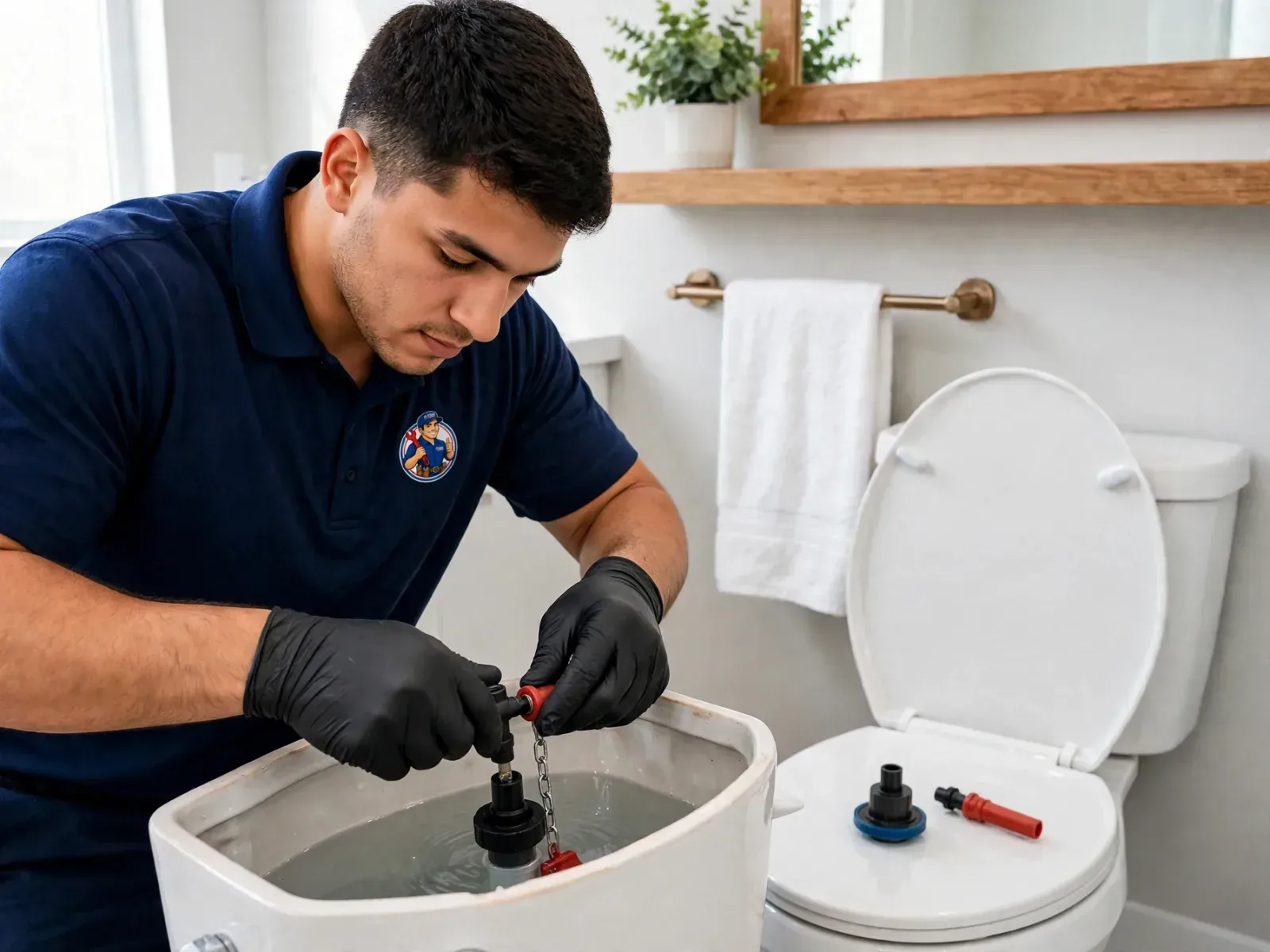
Roughly 89% of Torrance Municipal Water's supply is imported from MWD via the Colorado River and Northern California, and that blend carries enough mineral to wear cartridges and valve seats faster than manufacturer guidance assumes. If a tap repaired two years ago is dripping again, the water is the reason rather than the workmanship.
Dripping spouts, stiff handles, leaking handle bases, or flow that has dropped at one fixture while the rest of the house is fine.
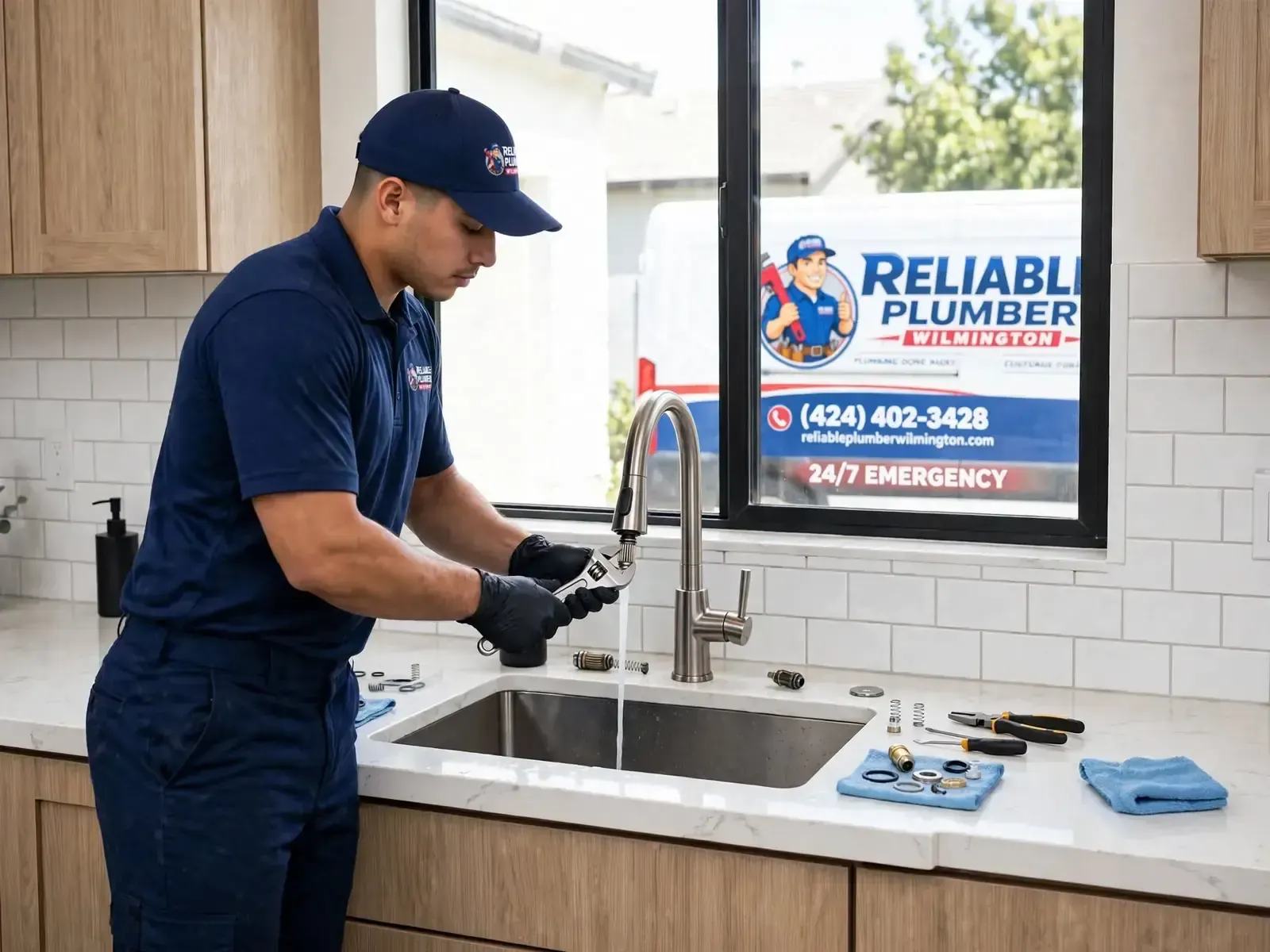
We reach Torrance from the Harbor Area, and the first move is the same wherever you are in the city: close the main shut-off. On a raised-foundation bungalow it is usually near the front of the house or by the meter at the kerb; on a postwar tract home it is generally on the street side. Keep people clear of standing water near outlets while you wait.
Burst supply lines, sewage backing up, main line breaks, and water heater failures - anything where water is causing damage right now.

Covering a city properly means knowing what changes at its boundary. Here, several things do.
Old Torrance bungalows and 1960s tract homes present the same complaints for completely different reasons. Crawlspace or slab decides the method, so we establish which you have before quoting anything.
1912 Olmsted Tract · 1963 medianThe city holds the owner responsible for the lateral including the connection to the public main. That is further than most neighbouring cities go, and it changes both the scope and the permits before work starts.
Owner responsible to the mainPrivate-side repair takes an "Alter Building Sewer" plumbing permit; right-of-way work takes a Construction and Excavation permit. Jobs crossing the property line need both, and we plan for that rather than discovering it mid-dig.
Torrance Community DevelopmentTorrance Municipal Water serves most of the city, but California Water Service covers portions of it too. Which one you are on decides who to ask about a leak adjustment - and neither of them is LADWP.
TMW · Cal Water Rancho DominguezCamera footage on sewer recommendations, thermal and acoustic on hidden leaks, findings in writing. When the lateral under the street is your responsibility, you should be able to see exactly what you are paying to fix.
Camera · written findingsTorrance covers 21 square miles and around 59,411 housing units, and the era of each neighbourhood is the single most useful thing to know before diagnosing it.
Old Torrance is the original 1912 Olmsted Tract, and its Craftsman and California bungalows around El Prado, Gramercy and Andreo sit on raised foundations with crawlspaces - original galvanized supply and cast iron or clay drains are still common, and the compact 800-to-1,200 square foot footprint keeps repipe runs short. Almost everything else is postwar and slab-on-grade, which is why the citywide median construction year is 1963. Southwood, Delthorne, Seaside Ranchos and the West Torrance tracts are the classic 1950s and 1960s development where slab leaks and the galvanized-to-copper transition both show up. Hollywood Riviera and Walteria sit on the higher ground toward the Palos Verdes hillside, where elevation change affects both pressure and drainage. The industrial districts along the eastern edge reflect Olmsted's original plan, which put the factories downwind of the housing.
Licensed, bonded and insured · 24/7 dispatch · diagnosis before price · findings in writing
Five categories covering everything from a slow drain to a full repipe.
We reach Torrance from Wilmington 90744, and cover 30 cities across Los Angeles County and north Orange County. These are the communities closest to Torrance.
Coverage, permits, water and what is specific to this city.
Yes, across the whole city - Old Torrance, West and North Torrance, Southwood, Walteria, Hollywood Riviera and the rest. We work from the Harbor Area, so the South Bay is regular territory rather than the edge of a map.
Yes, and further than in many neighbouring cities. The City of Torrance policy states that property owners are responsible for maintaining and repairing their sewer lateral including the connection to the public sewer main, so a failure in the right-of-way is still the owner's to fix.
Two, potentially. Repairs on private property between the building and the property line take an "Alter Building Sewer" plumbing permit. Work in the public right-of-way from the property line to the main takes a Construction and Excavation permit. A repair spanning both needs both, issued through the Torrance Community Development Department.
Mostly Torrance Municipal Water, a community-owned utility established in 1921 and a founding member of the Metropolitan Water District, serving about 106,460 residents. But not all of it - California Water Service's Rancho Dominguez District covers portions of Torrance too, so check your bill before assuming.
No. Neither agency serves Torrance, so there is no LADWP leak billing adjustment and no LASAN sewer lateral rebate here. Water questions go to Torrance Municipal Water or California Water Service depending on your service address.
Because they are around fifty years older than the rest of the city and built differently. The 1912 Olmsted Tract bungalows sit on raised foundations with crawlspaces and often still run original galvanized supply and cast iron or clay drains. They cannot have a slab leak, but they are far more likely to show rust-narrowed pipe and scaled drain lines.
In the postwar neighbourhoods, yes - the citywide median construction year is 1963 and those tracts are slab-on-grade. In Old Torrance they are not possible at all, since those homes are on raised foundations. Which half of the city you are in decides the answer.
The City of Torrance maintains its own collection system of roughly 280 miles of pipeline, 6,171 manholes and nine lift stations, then conveys flow through Los Angeles County Sanitation Districts interceptors to the A.K. Warren Water Resource Facility in Carson.