Lynwood combines 1950s pipe with some of the largest households in the region. That pairing matters more than either fact on its own: a system sized for a smaller family is being asked to do considerably more work.











The most useful thing to understand about Lynwood is load. Across 15,206 occupied housing units the most common household size is four people, and the second most common is five - the median renter household runs to 3.93. Set that against a median construction year of 1952 and you have a plumbing system designed around mid-century assumptions about family size and fixture use, now serving noticeably more people. It shows up in predictable ways: hot water that runs out partway through a morning, pressure that drops when a second fixture opens, drains that block more often than the neighbours might expect, and fixture parts that wear through faster because they are simply used more.
The pipe itself is the other half. A 1952 median puts Lynwood squarely in galvanized-steel supply and cast-iron drain territory - the same materials and the same failure curve we work with daily in Wilmington. Galvanized has a practical service life of around thirty to forty years, so anything original here is running some fifty years beyond it, corroding inward until the working diameter is a fraction of what it was. Add heavy daily demand to a pipe that has already narrowed and the pressure complaints stop being mysterious.
Jurisdiction is straightforward once you know it. Lynwood incorporated on 16 July 1921 as its own city, so permits come from the City of Lynwood - not LADBS. The City of Lynwood Water Division supplies the water, drawing on local deep wells plus surface water from the Colorado River and the State Water Project purchased through the Metropolitan Water District. Sewers fall under Los Angeles County Sanitation District No. 1. Because this is an incorporated city rather than City of Los Angeles territory, the LASAN sewer lateral rebate and the LADWP billing adjustment do not apply here.
Reliable Plumber Wilmington covers Lynwood from the Harbor Area. We handle drain cleaning, sewer line repair, leak detection, water heater work, repiping and everything alongside them - diagnosis before price, camera evidence on sewer work, and the finding written down.
Lynwood splits close to evenly between owners and renters, at roughly 47.8% owner-occupied against 52.2% rented, so we work with homeowners, landlords and tenants in similar measure. California requirements are the same statewide regardless: SB 407 on fixture replacement during a remodel, the 80 psi pressure ceiling with a regulator required above it, and seismic strapping on water heaters.
Two things stack up in Lynwood. Cast iron drain lines from around 1952 have lost working diameter to seventy years of scale, and the households using them are larger than average - four and five people are the most common sizes here. More daily use through a narrower pipe produces blockages on a shorter cycle, which is why clearing the obstruction without addressing the bore rarely holds for long.
Slow or blocked kitchen, bath, shower and laundry lines - and any drain that has already been cleared once and blocked again.
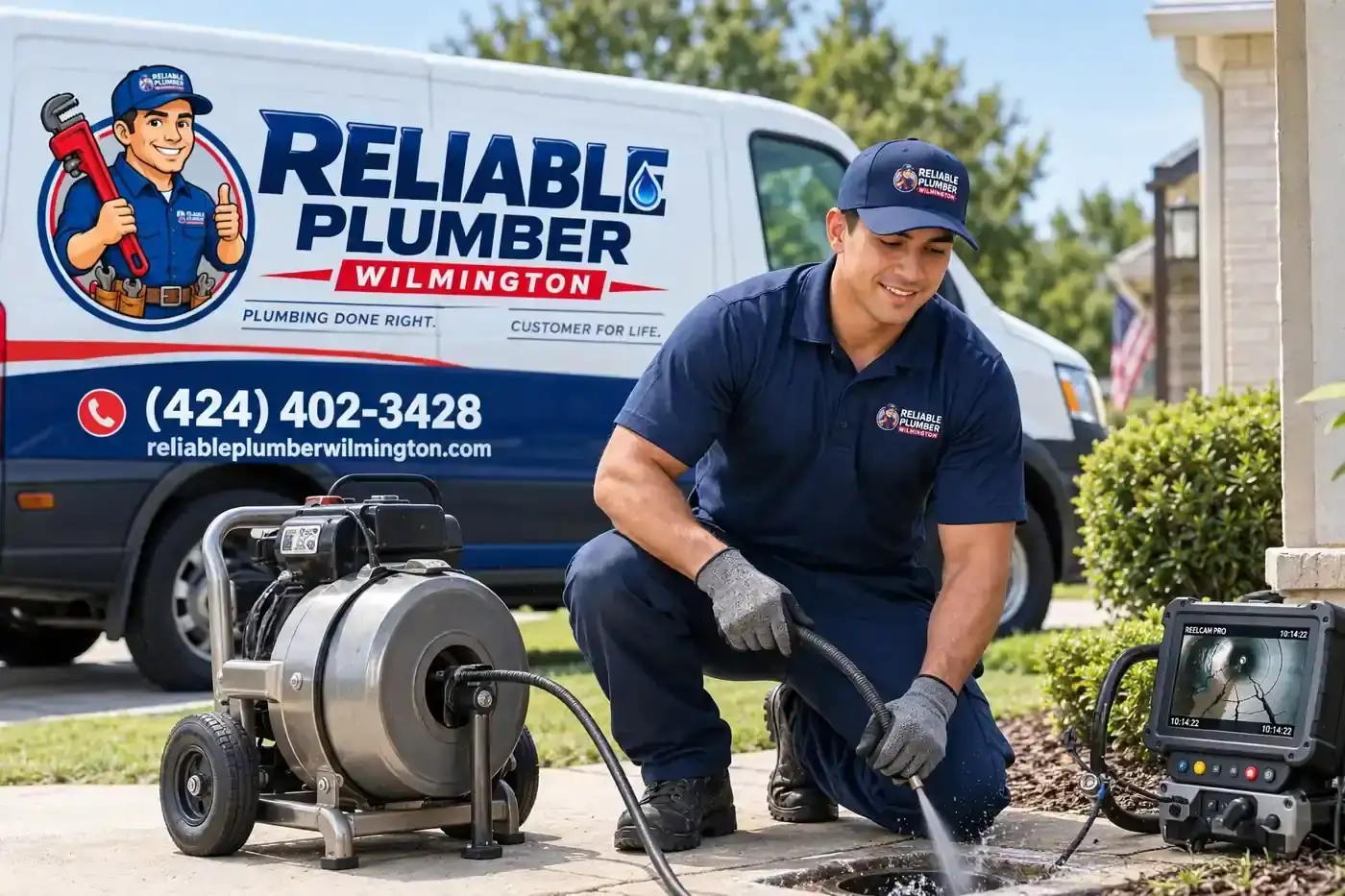
Sewers in Lynwood fall under Los Angeles County Sanitation District No. 1, and permits come from the City of Lynwood rather than LADBS. Laterals of this age are usually cast iron or clay, where the failures are root intrusion at joints, offsets from ground movement, and sections that have corroded through. A camera establishes which before anyone quotes a scope.
Recurring backups, several fixtures slow at once, sewer odour, or a line a camera has shown to be cracked, offset or root-invaded.
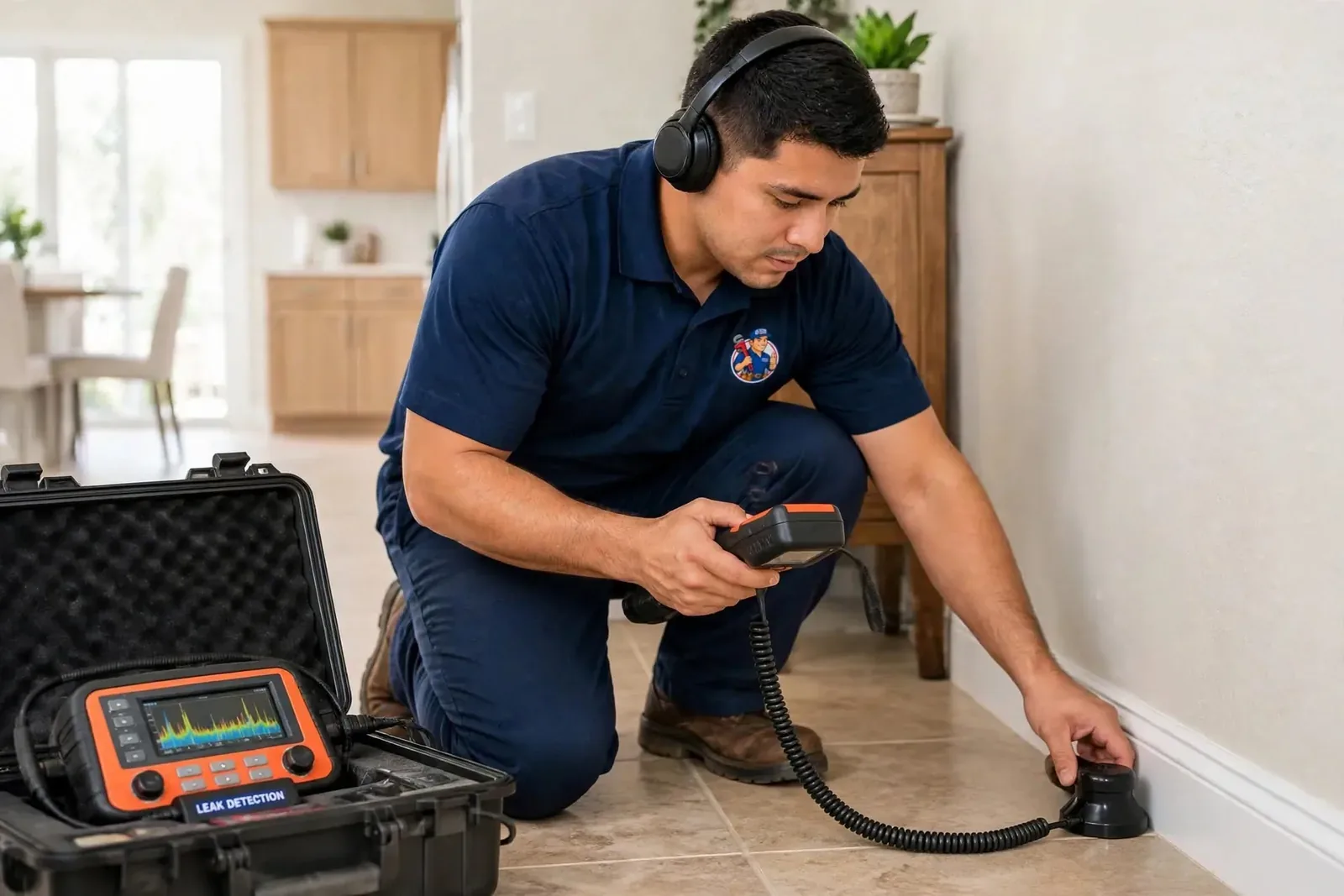
Galvanized supply pipe fails from the inside out, so a Lynwood leak often begins as a slow weep inside a wall rather than a sudden burst. The signals are a bill that climbed without a change in household routine, damp appearing at the base of a wall, or a meter that keeps moving with every tap closed. Acoustic listening and thermal imaging locate it without opening more wall than necessary.
A water bill that jumped with no change in use, running water with every tap closed, a warm patch on the floor, or a stain with no obvious source.
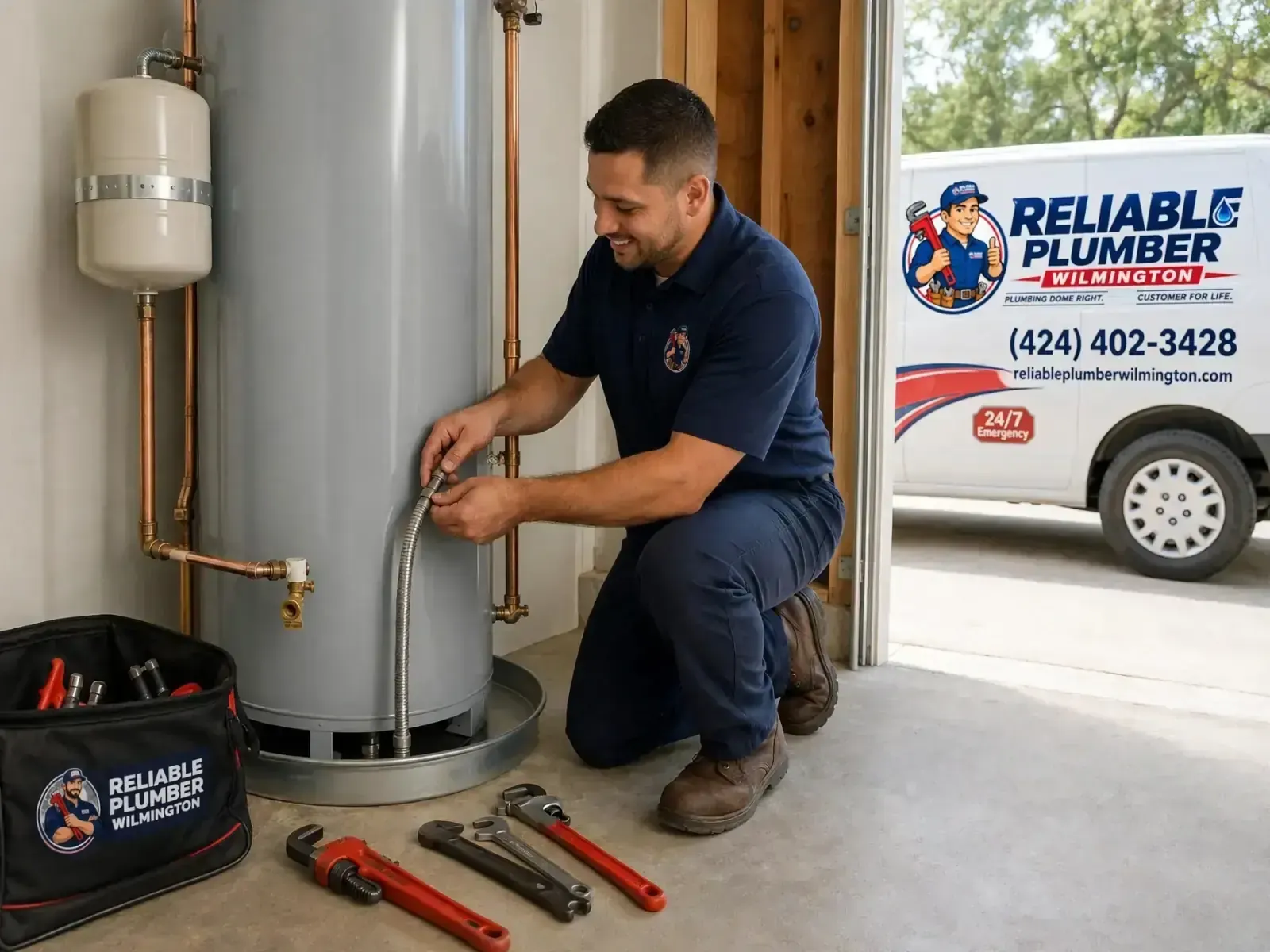
This is where household size matters most in Lynwood. A 40-gallon tank sized for a smaller family will not carry four or five people through consecutive morning showers, and the complaint that follows is usually blamed on the heater when it is actually a sizing and recovery-rate question. Permits come from the City of Lynwood. Strapping is California state code: two straps at the upper and lower third into framing, the lower at least four inches above the gas control.
No hot water, rumbling or popping, water pooling at the base, or a unit past twelve years old that is worth replacing on your schedule rather than its own.
Lynwood is close to a textbook repiping case. Original galvanized steel from around 1952 is running roughly fifty years past its thirty-to-forty-year service life, and heavier-than-average daily demand accelerates what corrosion has already started. Rust-tinted water at first draw, pressure that falls across the whole house, and a second and third leak arriving soon after the first are the point at which patching stops being the cheaper option.
Rust-tinted water, pressure falling across the whole house, or a second and third leak on the same ageing supply system.
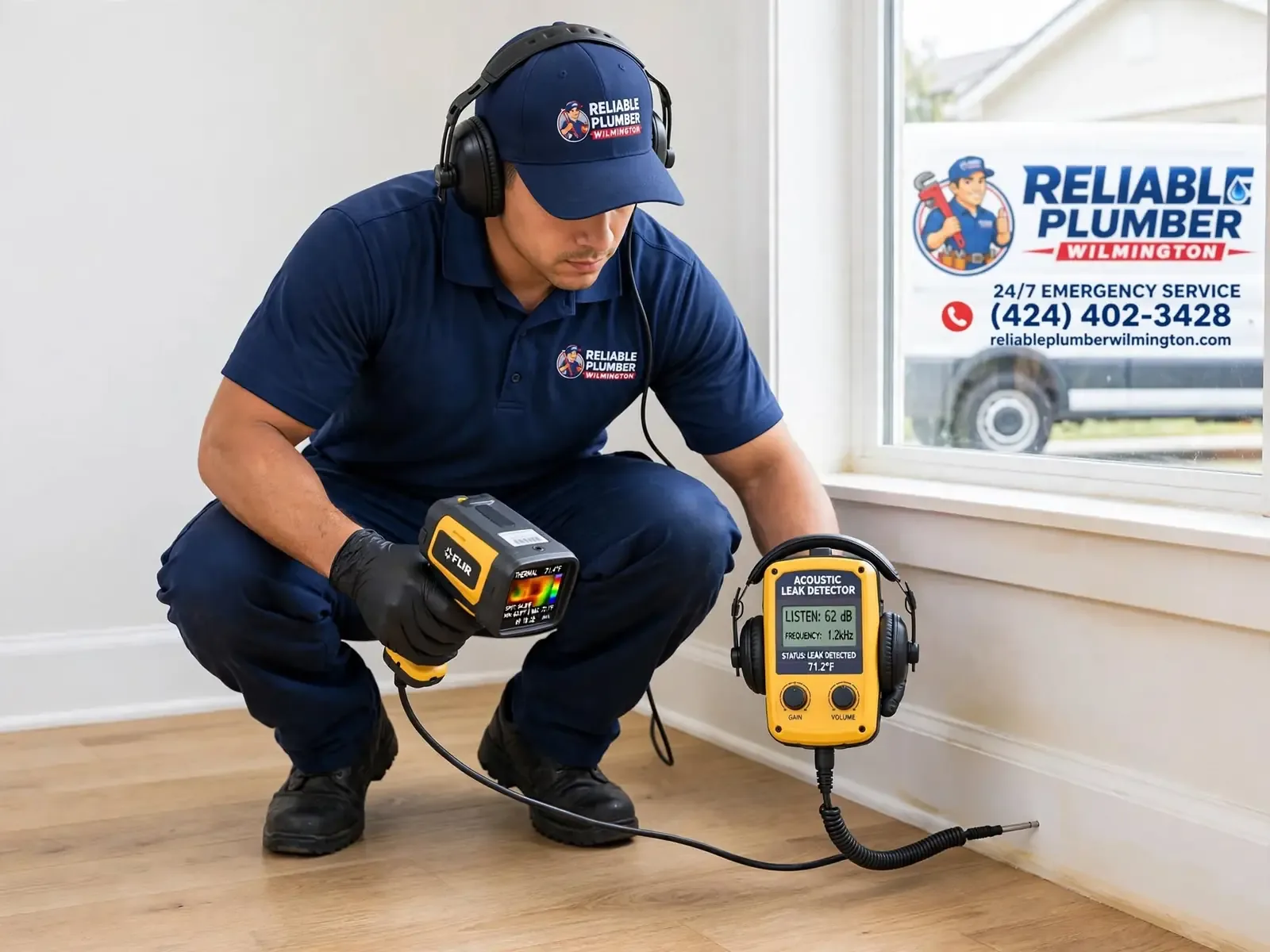
Early 1950s construction here is a mix, so the first question is whether your home sits on a slab or a raised foundation. Where it is slab, a warm patch underfoot or water audible with every fixture closed points to a supply line in the concrete - and with galvanized pipe of this age the cause is usually corrosion working through rather than ground movement.
A warm patch on the floor, water audible with every fixture closed, or an unexplained bill increase on a slab-on-grade property.
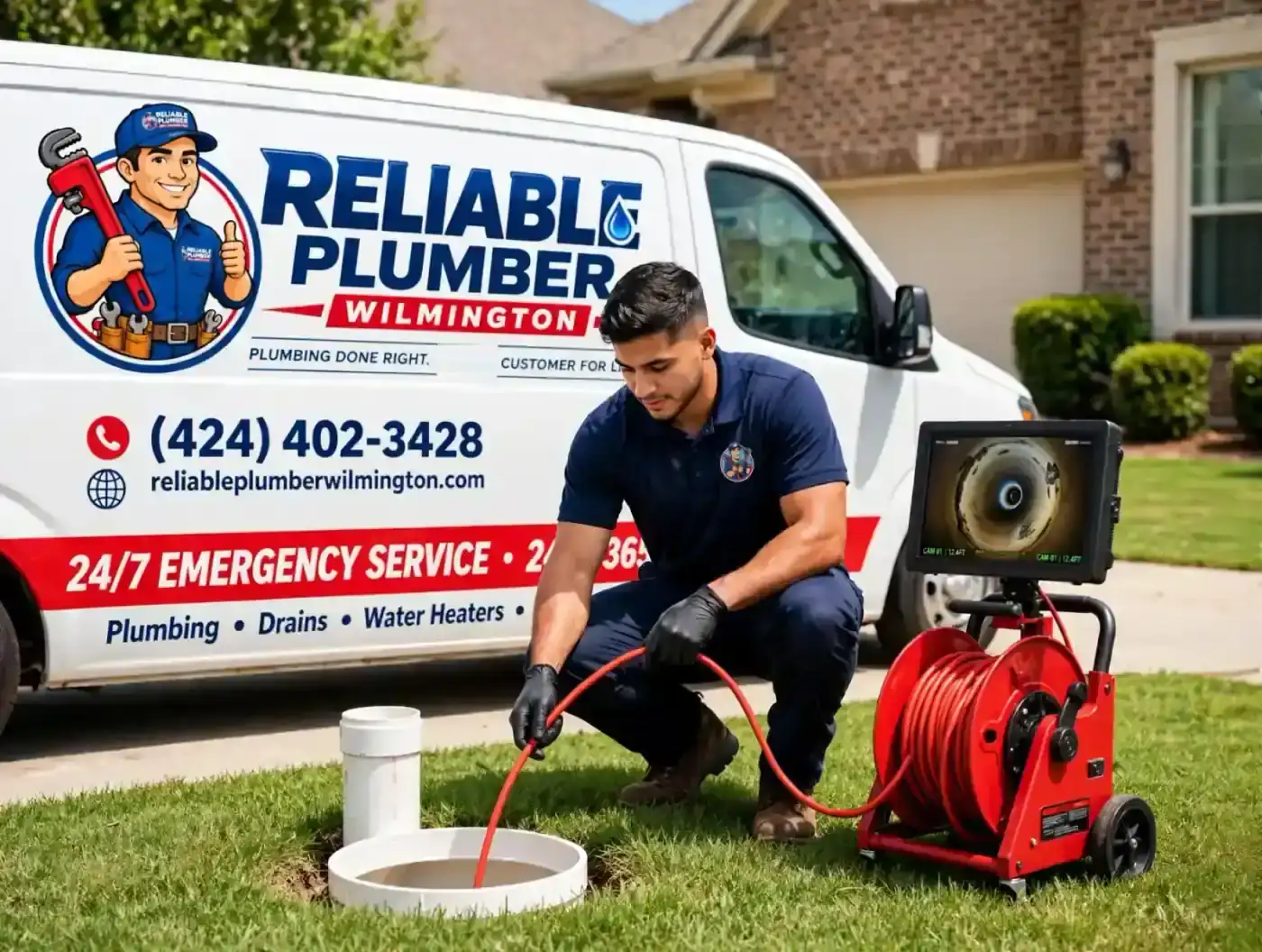
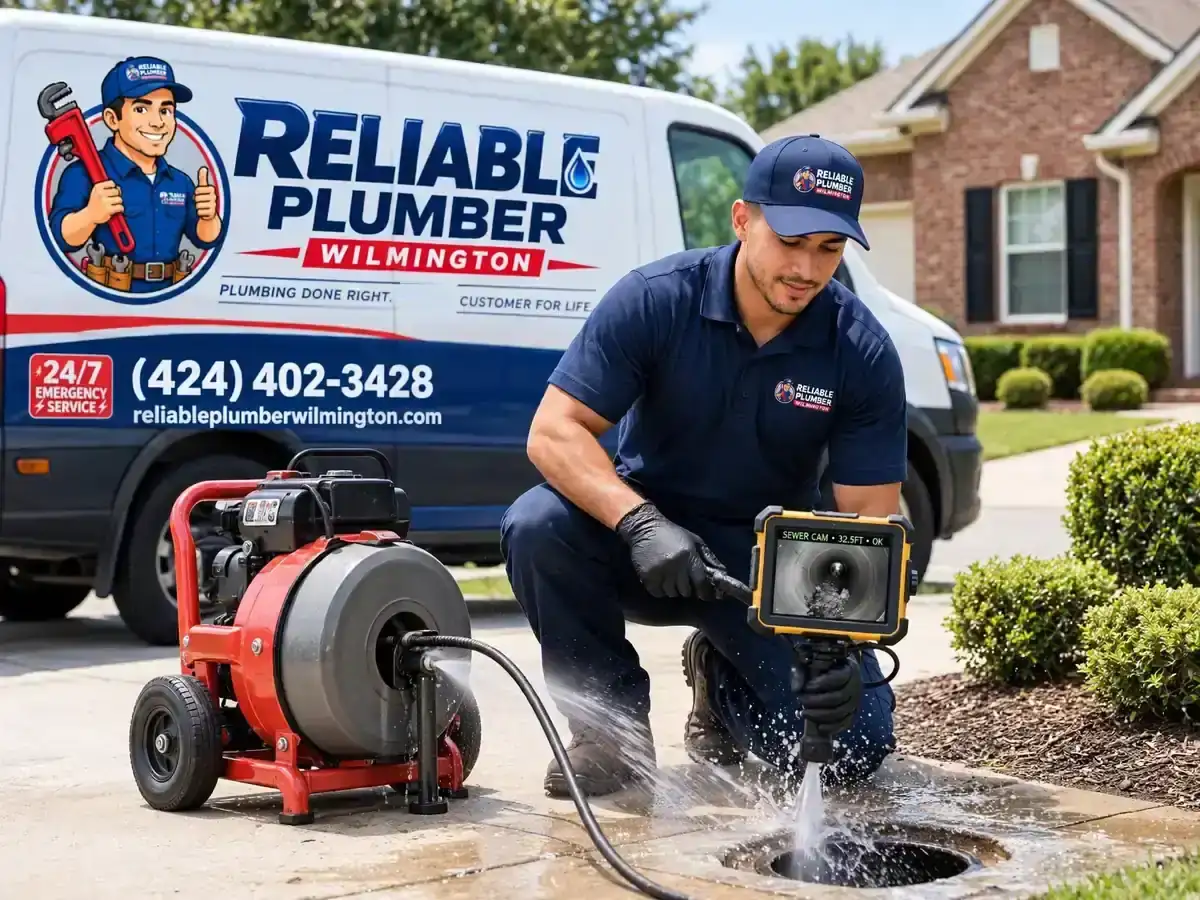
Pressure is set from the camera, not the job type. Seventy-year-old cast iron in Lynwood is run at 1,500 to 2,000 PSI rather than the 2,500 to 3,000 PSI a sound modern lateral will take, because the aim is to strip scale and grease without finding the weakest section. In a busy household this is also the service that buys the longest interval between callbacks.
Blockages that keep returning, kitchen lines with a grease history, and scaled cast iron where cabling only bores a channel.
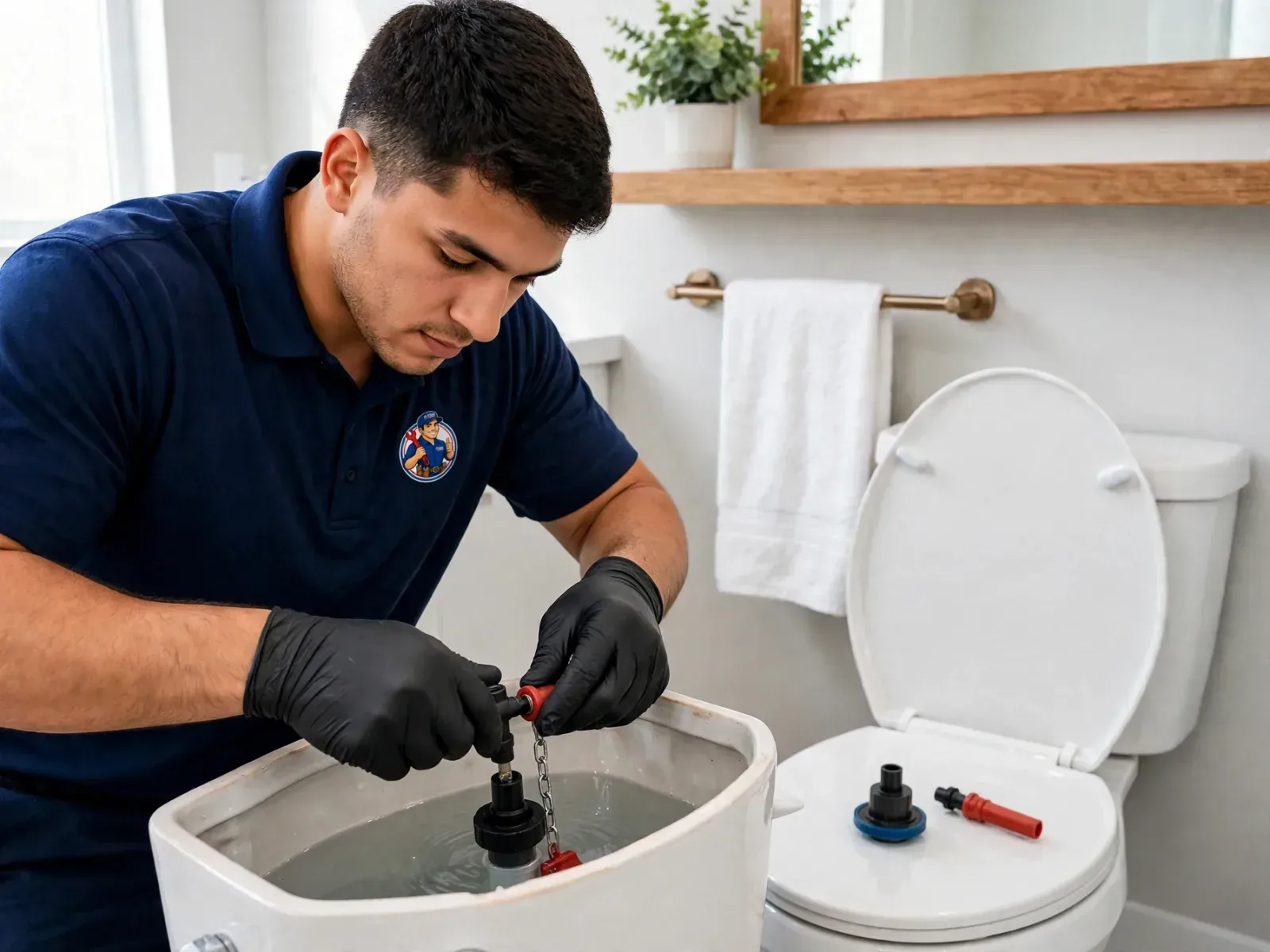
Fixtures in Lynwood do more work than average - four and five person households are the two most common here - so flappers, fill valves and supply lines wear through faster than the manufacturer's expected life. Anything predating 1994 is also flushing 3.5 gallons or more against California's 1.28 gallon standard, and SB 407 brings replacement into scope during a remodel.
Running or phantom-flushing toilets, weak flush, water seeping at the base, or replacing a pre-1994 fixture using 3.5 gallons a flush.
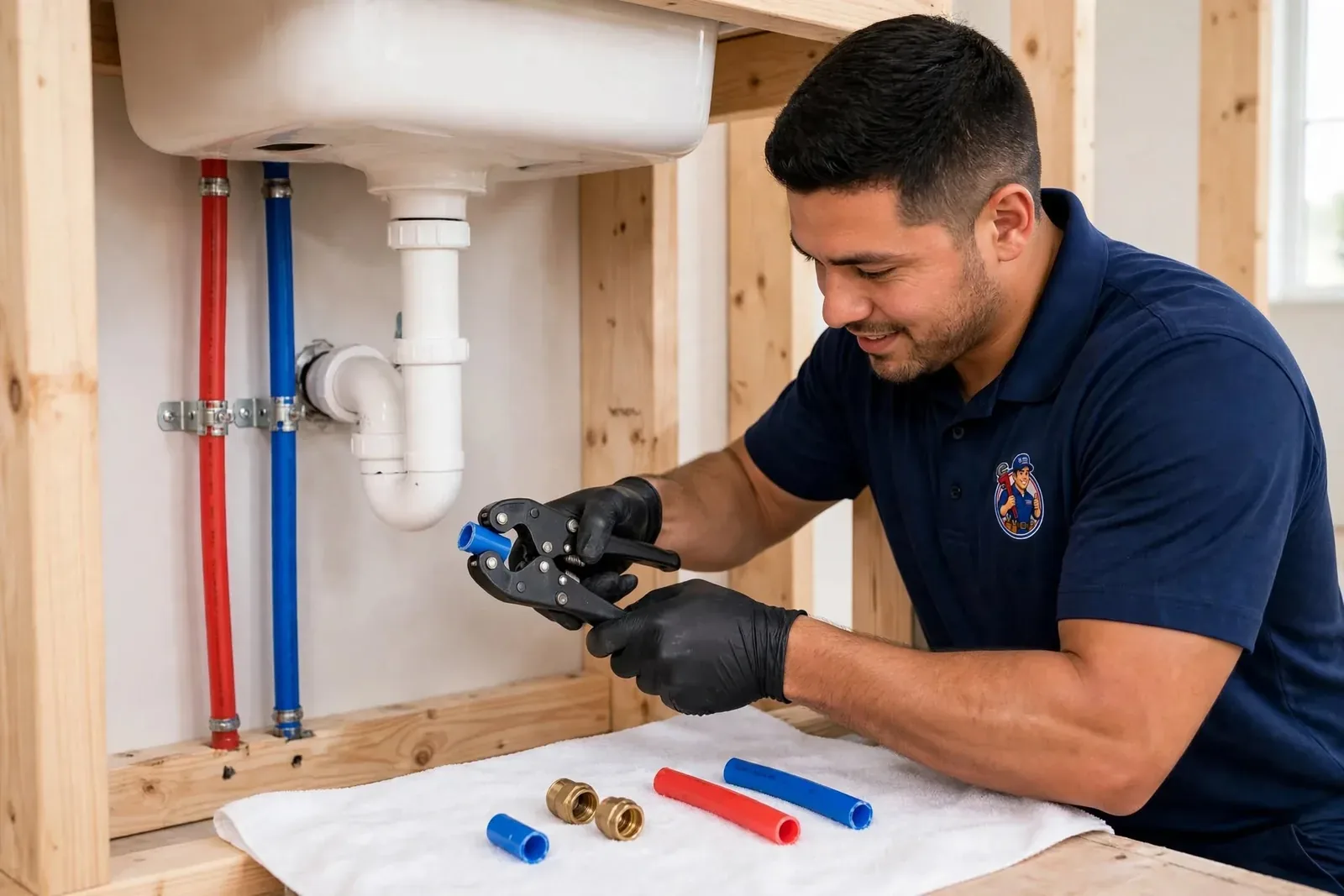
Lynwood blends local deep-well groundwater with Colorado River and State Water Project supply bought through MWD, and that mineral content wears cartridges and seats. Where the supply pipe is still galvanized there is a second factor on top: corrosion products carried out of the pipe will chew through a new cartridge regardless of its quality.
Dripping spouts, stiff handles, leaking handle bases, or flow that has dropped at one fixture while the rest of the house is fine.
Lynwood is a direct run from our Harbor Area base. Shut the main off first - in this housing stock it is generally at the front of the lot near the meter - and if the property is a larger household, get everyone away from standing water before we arrive rather than after. Tell the dispatcher whether it is clean water or sewage so we bring the right equipment.
Burst supply lines, sewage backing up, main line breaks, and water heater failures - anything where water is causing damage right now.

Covering a city properly means knowing what changes at its boundary. Here, several things do.
Four and five person households are the two most common in Lynwood. A water heater or fixture sized for a smaller family is not faulty, it is undersized - and that is a different conversation with a different fix.
Median renter household 3.93A median construction year of 1952 means galvanized supply and cast iron drains, the same materials and the same failure curve we deal with every day in Wilmington. This is familiar ground for us.
Median build year 1952Lynwood incorporated in 1921, so permits come from the City of Lynwood, water from the city's own division and sewers from LA County Sanitation District No. 1. The LA City programmes do not reach here.
Incorporated 16 July 1921Low pressure in Lynwood usually has two causes at once - a bore narrowed by decades of corrosion and more fixtures running at the same time. Treating only one of them leaves the complaint in place.
Pressure tested on siteCamera footage on sewer recommendations, acoustic and thermal on hidden leaks, findings written down so they can be passed to a landlord or manager without anything getting lost.
Camera · written findingsLynwood is compact and densely built, and the housing across it dates from broadly the same period.
Lynwood packs 15,206 occupied units into a small footprint, and the housing across the city shares a build era rather than differing sharply between neighbourhoods - the median construction year is 1952 throughout. That consistency means the diagnosis usually starts in the same place: galvanized supply pipe well past its service life and cast iron drains that have lost diameter to scale. What varies is occupancy. Household sizes here are among the larger ones in the region, with four-person households the most common and five-person close behind, so two identical houses on the same street can be on very different maintenance clocks depending on how many people they serve. Small lots and close-set homes also limit excavation access, which is why trenchless options are worth pricing on sewer work rather than assuming an open dig.
Licensed, bonded and insured · 24/7 dispatch · diagnosis before price · findings in writing
Five categories covering everything from a slow drain to a full repipe.
We reach Lynwood from Wilmington 90744, and cover 30 cities across Los Angeles County and north Orange County. These are the communities closest to Lynwood.
Coverage, permits, water and what is specific to this city.
Yes. Lynwood is a direct run north from our Harbor Area base, and it shares much of the housing stock and pipe material we work with in Wilmington every day.
Often because the tank is sized for a smaller household than the one using it. Four and five person households are the two most common in Lynwood, and a 40-gallon heater will not carry that many consecutive showers. That is a sizing and recovery-rate question rather than a faulty heater, and the fix is different.
The City of Lynwood Water Division. It draws on local deep wells plus surface water imported from the Colorado River and the State Water Project, purchased through the Metropolitan Water District of Southern California.
Los Angeles County Sanitation District No. 1. Building and plumbing permits come from the City of Lynwood, which incorporated as its own city on 16 July 1921.
No. Both are City of Los Angeles programmes and Lynwood is a separately incorporated city, so neither LA Sanitation nor LADWP serves it. Water questions go to the City of Lynwood Water Division instead.
Usually two causes together. Cast iron drain lines from around 1952 have lost working diameter to decades of scale, and Lynwood households are larger than average, so more goes through a narrower pipe. Clearing the blockage without addressing the bore tends not to hold.
Most often galvanized supply pipe that has corroded inward over seventy years, made more noticeable when several fixtures run at once in a busy household. We test pressure on site rather than guessing, because a failing regulator and a narrowed pipe produce similar complaints with different fixes.
Both. Lynwood is roughly 47.8% owner-occupied and 52.2% rented, so calls come from either side. We write findings up plainly so a tenant can hand them on and an owner can act on them.