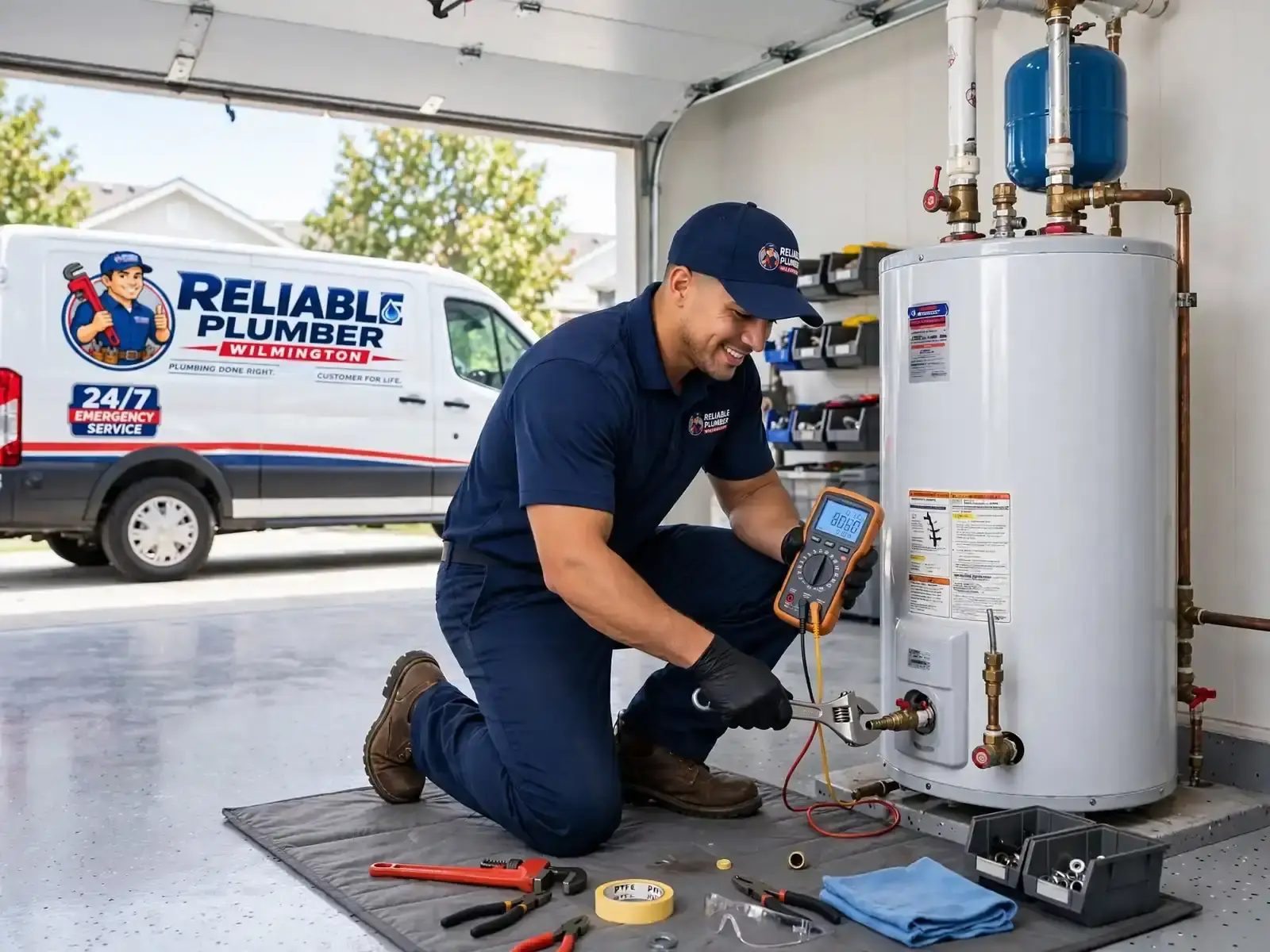
Water Heater Repair in Wilmington, CA - The Complete Guide
A water heater is a simple appliance with a small number of failure points. Knowing which one you have is most of the value of a diagnostic visit.
How the Appliance Actually Works
Cold water enters at the bottom of the tank through a dip tube. A gas burner underneath, or one or two electric elements inserted through the side, raise its temperature. Hot water is drawn from the top, where it naturally collects.
Three safety and protection components matter. The thermostat controls the target temperature. The temperature and pressure relief valve vents if either exceeds safe limits. And the anode rod - a sacrificial magnesium or aluminium rod - corrodes preferentially so the steel tank does not.
Almost every fault traces to one of those parts or to sediment interfering with heat transfer. That is why "the water heater is broken" is rarely the accurate description.
Gas Faults Versus Electric Faults
On a gas unit the sequence is pilot, thermocouple, gas control valve, burner. A pilot that will not stay lit is classically a thermocouple that has stopped sensing flame reliably, and the valve then shuts gas off as designed. No ignition at all points further up the chain to the control valve.
On an electric unit there are usually two elements and two thermostats, upper and lower. A distinctive symptom follows: lukewarm water that never gets properly hot often means the lower element has failed while the upper still works, so the tank heats at half capacity. Complete loss of hot water more often means the upper thermostat or a tripped high-limit cut-out.
Both types can also present a fault that is really a sediment problem, which is where local water quality comes in.
Why Scale Shows Up as a Repair Call
Los Angeles water runs between 7 and 16 grains per gallon depending on the source blend, and the harbor area sits toward the harder end. Minerals come out of solution as water heats and settle on the tank floor - directly above a gas burner.
That layer insulates. The burner runs longer and hotter to push heat through it, which produces the popping and rumbling people describe: water trapped underneath the sediment flashing to steam. It also reduces effective capacity, because sediment occupies volume that used to hold water. A 40-gallon tank starts behaving like a 30.
Repairing a component without removing the sediment leaves the underlying condition in place. That is why a repair visit on an older tank often includes a flush, and why maintenance is the thing that actually prevents repeat calls.
When Repair Stops Being the Answer
Three situations end the repair conversation. The tank body is leaking, which cannot be repaired at any price. The repair cost exceeds roughly half of a replacement. Or the unit is over twelve years old, at which point money spent buys time rather than reliability.
Anything else - thermostat, element, thermocouple, gas valve, T&P valve, anode rod - is a component with a part number, and replacing it on a sound tank is straightforward work. The full decision framework is on water heater replacement.
References