Anaheim is the newest housing stock we cover, and that changes the failure list entirely. A 1973 median build year means copper and plastic rather than galvanized - and it puts a large share of the city inside the polybutylene era.











Anaheim is younger than anywhere else we cover, and that is the single most useful fact about its plumbing. The median construction year across 113,613 housing units is 1973 - roughly two decades newer than the harbour neighbourhoods - so the galvanized steel that dominates Wilmington is comparatively rare here. What you get instead is copper supply and ABS drain line, and one genuine hazard the older cities do not have: homes built from the late 1970s through the mid 1990s may carry polybutylene supply pipe, a grey plastic that becomes brittle and fails at the fittings. If your home dates from that window it is worth identifying what you have before it identifies itself.
The utilities here are unusual for Orange County. Anaheim Public Utilities is the only municipally owned electric and water utility in the county - the city took over its water system in 1879 and residents established the first municipal electric utility in Southern California in 1894. It now serves over 340,000 residents, 20,000 businesses and around 25 million annual visitors. More to the point for plumbing, Anaheim's water is mostly local: it comes primarily from wells drawing on the Orange County Groundwater Basin, a 350-square-mile aquifer managed by the Orange County Water District and replenished by the Santa Ana River, local runoff, imported water and purified recycled water, with the balance bought in from the Metropolitan Water District.
Wastewater is a two-agency arrangement. The City of Anaheim maintains its own collection system through the Public Works Operations Division, then conveys flow into the Orange County Sanitation District trunk lines for treatment. OC San serves roughly 2.6 million people across central and northwest Orange County with over 380 miles of regional sewer pipe, 15 pump stations and two treatment facilities. Permits come from the City of Anaheim, and none of the Los Angeles City programmes apply here - no LASAN rebate, no LADWP adjustment.
Reliable Plumber Wilmington covers Anaheim across north Orange County. We handle drain cleaning, sewer line repair, leak detection, water heater work, repiping and the full range - diagnosis before price, camera evidence on sewer work, and the finding written down.
Anaheim is also close to evenly split between owners and renters, at about 46.2% owner-occupied against 53.8% rented, so we are used to working with landlords, property managers and tenants as well as homeowners. California requirements apply the same way they do everywhere in the state: SB 407 on fixture replacement during a remodel, the 80 psi pressure ceiling with a regulator required above it, and seismic strapping on water heaters.
A 1973 median build year means most Anaheim drain lines are ABS plastic rather than the cast iron and clay we deal with in the harbour. ABS does not scale or corrode, so a blockage here is usually a genuine obstruction - grease, wipes, roots at a joint - rather than a pipe that has quietly narrowed. That generally makes it a cheaper problem to solve, provided nobody has been feeding it a chemical drain opener.
Slow or blocked kitchen, bath, shower and laundry lines - and any drain that has already been cleared once and blocked again.
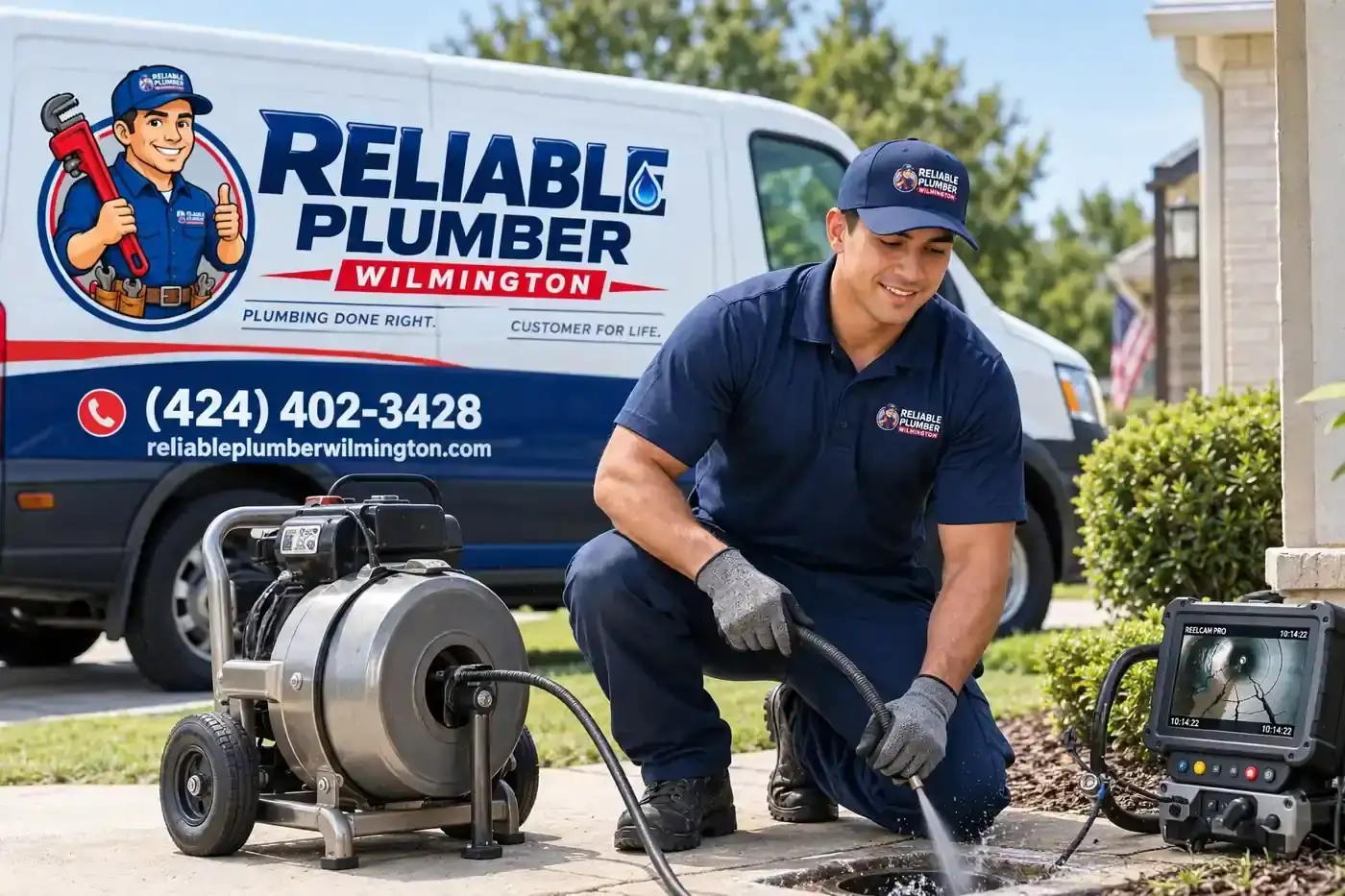
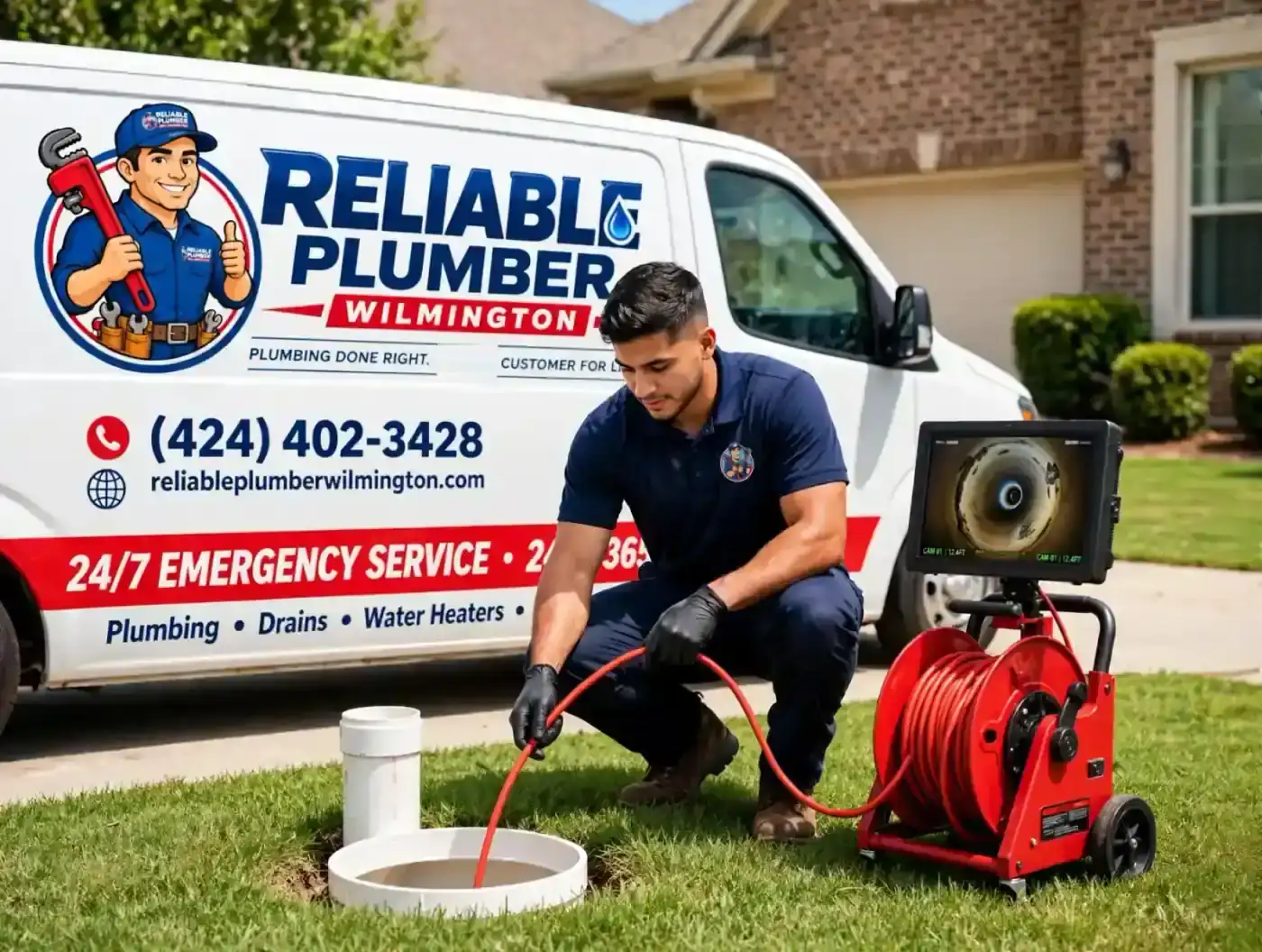
Anaheim maintains its own collection system and conveys flow into Orange County Sanitation District trunk lines, with permits issued by the City of Anaheim. The city's relative youth helps: ABS and vitrified clay laterals from the 1960s onward are usually structurally sound, so failures tend to be root intrusion at a joint or a single offset rather than a line that has reached the end of its life.
Recurring backups, several fixtures slow at once, sewer odour, or a line a camera has shown to be cracked, offset or root-invaded.
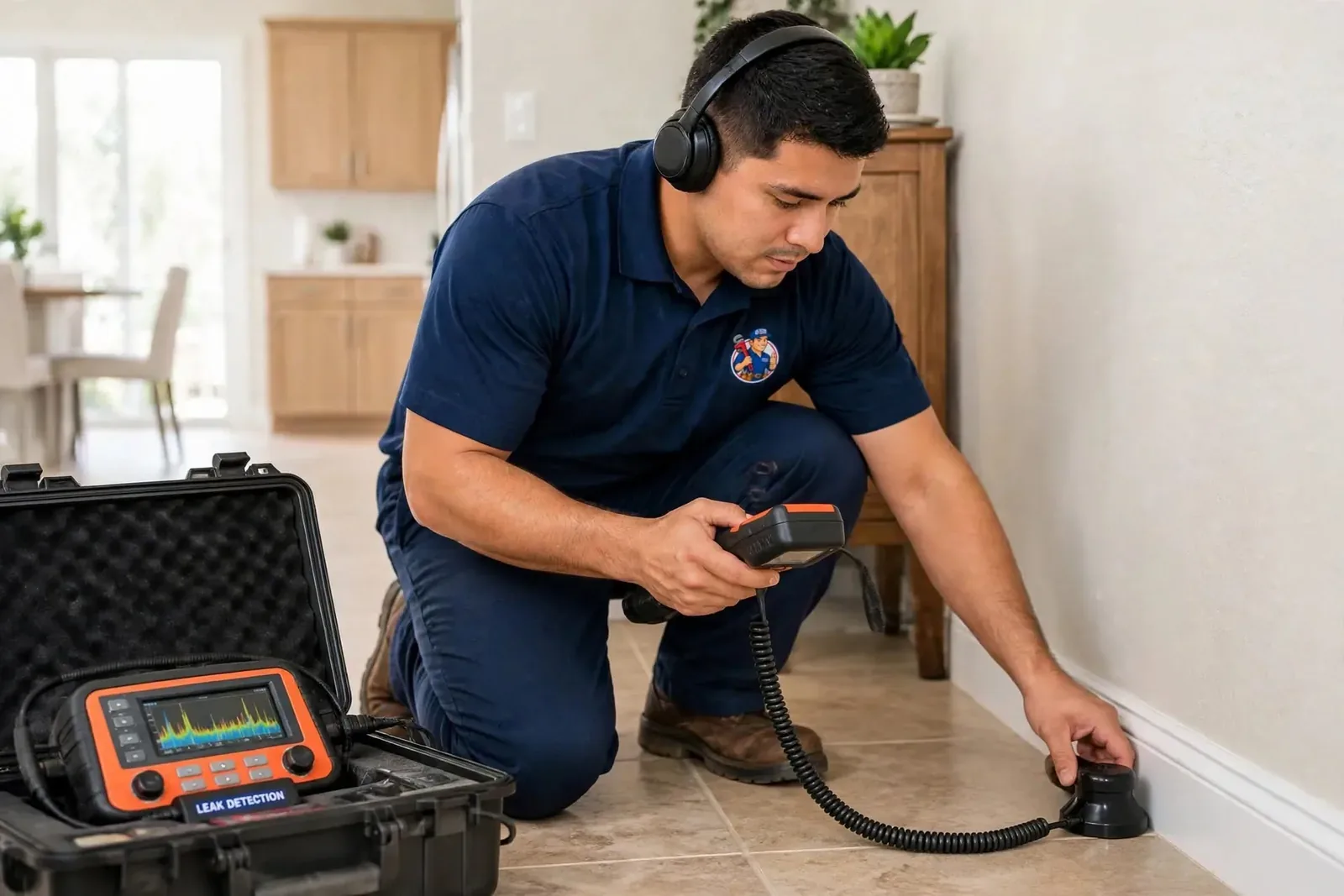
The leak we look hardest for in Anaheim is the one in the walls, not the slab. Homes built between roughly 1978 and the mid 1990s may have polybutylene supply pipe, which fails at the fittings and often behind drywall rather than underfoot. Combined with the slab-on-grade construction typical of 1970s tracts, that means both acoustic listening and thermal imaging earn their place before anything gets opened up.
A water bill that jumped with no change in use, running water with every tap closed, a warm patch on the floor, or a stain with no obvious source.
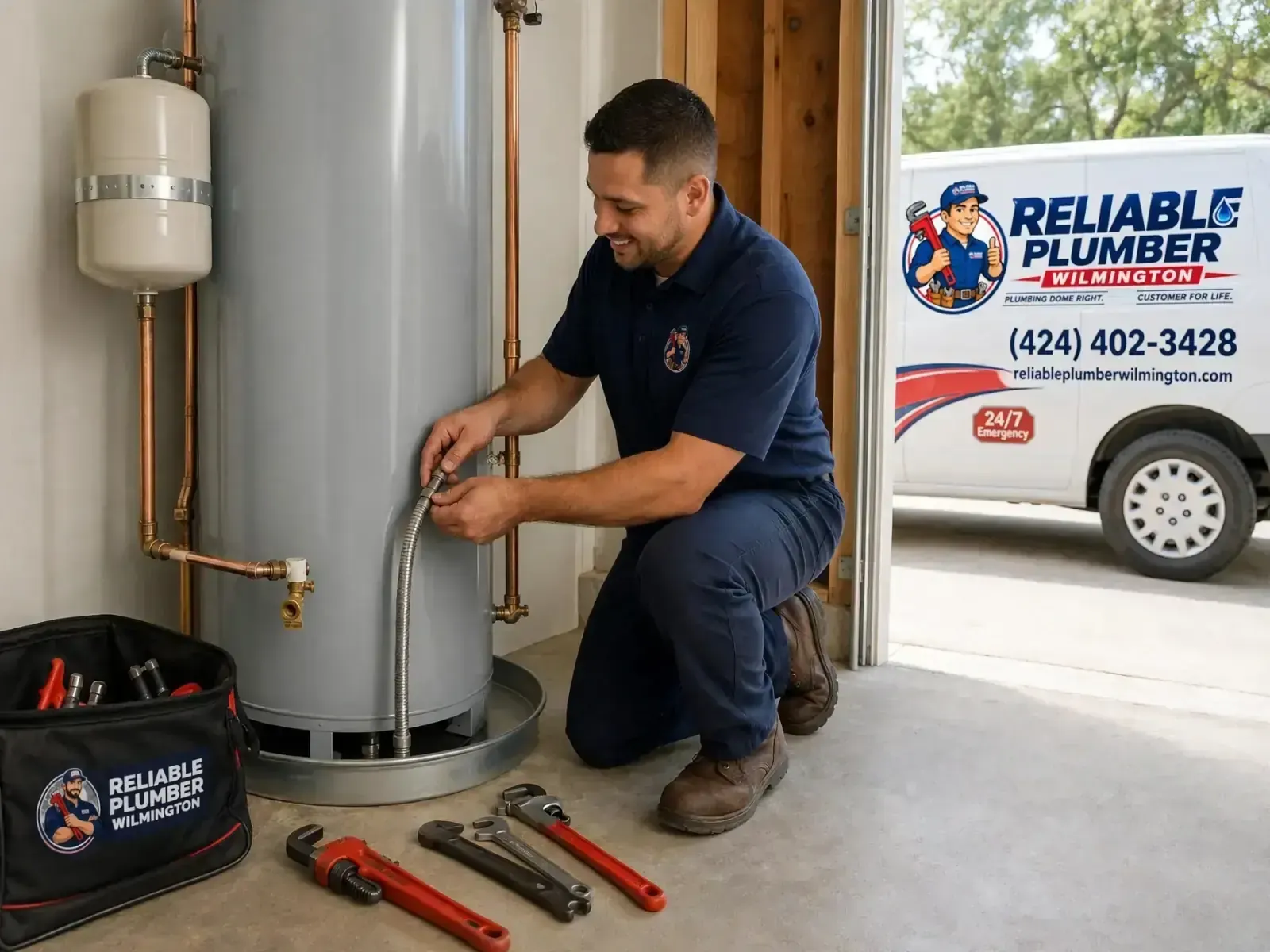
Permits here come from the City of Anaheim, and the requirements are California state code: two seismic straps at the upper and lower third anchored into framing, with the lower strap at least four inches above the gas control. Anaheim's newer housing is generally more accommodating than the harbour's - garage installations with proper clearance are the norm rather than a closet retrofit.
No hot water, rumbling or popping, water pooling at the base, or a unit past twelve years old that is worth replacing on your schedule rather than its own.
Anaheim is the one city we cover where repiping is more often about plastic than metal. Galvanized steel is uncommon given the 1973 median build year, but polybutylene from the late 1970s to mid 1990s is a real and known failure mode - grey pipe with brass or acetal fittings that becomes brittle over time. If you are seeing a second and third leak in quick succession, identifying the pipe material is the first job.
Rust-tinted water, pressure falling across the whole house, or a second and third leak on the same ageing supply system.
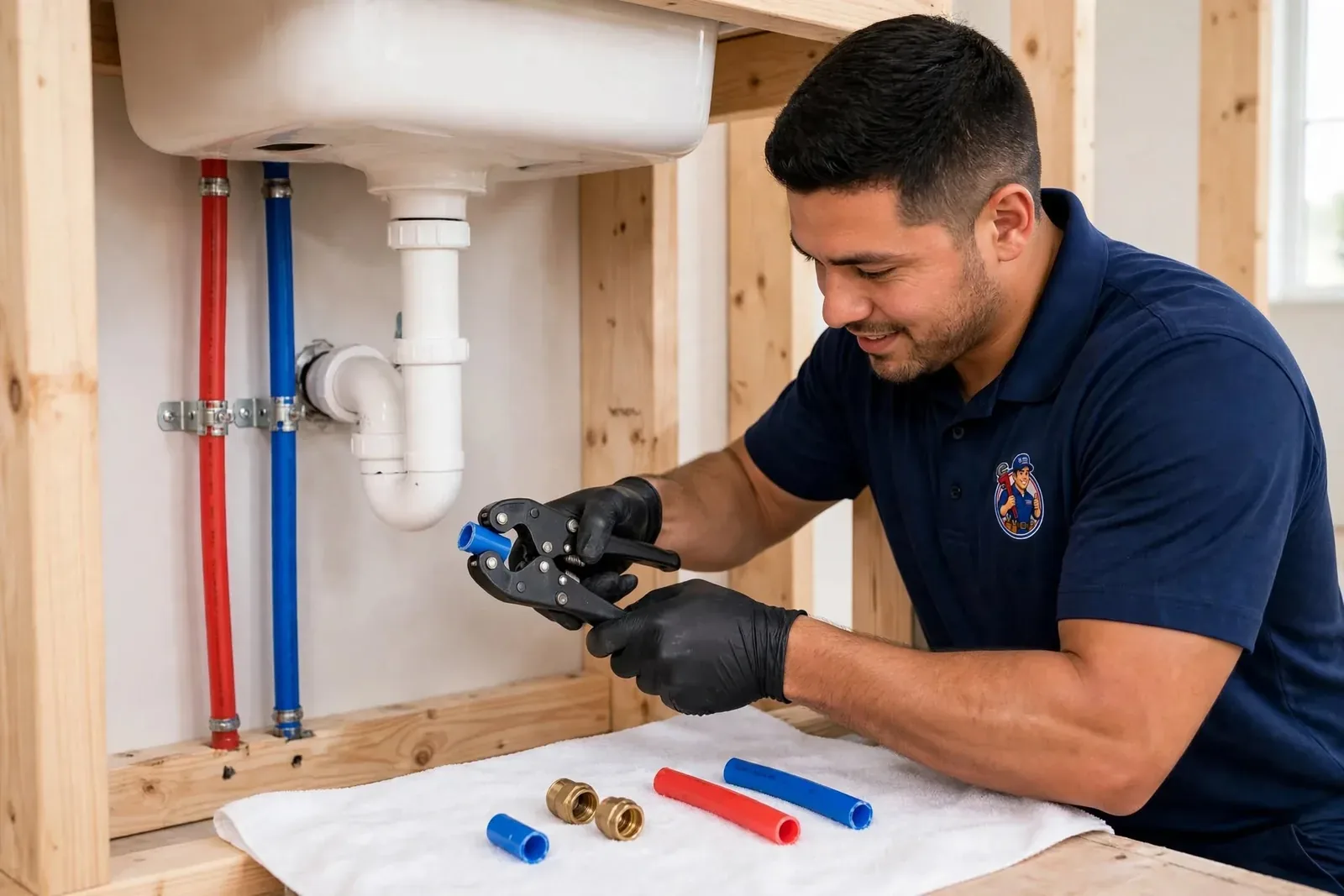
Anaheim's 1970s and 1980s tracts are almost all slab-on-grade, so a warm patch on the floor, an unexplained bill or running water with every fixture closed points underneath the concrete. Newer copper does not rule it out - soil chemistry and the shifting that comes with any slab foundation will find a weak point eventually. Precise location keeps the concrete work small.
A warm patch on the floor, water audible with every fixture closed, or an unexplained bill increase on a slab-on-grade property.

ABS drain line takes jetting well, which is an advantage Anaheim has over the older cities we serve. Sound residential lateral runs at 2,500 to 3,000 PSI and plastic handles that comfortably, so a properly jetted line here really does come back to full bore rather than merely reopened. A camera still goes in first, because the older Colony District blocks are a different proposition.
Blockages that keep returning, kitchen lines with a grease history, and scaled cast iron where cabling only bores a channel.

With Anaheim close to evenly split between owners and renters, fixture calls come from every direction - homeowners, landlords and property managers alike. Homes from the 1970s and 1980s frequently still carry 3.5 gallon or larger toilets against California's 1.28 gallon standard, and SB 407 brings replacement into scope whenever a remodel touches them.
Running or phantom-flushing toilets, weak flush, water seeping at the base, or replacing a pre-1994 fixture using 3.5 gallons a flush.
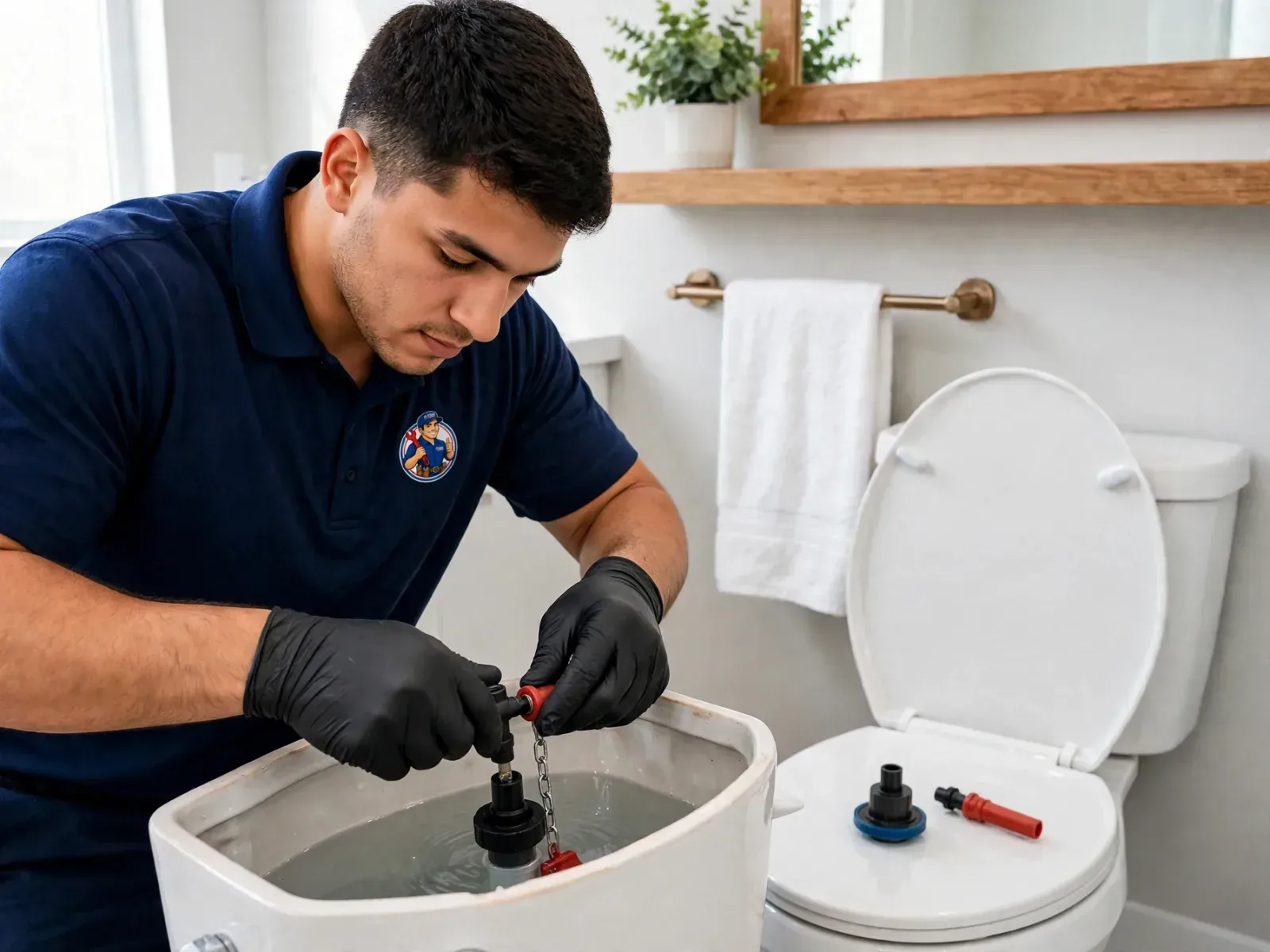
Anaheim's water is mostly local groundwater from the Orange County Basin rather than imported supply, and basin groundwater carries dissolved mineral that wears cartridges and valve seats. A tap that was repaired and is dripping again within a couple of years is usually telling you about the water rather than the work.
Dripping spouts, stiff handles, leaking handle bases, or flow that has dropped at one fixture while the rest of the house is fine.
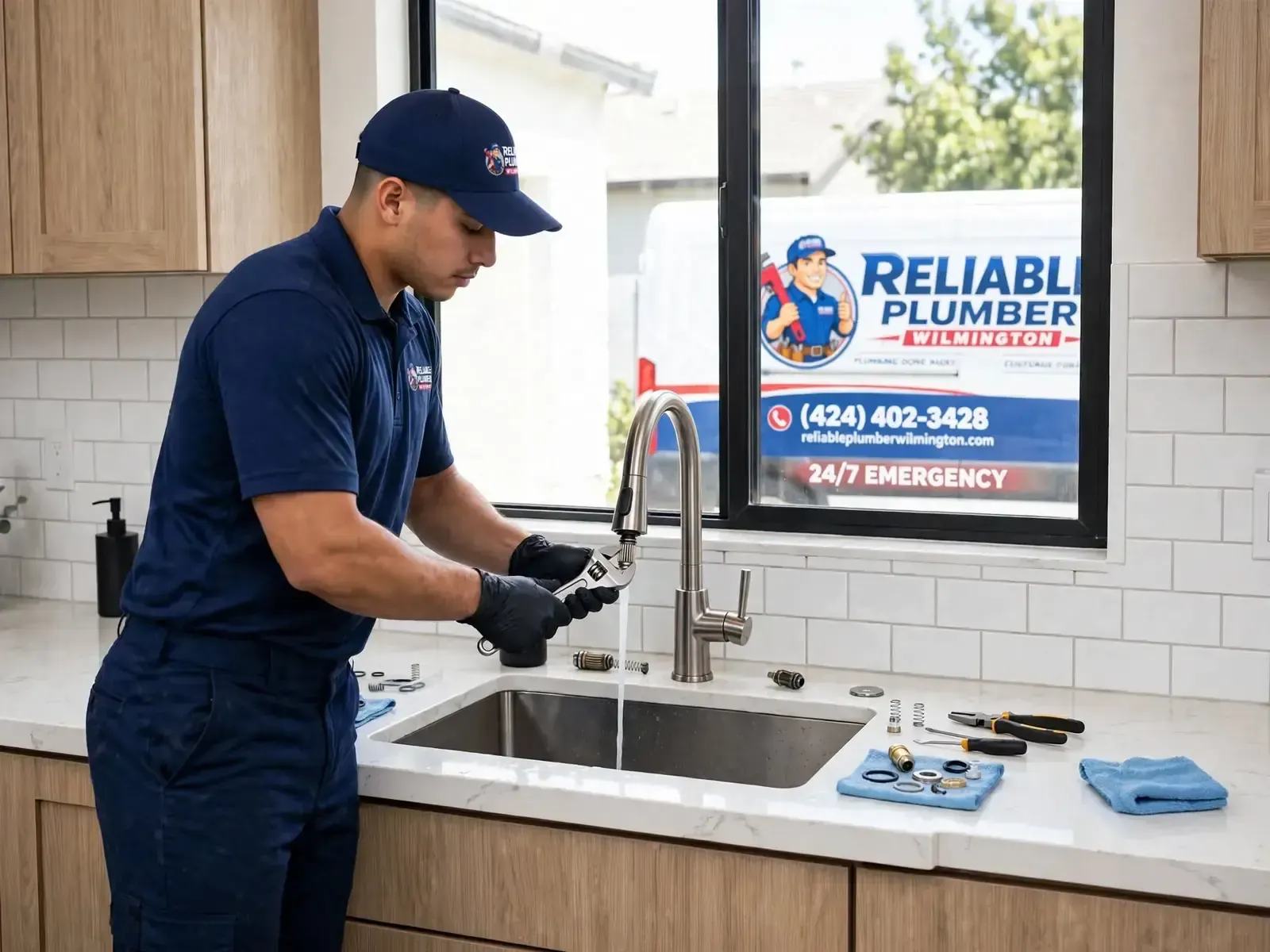
Anaheim is the furthest of our regular coverage from the harbour, so tell the dispatcher what is actually happening - a burst supply line and a slow backup need different urgency and different equipment. Close your main shut-off first, usually at the front of the property near the meter, and keep people away from standing water near outlets.
Burst supply lines, sewage backing up, main line breaks, and water heater failures - anything where water is causing damage right now.

Covering a city properly means knowing what changes at its boundary. Here, several things do.
Homes built from the late 1970s to the mid 1990s may run grey polybutylene supply pipe that fails at the fittings. Given a 1973 median build year, a real share of Anaheim sits in that window - so we identify the material before quoting a repair.
Median build year 1973Anaheim Public Utilities is the only municipally owned electric and water utility in Orange County, running its own water system since 1879. Billing questions and leak enquiries go to the city, not to a private company or LADWP.
Municipal water since 1879Anaheim draws primarily from the 350-square-mile Orange County Groundwater Basin managed by OCWD. That is a different mineral profile from the imported supply most of our coverage area drinks, and it shows up in fixture wear.
OC Groundwater Basin · OCWDAnaheim runs about 46.2% owner-occupied against 53.8% rented. We are used to the three-way conversation between tenant, manager and owner, and to putting findings in writing so it does not turn into hearsay.
53.8% renter-occupiedCamera footage on sewer recommendations, thermal and acoustic on hidden leaks, findings written down. You should be able to see the reason for a repair before you agree to pay for it.
Camera · written findingsAnaheim spans a wide range of build eras despite its 1973 median, and knowing which part of the city you are in narrows the diagnosis quickly.
The Anaheim Colony Historic District marks the original 1857 town site and holds the oldest housing in the city - raised foundations and original metal supply pipe still turn up there, much as they do in the harbour. Everything around it is newer. West Anaheim and the Brookhurst and Euclid corridors are largely 1950s and 1960s tract development on slab. The Santa Ana Canyon and Anaheim Hills were built out later still, from the 1970s onward, which places them squarely in the polybutylene window and also introduces elevation change that affects both water pressure and drainage. The Resort District and Platinum Triangle are dominated by commercial and higher-density residential, where the plumbing questions are about volume and shared systems rather than pipe age.
Licensed, bonded and insured · 24/7 dispatch · diagnosis before price · findings in writing
Five categories covering everything from a slow drain to a full repipe.
We reach Anaheim from Wilmington 90744, and cover 30 cities across Los Angeles County and north Orange County. These are the communities closest to Anaheim.
Coverage, permits, water and what is specific to this city.
Yes, across the city - the Colony District, West Anaheim, Anaheim Hills, the Santa Ana Canyon and the corridors between them. Anaheim is the furthest point of our regular north Orange County coverage.
It depends on the build date. Polybutylene was used in homes built roughly between the late 1970s and the mid 1990s - grey plastic supply pipe that becomes brittle and fails at the fittings. Anaheim's median construction year is 1973 and much of the Hills and Canyon was built after that, so it is worth checking rather than assuming.
Anaheim Public Utilities, which is the only municipally owned electric and water utility in Orange County. The city has run its own water system since 1879. Water comes primarily from local wells in the Orange County Groundwater Basin managed by OCWD, with the balance imported from the Metropolitan Water District.
The City of Anaheim maintains its own collection system and conveys flow into Orange County Sanitation District trunk lines for treatment. OC San serves around 2.6 million people with over 380 miles of regional sewer pipe, 15 pump stations and two treatment facilities.
No. Those are City of Los Angeles programmes and Anaheim is in Orange County, more than twenty miles away. Water and billing questions go to Anaheim Public Utilities instead.
Yes. The 1970s and 1980s tracts that make up much of the city are slab-on-grade, and newer copper does not make a home immune - soil movement and chemistry still find weak points. A warm patch on the floor or running water with every fixture closed are the usual first signs.
Substantially. A 1973 median build year means copper supply and ABS drain line rather than galvanized steel and cast iron, so scaled and rust-narrowed pipe is much less common. The trade-off is the polybutylene window, which the older cities largely predate.
Regularly. Anaheim is about 53.8% renter-occupied, so a good share of our work there runs through managers and owners rather than the occupant. We put findings in writing so everyone in the chain is looking at the same information.