Huntington Beach housing is decades newer than the harbour stock we work in daily, and that changes everything about what fails. Copper rather than galvanized, pinholes rather than rust - plus 85% local groundwater and Orange County rules throughout.











The average Huntington Beach home was built around 1975, which is the single most useful fact about plumbing in this city. It puts the housing stock a full generation after the 1940s-60s harbour neighbourhoods, and it means copper and later CPVC rather than galvanized steel. The characteristic failure here is the copper pinhole - a fine spray from pitting corrosion - rather than the rust-narrowed bore and falling pressure that dominate older areas.
The water is a bigger factor here than most residents realise. Huntington Beach draws roughly 85% of its supply from local groundwater in the Orange County basin, replenished by the Santa Ana River and Orange County Water District programmes, with about 15% imported through the Municipal Water District of Orange County. Published hardness figures vary by source and by which blend is reaching your street - OCWD puts county averages around 10 to 15 grains per gallon, with local well water and imported surface water measured at meaningfully different levels. The city itself notes that residents may notice hardness changing from time to time because of that two-source blend. It is worth confirming your own reading rather than assuming a single number, and Huntington Beach Utilities can tell you.
The third thing that shapes work here is what the city was built on. Huntington Beach sat over a major oil field, and the transition to housing was deliberate: in 1964 Standard Oil began capping wells on its beachfront land to develop the Seacliff project, turning what one account calls oil-soaked ground into a residential enclave. Old wells and pumps are still visible around the city. For plumbing that mostly matters as ground history - fill, capped infrastructure and made ground under some tracts - which is worth knowing before anyone assumes a slab leak is simply a pipe defect.
Reliable Plumber Wilmington covers Huntington Beach from our base in the Los Angeles harbour. We handle drain cleaning, sewer line repair, leak detection, water heater work, repiping and the rest of the range - diagnosis before price, camera evidence on sewer recommendations, and the finding in writing.
What matters for Huntington Beach specifically is that almost none of the Los Angeles rules apply. Plumbing work here follows the Huntington Beach Plumbing Code with the city issuing sewer connection permits, not LADBS. Wastewater goes to Orange County Sanitation District, whose Treatment Plant No. 2 is in the city itself, rather than LA Sanitation. Water is Huntington Beach Utilities via OCWD and MWDOC, not LADWP - so the LADWP leak billing adjustment does not exist for you. Californian state code still applies throughout: SB 407 on fixtures, the 80 psi pressure ceiling, water heater seismic strapping.
Drain lines in a city whose housing averages 1975 are generally ABS or cast iron rather than the older cast iron and clay found in the harbour neighbourhoods. That usually means blockages here are genuinely blockages - grease, hair, an object - rather than the symptom of a bore narrowed by decades of scale. It also means a first-time blockage is more likely to be a one-off, which changes whether jetting is worth paying for.
Slow or blocked kitchen, bath, shower and laundry lines - and any drain that has already been cleared once and blocked again.
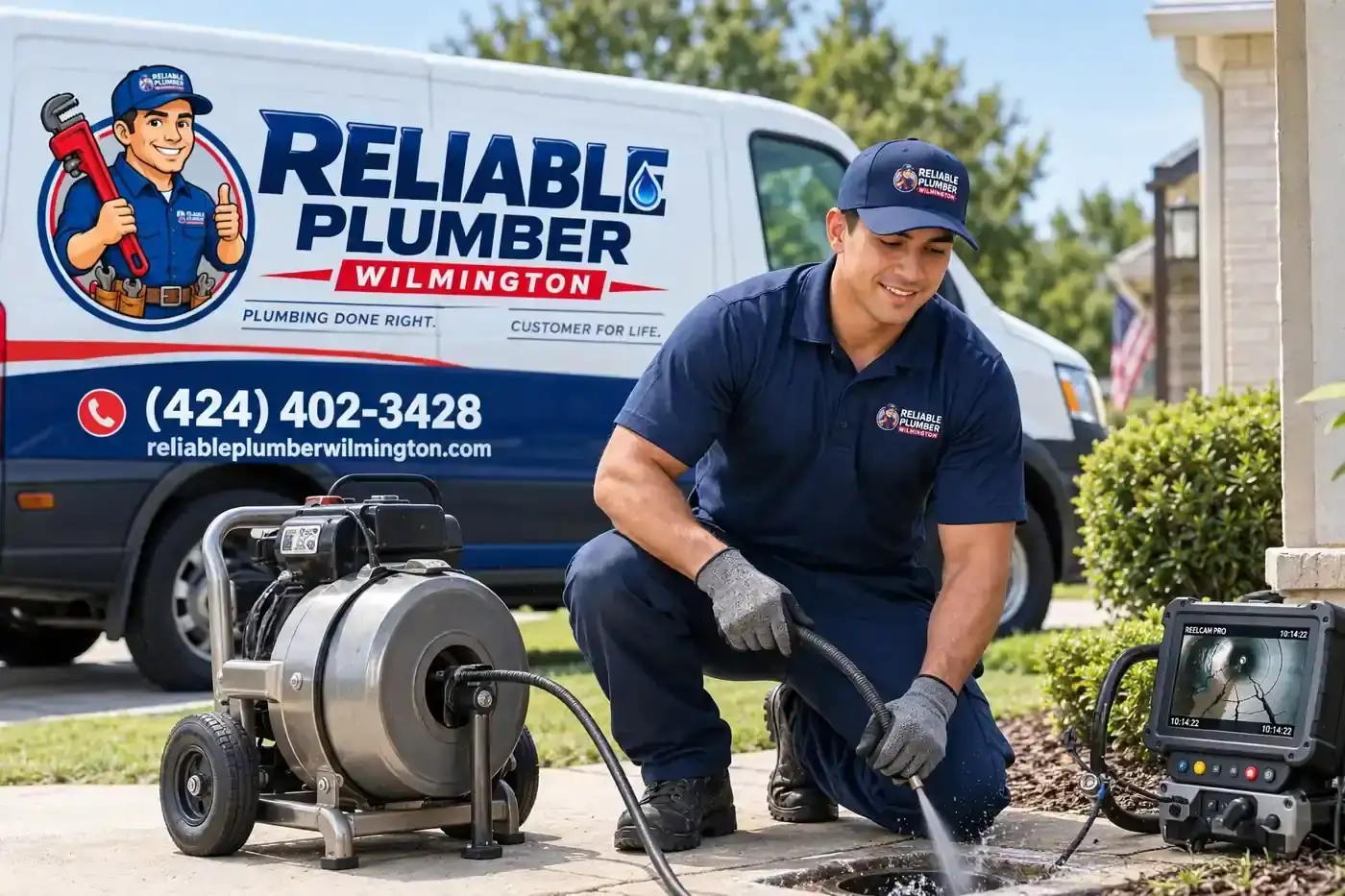
Sewer laterals in Huntington Beach are newer than harbour-area equivalents, so structural failure is less common and root intrusion at cracked joints is the more likely finding. Wastewater treatment is Orange County Sanitation District rather than LA Sanitation, and connection permits come from the City of Huntington Beach. A camera inspection still comes before any quote - newer does not mean sound.
Recurring backups, several fixtures slow at once, sewer odour, or a line a camera has shown to be cracked, offset or root-invaded.
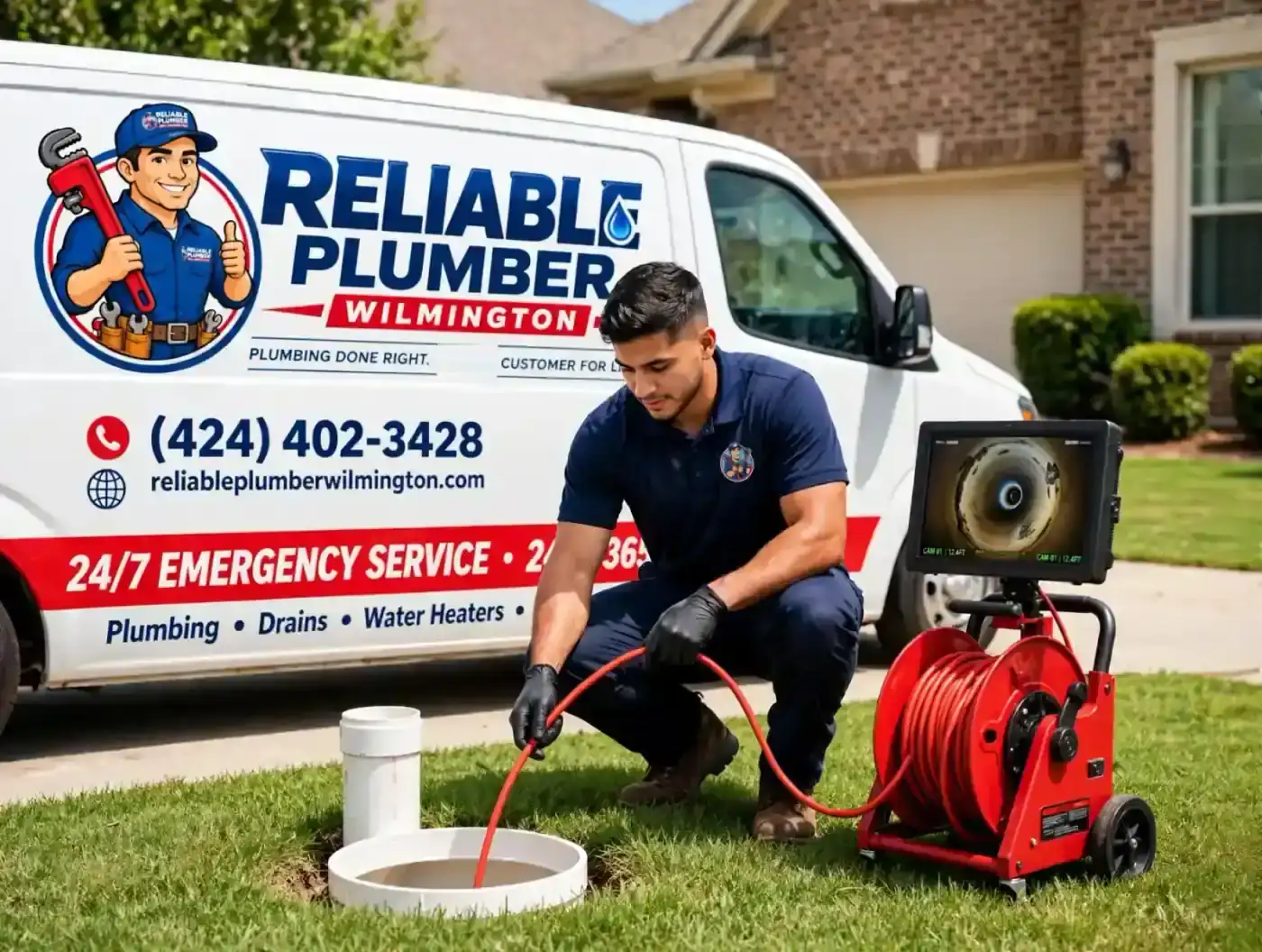
This is the service Huntington Beach needs most, because copper pinhole leaks are the signature failure in housing of this era. They produce a fine spray rather than a gush, so they can run inside a wall or under a slab for a long time before anything surfaces. A meter test confirms it, then acoustic listening and thermal imaging locate it before anything is opened.
A water bill that jumped with no change in use, running water with every tap closed, a warm patch on the floor, or a stain with no obvious source.
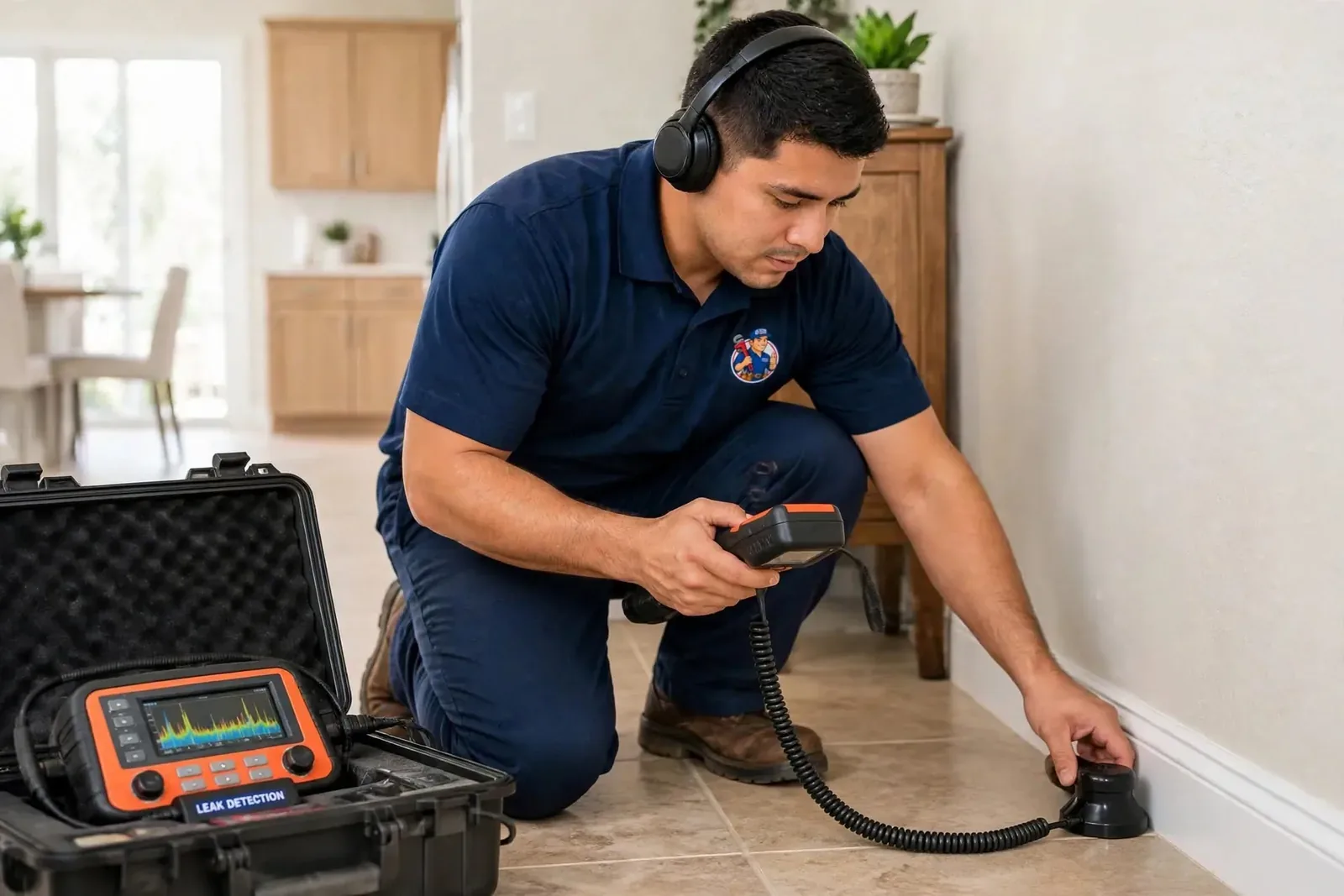
Local groundwater makes up around 85% of supply here and county hardness runs high enough that sediment is a real factor in tank life. Installations are permitted through the City of Huntington Beach rather than LADBS, but the California seismic strapping requirement is identical statewide - two straps, upper and lower third, anchored into framing rather than drywall.
No hot water, rumbling or popping, water pooling at the base, or a unit past twelve years old that is worth replacing on your schedule rather than its own.
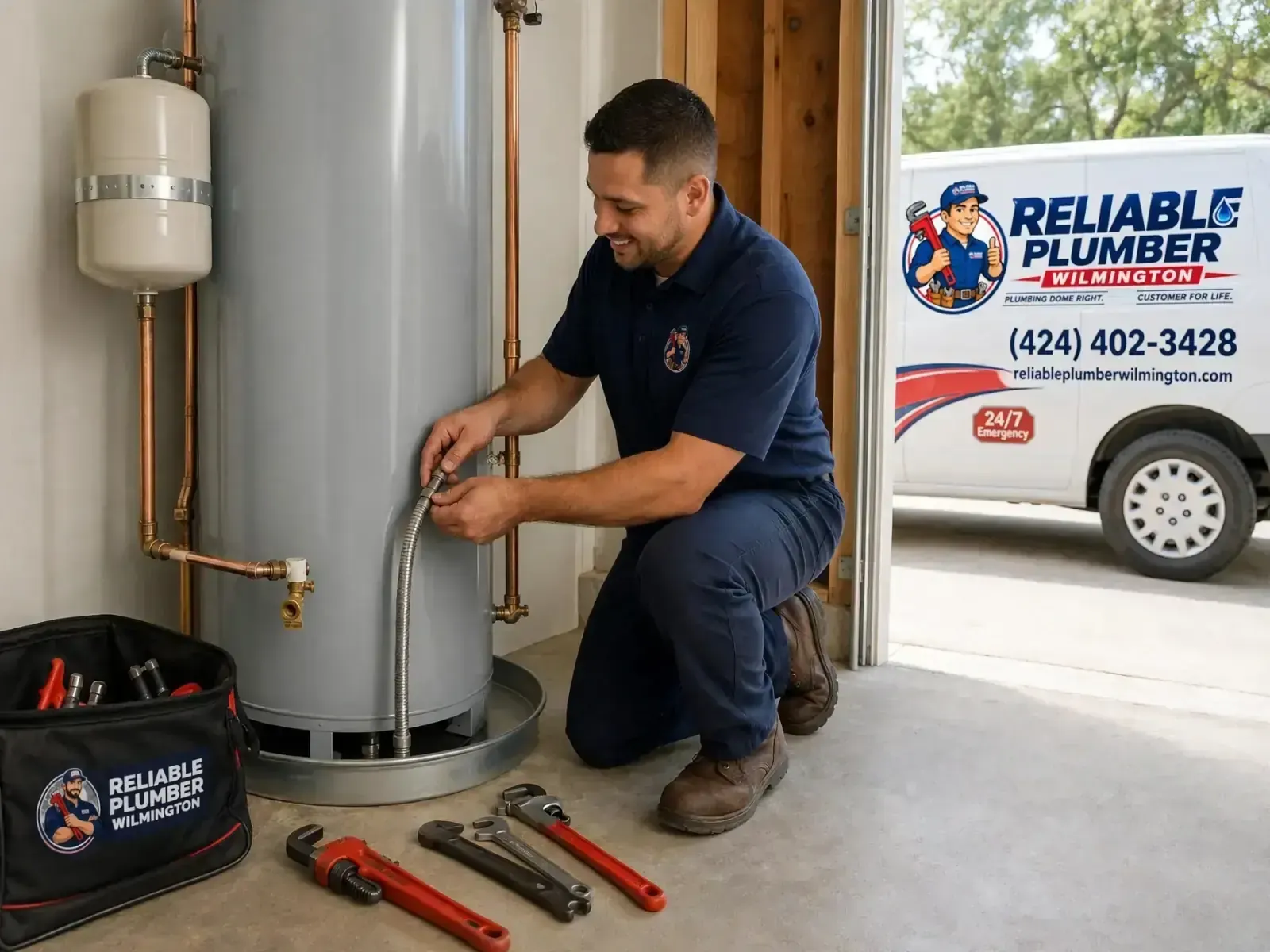
Repiping in Huntington Beach is usually a copper conversation rather than a galvanized one. Where a home has produced two or three pinhole leaks, the cause is systemic - water chemistry, velocity at bends, or an undersized run - so patching relocates the next failure. PEX costs 40 to 50% less than copper and flexes rather than transferring ground stress into soldered joints.
Rust-tinted water, pressure falling across the whole house, or a second and third leak on the same ageing supply system.
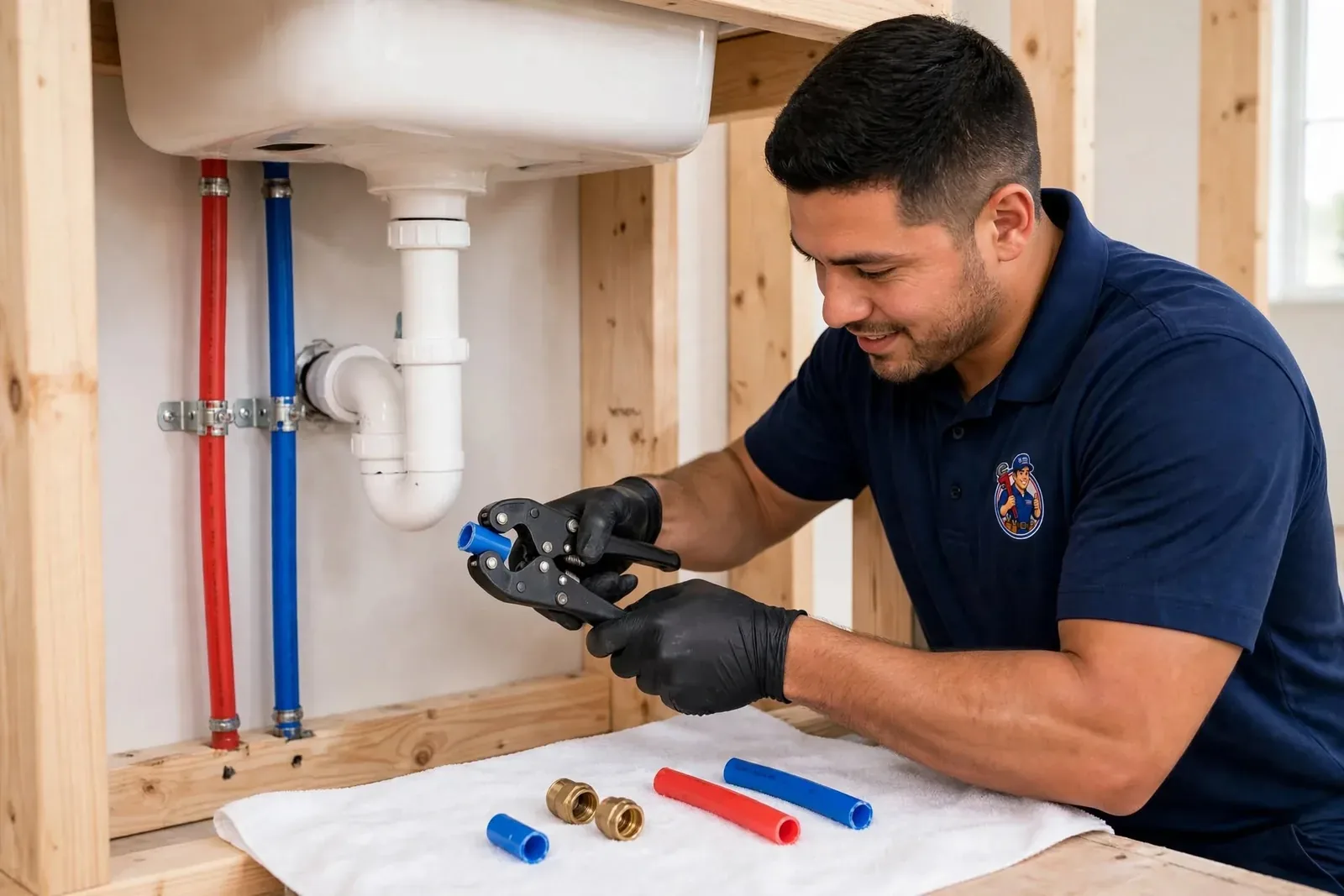
Slab-on-grade is the norm across most Huntington Beach tracts, and with copper as the dominant supply material a pinhole under the slab is a common presentation. Add the city's history of development over former oil-field ground and made fill, and locating precisely matters more than usual before any concrete is cut. Each spot repair runs $2,000 to $4,000 and protects against nothing further.
A warm patch on the floor, water audible with every fixture closed, or an unexplained bill increase on a slab-on-grade property.

Because the lines here are generally newer than harbour-area cast iron, jetting can more often run at full residential pressure - 2,500 to 3,000 PSI - rather than the reduced 1,500 to 2,000 PSI we use on ageing cast iron. That is a judgement made from camera footage rather than assumed, since some of the older Huntington Beach tracts do carry the earlier material.
Blockages that keep returning, kitchen lines with a grease history, and scaled cast iron where cabling only bores a channel.
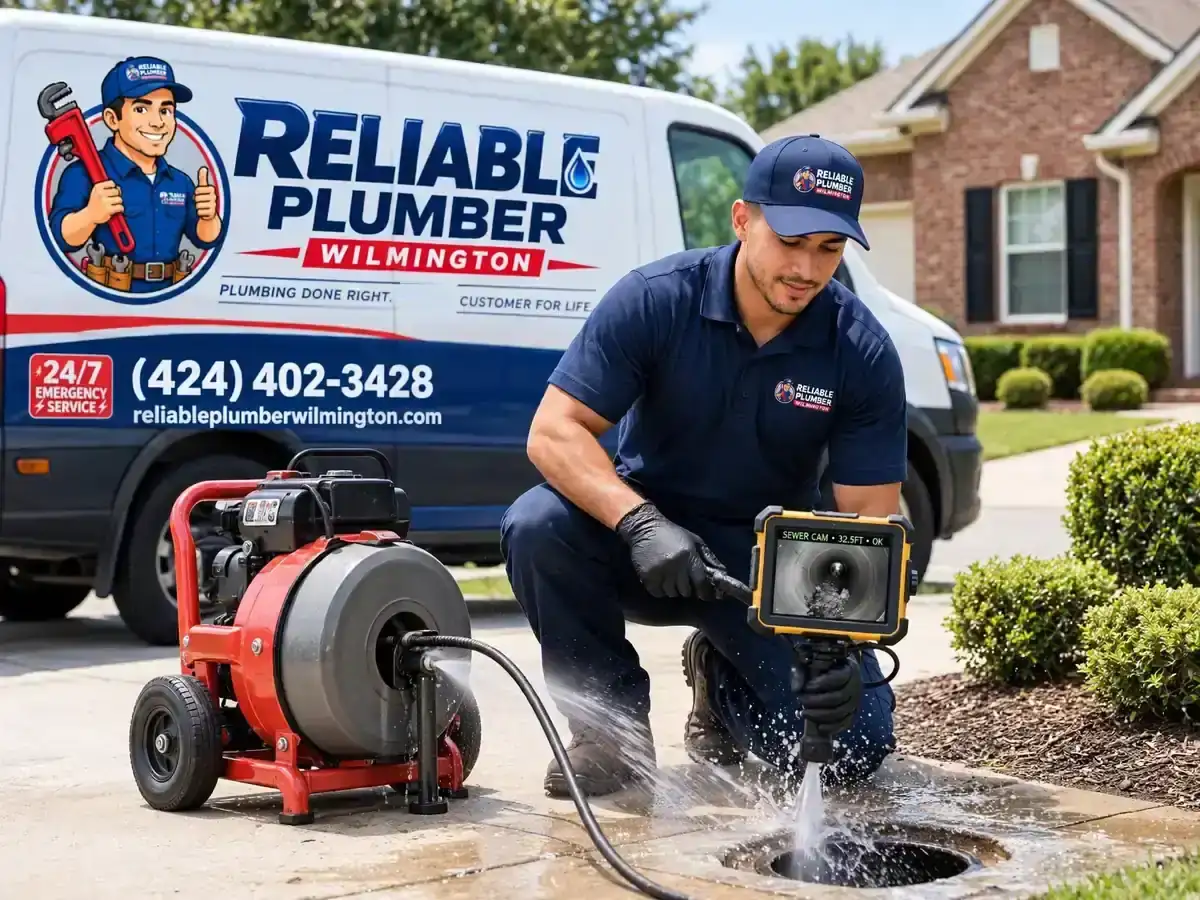
On fixtures the California rules apply here exactly as they do statewide. Anything predating 1994 uses 3.5 gallons a flush or more against the 1.28 gallon limit, and SB 407 brings replacement into scope when a pre-1994 property is altered or improved. Given the median build year of 1975, a good number of Huntington Beach homes fall inside that.
Running or phantom-flushing toilets, weak flush, water seeping at the base, or replacing a pre-1994 fixture using 3.5 gallons a flush.
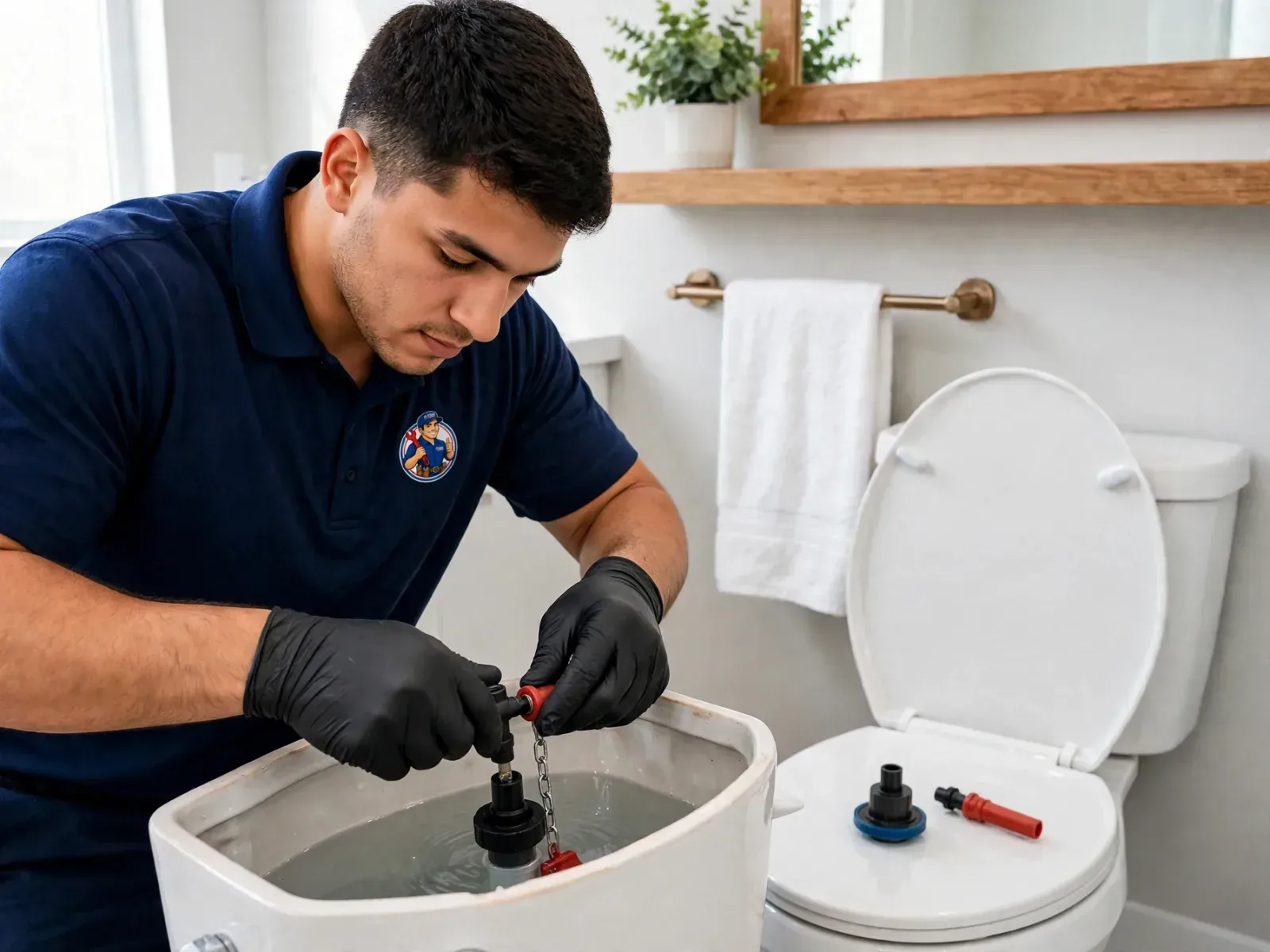
Hard groundwater is the reason cartridges and valve seats wear faster here than manufacturer guidance assumes. Because Huntington Beach blends two sources, hardness can shift over time and vary by area, so a tap that behaved for years may start needing attention more often. Descaling aerators twice a year restores flow that people routinely mistake for a pressure problem.
Dripping spouts, stiff handles, leaking handle bases, or flow that has dropped at one fixture while the rest of the house is fine.
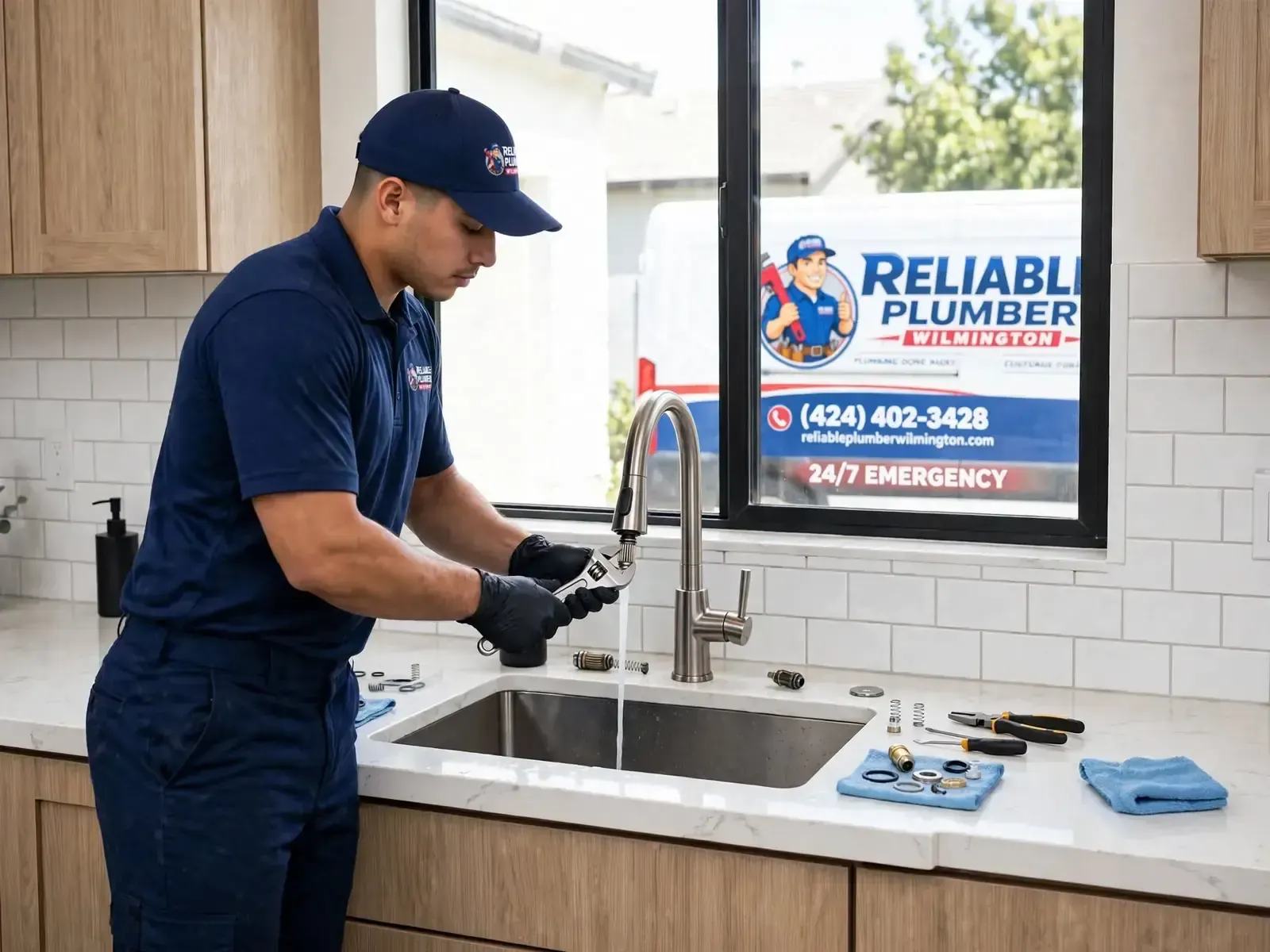
Huntington Beach is at the far edge of our service map rather than next door, so for a genuine emergency it is worth being straight about timing when you call. We will give you a realistic window and the stop-use guidance that limits damage while you wait - closing the main first, above everything else.
Burst supply lines, sewage backing up, main line breaks, and water heater failures - anything where water is causing damage right now.

Covering a city properly means knowing what changes at its boundary. Here, several things do.
The average Huntington Beach home dates to around 1975 - a generation newer than Wilmington or San Pedro. Copper and CPVC rather than galvanized, pinhole leaks rather than rust-narrowed bore. Diagnosing it like an older house wastes your money.
Median build year ~1975Huntington Beach Plumbing Code and city-issued sewer permits, not LADBS. Orange County Sanitation District, not LA Sanitation. Huntington Beach Utilities, not LADWP - so no LADWP billing adjustment here.
City code · OC San · HB UtilitiesThe city blends roughly 85% local groundwater with 15% imported, and published hardness figures differ by source and blend. We work from your reading rather than a county average.
~85% local groundwaterHuntington Beach is the far edge of our service area rather than adjacent. For emergencies we will give you a realistic window instead of a marketing one, and tell you if someone closer is the better call.
Straight answers on timingCamera footage on any sewer recommendation, acoustic and thermal for hidden leaks, and the finding written down. Newer housing still deserves a diagnosis rather than an assumption.
Camera · written findingsHuntington Beach is not one housing stock. These districts were built in different decades and behave differently.
Huntington Harbour is the distinctive one - built through the 1960s as custom homes on a canal system, largely midcentury modern and California ranch, many since renovated or rebuilt. Waterfront and canal-adjacent properties bring their own considerations that inland tracts do not. Seacliff has the most interesting history: the land was oil-producing until Standard Oil began capping wells in 1964 to develop the residential project, and the area now mixes mid-century bungalows with later gated development. Oak View went in through the 1960s as Mediterranean and ranch homes on quiet cul-de-sacs. Across all of them the pattern holds - later construction than the harbour neighbourhoods, so copper supply and its characteristic pinhole failure rather than galvanized corrosion.
Licensed, bonded and insured · 24/7 dispatch · diagnosis before price · findings in writing
Five categories covering everything from a slow drain to a full repipe.
We reach Huntington Beach from Wilmington 90744, and cover 30 cities across Los Angeles County and north Orange County. These are the communities closest to Huntington Beach.
Coverage, permits, water and what is specific to this city.
Yes, though we will be straight with you: Huntington Beach is the far edge of our service map rather than adjacent territory. For scheduled work that makes no practical difference. For a genuine emergency, ask for a realistic arrival window when you call.
The City of Huntington Beach. Work follows the Huntington Beach Plumbing Code and the city issues sewer connection permits - LADBS has no jurisdiction here at all.
Yes, though the figure depends on your blend. The city draws roughly 85% from local groundwater and 15% imported, and published hardness varies by source - Orange County Water District puts county averages around 10 to 15 grains per gallon. The city notes hardness can shift over time because of the blend, so it is worth confirming your own reading.
Copper pinhole leaks, above everything else. With an average build year around 1975 the supply is generally copper rather than galvanized, and pitting corrosion produces a fine spray that can run hidden for a long time before it surfaces.
No. That is an LADWP programme and Huntington Beach is served by its own city utility through OCWD and MWDOC. Ask Huntington Beach Utilities about their own policies instead.
Orange County Sanitation District, whose Treatment Plant No. 2 is located in the city. OC San is the regional provider; private connections are permitted and serviced by the city itself.
Indirectly. Much of the city was developed over former oil-producing ground - Seacliff notably, after Standard Oil capped wells there in 1964 - so made ground and capped infrastructure exist under some tracts. It is context worth having before assuming a slab leak is purely a pipe defect.
Yes - it is state law, not a city rule. Property built on or before 1 January 1994 must have non-compliant fixtures replaced with water-conserving ones, triggered by alterations or improvements. With a median build year around 1975, most of the city falls inside it.