Stanton is two cities in one set of boundaries: about a third of it went up before 1970 and most of the rest afterwards. That split, not the citywide average, is what decides the diagnosis here.











Stanton has the most improbable civic history of anywhere we serve, and it begins with sewage. The community was known as Benedict until the City of Anaheim proposed creating a sewage farm on that section of county land - and in May 1911, with the help of Philip Stanton, a state assemblyman and former Speaker of the California State Assembly, the residents incorporated as a city specifically to stop it. Having achieved that, they changed their minds about being a city at all: at an election on 22 July 1924 the voters chose to disincorporate so the State could build roads through the territory, and the disincorporation papers were filed that August. Stanton spent the next three decades as unincorporated county land before reincorporating on 15 May 1956. No other city in our coverage area has dissolved itself and come back.
That interrupted history left an unusually mixed housing stock, and it is the thing that matters most on a service call. The citywide median construction year is 1975, but about 36% of Stanton's 13,269 units were built between 1940 and 1969, with much of the remainder going up from 1970 onward. So this is not a city where the average describes any particular street. In the older third you find galvanized steel supply well past its thirty-to-forty-year service life and cast iron drains that have lost diameter to scale - rust-tinted water and pressure falling across the whole house. In the newer parts you find copper and plastic, where the failure is an isolated pinhole and the drain line is still the size it was installed at. Those are different problems with different price tags, and the only reliable way to know which you have is to look.
The utilities are straightforward by comparison. Water comes from Golden State Water Company's Los Alamitos system, which also serves Cypress, Los Alamitos and portions of Garden Grove, La Palma, Rossmoor and Seal Beach. Regional wastewater is handled by the Orange County Sanitation District, and building and plumbing permits come from the City of Stanton. Of 12,712 occupied units about 48.1% are owner-occupied and 51.9% rented, so calls arrive from owners, tenants and managers in fairly even measure. As an Orange County city, none of the Los Angeles programmes apply.
Reliable Plumber Wilmington covers Stanton in central Orange County. We handle drain cleaning, sewer line repair, leak detection, water heater work, repiping and everything alongside them - diagnosis before price, camera evidence on sewer work, and the finding written down.
The practical request we would make of Stanton customers is simple: if you know roughly when your property was built, tell us when you call. In a city this evenly divided between two eras it genuinely changes what we bring on the van. California requirements are the same regardless: SB 407 on fixtures during a remodel, the 80 psi pressure ceiling with a regulator above it, and seismic strapping on water heaters.
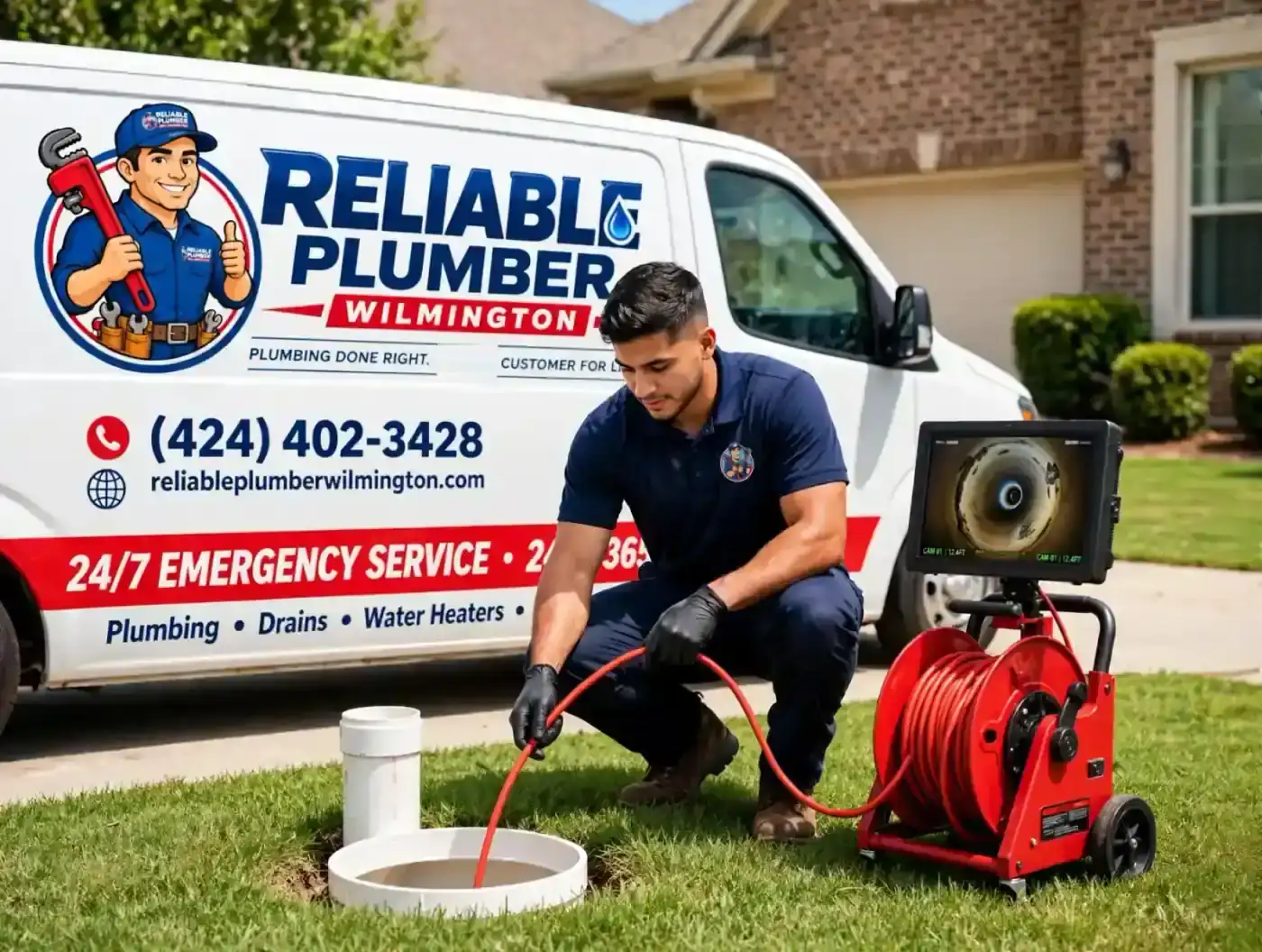
Stanton's split shows up here immediately. In the third of the city built between 1940 and 1969, cast iron drains have lost much of their working diameter to scale, so blockages return on a cycle no amount of clearing changes. In the newer parts, plastic line is still full-bore and a blockage has a specific cause worth identifying. A camera settles which conversation you are in before anyone quotes.
Slow or blocked kitchen, bath, shower and laundry lines - and any drain that has already been cleared once and blocked again.
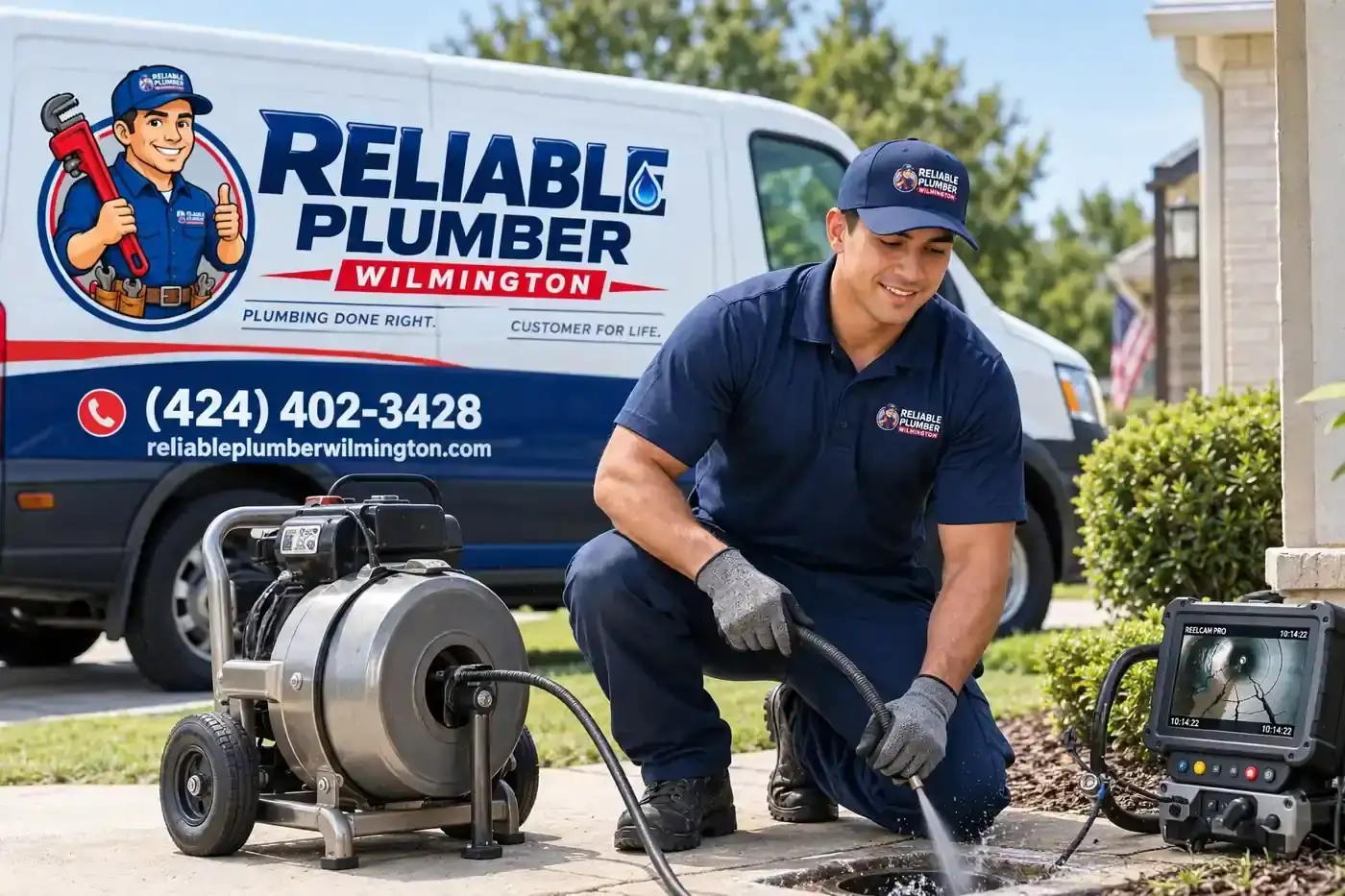
Regional wastewater here is handled by the Orange County Sanitation District, with permits from the City of Stanton. Because the city spans two build eras, we camera before scoping rather than assuming from the 1975 median - an older clay or cast iron lateral near the end of its life and a sound newer one with a single failed joint call for completely different work at completely different cost.
Recurring backups, several fixtures slow at once, sewer odour, or a line a camera has shown to be cracked, offset or root-invaded.
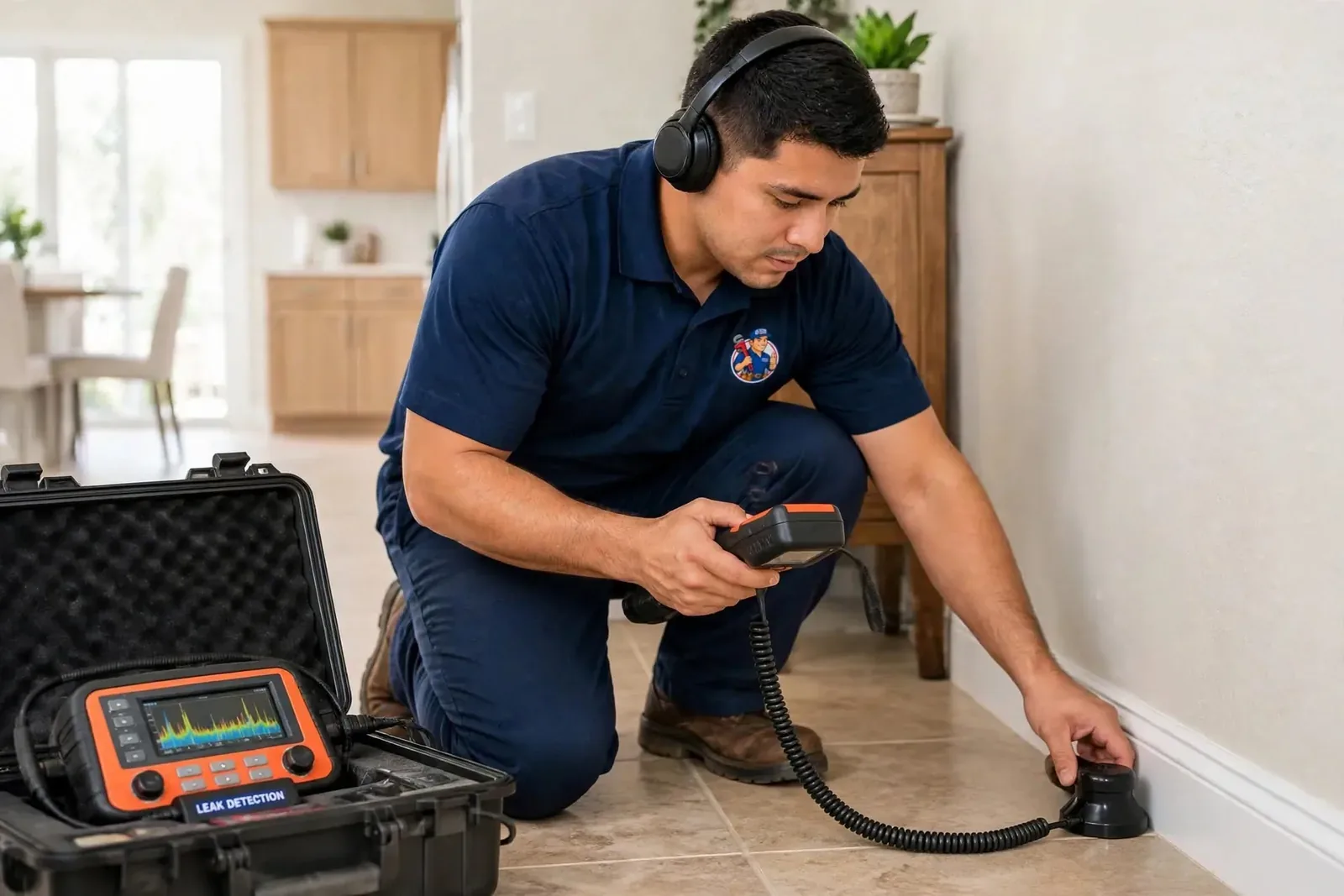
What we listen for depends on the era. In an older Stanton property with galvanized supply, a leak typically begins as a slow internal weep showing up as damp low on a wall or a meter that creeps with everything closed. In a newer one it is more often an abrupt copper pinhole, or a fitting failure in the plastic supply pipe used from the late 1970s onward. Establishing the material narrows the search considerably.
A water bill that jumped with no change in use, running water with every tap closed, a warm patch on the floor, or a stain with no obvious source.
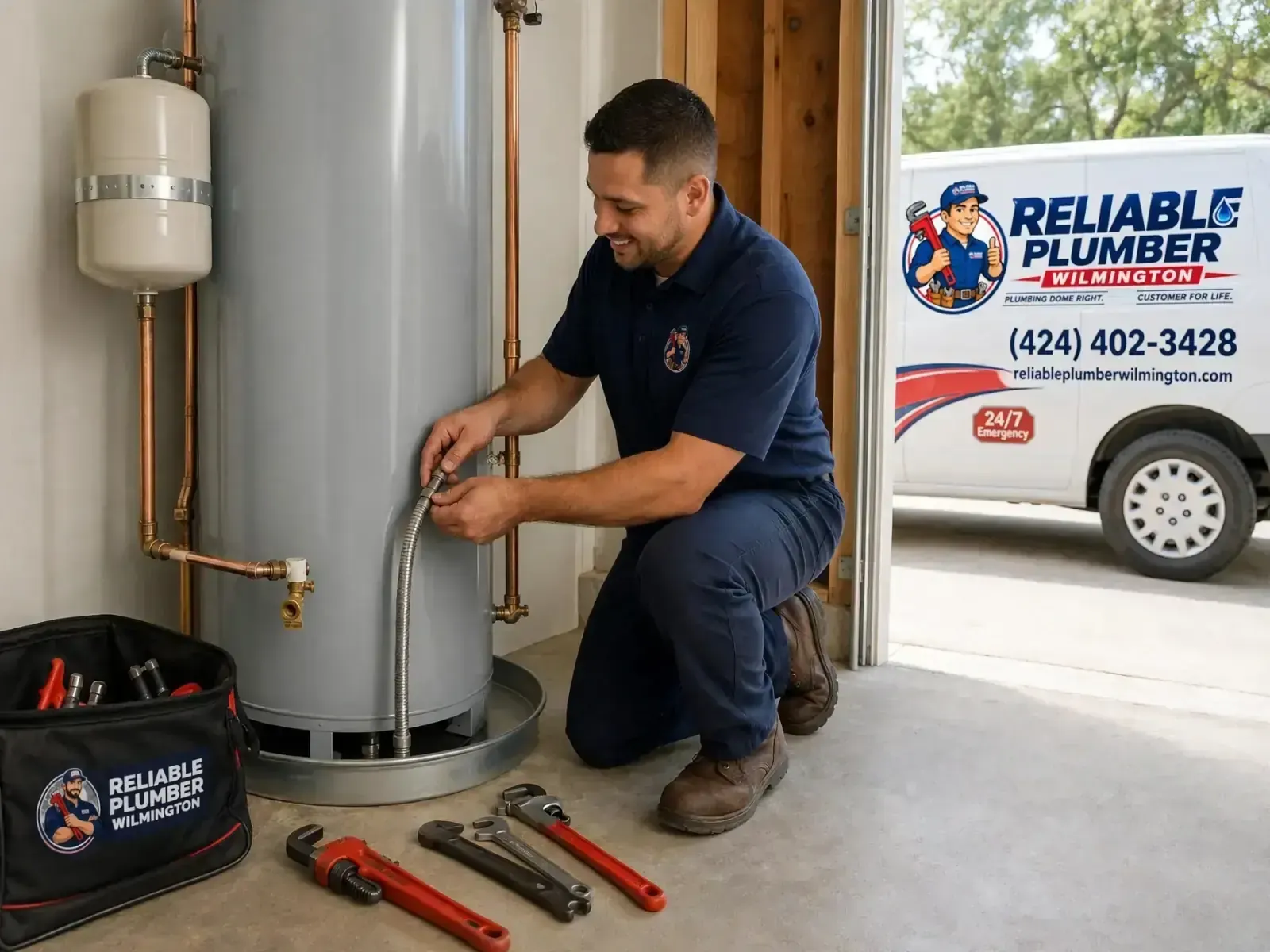
Permits come from the City of Stanton. The code is California state law and applies identically across both halves of the city: two seismic straps at the upper and lower third anchored into framing rather than drywall, with the lower strap at least four inches above the gas control. In the older housing the limiting factor is usually clearance and combustion air, since those homes were not built around a modern tank.
No hot water, rumbling or popping, water pooling at the base, or a unit past twelve years old that is worth replacing on your schedule rather than its own.
This is the decision Stanton's two-era history most affects. In the pre-1970 third of the city, original galvanized steel is decades past its service life and a full repipe is often cheaper over any reasonable horizon than continuing to patch. In the newer parts, copper with an occasional pinhole rarely justifies one - though the phases built from the late 1970s onward are worth checking for plastic supply pipe that fails at its fittings.
Rust-tinted water, pressure falling across the whole house, or a second and third leak on the same ageing supply system.
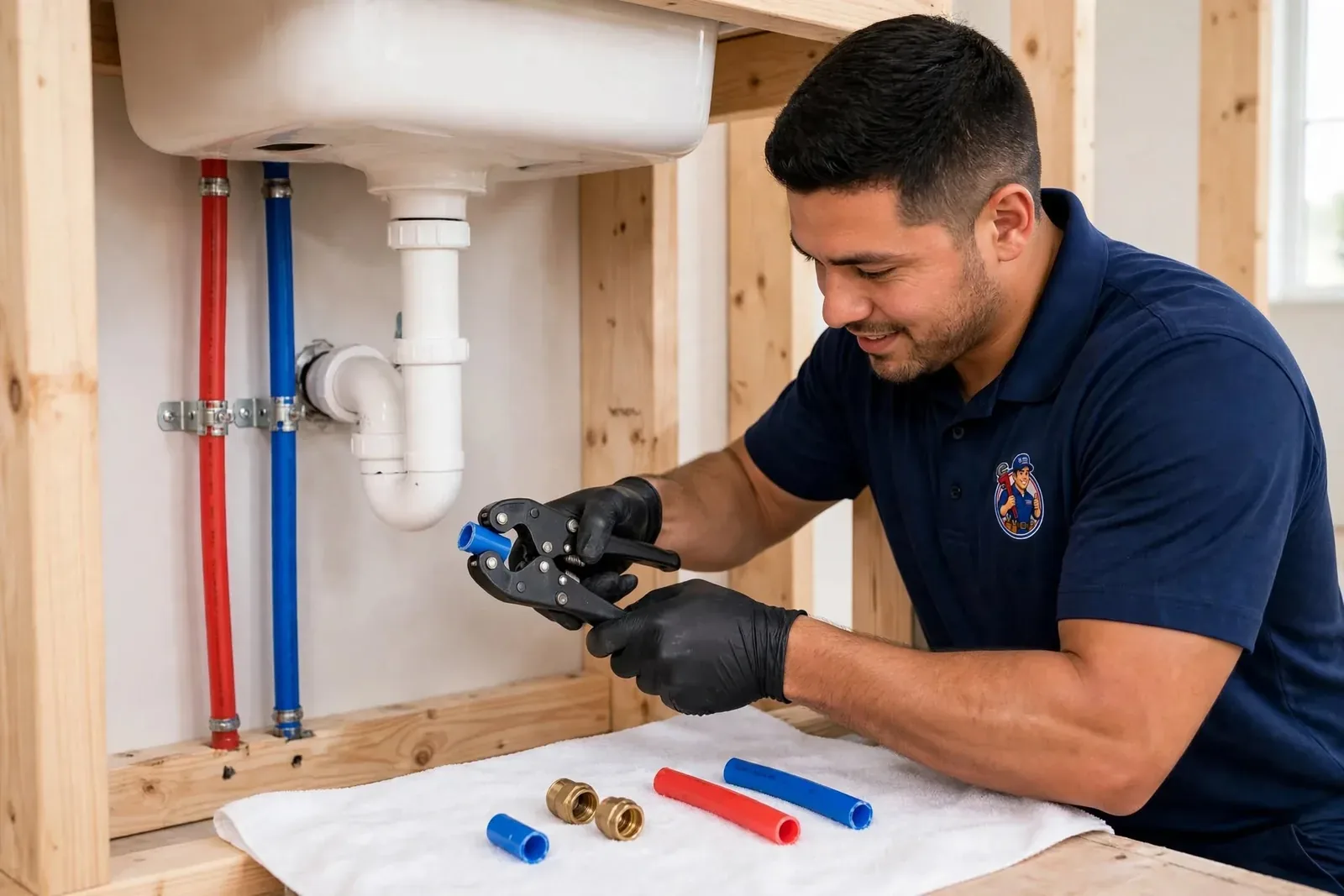
The post-1970 tracts that make up most of Stanton are slab-on-grade, so supply lines run through concrete and a failure there is a routine call. The cause differs by material: corrosion working outward in an older galvanized system, or soil movement and chemistry finding a weak point in copper. That distinction matters, because a corroding system tends to produce a second slab leak soon after the first.
A warm patch on the floor, water audible with every fixture closed, or an unexplained bill increase on a slab-on-grade property.

We set pressure from what the camera shows, and in Stanton the range is genuinely wide. Sound plastic lateral takes the full 2,500 to 3,000 PSI, while heavily scaled cast iron in the older third of the city is run at 1,500 to 2,000 PSI instead. Choosing by pipe condition rather than by job type is what keeps a drain cleaning from becoming a drain repair.
Blockages that keep returning, kitchen lines with a grease history, and scaled cast iron where cabling only bores a channel.

Stanton splits close to evenly at about 48.1% owner-occupied and 51.9% rented, so fixture calls come from every direction and we write findings so they travel between tenant, manager and owner. In the older housing the rough-in spacing often is not the modern standard, so measuring before ordering a replacement avoids a wasted second visit.
Running or phantom-flushing toilets, weak flush, water seeping at the base, or replacing a pre-1994 fixture using 3.5 gallons a flush.
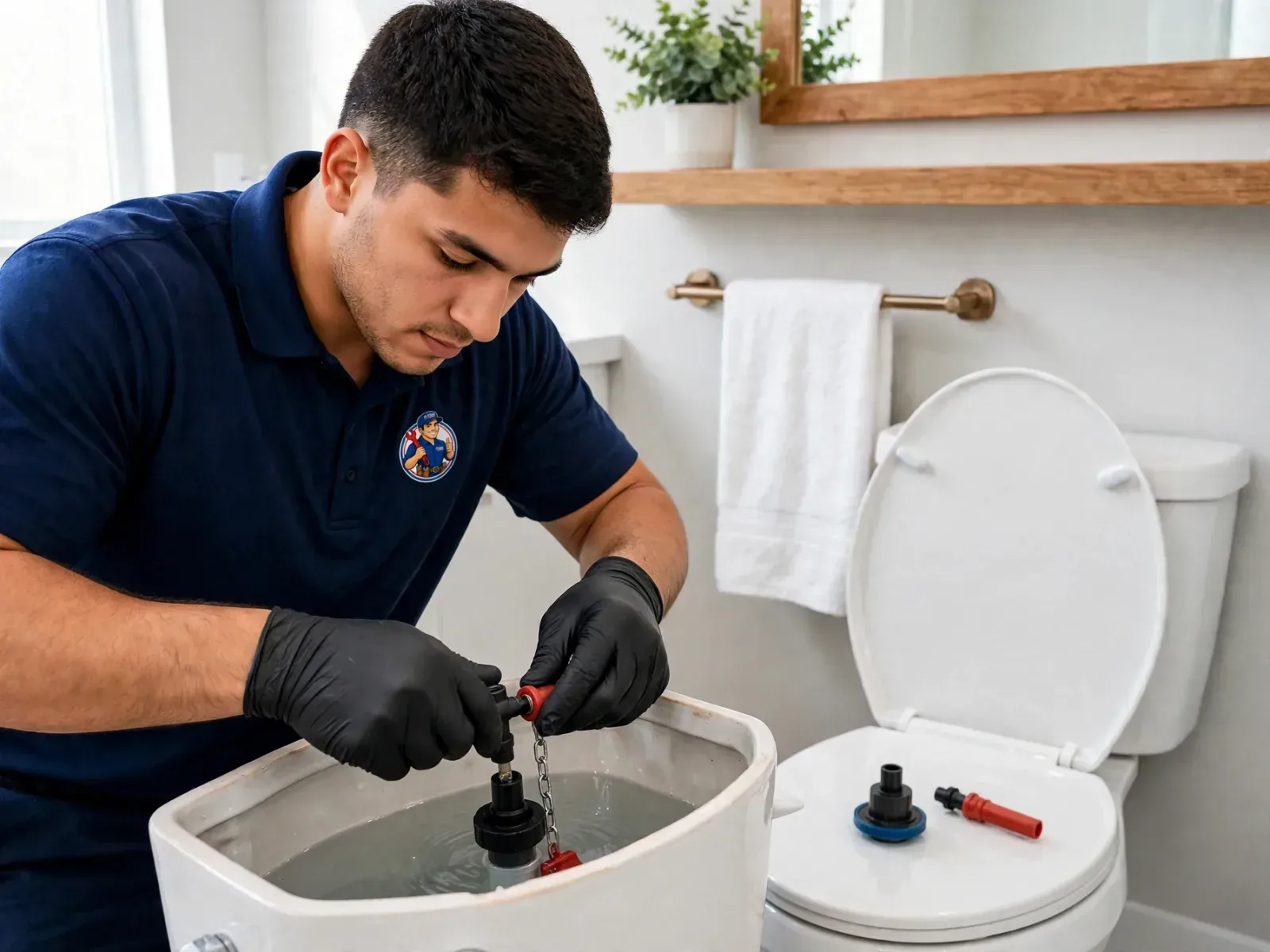
Golden State Water's Los Alamitos system supplies Stanton, and its mineral content shortens cartridge and valve seat life beyond what manufacturer guidance assumes. Where an older property still has galvanized supply pipe there is a second cause layered on top, because corrosion carried out of the pipe will wear through a new cartridge no matter how good the part is.
Dripping spouts, stiff handles, leaking handle bases, or flow that has dropped at one fixture while the rest of the house is fine.
Stanton is centrally placed in our Orange County coverage and quick for us to reach. Shut the main off first - on a slab-built home it is normally on the street side near the meter. Tell the dispatcher roughly when the property was built if you know, because in a city this evenly divided between two eras it genuinely affects what we arrive carrying.
Burst supply lines, sewage backing up, main line breaks, and water heater failures - anything where water is causing damage right now.

Covering a city properly means knowing what changes at its boundary. Here, several things do.
About a third of the housing dates from 1940 to 1969 and most of the rest from 1970 onward. The citywide median of 1975 describes neither half, so we identify materials on site rather than inferring from a date.
36% built 1940-1969Galvanized rust and scaled cast iron in the older third; copper pinholes and plastic supply pipe in the newer parts. Different problems, different fixes, and we come equipped for the one you actually have.
Median build year 1975Golden State Water's Los Alamitos system covers Stanton along with Cypress, Los Alamitos and parts of Garden Grove, La Palma, Rossmoor and Seal Beach. We work right across that footprint.
GSWC Los Alamitos systemAt roughly 48% owner-occupied and 52% rented, Stanton calls come from every direction. We put findings in writing so a tenant can pass them on and an owner can act on them without a site visit.
51.9% renter-occupiedCamera footage on sewer recommendations, thermal and acoustic on hidden leaks, findings written down. In a city where the answer depends on the era, you should see the evidence it rests on.
Camera · written findingsStanton is compact and centrally placed between Anaheim, Garden Grove and Cypress, with build eras that vary sharply across it.
Stanton first incorporated in May 1911 - as a defensive move, after the City of Anaheim proposed building a sewage farm on what was then county land - then disincorporated by public vote on 22 July 1924 so the State could construct roads through it, and did not become a city again until 15 May 1956. Those interruptions are why the housing arrived in two distinct waves rather than one: roughly 36% of the city's 13,269 units date from between 1940 and 1969, with much of the remainder built from 1970 onward, giving a citywide median of 1975 that fits neither group well. The Beach Boulevard and Katella corridors carry most of the commercial activity, and the residential streets between them can change era from one block to the next - which is exactly why we ask about the build date when you call.
Licensed, bonded and insured · 24/7 dispatch · diagnosis before price · findings in writing
Five categories covering everything from a slow drain to a full repipe.
We reach Stanton from Wilmington 90744, and cover 30 cities across Los Angeles County and north Orange County. These are the communities closest to Stanton.
Coverage, permits, water and what is specific to this city.
Yes. Stanton sits centrally within our Orange County coverage, bordered by Garden Grove, Anaheim, Cypress and Buena Park, all of which we also serve.
To stop a sewage farm. The community was known as Benedict until the City of Anaheim proposed creating a sewage farm on that section of county land, and in May 1911 the residents incorporated as a city - with the help of state assemblyman Philip Stanton - specifically to prevent it.
Yes, for over thirty years. At an election held on 22 July 1924 the voters chose to disincorporate so the State could build roads through the territory, and the disincorporation papers were filed that August. Stanton remained unincorporated county land until it reincorporated on 15 May 1956 - the only city in our coverage area to have dissolved itself and returned.
It depends entirely which part you are in, which is the key thing to know here. The citywide median construction year is 1975, but around 36% of the 13,269 units were built between 1940 and 1969 and much of the rest from 1970 onward. The average describes neither group well.
Both are common here because the city spans two build eras. In the pre-1970 third you are likely to find galvanized steel well past its thirty-to-forty-year service life, showing rust-tinted water and pressure down across the whole house. In the newer parts it is usually copper, showing isolated pinhole leaks. We confirm on site rather than inferring from the citywide median.
Golden State Water Company, through its Los Alamitos system. That system also serves Cypress and Los Alamitos, plus portions of Garden Grove, La Palma, Rossmoor and Seal Beach, so if you have moved within this part of Orange County you may well have kept the same water company.
Regional wastewater is handled by the Orange County Sanitation District, which provides collection, treatment and disposal across central and northwest Orange County. Building and plumbing permits come from the City of Stanton.
No. Stanton is in Orange County, so there is no LASAN sewer lateral rebate and no LADWP billing adjustment. Supply questions go to Golden State Water and permits to the City of Stanton.