Sewer Line Repair in Wilmington, CA - The Complete Guide
Lateral repair is the largest single plumbing expense most homeowners face, and the one where the quality of the diagnosis has the biggest effect on the bill.
Why This Housing Stock Produces These Calls
Wilmington housing is largely 1940 to 1969, with a meaningful share older. Sewer laterals from that era are cast iron, which has a service life of 50 to 100 years - a range most local laterals are now inside rather than past.
Being inside that window rather than beyond it is precisely why these lines produce symptoms instead of outright failures. Scale narrows the bore, joints crack and offset, and roots find the gaps. Each of those is a stage rather than an ending, which is why the same lateral can be jetted this year and need replacing in five.
It also means chronological age alone is a poor guide. Two houses built the same year, on the same street, can have laterals in genuinely different condition depending on soil movement, what has been poured down them, and what is growing above them.
Reading the Camera Findings
Structurally sound with deposit: this is not a repair. It is jetting, at a pressure set by the pipe's condition.
One defect, sound elsewhere: spot repair. Access the affected section, replace it, done. Sensible where the rest of the run genuinely is in good order.
Damage at intervals along the run: full-length replacement. Repairing one section of a lateral whose joints have all reached the same age simply relocates the next failure, and you pay the mobilisation cost again each time.
A belly: replacement specifically, because slope cannot be restored by lining a pipe that has sagged.
Trenchless or Open Trench
Where full-length replacement is needed, the choice is mostly about disruption. Open-cut means excavating the run - across lawn, driveway or street as applicable - and reinstating everything afterwards, which is frequently the largest line on the invoice.
Trenchless methods avoid most of that. Lining cures a new pipe inside the old one; bursting pulls a new pipe through the path of the old one. Both need access pits rather than a continuous trench.
Neither is universally applicable. Lining needs a host pipe with meaningful structural integrity remaining and cannot correct slope. Bursting is obstructed by concrete encasement, very dense backfill, adjacent utilities sitting close, and sharp deviations in the run. The camera and the site conditions decide, not the sales preference.
What to Ask Before Agreeing
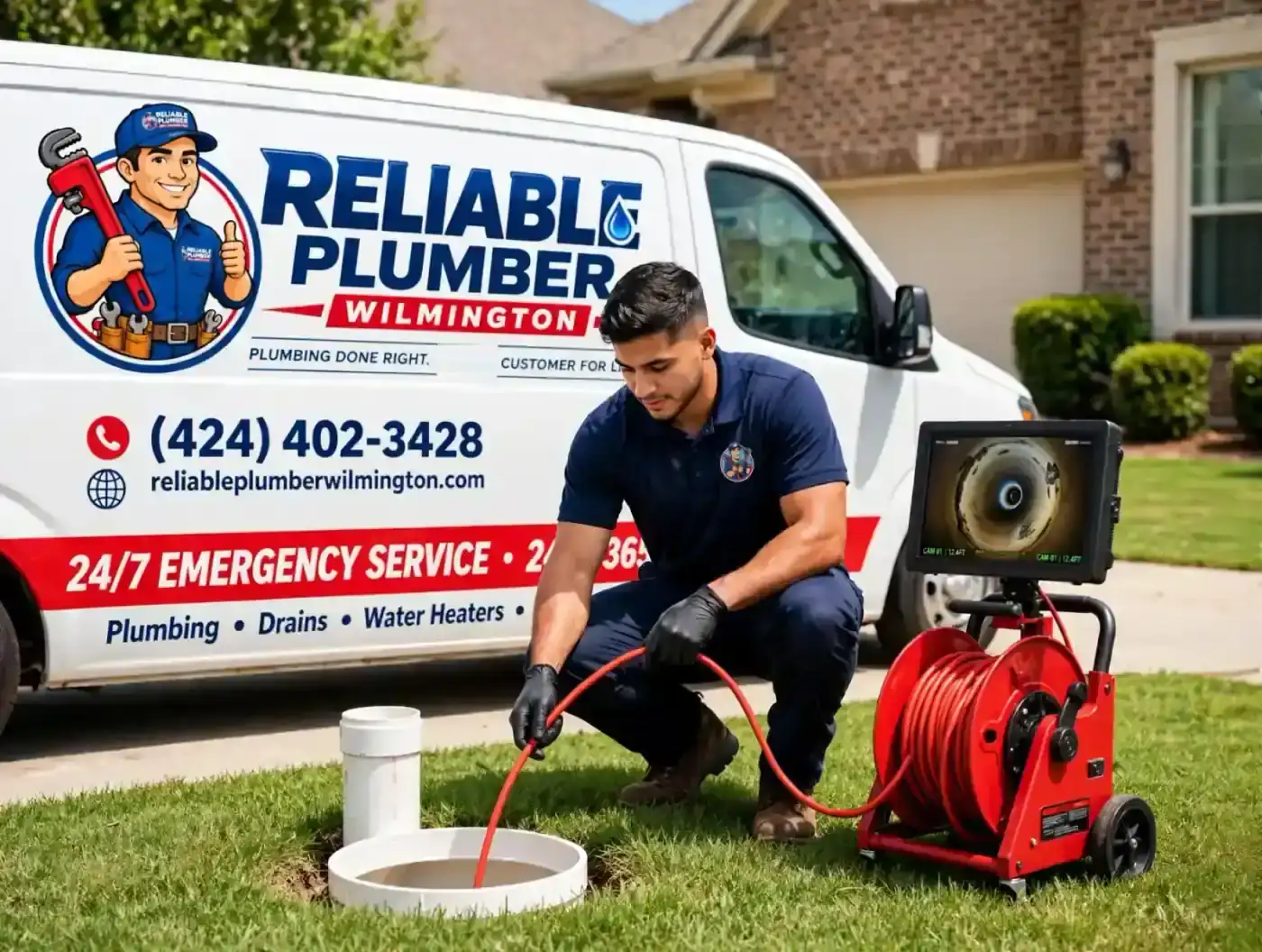
Can I see the camera footage of the defect you are quoting for? Anyone confident in the diagnosis expects this question.
Is this a spot repair or full-length, and what did you see that decided it? The answer should reference specific findings at specific distances along the run.
Which permits does this need, and are they in the price? S-Permit at minimum, supplemental where the defect is major.
Am I eligible for the LASAN rebate, and what documentation will I need? It requires a licensed and bonded contractor, so this also functions as a question about who is doing the work.
References