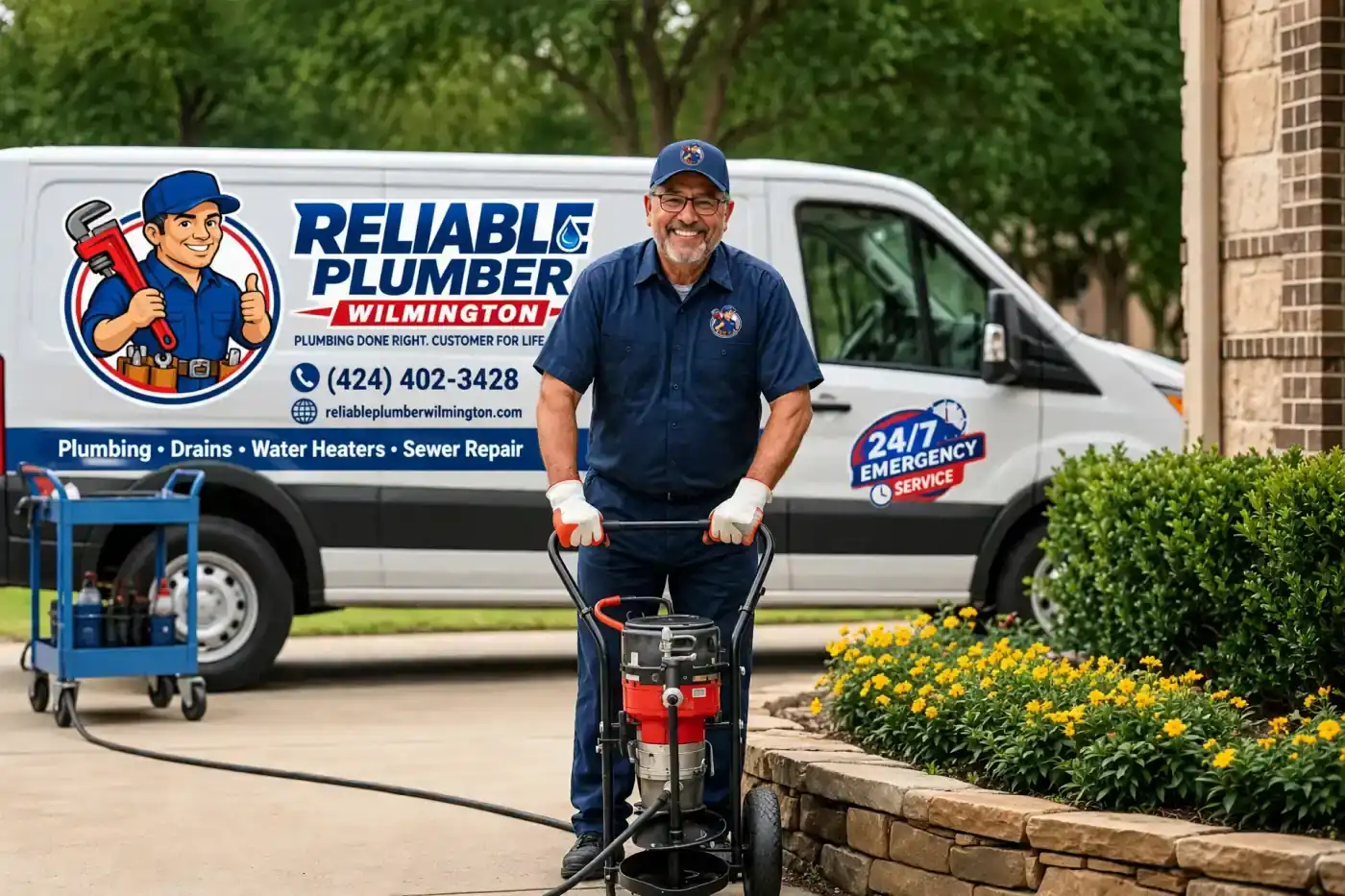
Manhattan Beach was built on levelled sand dunes, and sand changes two things about plumbing here: a hidden leak often never shows itself on the surface, and any excavation has to be shored before anyone can work in it.











The ground here is the thing worth understanding first. Manhattan Beach was built on a system of sand dunes that stood 50 to 70 feet high, running down from what is now El Segundo, and levelling them was a long job that builders worked through in the 1920s and 1930s. What remains underneath is sand, and sand behaves nothing like the clay soils most of our coverage area sits on. It drains extremely freely, which means water escaping from a buried supply line disperses downward instead of collecting and surfacing. In practice a leak here can run for a long time with no damp patch, no soft spot in the garden and nothing visible at all - and the first evidence is usually the water bill. If your usage has climbed with no change in habit, that is worth taking seriously in this city even when there is nothing to see.
The second consequence is about doing the work rather than finding it. Sand will not hold a vertical face, so a trench for sewer or supply repair needs proper shoring before anyone can safely get into it. That is a genuine cost and scheduling factor rather than an optional extra, and it is one reason trenchless methods are worth pricing on sewer work here rather than assuming an open dig is the cheaper route. Anyone quoting a Manhattan Beach excavation as though it were a Wilmington one has not accounted for it.
The utilities are unusually simple. Manhattan Beach incorporated on 12 December 1912 and established its water system the same year, and the city is the direct provider of water, sewer and storm drain services - all three run through a single Utilities Division. One authority, one number. Housing runs to 15,281 units with a median construction year of 1970 and about 65.9% detached single-family, roughly 66.1% owner-occupied. But the median hides real spread: around 7.5% of homes predate 1940 with a further 7.4% built by 1949, so a meaningful slice of the city is pre-war stock sitting alongside tract housing three decades younger.
Reliable Plumber Wilmington covers Manhattan Beach across the South Bay. We handle drain cleaning, sewer line repair, leak detection, water heater work, repiping and everything alongside them - diagnosis before price, camera evidence on sewer work, and the finding written down.
Access is worth mentioning when you call. The walk streets and Strand-side properties have no vehicle frontage, and the Hill Section is steep enough that getting equipment to the back of a property takes planning. None of it is a problem, but it changes what we load. As an incorporated city outside Los Angeles, the LA programmes do not apply here. California requirements do, exactly as everywhere: SB 407 on fixtures during a remodel, the 80 psi pressure ceiling with a regulator above it, and seismic strapping on water heaters.
Manhattan Beach spans a wide range of drain vintages despite its 1970 median - around fifteen percent of the housing predates 1950, and those properties still carry cast iron and clay that has lost working diameter to decades of scale. Later tracts run plastic that has not narrowed at all. A camera settles which you have, and that decides whether a recurring blockage is an obstruction or a pipe that has quietly closed in.
Slow or blocked kitchen, bath, shower and laundry lines - and any drain that has already been cleared once and blocked again.
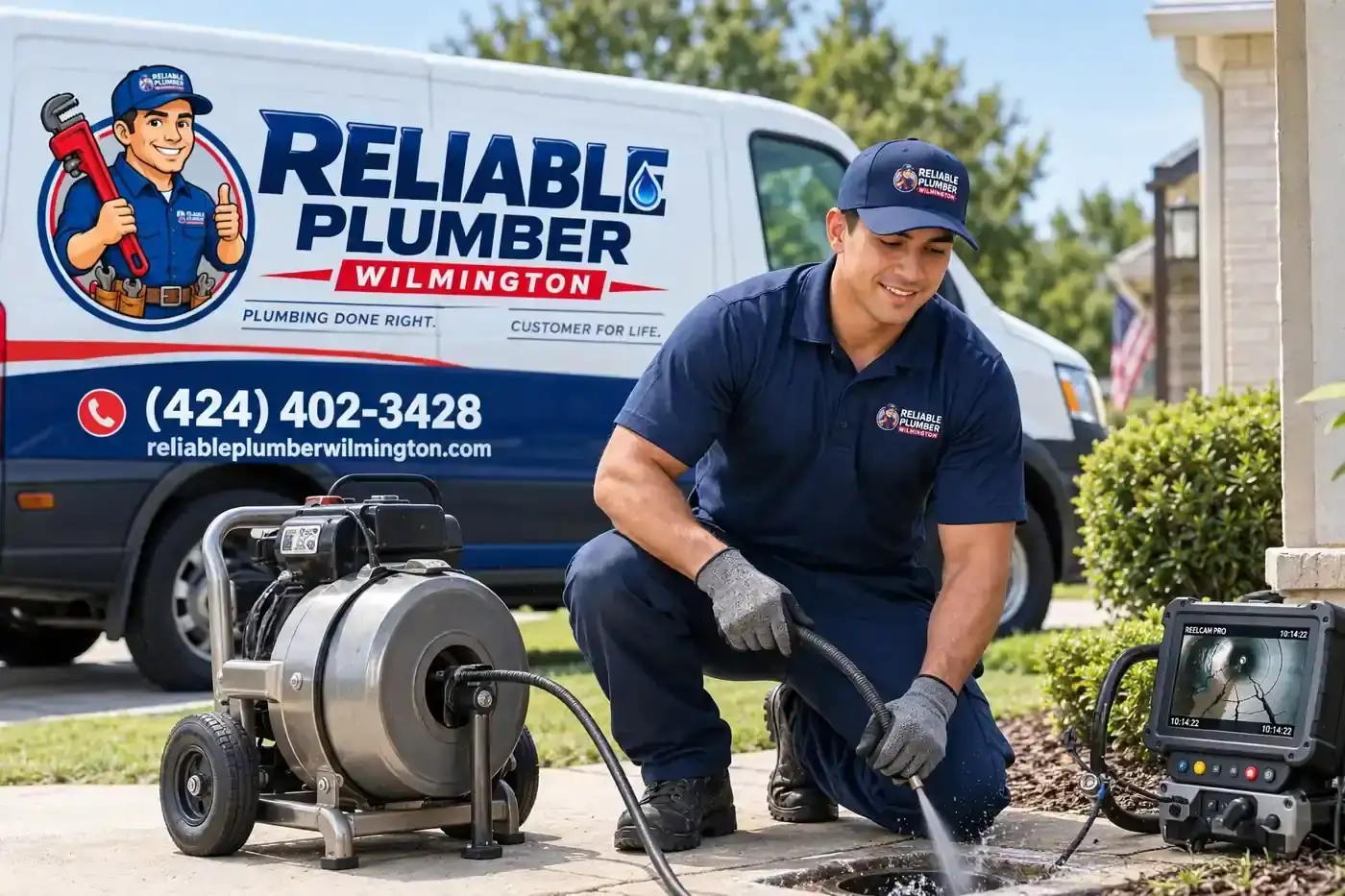
Two Manhattan Beach factors shape this. The city provides sewer service directly through its own Utilities Division, so there is one authority for both the work and the permit. And the sand means an open trench has to be shored before anyone can safely enter it, which is a real cost - so we price trenchless options alongside excavation rather than treating them as an upgrade.
Recurring backups, several fixtures slow at once, sewer odour, or a line a camera has shown to be cracked, offset or root-invaded.
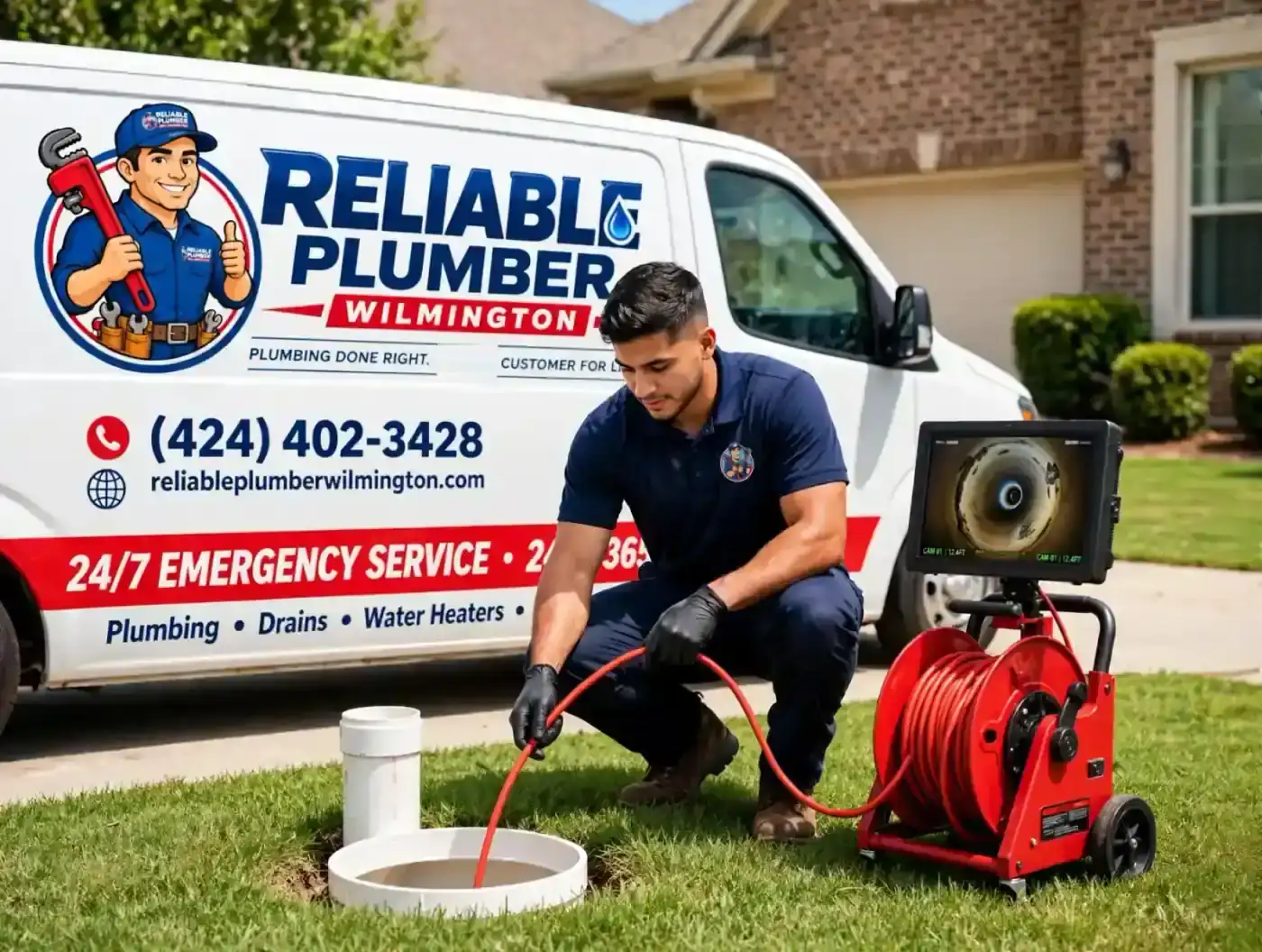
This is the service where the sand matters most, and it works against you. Free-draining ground means an escaping supply line disperses downward instead of surfacing, so the usual damp patch or soft spot may never appear. That makes the water bill the most reliable early signal in this city. When you call, tell us what your usage has done - acoustic listening and thermal imaging do the rest.
A water bill that jumped with no change in use, running water with every tap closed, a warm patch on the floor, or a stain with no obvious source.
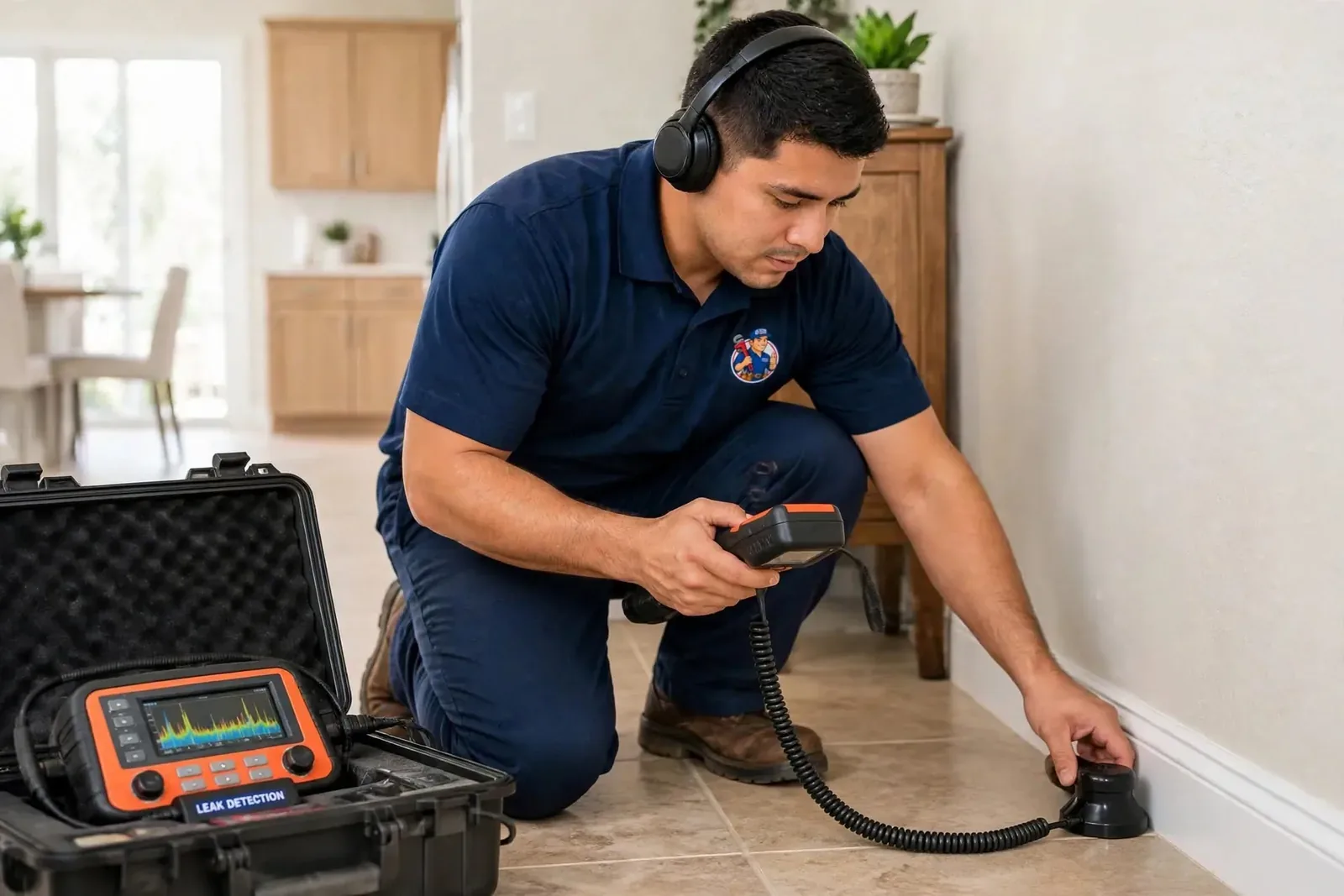
Permits come from the City of Manhattan Beach. Requirements are California state code and do not vary: two seismic straps at the upper and lower third anchored into framing rather than drywall, with the lower strap at least four inches above the gas control. The practical constraint here is usually the building - pre-war properties in the older sections were not planned around a modern tank, so clearance and venting need confirming before ordering.
No hot water, rumbling or popping, water pooling at the base, or a unit past twelve years old that is worth replacing on your schedule rather than its own.
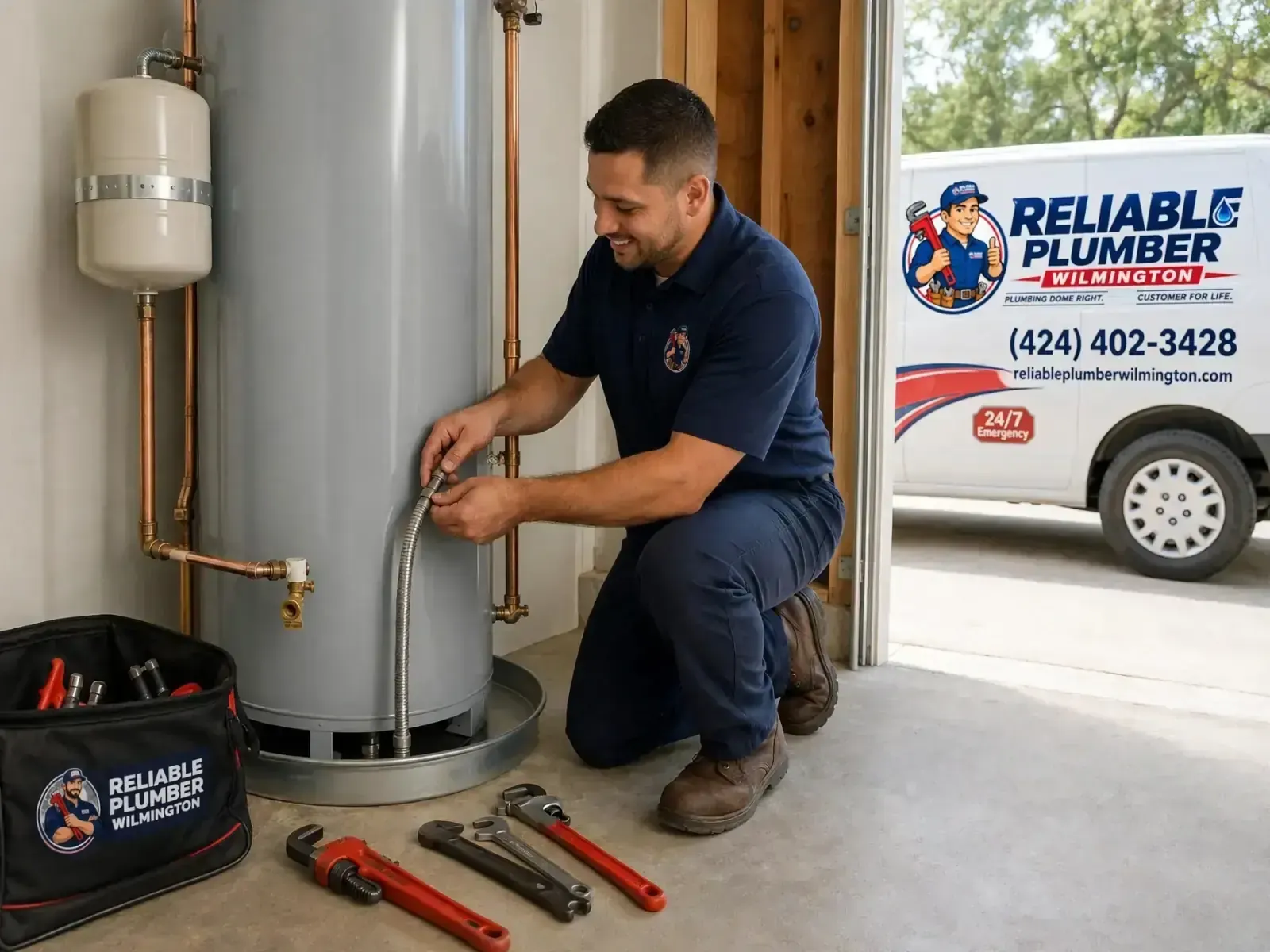
Which conversation we have depends on the era, and Manhattan Beach holds both. Pre-1950 properties may still carry original galvanized steel decades past its thirty-to-forty-year service life, showing rust-tinted water and pressure down across the house. Homes from around the 1970 median are more likely copper, where the signature is the isolated pinhole. The free-draining ground is relevant here too, since a buried section can leak for a long time before anyone notices.
Rust-tinted water, pressure falling across the whole house, or a second and third leak on the same ageing supply system.
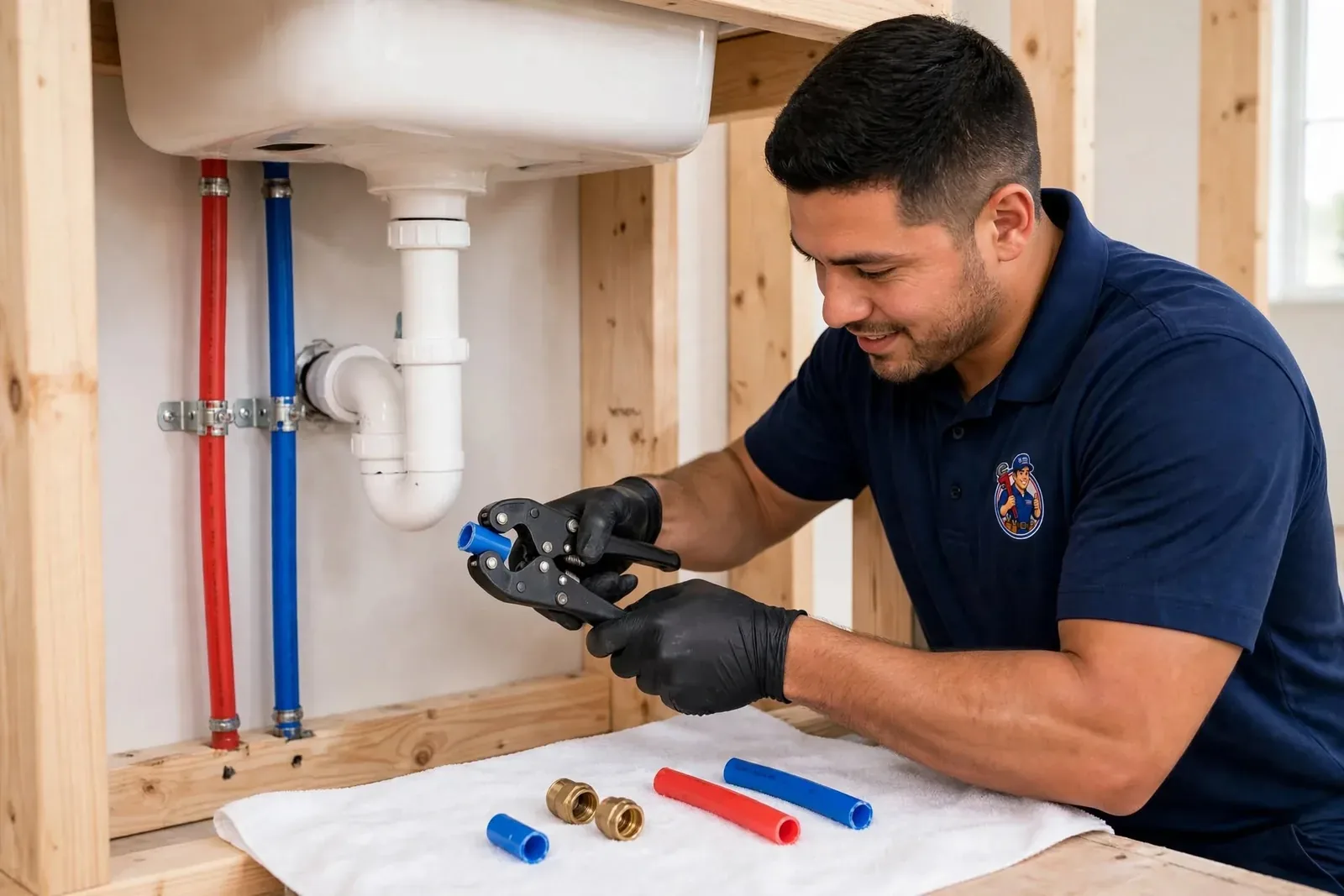
Foundation type varies across the city, so we confirm it before anything else - a good deal of the older Manhattan Beach stock predates slab construction. Where a property is on slab, the ordinary signals still apply, but the sand removes one of them: you are less likely to see water find its way to the surface. That makes acoustic and thermal location the whole job rather than a confirmation step.
A warm patch on the floor, water audible with every fixture closed, or an unexplained bill increase on a slab-on-grade property.
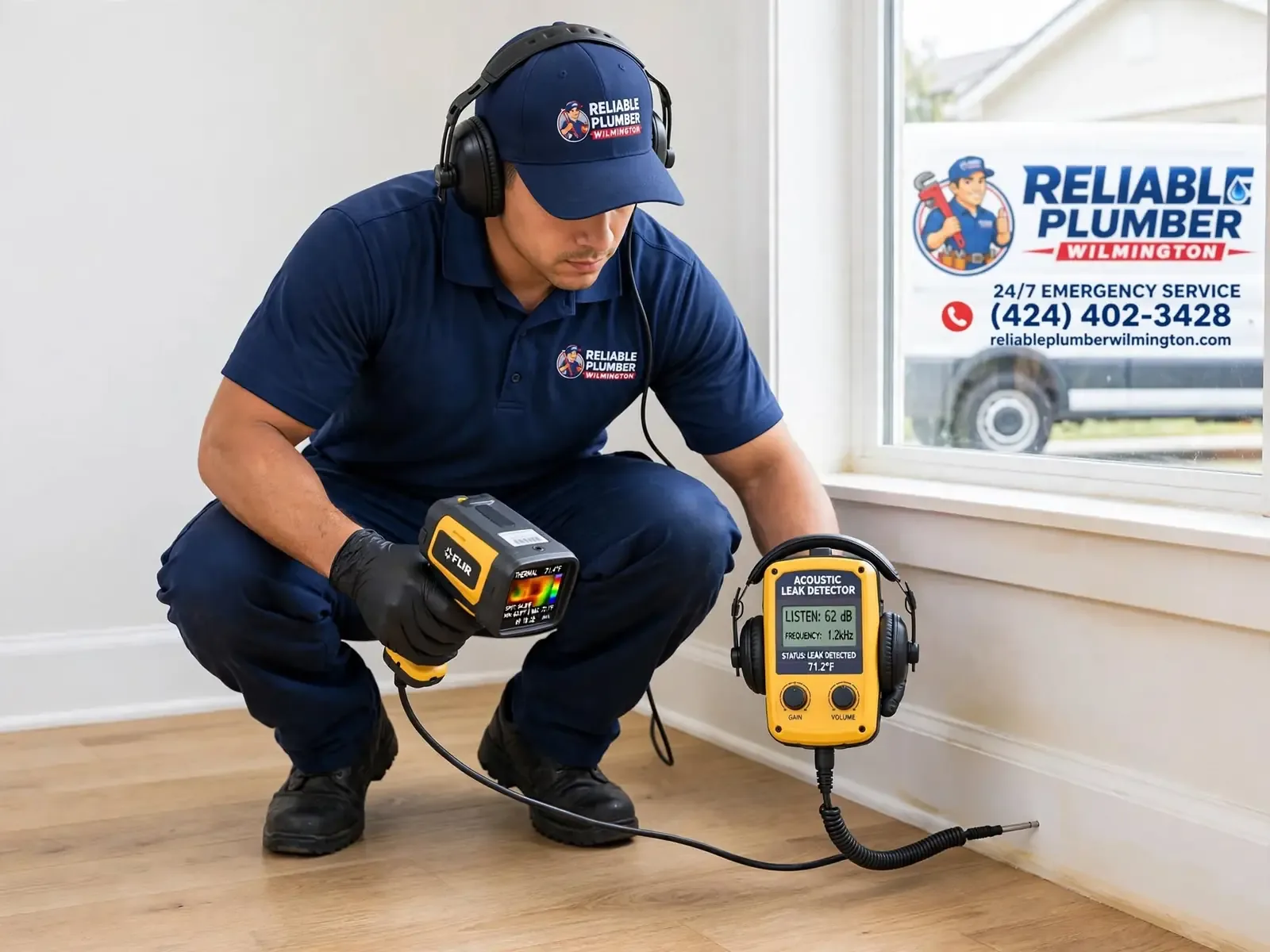
Pressure follows the camera, and here the range is wide. Sound modern lateral takes 2,500 to 3,000 PSI, while the cast iron under the older pre-war properties is run at 1,500 to 2,000 PSI instead. Given the city runs its own sewer system and its own permitting, keeping a lateral properly clear rather than merely reopened is worth the difference in method.
Blockages that keep returning, kitchen lines with a grease history, and scaled cast iron where cabling only bores a channel.
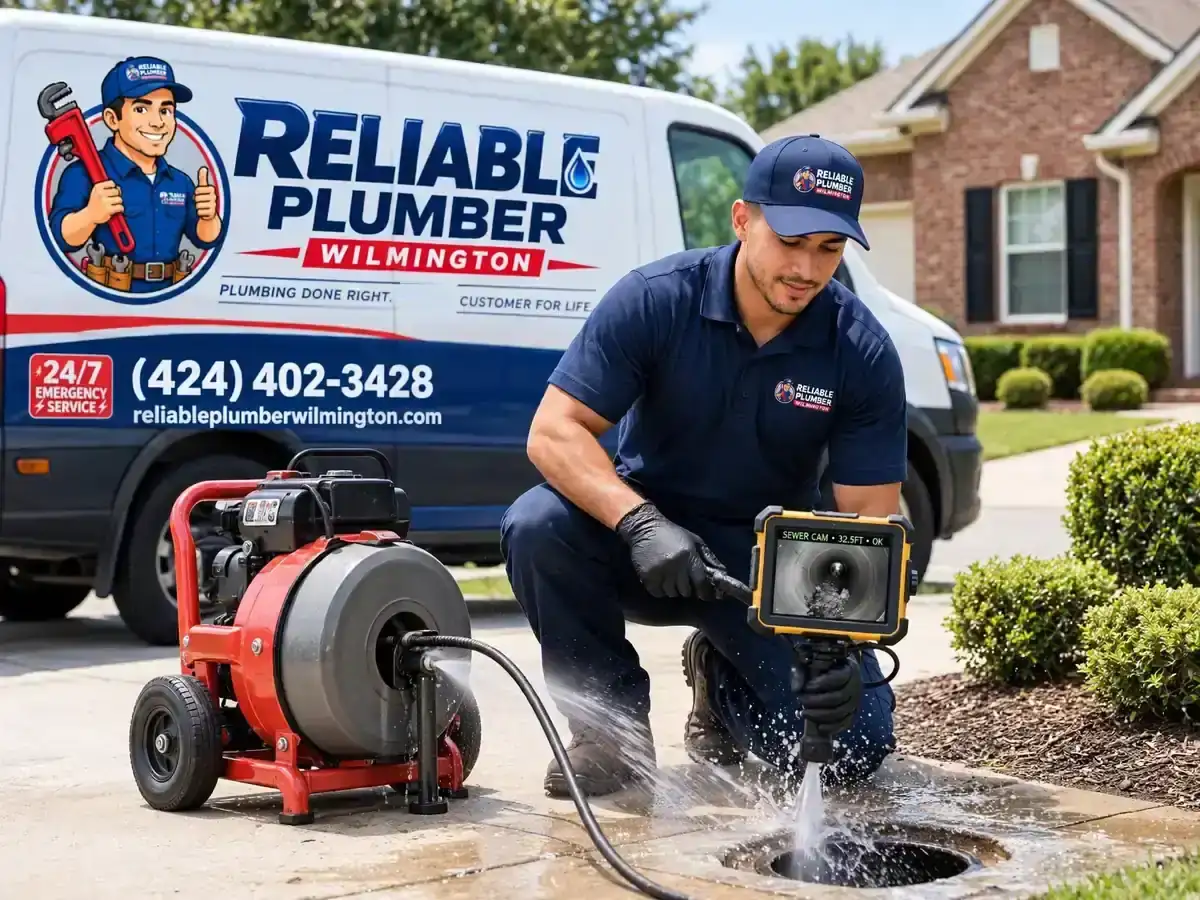
The older sections of Manhattan Beach frequently have non-standard rough-in spacing and tight bathroom footprints, so measuring before ordering saves a return trip. On any fixture predating 1994 there is a straightforward case anyway: 3.5 gallons a flush or more against California's 1.28 gallon standard, with SB 407 bringing replacement into scope during a remodel.
Running or phantom-flushing toilets, weak flush, water seeping at the base, or replacing a pre-1994 fixture using 3.5 gallons a flush.
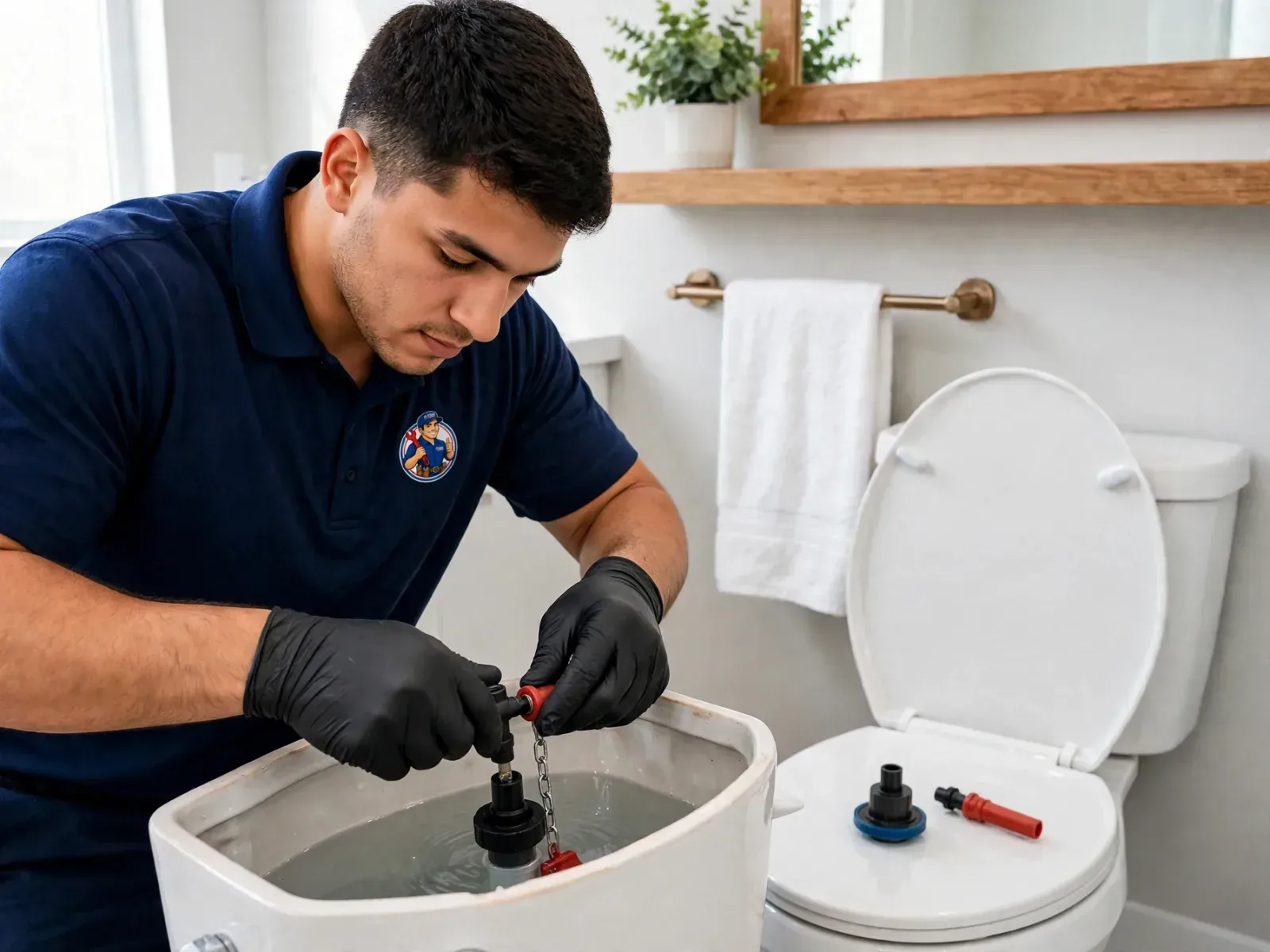
City-supplied water here carries enough dissolved mineral to shorten cartridge and valve seat life beyond what manufacturer guidance assumes, and coastal exposure works on the visible hardware from the outside. If a tap rebuilt a year or two ago has started dripping again, that combination is the likeliest explanation rather than the repair itself.
Dripping spouts, stiff handles, leaking handle bases, or flow that has dropped at one fixture while the rest of the house is fine.
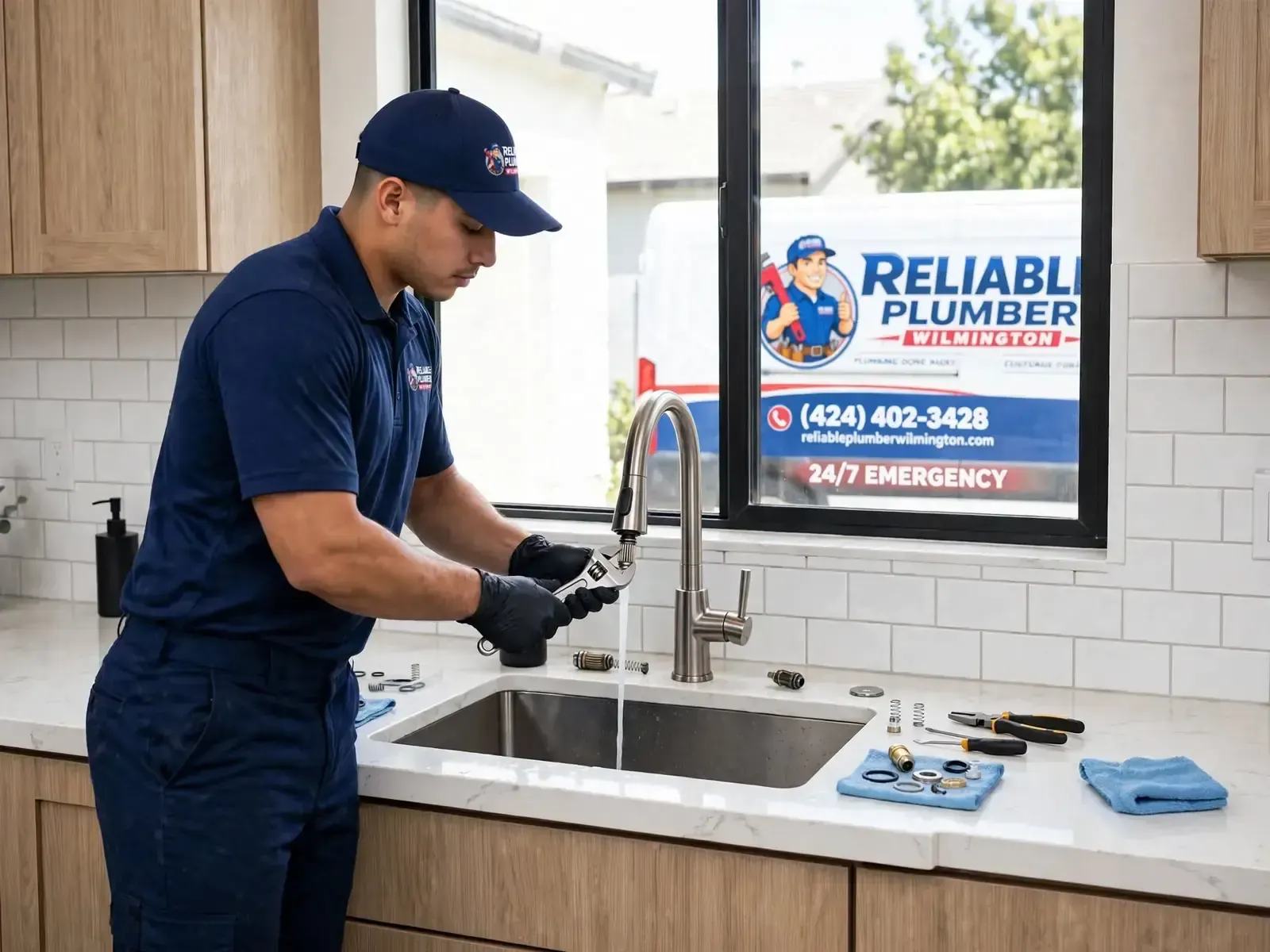
Tell the dispatcher whether you are on a walk street, the Strand or the Hill Section, because vehicle access differs sharply between them and it changes how we approach. Shut the main off first. And if there is no visible water but you suspect a leak, say so - on sandy ground the absence of a wet patch proves very little.
Burst supply lines, sewage backing up, main line breaks, and water heater failures - anything where water is causing damage right now.

Covering a city properly means knowing what changes at its boundary. Here, several things do.
Free-draining ground means an escaping line disperses downward instead of surfacing, so there may be no damp patch at all. Here the water bill is the early warning, and we investigate on that rather than waiting for something to show.
Built on levelled sand dunesSand will not hold a vertical trench face, so an excavation must be shored before anyone works in it. That is a genuine cost we account for up front, and a real reason to compare trenchless options.
Shored excavation · trenchless pricedManhattan Beach provides water, sewer and storm drain directly through a single Utilities Division, and issues its own permits. That is simpler than most of the cities around it, and we work to it.
City water · sewer · storm drainThe citywide median is 1970, but roughly fifteen percent of homes were built before 1950. Pre-war galvanized and 1970s copper fail completely differently, so we identify the material rather than trusting the average.
~15% built pre-1950Camera footage on sewer recommendations, acoustic and thermal on hidden leaks, findings written down. Where the ground hides the problem, the evidence has to come from equipment rather than eyes.
Camera · written findingsManhattan Beach divides into well-defined sections, and each one presents differently once you are working on it.
The Sand Section runs down to the water and takes in the walk streets and the Strand, where properties have no vehicle frontage and equipment has to come in on foot - a genuine planning factor rather than an inconvenience. The Hill Section climbs steeply behind it, and elevation change there affects both pressure and drainage. The Tree Section and Manhattan Heights are more conventional residential streets, and Manhattan Village to the east is later development. Underneath all of it is the same story: dunes 50 to 70 feet high, levelled by builders through the 1920s and 1930s, leaving free-draining sand that lets a hidden leak disperse instead of surface. With 15,281 units at a 1970 median but roughly fifteen percent built before 1950, the era of the individual property tells us far more here than the neighbourhood does.
Licensed, bonded and insured · 24/7 dispatch · diagnosis before price · findings in writing
Five categories covering everything from a slow drain to a full repipe.
We reach Manhattan Beach from Wilmington 90744, and cover 30 cities across Los Angeles County and north Orange County. These are the communities closest to Manhattan Beach.
Coverage, permits, water and what is specific to this city.
Yes, across all sections - Sand, Hill, Tree, El Porto and Manhattan Village. It sits within our South Bay coverage, and we plan access in advance for walk street and Strand properties.
Because the city is built on sand. Manhattan Beach was developed over dunes that stood 50 to 70 feet high before builders levelled them in the 1920s and 1930s, and the sand left behind drains extremely freely. Water escaping a buried line disperses downward rather than collecting and surfacing, so there may be no damp patch at all - the water bill is usually the first real evidence.
Yes, and it is a genuine cost factor. Sand will not hold a vertical face, so a trench has to be properly shored before anyone can safely work in it. That is one of the main reasons we price trenchless sewer options alongside open excavation here rather than assuming a dig is the cheaper route.
The city does, for both. Manhattan Beach is the direct provider of water, sewer and storm drain services through a single Utilities Division, and its water system was established in 1912, the same year the city incorporated. Permits also come from the city.
More varied than the headline figure suggests. The median construction year across 15,281 units is 1970, but around 7.5% of homes predate 1940 and a further 7.4% were built by 1949 - so roughly fifteen percent of the city is pre-1950 stock with pipe to match, sitting alongside tract housing decades newer.
No. Manhattan Beach is its own incorporated city, so there is no LASAN sewer lateral rebate and no LADWP billing adjustment. Water, sewer and permit questions all go to the City of Manhattan Beach.
Yes, but tell us when you book. Those properties have no vehicle frontage, so equipment comes in on foot and we load accordingly. The Hill Section has its own access considerations because of the gradient.
In Manhattan Beach that is exactly the situation worth investigating rather than waiting out. Free-draining sand means a hidden leak may never surface, so an unexplained rise in usage is often the only symptom you will get. Acoustic listening and thermal imaging locate it without opening anything up on spec.