Leaks and Pipes in Wilmington, CA - The Complete Guide
Pipe failure in this neighbourhood is not random. It follows the housing stock, the material
that was standard when those houses were built, and the pressure the system runs at. Those
three facts explain most of the leak calls in 90744.
Why the Galvanized Arithmetic Matters
Housing in 90744 is largely 1940 to 1969, with a meaningful share older still.
Galvanized steel was the standard supply pipe through that entire period, and its practical
service life is 30 to 40 years. That pipe is now 60 to 85 years old.
Galvanized corrodes from the inside. The zinc coating depletes, the steel beneath rusts, and
the bore narrows with scale until pressure drops and the water runs rust-tinted. Both of
those symptoms arrive together, because they are the same process observed two different
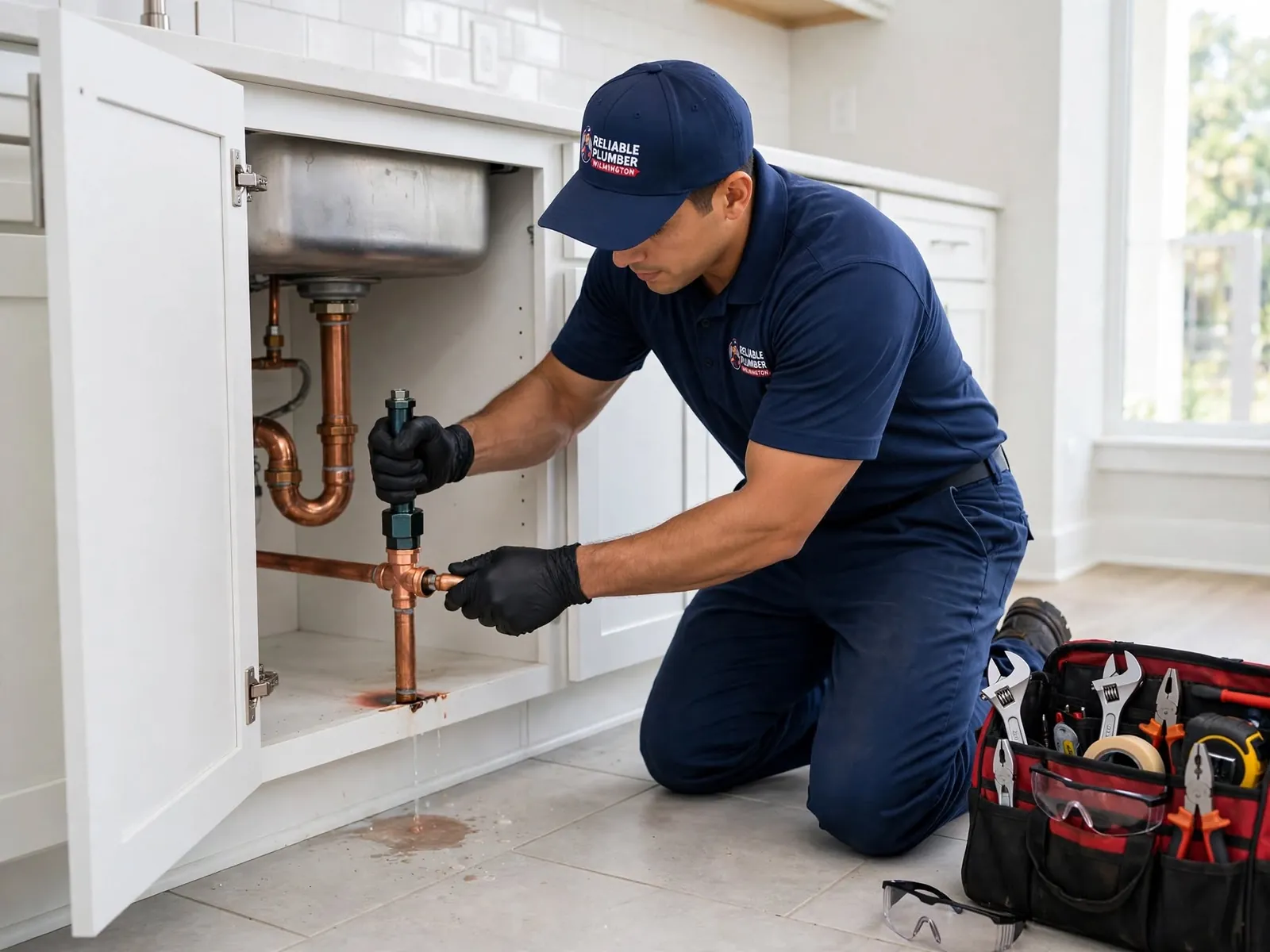
ways. See pipe repair for how the material determines the
repair.
The consequence for spending decisions is the one people find hardest to accept. The section
that failed did not fail because something happened to it. It failed because the entire
system reached the same age simultaneously, and it happened to be marginally the weakest.
Replacing it restores the system to a state where the next weakest section is now the
weakest.
Finding a Leak Before Opening Anything
Three techniques, used in order. The meter test confirms a supply leak exists at all: close
every fixture, watch the meter, and any movement means water is escaping. Acoustic equipment
then listens for pressurised water escaping, which narrows the location to within inches.
Thermal imaging finds temperature differences through slab and drywall, which is what makes
hot-water slab leaks findable without demolition.
Doing this properly is the difference between one opened wall and three. It is also why
leak detection is priced separately from repair - it
is a different job with different equipment.
Slab Leaks and Why They Escalate
A slab leak is a supply line failing inside or beneath the concrete foundation. The
signature is specific: a warm patch on the floor where a hot line runs, water audible with
every fixture closed, and a bill that jumps with no change in use.
Left running, the water saturates soil beneath the footing. Saturated soil compresses
unevenly, the foundation settles differentially, and cracks appear alongside doors that stop
closing. At that point the plumbing repair is the smaller half of the bill, which is the
entire argument for acting on the bill rather than waiting for the crack.
Repair options are a spot repair through a small access cut, a reroute that abandons the run
and carries the line above the slab, or repiping. Each spot repair runs $2,000 to $4,000 and
protects against nothing. Three or four reach $6,000 to $12,000 - repipe money, spent without
a repipe.
Pressure: the Cause Nobody Tests For
California Plumbing Code caps residential pressure at 80 psi and requires a pressure
regulator above that threshold, fitted immediately after the meter with a strainer upstream.
Most regulators run between 50 and 70 psi. The property owner installs and maintains it, not
the utility.
Excess pressure does not present as a problem. It presents as everything else wearing out
early - joints weeping, fixtures failing, water hammer, repeat leaks that look like poor
workmanship. Where a house has produced several unexplained failures, a static pressure test
is the cheapest diagnostic available and it is skipped almost universally.
PEX or Copper
A whole-home repipe in Los Angeles runs roughly $15,000 to $30,000 for an average 1,700
square foot home. By material, PEX typically falls between $4,500 and $14,000 and copper
between $8,000 and $20,000 or more. PEX generally costs 40 to 50% less and lasts comparably,
and on a full repipe the material choice moves the total less than most guides suggest -
labour, access and wall repair dominate.
The local argument for PEX is not price. It flexes with ground movement, where rigid copper
transfers that stress into its soldered joints, and after seismic activity spot leaks appear
in rigid systems more often. In this part of Los Angeles County that is worth weighing.
The Money Most People Leave Behind
LADWP does not repair leaks on private property. It does, however, assess billing
adjustments where an underground leak has been repaired, through its Field Investigations
Unit. The scope is underground main line leaks - not toilets, sprinkler valves or pools.
A leak that ran for weeks was metered for weeks, so the inflated bill can be significant and
the adjustment worth claiming. Keep the repair paperwork, because that is what the claim
rests on. Almost nobody asks.
References