Redondo Beach runs 15 sewer pump stations across roughly 112 miles of main - far more pumping than its neighbours need. That tells you a lot about the ground, and about which properties are exposed if the power goes out.











Start with the sewer system, because it says something the brochures do not. Redondo Beach owns and operates its own wastewater collection network - roughly 112 miles of sewer main between 6 and 18 inches - and to move flow through it the city runs 15 major pump stations backed by nine standby generators. That is a striking amount of pumping for a system that size. For comparison, neighbouring cities with two or three times the pipe length manage with a handful of lift stations. What it reflects is terrain: Redondo runs from beach level and the King Harbor basin up to the Riviera hillside, and a good deal of it simply cannot drain by gravity alone. Flow leaves the city into the Los Angeles County Sanitation Districts trunk system and goes on to the treatment plant in Carson.
That has a practical consequence for low-lying properties. Where a building sits below the level of the sewer main serving it, or downstream of a pump station, a backup during a power interruption or a heavy flow event is a real possibility rather than a theoretical one - the nine backup generators exist precisely because the city treats power loss as a risk to the system. A backwater valve is worth asking about if your property is low-lying, and if fixtures on your lowest floor are the ones that back up first, that is a diagnostic signal rather than a coincidence.
Redondo Beach incorporated on 29 April 1892, making it the oldest city we cover, though most of its housing is far newer. Across 28,307 occupied units the median construction year is 1973, and the split by half is genuinely useful: North Redondo runs to a 1975 median while South Redondo comes in at 1969. Around 53.4% of units are owner-occupied. Water does not come from the city - California Water Service supplies Redondo Beach through its Rancho Dominguez District, so supply and billing questions go there rather than to city hall.
Reliable Plumber Wilmington covers Redondo Beach across the South Bay. We handle drain cleaning, sewer line repair, leak detection, water heater work, repiping and the rest - diagnosis before price, camera evidence on sewer work, and the finding written down.
Worth knowing before you call: water and sewer are separate authorities here. California Water Service handles supply while the city handles the sewer system and the permits, so the right first call depends on the problem. As an incorporated city outside Los Angeles, no LASAN rebate or LADWP adjustment applies. California requirements are unchanged: SB 407 on fixtures during a remodel, the 80 psi pressure ceiling with a regulator above it, and seismic strapping on water heaters.
Where a blockage shows up matters in Redondo. If the fixtures on your lowest floor back up first while the ones above stay clear, that points at the line leaving the property rather than at anything inside it - and on low-lying ground in a heavily pumped system it is worth taking seriously. A camera confirms it rather than leaving you to guess after a second cabling.
Slow or blocked kitchen, bath, shower and laundry lines - and any drain that has already been cleared once and blocked again.

The city owns and operates its own collection system, around 112 miles of main with 15 major pump stations and nine standby generators, and issues its own permits. Flow leaves into the Los Angeles County Sanitation Districts trunk network for treatment. On a lateral serving a low-lying property, we look at whether a backwater valve belongs in the scope rather than just restoring what was there.
Recurring backups, several fixtures slow at once, sewer odour, or a line a camera has shown to be cracked, offset or root-invaded.

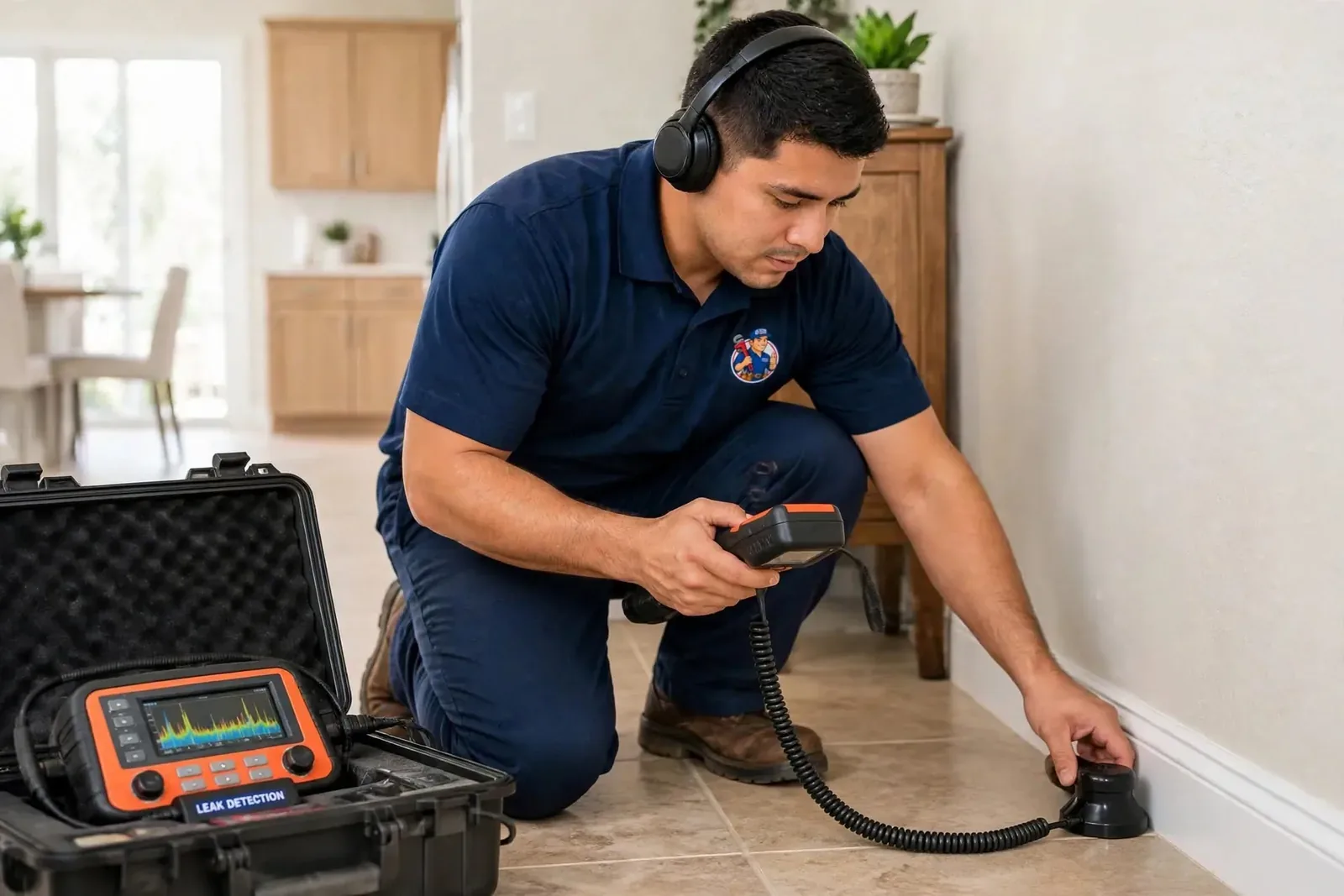
The north-south split shapes what we expect. South Redondo's 1969 median puts more properties near the galvanized-to-copper changeover, where a leak may begin as a slow internal weep. North Redondo's 1975 median leans copper and plastic, where failures are more abrupt and more localised. Either way, slab construction hides them, and acoustic listening with thermal imaging is what narrows the search.
A water bill that jumped with no change in use, running water with every tap closed, a warm patch on the floor, or a stain with no obvious source.
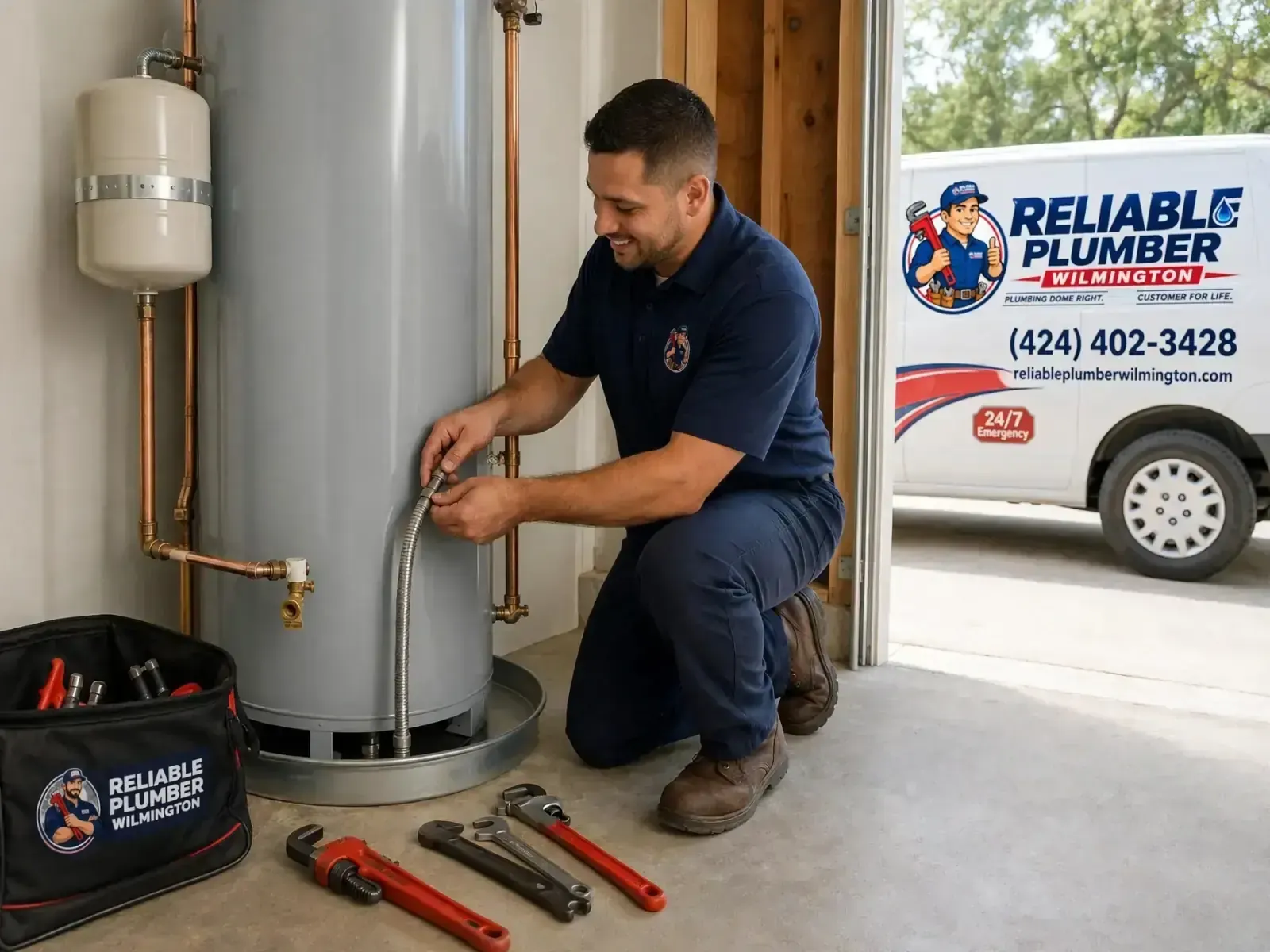
Permits come from the City of Redondo Beach. The code is California state law throughout: two seismic straps at the upper and lower third anchored into framing rather than drywall, with the lower strap at least four inches above the gas control. Because supply here comes from California Water Service rather than the city, any water-quality question about sediment or hardness goes to Cal Water.
No hot water, rumbling or popping, water pooling at the base, or a unit past twelve years old that is worth replacing on your schedule rather than its own.
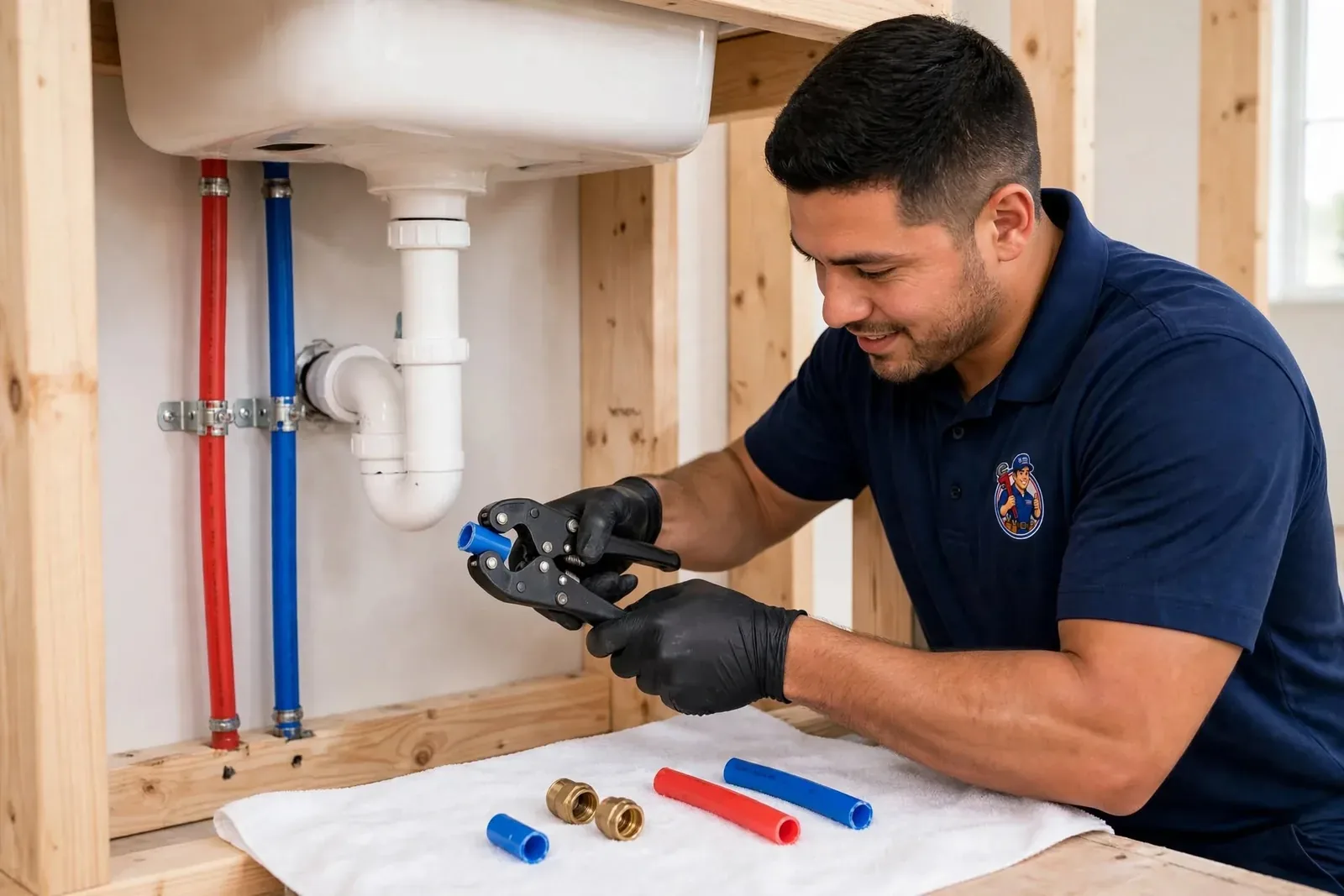
A 1973 citywide median means copper more often than galvanized, so the failure to expect is the pinhole rather than whole-house rust - but South Redondo's older 1969 median means the earlier material still turns up. In multi-unit buildings, which make up a substantial share of the city, repiping is usually planned at building level rather than unit by unit, and that changes both the sequencing and the cost per home.
Rust-tinted water, pressure falling across the whole house, or a second and third leak on the same ageing supply system.
Most Redondo tract housing sits on slab, so supply lines run through concrete and a failure there is routine. The signals are the familiar ones - a warm patch on the floor, a bill that climbed without a change in use, water audible with everything shut. Because supply is billed by California Water Service, that is who to raise a usage query with once the leak is found and fixed.
A warm patch on the floor, water audible with every fixture closed, or an unexplained bill increase on a slab-on-grade property.

On a system this dependent on pumping, a properly cleared lateral matters more than usual - a line merely reopened will silt and grease up again, and the consequences land hardest on low-lying properties. Sound lateral takes 2,500 to 3,000 PSI; older or compromised pipe is run at 1,500 to 2,000 PSI. The camera decides, before and after.
Blockages that keep returning, kitchen lines with a grease history, and scaled cast iron where cabling only bores a channel.

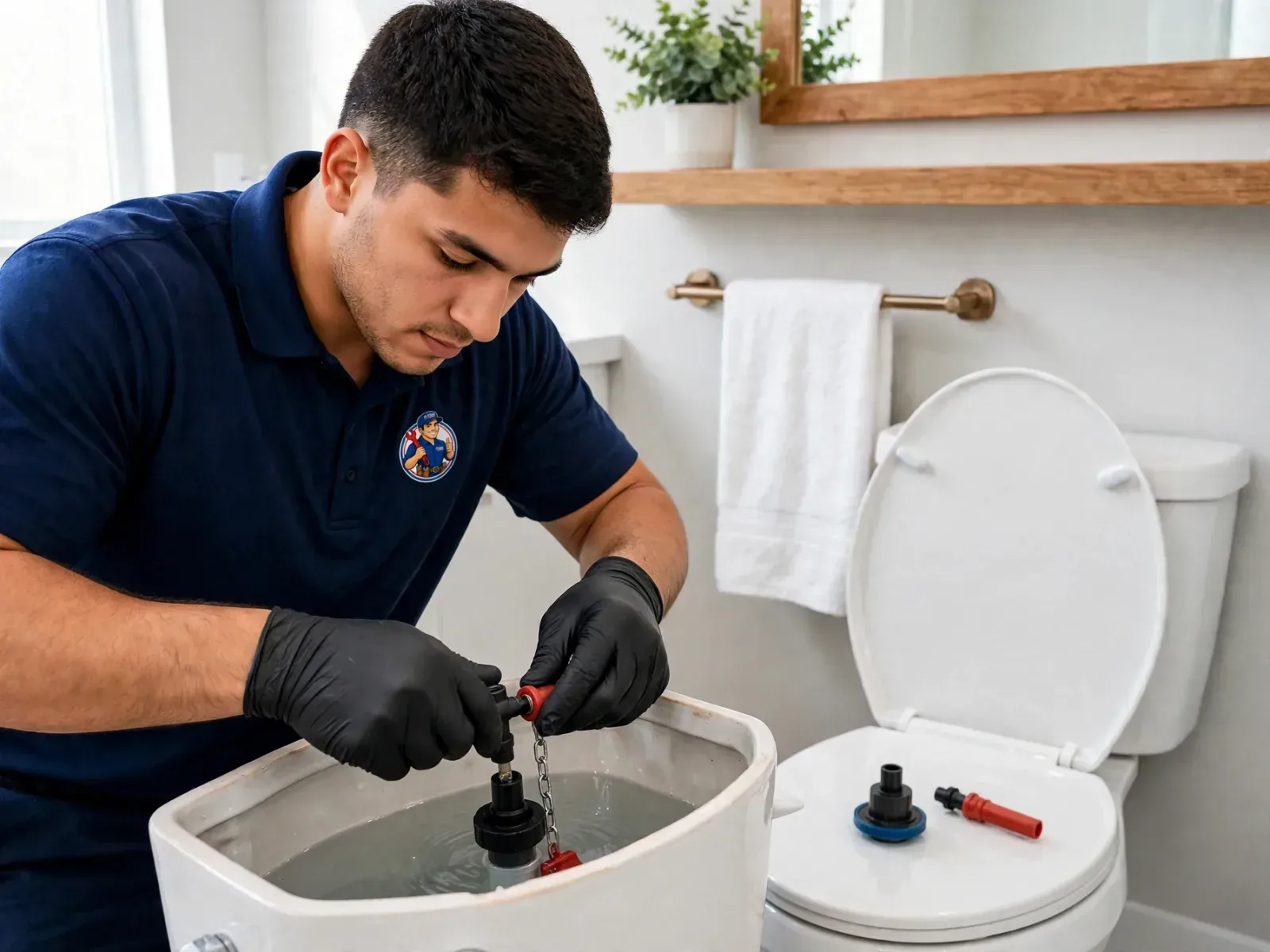
Redondo splits close to evenly between owners and renters at about 53.4% owner-occupied, and a large share of the stock is multi-unit, so fixture calls come through managers as often as residents. On anything predating 1994 the case is simple: 3.5 gallons a flush or more against California's 1.28 gallon standard, with SB 407 applying during a remodel.
Running or phantom-flushing toilets, weak flush, water seeping at the base, or replacing a pre-1994 fixture using 3.5 gallons a flush.
Supply comes from California Water Service's Rancho Dominguez District, and its mineral content wears cartridges and valve seats faster than manufacturer guidance assumes. Coastal exposure adds a second front on the visible hardware. A tap that has started dripping again within a year or two of being rebuilt is usually reporting on those rather than on the workmanship.
Dripping spouts, stiff handles, leaking handle bases, or flow that has dropped at one fixture while the rest of the house is fine.

Tell the dispatcher whether you are in North or South Redondo and whether the property sits low - near King Harbor, the Esplanade or the flats - because on a heavily pumped system that changes what we expect to find. Shut the main off first, and if sewage is backing up rather than water leaking, say so, as the two need different equipment.
Burst supply lines, sewage backing up, main line breaks, and water heater failures - anything where water is causing damage right now.

Covering a city properly means knowing what changes at its boundary. Here, several things do.
Fifteen major pump stations and nine standby generators across roughly 112 miles of main is far more pumping than neighbouring cities need. Much of Redondo cannot drain by gravity, and that shapes how we read a backup.
15 pump stations · 9 generatorsIf your property is low-lying or the lowest fixtures back up first, a backwater valve belongs in the conversation. The city keeps standby generators because it treats power loss as a real risk - that risk reaches your lateral too.
Low-lying property protectionNorth Redondo runs to a 1975 median build year, South Redondo to 1969. That gap straddles a change in supply pipe, so which half of the city you are in genuinely changes the likely diagnosis.
North 1975 · South 1969California Water Service supplies the water through its Rancho Dominguez District while the city runs the sewers and issues permits. Two authorities, and the right first call depends on the problem.
Cal Water · city sewerCamera footage on sewer recommendations, acoustic and thermal on hidden leaks, findings written down - which matters most in multi-unit buildings where several parties need to see the same thing.
Camera · written findingsRedondo divides north and south, and the two halves differ enough in age and elevation to matter on a service call.
North Redondo - Golden Hills, El Nido, Villas North and the Artesia corridor - is the newer half at a 1975 median, flatter and denser, with a large share of the city's multi-unit housing. South Redondo comes in at a 1969 median and takes in Riviera Village, the Esplanade, the pier and King Harbor, running from sea level up to the Hollywood Riviera hillside. That elevation range is why the city needs 15 major pump stations to move flow through only about 112 miles of sewer main, and it is why low-lying properties near the harbour and the flats are the ones where a backwater valve is worth discussing. Incorporated in 1892, Redondo is the oldest city we cover, though at a 1973 citywide median across 28,307 occupied units most of what is standing today went up long after that.
Licensed, bonded and insured · 24/7 dispatch · diagnosis before price · findings in writing
Five categories covering everything from a slow drain to a full repipe.
We reach Redondo Beach from Wilmington 90744, and cover 30 cities across Los Angeles County and north Orange County. These are the communities closest to Redondo Beach.
Coverage, permits, water and what is specific to this city.
Yes, both halves - North Redondo including Golden Hills and El Nido, and South Redondo including Riviera Village, the Esplanade and King Harbor. It sits within our regular South Bay coverage.
Terrain. The city owns roughly 112 miles of sewer main and runs 15 major pump stations with nine standby generators to move flow through it, because the ground runs from beach level and the King Harbor basin up to the Riviera hillside and much of it cannot drain by gravity alone.
It is worth asking about if your property is low-lying, sits below the level of the main serving it, or if the fixtures on your lowest floor are the first to back up. The city keeps standby generators because it treats power loss as a genuine risk to a pumped system, and that risk extends to individual properties.
California Water Service, through its Rancho Dominguez District - not the city. Supply, pressure and billing questions go to Cal Water, while the sewer system and permits are the city's.
The city collects it through its own network of about 112 miles of main, then conveys it into the Los Angeles County Sanitation Districts trunk sewer system, which carries flows to the treatment plant in Carson.
Yes, by about six years of build era, which is enough to matter. North Redondo has a median construction year of 1975 and South Redondo 1969, and that gap straddles the changeover in supply pipe - so the failure we expect to find differs between the two halves.
The city incorporated on 29 April 1892, which makes it the oldest municipality in our coverage area. The housing is much newer though: the citywide median construction year across 28,307 occupied units is 1973.
Regularly. Multi-unit housing is a large share of the Redondo stock, particularly in the north of the city. Repiping and drainage work in those buildings is usually planned at building level rather than unit by unit, and we put findings in writing so every party involved is looking at the same evidence.