Compton is the oldest city we cover and one of the few where you genuinely need to check which company supplies your water. It also contains something no other city here has: a working agricultural district.











Compton incorporated on 11 May 1888 with a population of 500, which makes it the oldest city anywhere in our coverage area. Griffith D. Compton donated the land on which it was founded, and he attached a condition that still shapes part of the city: a certain acreage was to be zoned solely for agriculture. That land became Richland Farms, a ten-block agricultural preserve of over a hundred acres, zoned for farming and livestock since the early twentieth century, where residents still keep horses and crops on deep lots in the middle of an otherwise densely built city. Plumbing on those properties is a different job - long service runs from the street to a house set well back, outbuildings and barns with their own supply, livestock water and irrigation demand, and hose bibs doing work that a suburban spigot never does.
The rest of Compton is postwar residential, and the dates matter. The median year for houses and condominiums is 1955 and for apartments 1958, which places the city firmly in galvanized-steel supply and cast-iron drain territory. Galvanized has a practical service life of about thirty to forty years, so anything original is running some three decades past it and corroding inward until the working diameter is a fraction of what was installed. Of 25,154 housing units, roughly 57% are owner-occupied and 43% rented - a higher ownership rate than most of the surrounding area.
Water is the thing to check before anything else, because Compton is unusually fragmented. The City of Compton Water Department serves approximately 80,000 people through around 14,500 residential, commercial and industrial connections, but it is not the only supplier in the city - Golden State Water Company's Southwest system covers part of Compton as well. Which one bills you depends on your service address rather than on the city you live in, and it determines who to approach about supply, pressure or a billing question. On the sewer side the city states that customers are responsible for their sewer line from the property line to the house, which is a narrower responsibility than the county code standard that applies in neighbouring unincorporated areas - worth confirming with the city for your specific property before you commit to a repair scope.
Reliable Plumber Wilmington covers Compton from the Harbor Area, a direct run north. We handle drain cleaning, sewer line repair, leak detection, water heater work, repiping and everything alongside them - diagnosis before price, camera evidence on sewer work, and the finding written down.
Permits come from the City of Compton, and because this is an incorporated city rather than City of Los Angeles territory, there is no LASAN sewer lateral rebate and no LADWP billing adjustment available. California state requirements apply the same way everywhere: SB 407 on fixture replacement during a remodel, the 80 psi pressure ceiling with a regulator required above it, and seismic strapping on water heaters.
Cast iron and clay drain lines from the mid-1950s have spent seventy years losing diameter to scale, so a blockage in Compton is frequently a symptom rather than the problem itself. Clearing it restores flow without restoring the bore, which is why it returns. A camera shows how much usable pipe is actually left - the number that decides whether cleaning or replacement is the honest recommendation.
Slow or blocked kitchen, bath, shower and laundry lines - and any drain that has already been cleared once and blocked again.
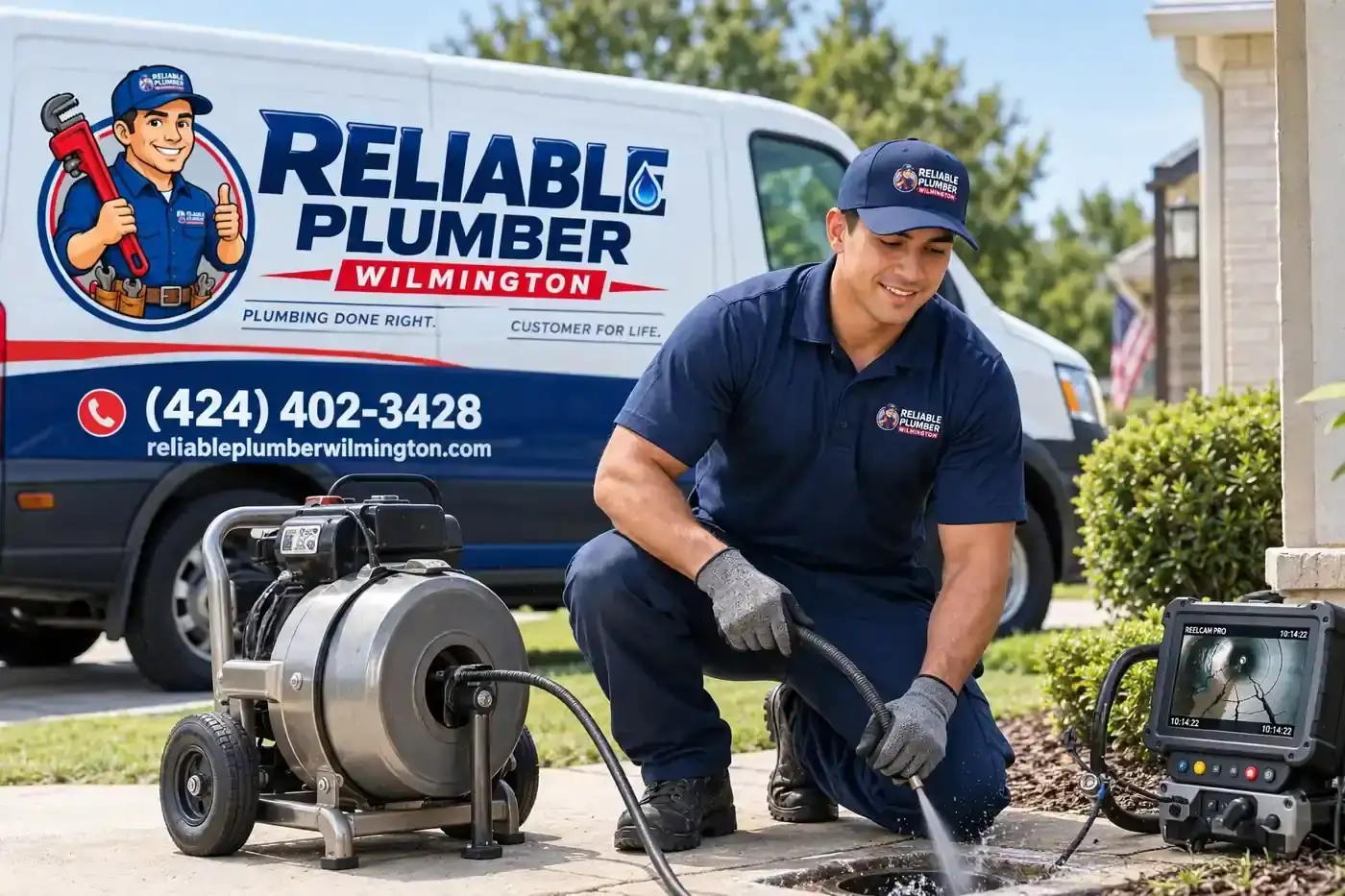
Establishing responsibility comes first here. The city states that customers are responsible for their sewer line from the property line to the house, which is narrower than the rule in the neighbouring unincorporated areas where the owner carries the lateral all the way to the main. We would recommend confirming the position for your address with the city before agreeing a scope, because it changes what you are actually paying for.
Recurring backups, several fixtures slow at once, sewer odour, or a line a camera has shown to be cracked, offset or root-invaded.
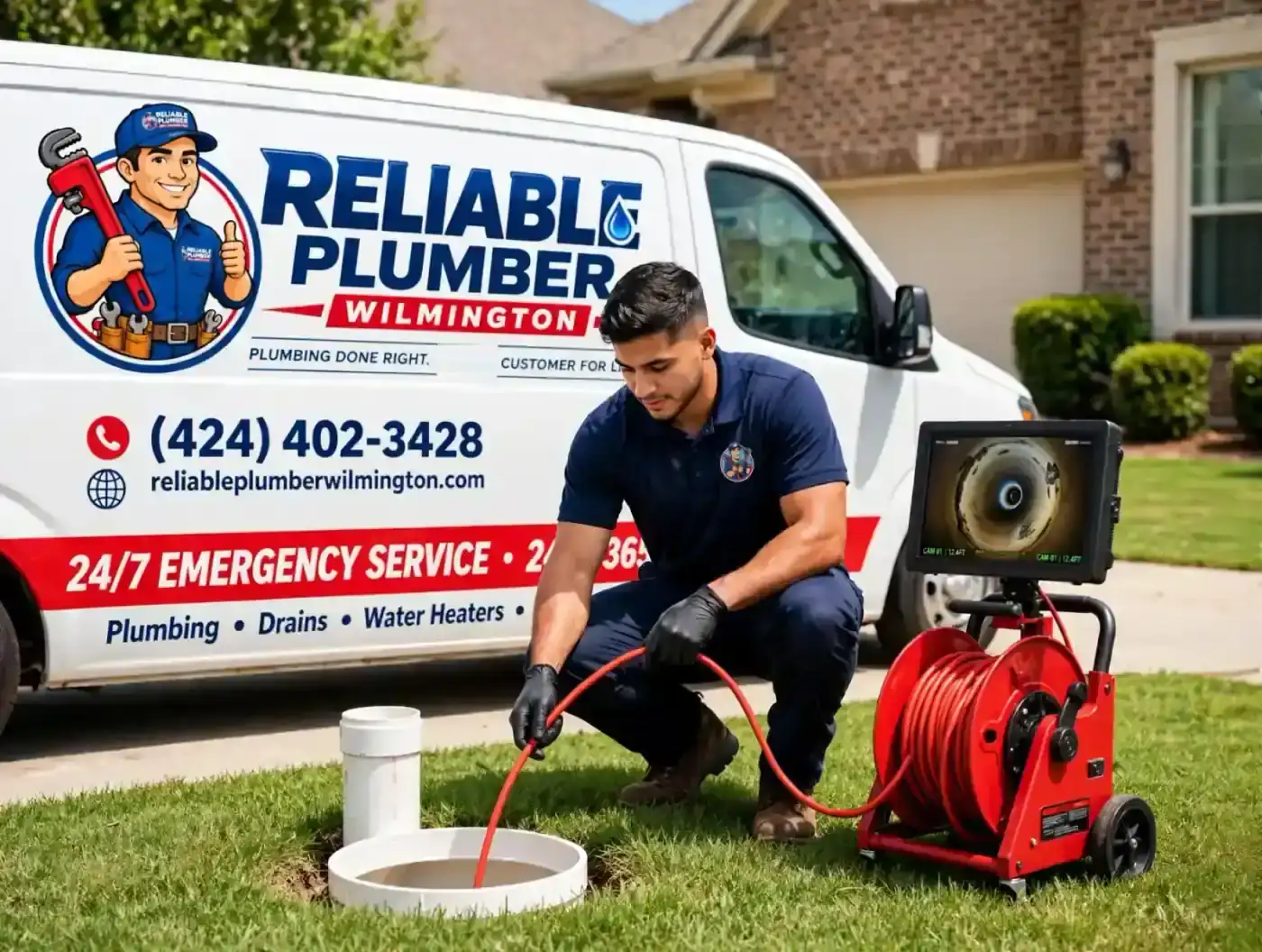
Galvanized supply from the mid-1950s corrodes from the inside out, so leaks here usually begin as slow weeps behind walls rather than as sudden failures. A bill that climbed without any change in routine and a meter that keeps turning with every tap closed are the reliable signals. On the deep Richland Farms lots there is an extra possibility worth ruling out: a long buried service run between the meter and a house set well back from the street.
A water bill that jumped with no change in use, running water with every tap closed, a warm patch on the floor, or a stain with no obvious source.
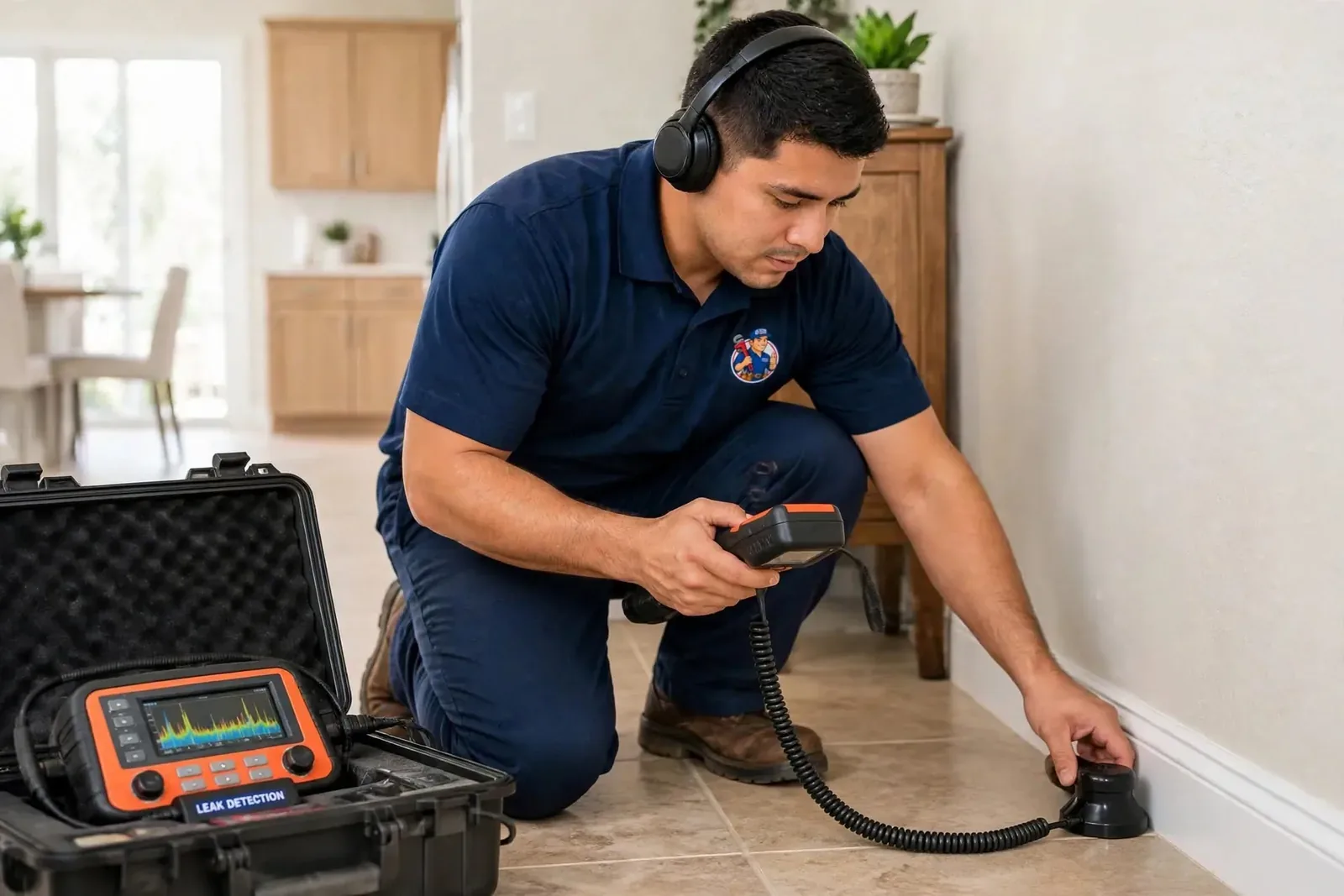
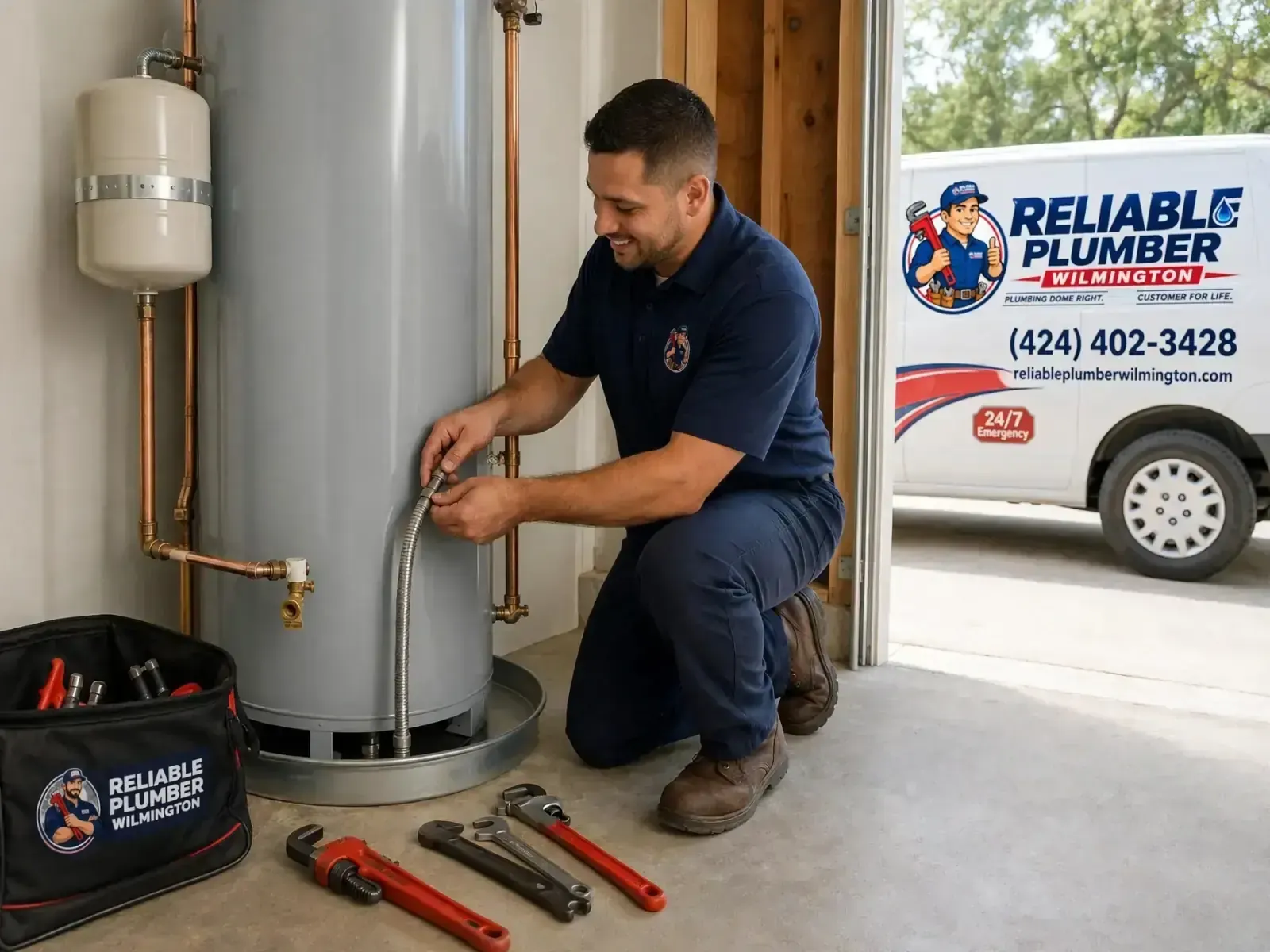
Permits come from the City of Compton. The requirements are California state code and do not vary: two seismic straps at the upper and lower third anchored into framing rather than drywall, with the lower strap at least four inches above the gas control. In mid-1950s housing the practical constraint is usually clearance and combustion air, since these homes were not designed around a modern tank.
No hot water, rumbling or popping, water pooling at the base, or a unit past twelve years old that is worth replacing on your schedule rather than its own.
Compton is a strong candidate. Original galvanized steel from around 1955 is running roughly three decades beyond its thirty-to-forty-year service life, and the pattern is consistent - rust-tinted water at first draw, pressure down across the whole house, and a second and third leak arriving soon after the first is patched. With most homes here owner-occupied, this is usually a decision the household can make directly.
Rust-tinted water, pressure falling across the whole house, or a second and third leak on the same ageing supply system.
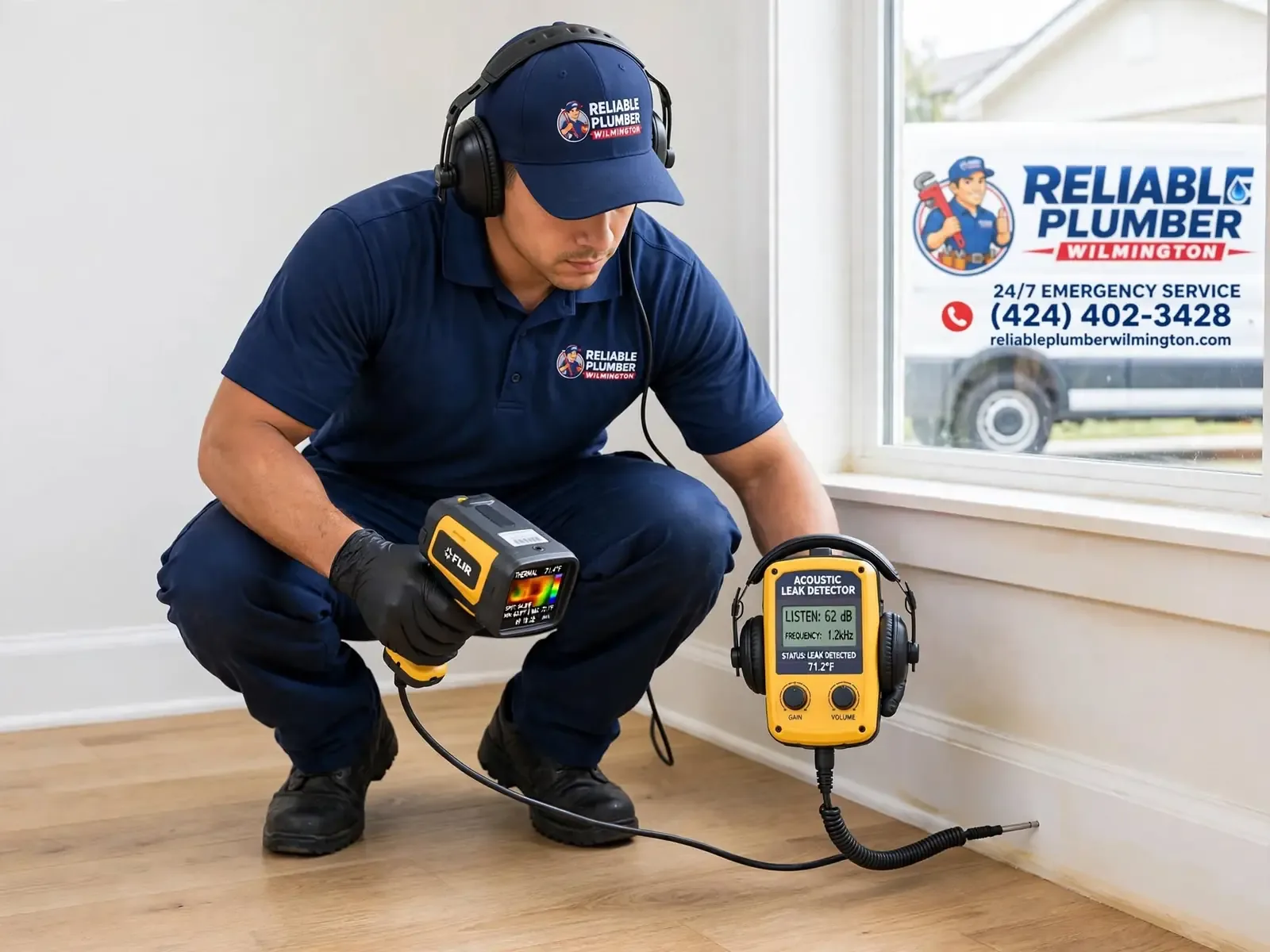
Mid-1950s construction in Compton includes both slab and raised foundations, so the first thing we establish is which you have. Where it is slab, a warm patch on the floor or water audible with every fixture closed points to a supply line in the concrete - and with galvanized pipe of this age it is corrosion working through rather than ground movement, which makes a second leak more likely than not.
A warm patch on the floor, water audible with every fixture closed, or an unexplained bill increase on a slab-on-grade property.
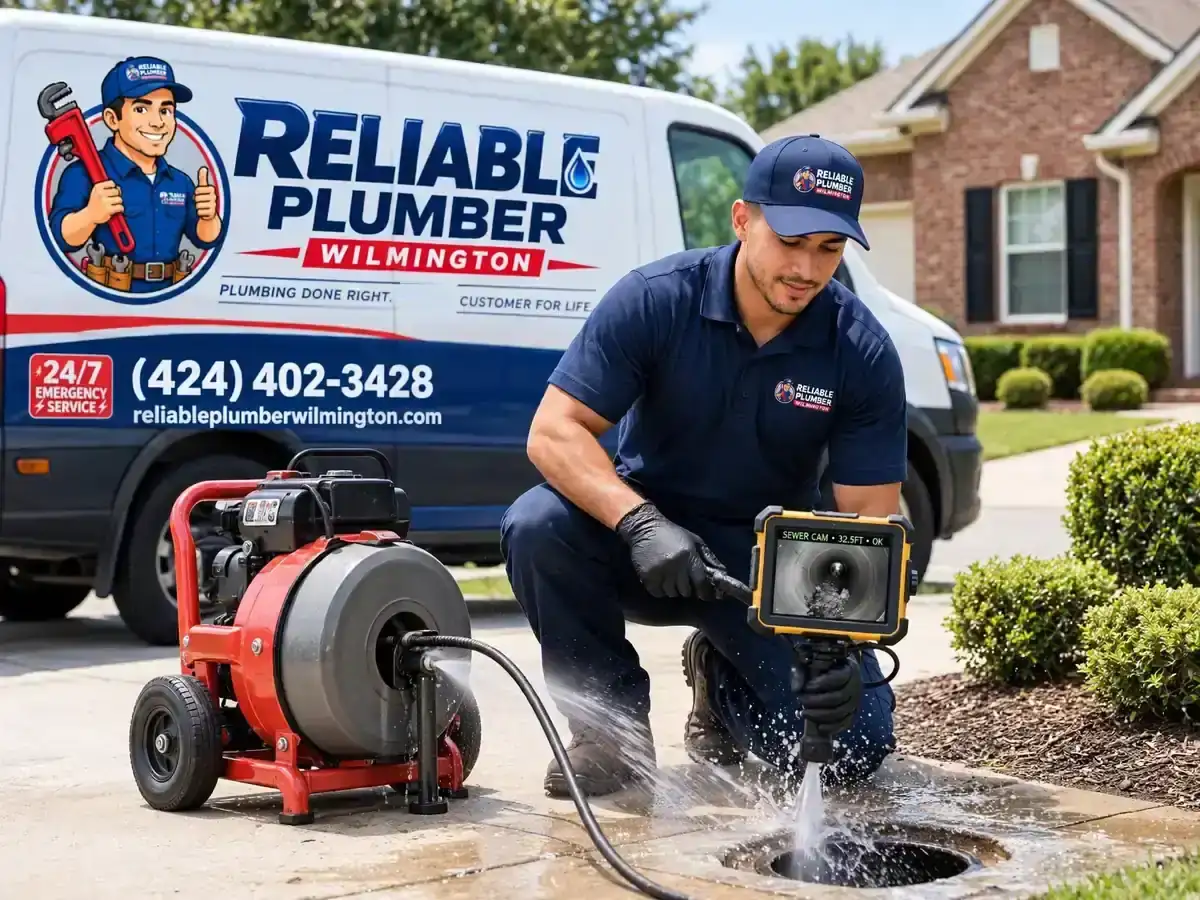
Pressure is set from the camera, and Compton pipe needs the lower end of the range. Seventy-year-old cast iron is run at 1,500 to 2,000 PSI rather than the 2,500 to 3,000 PSI a sound modern lateral takes, because the object is to recover bore without finding the section that will not survive the attempt. On agricultural lots the same care applies over longer runs.
Blockages that keep returning, kitchen lines with a grease history, and scaled cast iron where cabling only bores a channel.
At about 57% owner-occupied, Compton has a higher ownership rate than most of the surrounding area, so fixture decisions are usually made directly by the household. Anything predating 1994 is flushing 3.5 gallons or more against California's 1.28 gallon standard, and SB 407 brings replacement into scope during a remodel - so an upgrade often pays back faster than expected.
Running or phantom-flushing toilets, weak flush, water seeping at the base, or replacing a pre-1994 fixture using 3.5 gallons a flush.
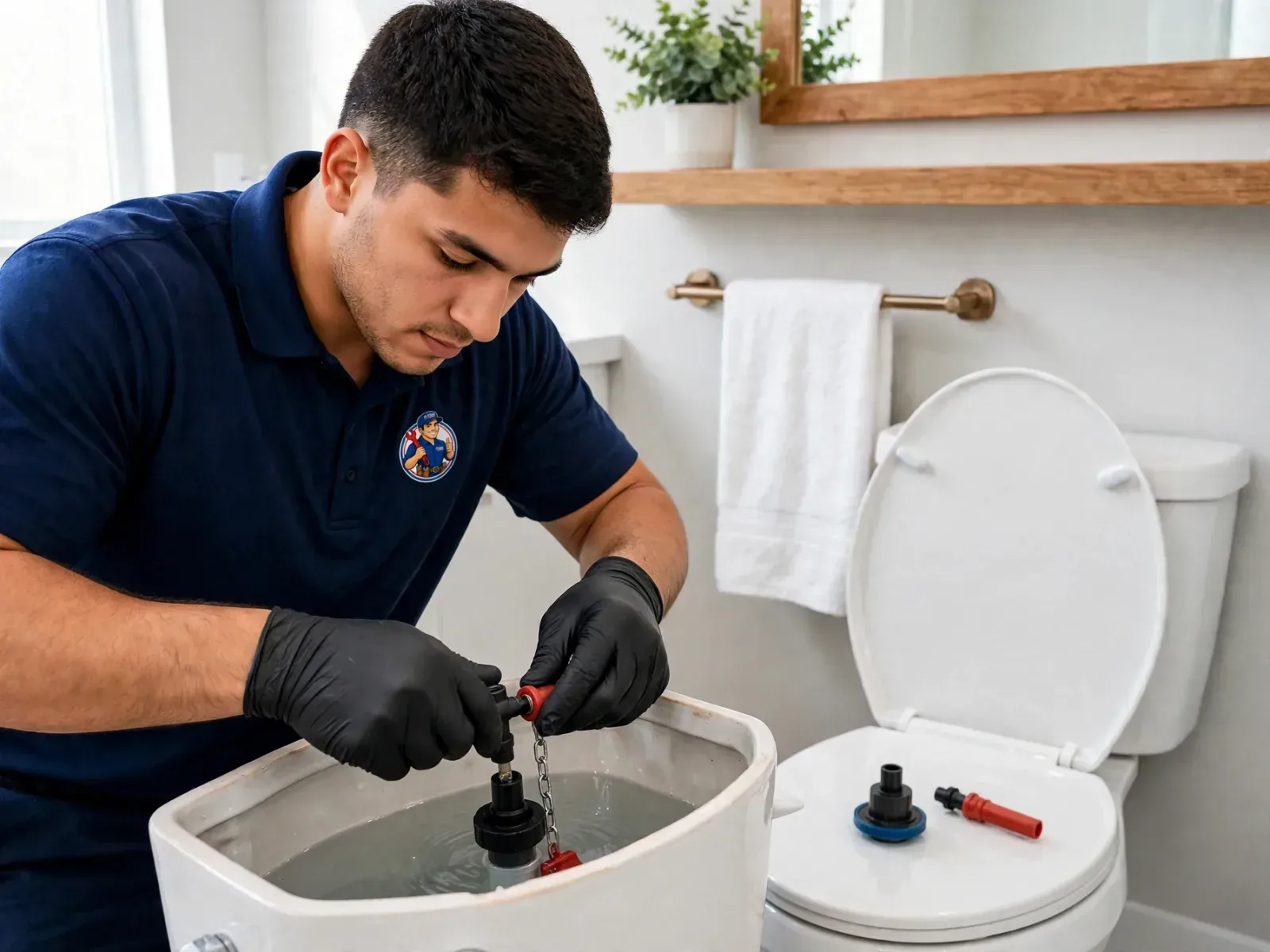
Whether the city's Water Department or Golden State Water supplies your address, the water carries dissolved mineral that wears cartridges and valve seats faster than manufacturer guidance assumes. Where the supply pipe is still galvanized there is a second cause on top, because corrosion products carried out of the pipe will chew through a new cartridge whatever its quality.
Dripping spouts, stiff handles, leaking handle bases, or flow that has dropped at one fixture while the rest of the house is fine.
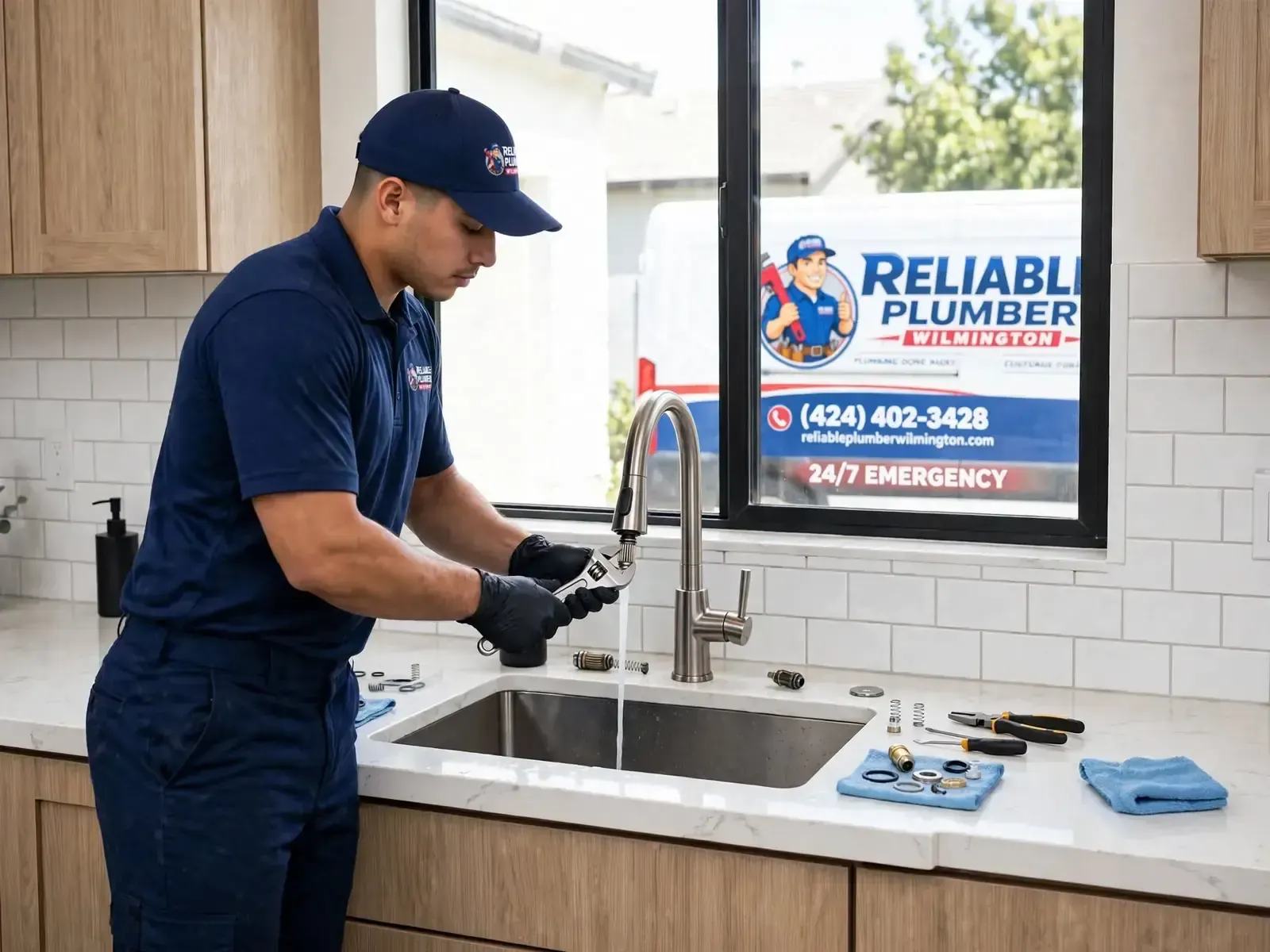
Compton is a direct run north from our Harbor Area base. Shut the main off first - in this housing stock it is usually at the front of the lot near the meter, though on a Richland Farms property it may be a long way from the house. Tell the dispatcher which water company bills you if you know, since it saves a call later.
Burst supply lines, sewage backing up, main line breaks, and water heater failures - anything where water is causing damage right now.

Covering a city properly means knowing what changes at its boundary. Here, several things do.
Compton has more than one supplier. The city's own Water Department covers around 14,500 connections, and Golden State Water covers part of the city too. Which one bills you depends on the address, not the city.
City water · Golden StateGriffith D. Compton stipulated that acreage be zoned solely for agriculture. Those deep lots with barns, livestock water and long buried service runs need a different approach from a standard suburban call.
100+ acre agricultural preserveA 1955 median for houses means galvanized supply about three decades past its service life and cast iron drains scaling for seventy years. These are the materials we handle daily in Wilmington.
Houses median 1955The city states customers are responsible for the sewer line from the property line to the house - narrower than the county rule next door. We recommend confirming it for your address before agreeing a scope.
Confirm with City of ComptonCamera footage on sewer recommendations, acoustic and thermal on hidden leaks, findings written down so you can see exactly what a repair rests on before agreeing to it.
Camera · written findingsCompton runs from dense postwar residential streets to a working agricultural district, and the two need different approaches.
Richland Farms is the part of Compton nothing else in our coverage area resembles. It exists because Griffith D. Compton, who donated the land the city was founded on in 1888, stipulated that a certain acreage be zoned solely for agriculture - and it has stayed zoned for farming and livestock since the early twentieth century, more than a hundred acres across roughly ten blocks where residents keep horses and grow crops on deep lots. Plumbing there means long service runs, outbuildings with their own supply and irrigation loads a normal house never sees. Everywhere else in Compton is dense postwar residential at a 1955 median for houses and 1958 for apartments, with galvanized supply and cast iron drains as the standard package across 25,154 units. The Wilmington Avenue and Alameda corridors run straight down toward our own base, which makes this one of the more direct calls we take.
Licensed, bonded and insured · 24/7 dispatch · diagnosis before price · findings in writing
Five categories covering everything from a slow drain to a full repipe.
We reach Compton from Wilmington 90744, and cover 30 cities across Los Angeles County and north Orange County. These are the communities closest to Compton.
Coverage, permits, water and what is specific to this city.
Yes. Compton is a direct run north from Wilmington along the Alameda and Wilmington Avenue corridors, and its 1950s housing stock uses the same materials we work with at home every day.
It depends on your address, and this genuinely varies within the city. The City of Compton Water Department serves approximately 80,000 people through around 14,500 connections, but Golden State Water Company's Southwest system covers part of Compton as well. Check your bill before assuming which one to contact.
The city states that sewer customers are responsible for their sewer line from the property line to the house. That is a narrower responsibility than the rule in neighbouring unincorporated county areas, where the owner carries the lateral all the way to the public main. Because it materially affects what a repair costs you, we would confirm the position for your specific property with the city before agreeing a scope.
An agricultural district inside the city. When Griffith D. Compton donated the land the city was founded on, he stipulated that a certain acreage be zoned solely for agriculture. Richland Farms covers more than a hundred acres across roughly ten blocks and has been zoned for farming and livestock since the early twentieth century - residents keep horses and grow crops there.
Yes, in practical ways. The lots are deep, so the buried service run between the meter and a house set back from the street can be long - which matters both for leaks and for pressure. There are often outbuildings and barns with their own supply, plus livestock water and irrigation demand that an ordinary residential system was never sized for.
The city incorporated on 11 May 1888 with a population of 500, which makes it the oldest municipality in our coverage area. Its housing is much newer: the median year for houses and condominiums is 1955 and for apartments 1958.
Galvanized supply pipe at the end of its life and cast iron drains that have lost diameter to scale. With a 1955 median for houses, original galvanized is running roughly three decades past its thirty-to-forty-year service life - so rust-tinted water, falling pressure and recurring blockages are the familiar pattern.
No. Compton is a separately incorporated city and has been since 1888, so there is no LASAN sewer lateral rebate and no LADWP billing adjustment. Permits come from the City of Compton.