Slab Leak Repair Wilmington CA

Three options exist: a spot repair through a small concrete cut, a reroute that abandons the failed run above the slab, or repiping. Each spot repair runs $2,000 to $4,000 and protects against nothing.

Reliable Plumber Wilmington review platform
Slab Leak Repair in Wilmington, CA

The Arithmetic That Decides This

A slab leak is a supply line failing inside or beneath the concrete foundation. It is the one section of the plumbing you cannot see, cannot reach and cannot isolate without breaking something.

The repair choice is where the money is. A spot repair opens the concrete at the fault, fixes it, and closes up - $2,000 to $4,000. That is reasonable for a first failure on an otherwise sound system. It becomes hard to justify on the third, because three or four patches reach $6,000 to $12,000 without having replaced any of the pipe that keeps failing.

Set against a PEX repipe at $4,500 to $14,000, the crossover point arrives faster than most people expect. Knowing that before the second patch is the point of this page.

Wilmington 90744 note: most housing here is slab-on-grade and dates to 1940-1969, which is the era of galvanized supply and early copper. Both fail under a slab - galvanized by corroding through, copper by pinholing. That combination is why slab leaks are more common in this ZIP than in newer parts of Los Angeles County, and why the reroute option is so often the sensible one. Is it an emergency? Slab leaks rarely announce themselves, but once you have warm flooring, a running meter or damp carpet, the water is already moving through the slab. That does not improve overnight, and dispatch runs 24 hours.

How a Slab Leak Announces Itself

The first four are plumbing signals. The last two mean the ground under the house is already involved.

A warm patch on the floor

A hot-water line under the slab heating the surface above it. On tile or hardwood this is usually the very first thing anyone notices, and often barefoot.

Running water with taps closed

Close every fixture and listen when the house is quiet. Water still audible means water still moving, and on a slab that means underneath.

The bill climbed with no change in use

Because the water never surfaces, the meter is frequently the only thing reporting the leak at all. This is often the earliest evidence available.

Pressure dropped across the house

A significant loss underneath the slab reduces what reaches the fixtures. If it is one fixture only, that points elsewhere.

New cracks, doors sticking

Saturated soil under the footing settling unevenly. At this point the plumbing repair is no longer the expensive part of the problem.

Musty smell or damp flooring edges

Moisture migrating up through the slab and into flooring materials. Usually means it has been running for a while.

Spot Repair, Reroute or Repipe?

The right answer depends on how much of the run has thinned, which is why detection comes first.

OptionWhat happensWhen it fitsCost
Spot repairConcrete opened at the fault, section replaced, closed upFirst failure, rest of the system sound$2,000 - $4,000 each
RerouteFailed run abandoned; new line run above the slabOne line failing repeatedly, rest still goodQuoted per run
Whole-home repipeEntire supply system replacedMultiple failures, or old galvanized throughout$4,500 - $14,000 PEX

A reroute is the option people are least often told about. It abandons the problem line entirely rather than repairing it, which removes the possibility of that run failing again - without the scope of a full repipe.

Need Slab Leak Repair in Wilmington?

Cause diagnosed before anything is quoted · price agreed before work starts · 24/7 dispatch

Slab Leak Repair Price Ranges in Los Angeles County

Published ranges. The middle row is the one that changes decisions.

WorkRangeWhat moves it
Slab leak detection$150 - $600Rising to $300 - $800 where flooring covers the slab
Spot repair$2,000 - $4,000Per repair, and it protects against nothing further
Three or four patches$6,000 - $12,000Repipe money, spent without a repipe
Whole-home repipe (PEX)$4,500 - $14,000Ends the cycle instead of paying into it

Slab Leak Repair in Wilmington, CA - The Complete Guide

Slab leaks are the plumbing failure that most often turns into a structural problem, and the one where acting on the earliest signal has the biggest financial effect.

Why It Escalates

Water escaping under a slab has nowhere obvious to go, so it saturates the soil beneath the foundation. Saturated soil compresses differently from dry soil, and it does so unevenly because the wet area is localised.

The foundation then settles differentially. That is what produces the classic secondary symptoms: new cracks in walls, doors that stop latching, floors that feel out of level.

Once that stage is reached, the plumbing repair is the smaller half of the bill and the structural assessment is the larger one. Everything about slab leaks argues for acting on the bill or the warm patch rather than waiting for the crack.

Finding It Precisely Matters More Here

Under a slab, the cost of an inaccurate location is measured in concrete. Every wrong cut is demolition, disposal, repair and flooring.

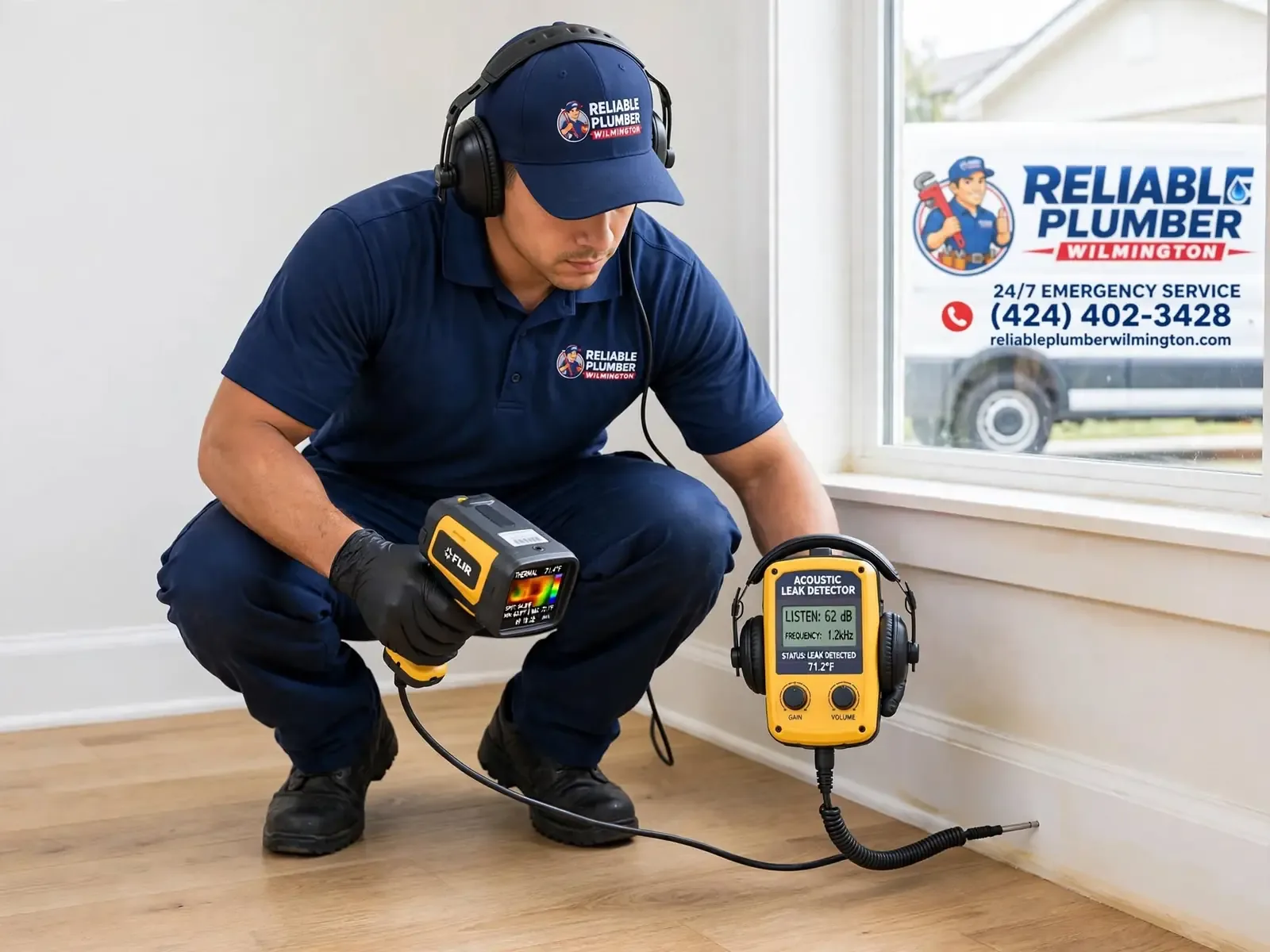
That is why slab leak detection combines acoustic correlation with thermal imaging rather than relying on either alone. Acoustic picks up pressurised water escaping; thermal renders the heat plume a hot-water line produces at the floor surface. Correlating both narrows the fix to inches.

Detection under flooring costs more - $300 to $800 against $150 to $600 - because the flooring blocks direct access and interpretation takes longer. It is still the cheapest part of the job.

The Case for a Reroute

A reroute abandons the failed line under the slab entirely and runs a replacement above it - through walls, ceiling or attic - to reconnect the same fixtures.

It is frequently the best value option and the one homeowners hear about least. It removes that run from beneath the concrete permanently, so it cannot fail there again, and it avoids repeated concrete cutting. It is also far less invasive than a full repipe while solving the specific problem completely.

It suits the common Wilmington case precisely: one hot-water line under the slab that has failed, in a house where the rest of the system is serviceable. Ask about it explicitly if it is not offered.

When Repiping Becomes the Rational Choice

Two situations. The first is arithmetic: you have already paid for two or three spot repairs, and a further one takes you past what a repipe would have cost.

The second is material. Housing here built before 1970 has galvanized steel supply pipe with a 30-to-40-year service life, now 60 to 85 years old. When that is what failed under the slab, the same pipe is running everywhere else in the house at the same age. Repairing one section returns the system to a state where the next weakest section fails next.

PEX is generally the material of choice for a repipe here, at 40 to 50% below copper and with a practical advantage in seismic country: it flexes with ground movement where rigid copper transfers that stress into soldered joints. Full detail on whole-home repiping.

References

Slab Leak Repair Questions

Answers specific to slab leak repair in Wilmington 90744.

A warm patch on the floor, running water audible with every tap closed, an unexplained jump in the bill, and later new cracking or sticking doors as soil settles unevenly beneath the footing.

A spot repair runs $2,000 to $4,000, and detection beforehand is $150 to $600, rising to $300 to $800 where flooring covers the slab. Three or four patches total $6,000 to $12,000.

It abandons the failed line under the slab and runs a replacement above it to the same fixtures. That run can then never fail under concrete again, and it avoids repeated cutting - often the best value option, and the one least often offered.

Yes, if it runs long enough. Water saturates the soil under the footing, which then compresses unevenly and causes differential settling - the cause of new wall cracks and doors that stop closing.

When you have already paid for two or three patches, or when the failed pipe is 60-plus-year-old galvanized - because the same pipe at the same age is running everywhere else in the house.

For a spot repair, yes - a small opening at the located fault. A reroute avoids cutting concrete altogether by abandoning the run and going above the slab instead.

Book Slab Leak Repair in Wilmington

Licensed, bonded and insured · diagnosis before price · 30 cities across Los Angeles County