Carson runs on a different set of rules from its neighbours: an investor-owned water utility, county sanitation rather than LA Sanitation, and city permits rather than LADBS. It is also overwhelmingly owner-occupied, which changes how repair decisions get made.











Carson incorporated on 20 February 1968, later than most of its neighbours, and that history still shapes the ground under the city. By the city's own account, the surrounding communities had already pushed garbage dumps, refineries and waste treatment plants onto the area before it became a city and could control its own land use. The practical consequence for plumbing is made ground and fill under some tracts, which is worth knowing before assuming a slab leak or a settled sewer line is purely a pipe defect.
The utilities here belong to nobody you might expect. Water in much of Carson comes from Golden State Water Company - an investor-owned utility regulated by the CPUC rather than a municipal department - whose Southwest system serves more than 54,000 connections across southwest Los Angeles County with a blend of local groundwater and imported supply from the Colorado River Aqueduct and State Water Project. Wastewater goes to the Los Angeles County Sanitation Districts, and their A.K. Warren Water Resource Facility sits inside Carson at 24501 South Figueroa Street, treating up to 400 million gallons a day for over 4.8 million people. Plumbing permits come from the City of Carson.
The housing is transitional. The median construction year is 1966, which puts Carson between the harbour neighbourhoods and the newer Orange County tracts - late galvanized and early copper both turn up, and which one you have decides whether you are dealing with rust-narrowed bore or pinhole leaks. Around 71.9% of the housing is detached single-family, and 74% of occupied units are owner-occupied. That last figure is the reverse of Wilmington, where roughly nine in ten homes are rented, and it changes the conversation: in Carson the person noticing the problem is usually the person deciding what to do about it.
Reliable Plumber Wilmington covers Carson from minutes away in the harbour. We handle drain cleaning, sewer line repair, leak detection, water heater work, repiping and the full range - diagnosis before price, camera evidence on sewer work, and the finding written down.
The thing to be clear about in Carson is which rules apply, because none of the Los Angeles City programmes do. There is no LASAN sewer lateral rebate here and no LADWP billing adjustment, because neither agency serves you. Permits come from the City of Carson rather than LADBS, and wastewater is LA County Sanitation. California state requirements are unchanged: SB 407 on fixtures, the 80 psi pressure ceiling with a regulator above it, and water heater seismic strapping.
With a median build year of 1966, Carson drain lines are typically cast iron or early ABS rather than the older cast iron and clay in the harbour neighbourhoods. Blockages here are more often genuine blockages than the symptom of a bore narrowed by decades of scale - but the tracts built on reclaimed industrial ground can show settlement that catches material at a low point, which a camera identifies quickly.
Slow or blocked kitchen, bath, shower and laundry lines - and any drain that has already been cleared once and blocked again.
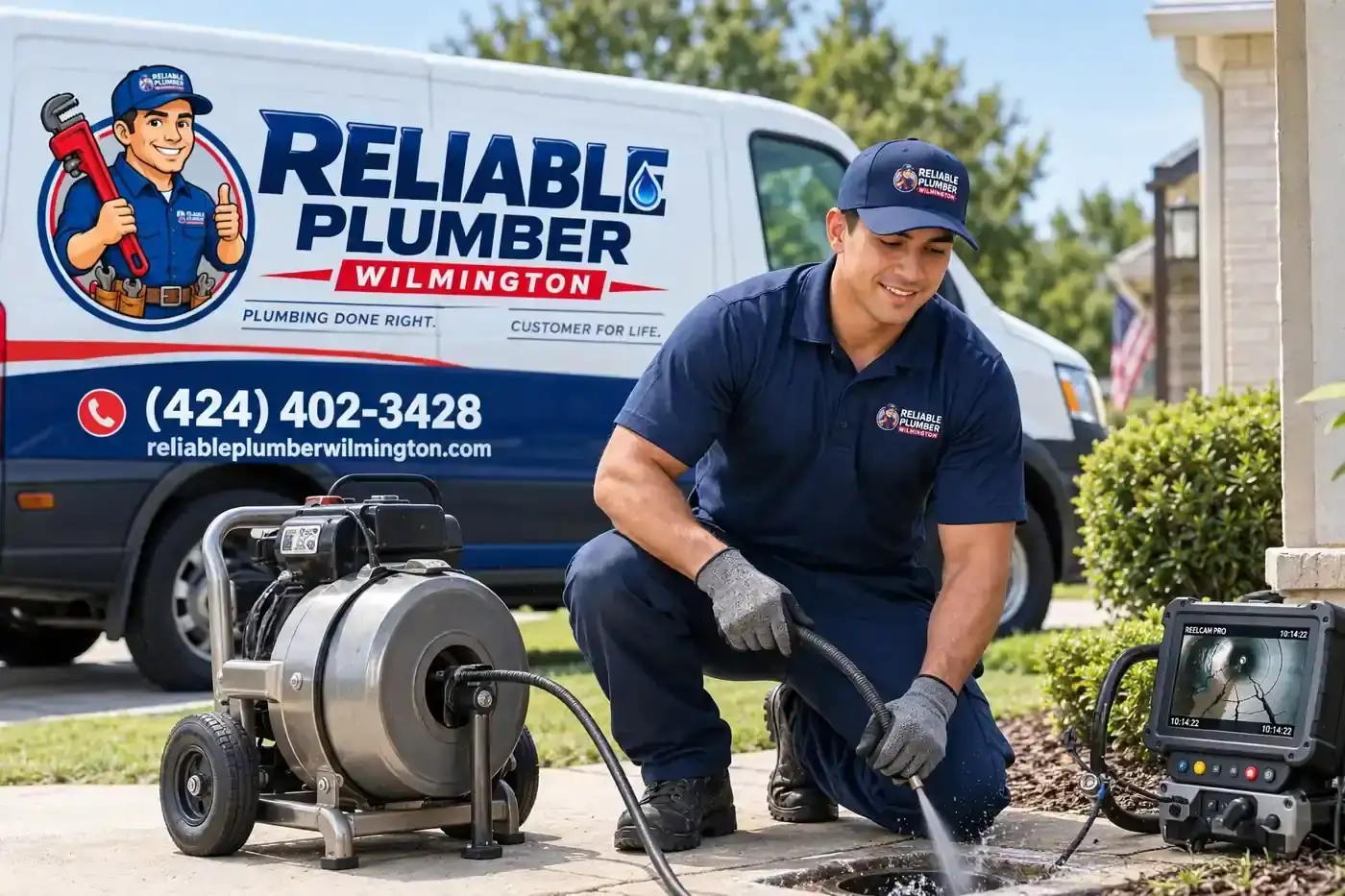
Sewer laterals in Carson connect to a system run by the Los Angeles County Sanitation Districts rather than LA Sanitation, and permits come from the City of Carson. Ground conditions matter here more than the pipe date alone would suggest, because parts of the city were developed over former industrial and landfill ground where differential settlement can offset joints.
Recurring backups, several fixtures slow at once, sewer odour, or a line a camera has shown to be cracked, offset or root-invaded.
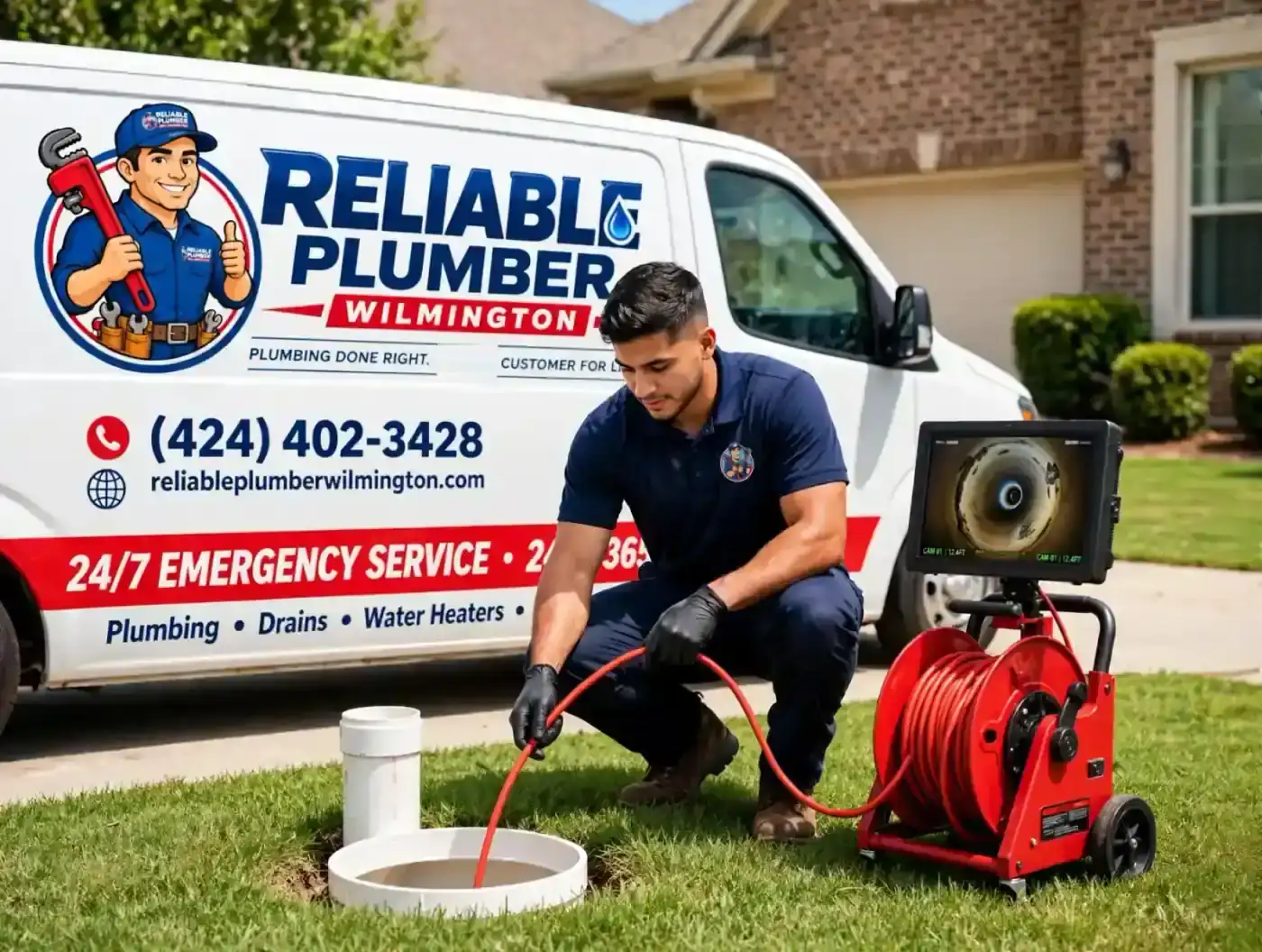
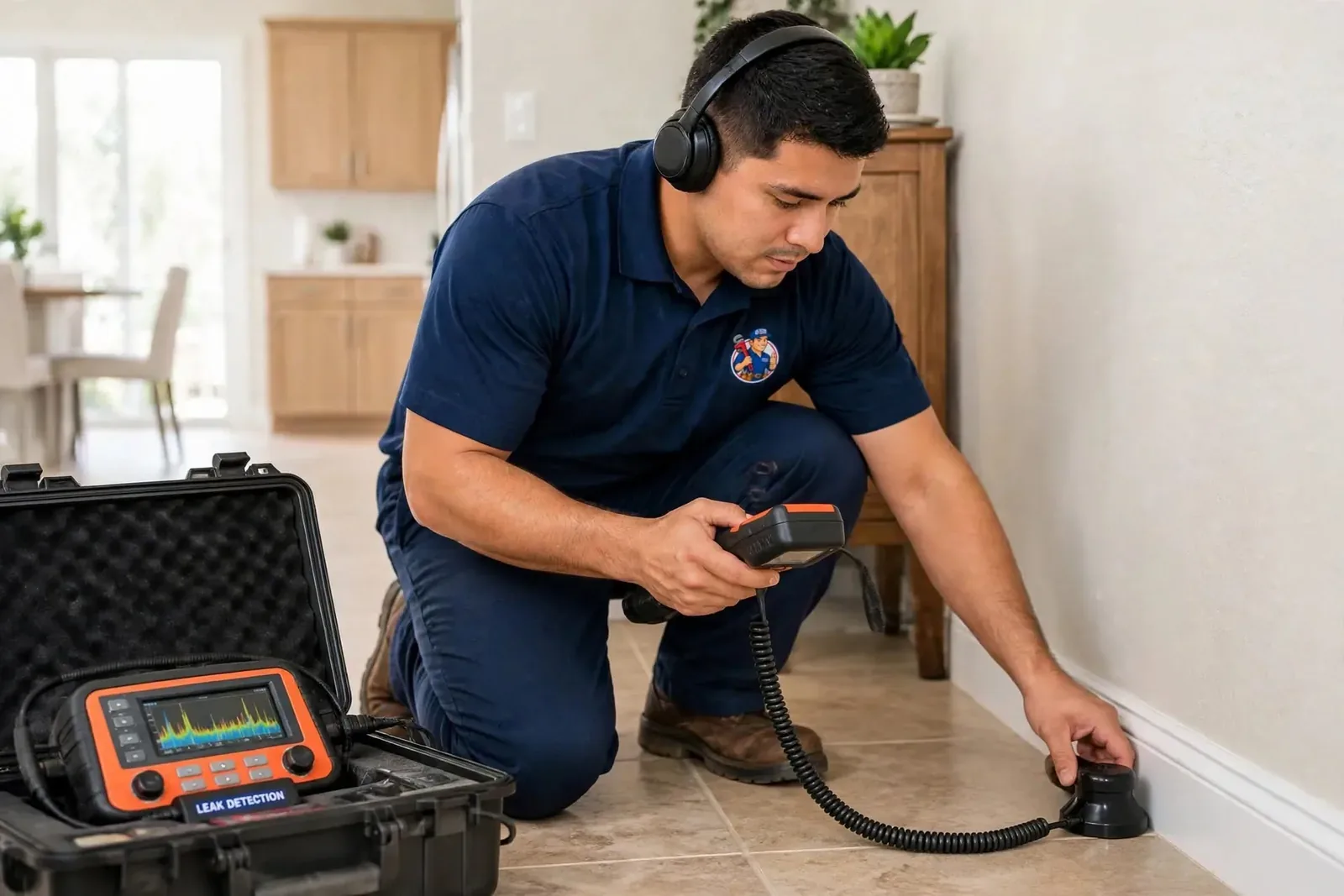
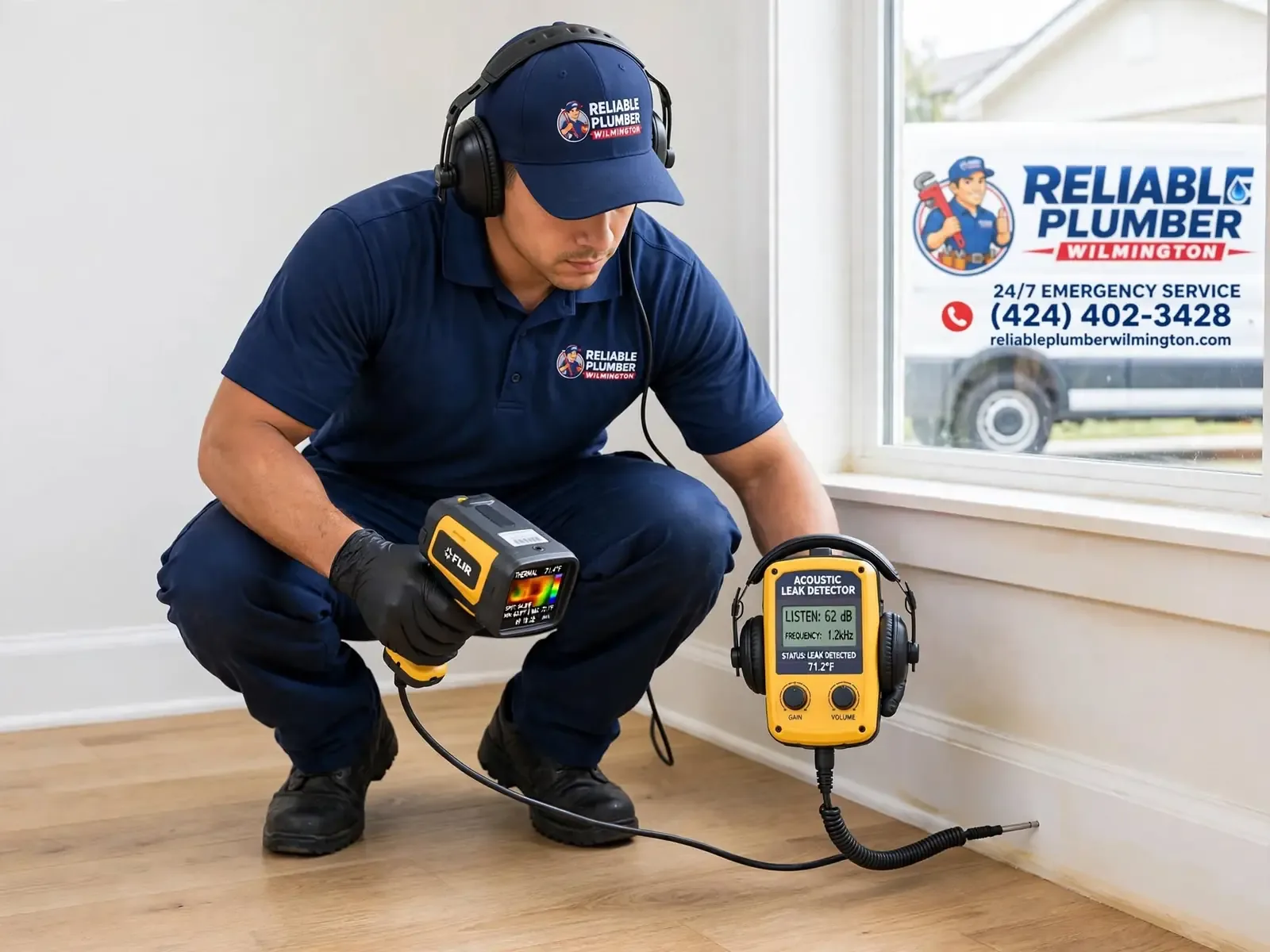
Carson's housing is predominantly detached single-family on slab, so hidden leaks tend to be slab leaks - and slab-on-grade removes the crawlspace that makes finding them straightforward. Thermal imaging picks up the heat signature of a hot-water line under concrete, and acoustic listening narrows it to inches before anything is cut.
A water bill that jumped with no change in use, running water with every tap closed, a warm patch on the floor, or a stain with no obvious source.
Permits here come from the City of Carson rather than LADBS, so the process differs from Wilmington even though the requirements do not. California Health & Safety Code and Plumbing Code §507.2 apply statewide: two seismic straps, upper and lower third, anchored into framing rather than drywall, with the lower strap at least four inches above the gas control.
No hot water, rumbling or popping, water pooling at the base, or a unit past twelve years old that is worth replacing on your schedule rather than its own.
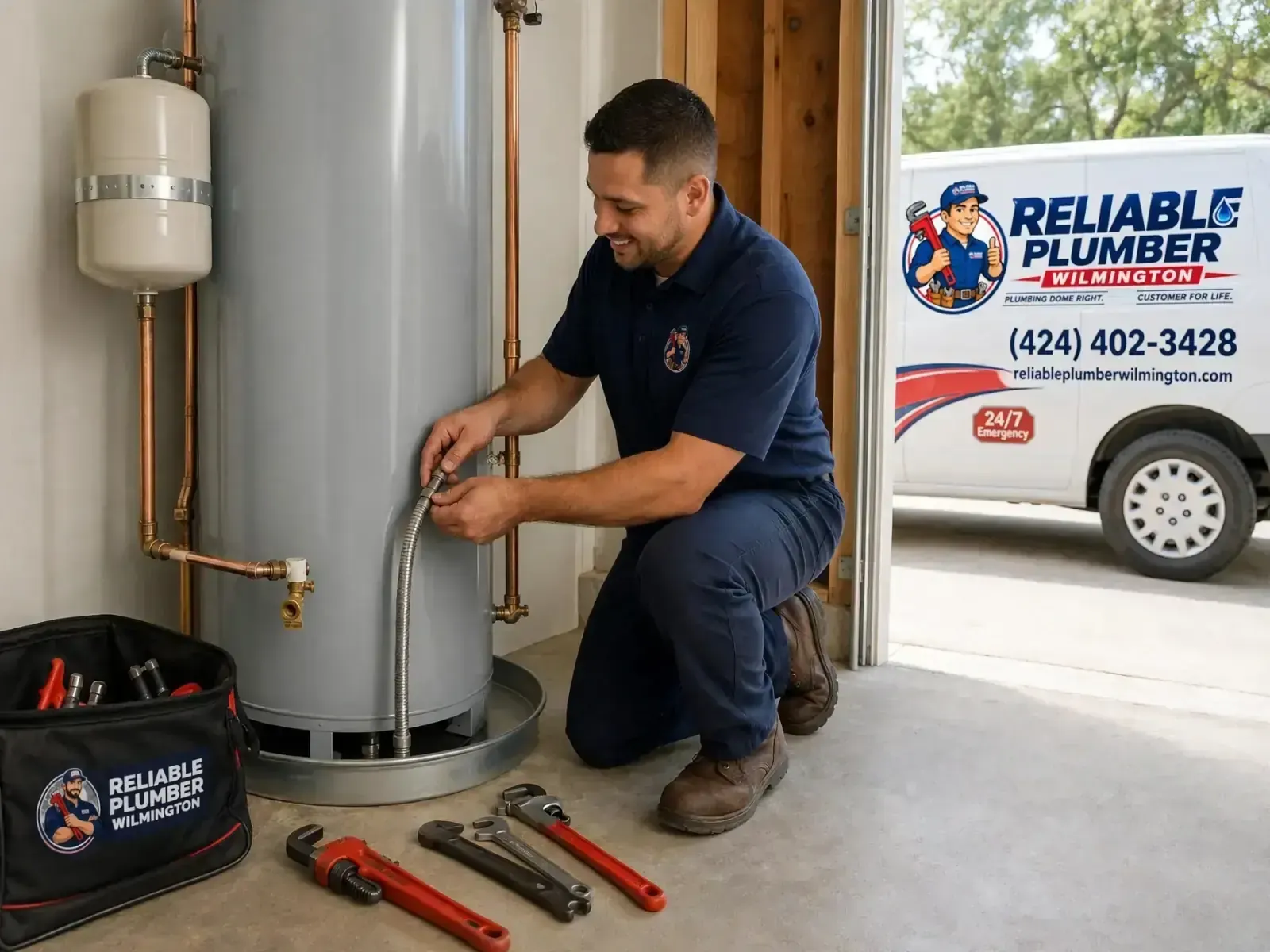
A 1966 median build year makes Carson a genuinely mixed city for supply pipe. Earlier tracts carry galvanized steel now well past its 30-to-40-year service life, showing rust-tinted water and falling pressure. Later ones carry copper, where the signature failure is the pinhole. Establishing which you have is the first step, because the two lead to different conversations about timing.
Rust-tinted water, pressure falling across the whole house, or a second and third leak on the same ageing supply system.
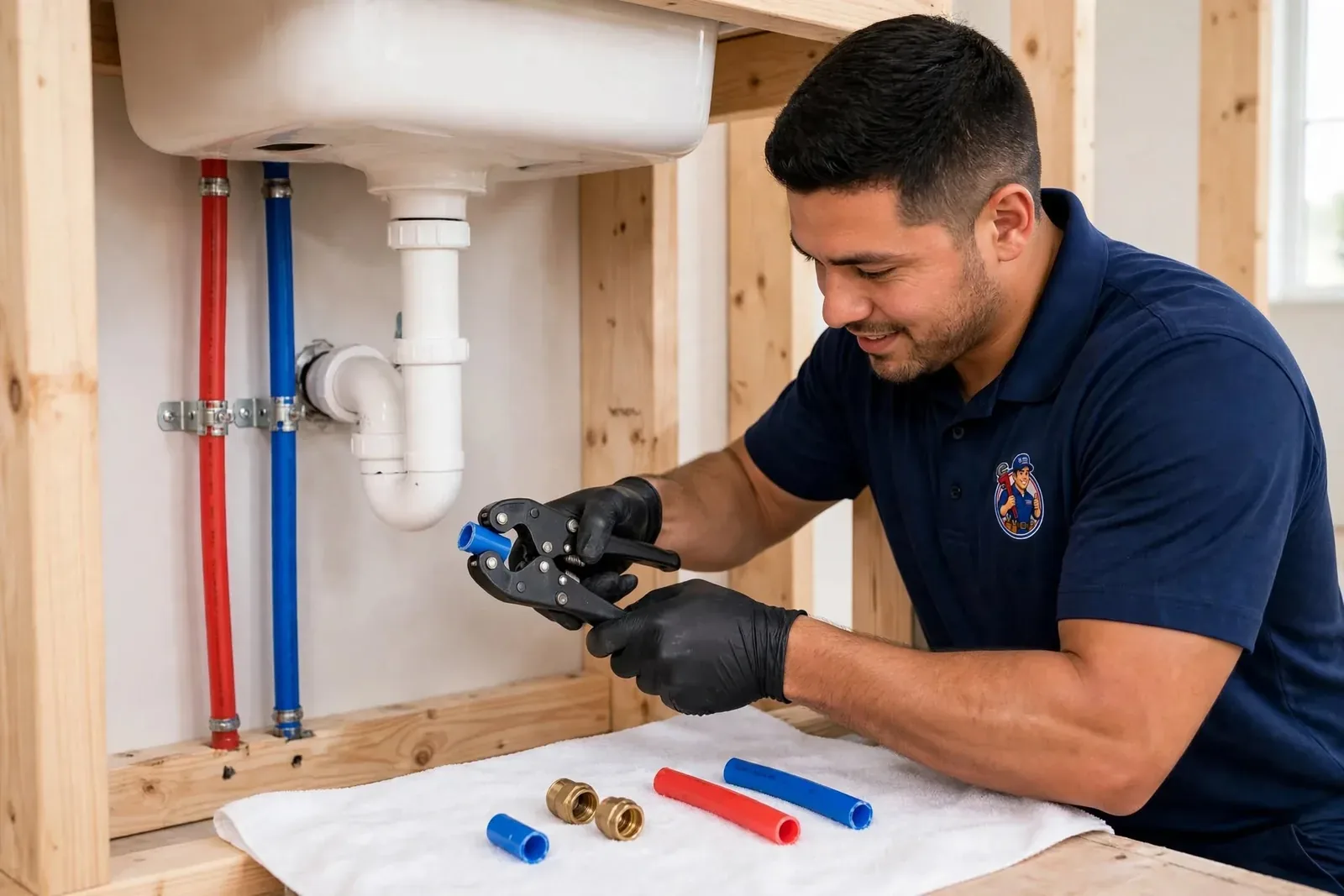
With roughly 72% of Carson housing detached single-family and most of it slab-on-grade, this is one of the more common calls in the city. The ground history matters: tracts developed over former industrial or landfill land can settle unevenly, which stresses the supply lines cast into the slab. Locating precisely before cutting concrete is what keeps the cost proportionate.
A warm patch on the floor, water audible with every fixture closed, or an unexplained bill increase on a slab-on-grade property.
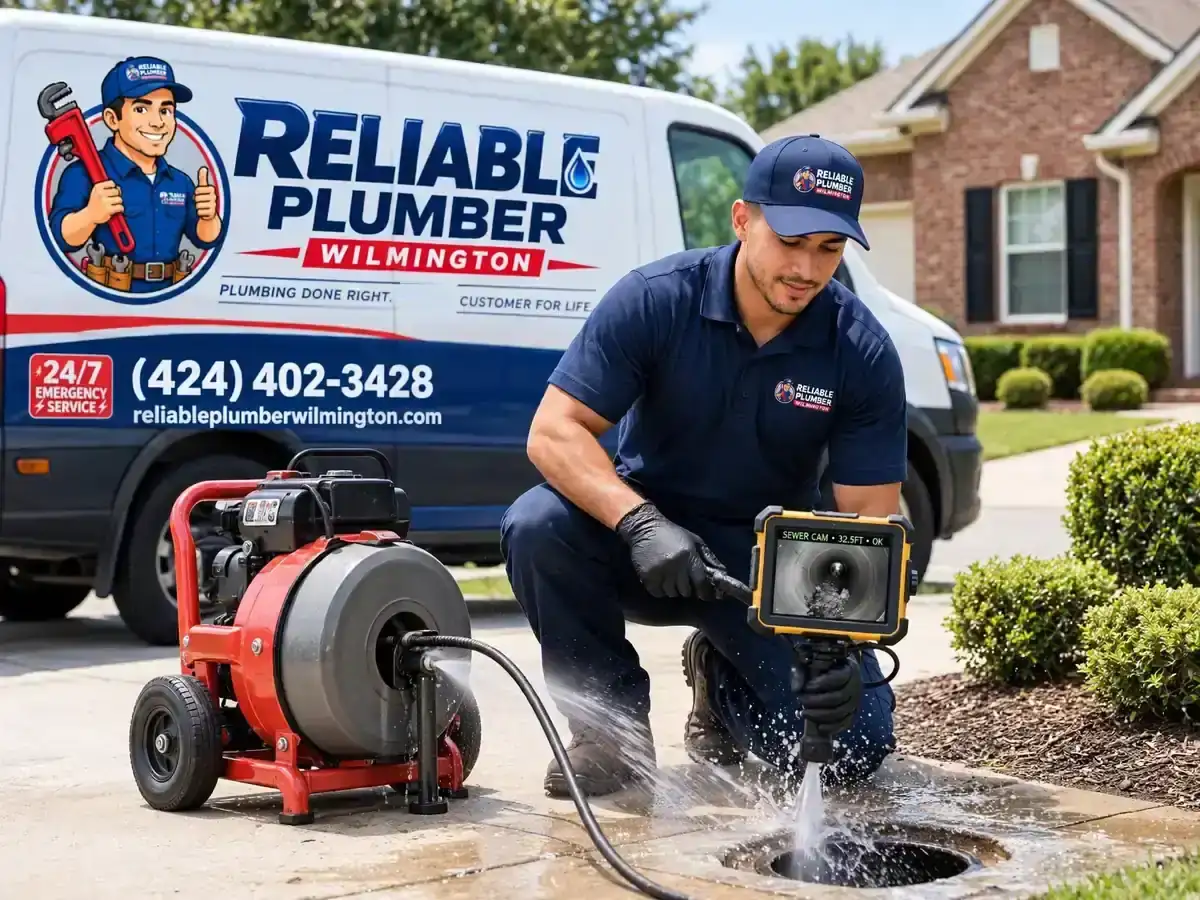
Pipe age governs jetting pressure. Carson's mid-1960s lines generally take more than the century-old cast iron in San Pedro, but a camera still decides - sound residential lateral takes 2,500 to 3,000 PSI, older or compromised cast iron is run at 1,500 to 2,000 PSI instead. We look before we choose rather than assuming from the build date.
Blockages that keep returning, kitchen lines with a grease history, and scaled cast iron where cabling only bores a channel.
Carson is 74% owner-occupied, so most fixture calls here are the owner deciding directly rather than a tenant relaying to a landlord. That usually makes the repair-or-replace conversation quicker. On anything predating 1994 the maths is straightforward: 3.5 gallons a flush or more against the 1.28 gallon California limit, and SB 407 brings replacement into scope during a remodel.
Running or phantom-flushing toilets, weak flush, water seeping at the base, or replacing a pre-1994 fixture using 3.5 gallons a flush.
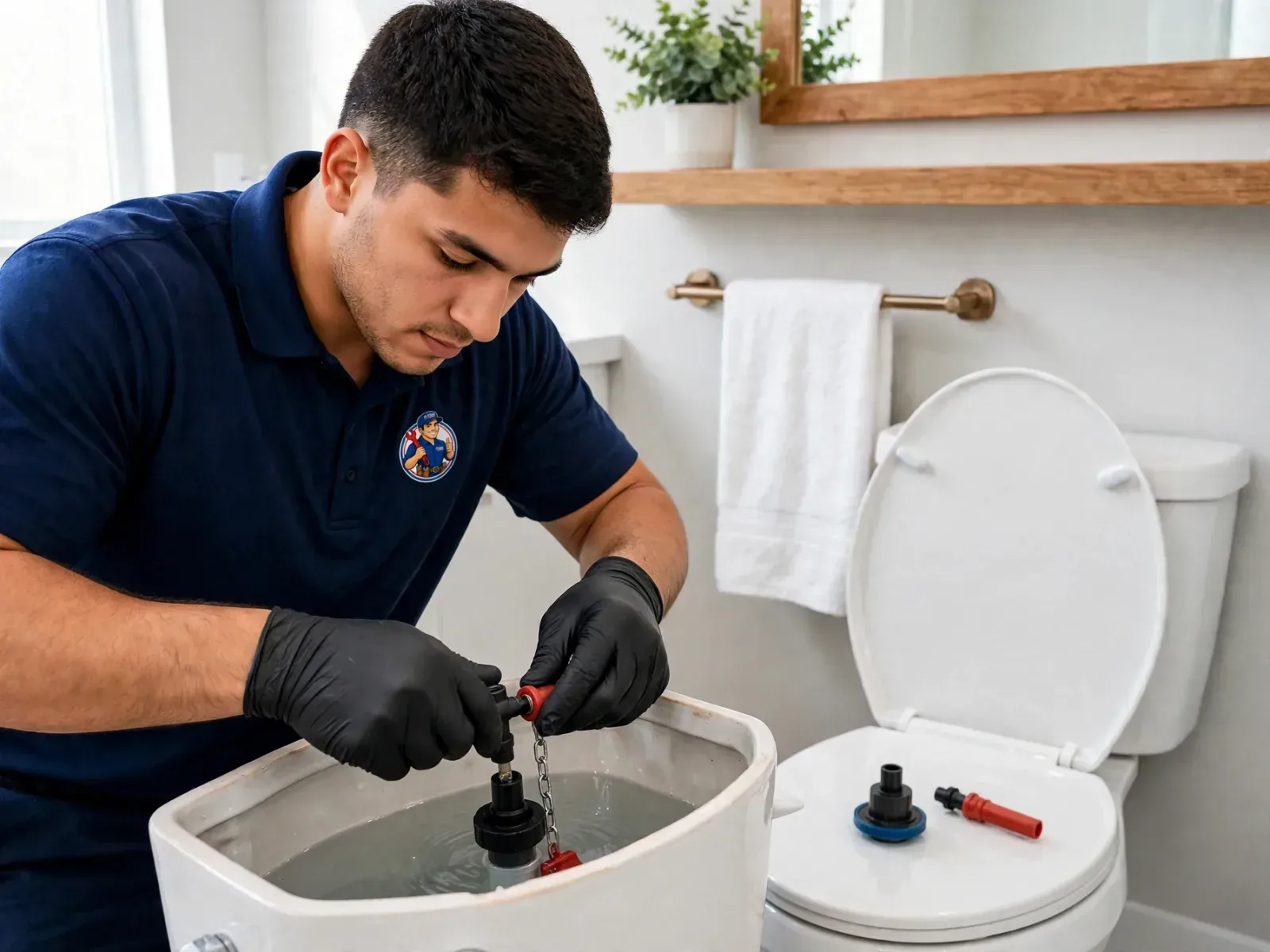
Golden State Water blends local groundwater with imported supply from the Colorado River Aqueduct and State Water Project, and that blend carries enough mineral to wear cartridges and valve seats faster than manufacturer guidance assumes. If a tap you had repaired is dripping again inside two years, the water is the reason rather than the work.
Dripping spouts, stiff handles, leaking handle bases, or flow that has dropped at one fixture while the rest of the house is fine.
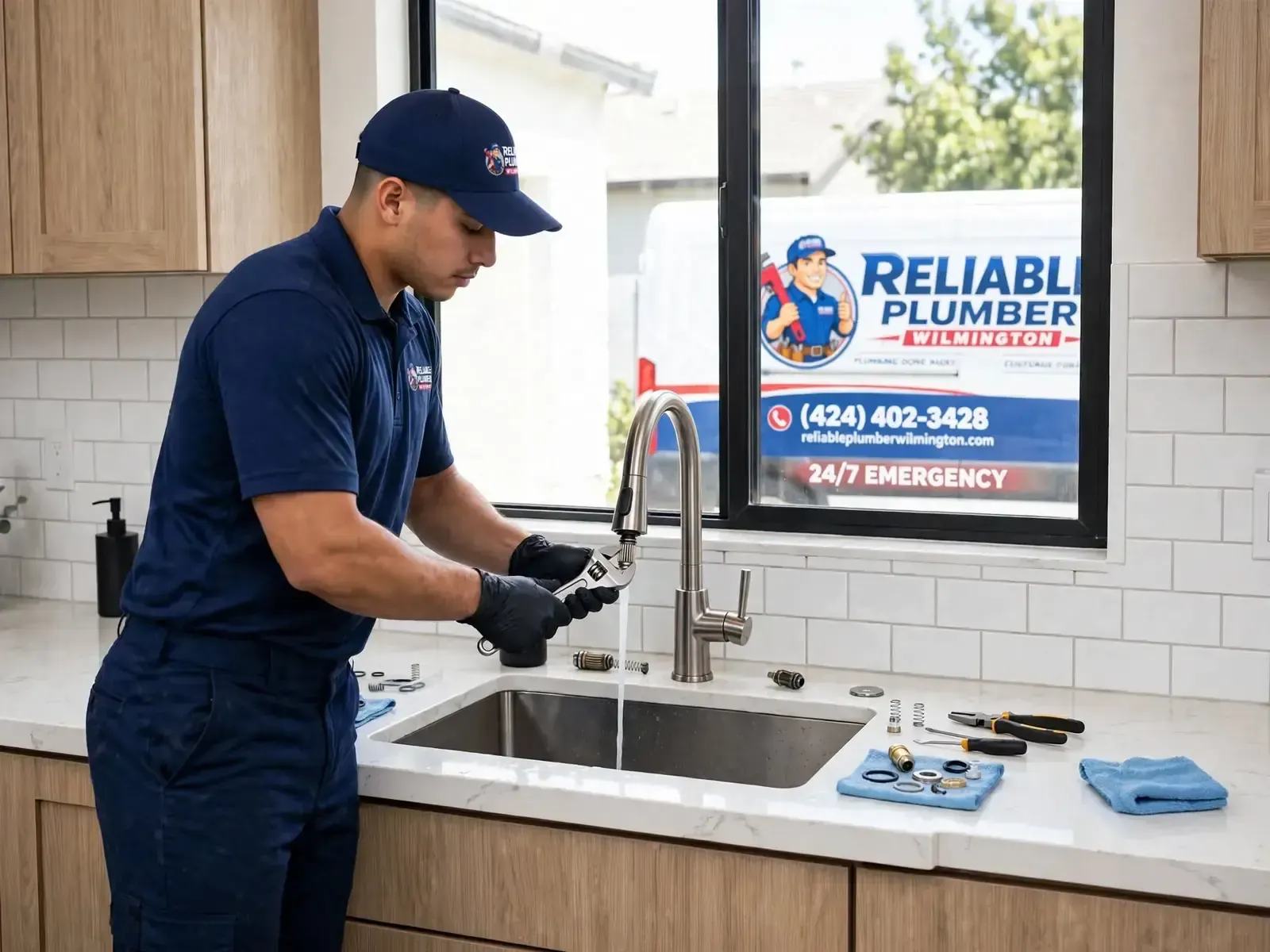
Carson is minutes from our Wilmington base, making it one of the areas we reach quickest. Close your main water shut-off first - on most Carson properties it is on the street side of the house or near the meter - and keep people away from standing water near outlets while you wait.
Burst supply lines, sewage backing up, main line breaks, and water heater failures - anything where water is causing damage right now.
Covering a city properly means knowing what changes at its boundary. Here, several things do.
Carson borders Wilmington directly to the north. This is adjacent territory rather than the edge of a service map, which matters most on the calls that will not wait.
Directly north of 90744City of Carson permits, not LADBS. LA County Sanitation, not LASAN. Golden State Water, not LADWP - which means no LASAN lateral rebate and no LADWP billing adjustment here. Assuming otherwise wastes your time.
City permits · County sanitationA 1966 median build year puts Carson on the boundary between galvanized and copper. Rust-narrowed bore and copper pinholes are different failures needing different answers, so we establish which you have first.
Median build year 1966Carson was used for dumps, refineries and treatment plants before it incorporated in 1968. Made ground under some tracts means settlement that offsets sewer joints and stresses slab supply lines.
Incorporated 1968Camera footage on sewer recommendations, acoustic and thermal for hidden leaks, findings in writing. With most Carson homes owner-occupied, you are the one making the call - you should be able to see what it rests on.
Camera · written findingsCarson is largely detached single-family tract housing, and the era of each tract tells you what is behind the walls.
Around 71.9% of Carson housing is detached single-family, and the city's 28,178 units are dominated by tract development from the 1950s through the 1970s - a median construction year of 1966. That places the city right on the boundary between galvanized supply and copper, so two neighbouring tracts can present completely different failures. Dominguez Hills carries the Cal State campus established in the early 1960s and the development that followed it. The industrial corridors along Figueroa and Alameda reflect the pre-incorporation history, when the area absorbed refineries and waste facilities that surrounding cities would not take - and the LA County Sanitation Districts' A.K. Warren facility still sits on South Figueroa Street today. Tracts built over that reclaimed ground are the ones where settlement is worth checking for before blaming a pipe.
Licensed, bonded and insured · 24/7 dispatch · diagnosis before price · findings in writing
Five categories covering everything from a slow drain to a full repipe.
We reach Carson from Wilmington 90744, and cover 30 cities across Los Angeles County and north Orange County. These are the communities closest to Carson.
Coverage, permits, water and what is specific to this city.
Yes, and quickly. Carson borders Wilmington directly to the north, so it is one of the areas we reach fastest from our base in 90744.
Much of Carson is served by Golden State Water Company, an investor-owned utility regulated by the CPUC rather than a municipal department. Its Southwest system serves over 54,000 connections with a blend of local groundwater and imported Colorado River and State Water Project supply.
No. That programme belongs to LADWP, which does not serve Carson. Ask your own water provider about their policies instead - in much of the city that is Golden State Water.
No. LA Sanitation serves the City of Los Angeles, and Carson is a separate incorporated city. Wastewater here goes to the Los Angeles County Sanitation Districts instead.
The City of Carson, not LADBS. The requirements themselves are California state code - SB 407 on fixtures, the 80 psi pressure ceiling, water heater seismic strapping - but the permit desk is different.
It depends on the tract. A median build year of 1966 puts the city on the boundary between galvanized and copper, so some homes show rust-tinted water and falling pressure while their neighbours show copper pinhole leaks. Slab leaks are common throughout, since most housing is detached single-family on slab.
Indirectly but genuinely. Before incorporating in 1968 the area absorbed dumps, refineries and treatment plants that neighbouring cities would not take, so some tracts sit on made ground. Differential settlement there can offset sewer joints and stress supply lines cast into a slab.
Yes, though Carson is unusual for the area - around 74% of occupied homes are owner-occupied, against roughly one in ten in Wilmington. Most calls here come from the owner directly.