Signal Hill has the newest housing anywhere we work, and the reason is oil: the land was a working field for decades before homes went up. It is also an enclave, so your neighbours across the boundary are on different utilities entirely.











Signal Hill has the youngest housing stock of anywhere we serve - a median construction year of 1980 across 4,811 units - and the reason is the thing the city is named for. Oil was discovered here on 23 June 1921, and the Signal Hill field went on to help California produce a quarter of all the world's oil. The city incorporated on 22 April 1924, three years later, specifically so its founders could avoid Long Beach's per-barrel tax on oil. For decades afterwards the hill was a working oilfield rather than a residential neighbourhood, so the houses came later than they did almost anywhere else in the harbour area. That gives Signal Hill copper and plastic where its neighbours have galvanized and cast iron - but it also puts a good share of the city inside the window when polybutylene supply pipe was installed, which is worth identifying rather than assuming.
The city is an enclave, completely surrounded by Long Beach - one of the first cities in the country to be entirely enclosed by another. That has a practical effect people run into constantly: cross the boundary and the utilities change. Inside Signal Hill your water comes from the city's own Water Department, which serves about 3,150 accounts through roughly 50 miles of pipeline, three reservoir facilities and two wells. Around 90% of the supply is drawn from those groundwater wells - which are themselves located in north Long Beach, outside the city limits - at depths of about 1,000 feet and a combined output near 2,300 gallons per minute, with the remaining tenth purchased from the Metropolitan Water District. A block away, that same household would be a Long Beach Utilities customer.
Sewer, by contrast, is not the city's at all: the system serving Signal Hill is owned and maintained by the Sanitation Districts of Los Angeles County. And then there is the hill itself. Three reservoir facilities for only fifty miles of pipe tells you the city has to manage pressure across real elevation change, which is why properties near the top and properties near the bottom can have quite different pressure experiences on the same system. Housing splits almost exactly evenly at about 50.3% owner-occupied and 49.7% rented.
Reliable Plumber Wilmington covers Signal Hill from the Harbor Area, a short run up from Wilmington. We handle drain cleaning, sewer line repair, leak detection, water heater work, repiping and everything alongside them - diagnosis before price, camera evidence on sewer work, and the finding written down.
Because Signal Hill sits inside Long Beach without being part of it, we confirm the address before saying anything about which agency handles what - city water, county sewer, and city permits, none of which match the Long Beach arrangement a street away. The Los Angeles City programmes do not apply either. California requirements are the same statewide: SB 407 on fixtures during a remodel, the 80 psi pressure ceiling with a regulator above it, and seismic strapping on water heaters.
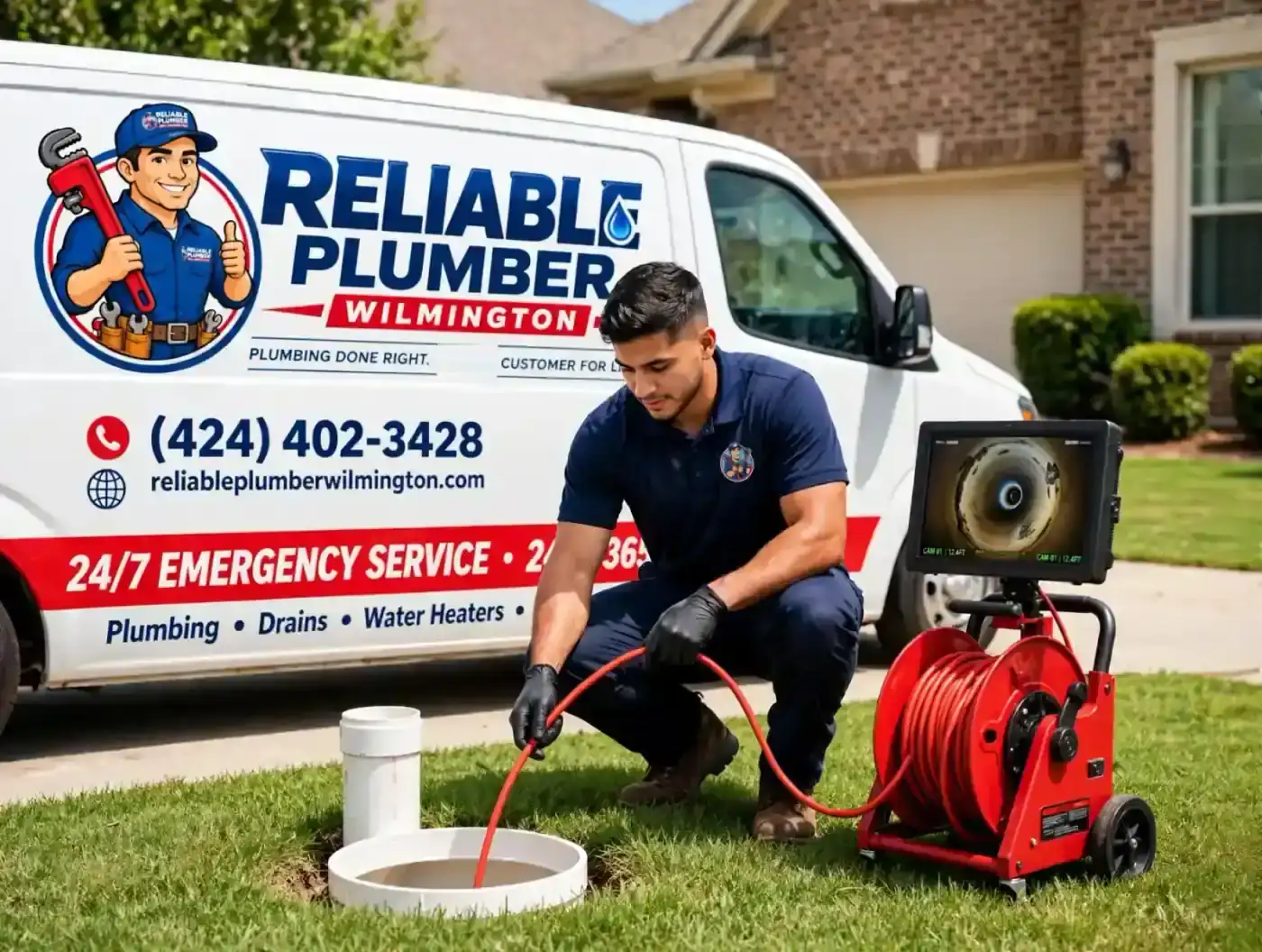
Signal Hill drain lines are mostly ABS plastic laid from around 1980, which means they have not scaled or corroded and are still the diameter they were installed at. A blockage here is a genuine obstruction with a cause rather than the slow closing-in that defines the older harbour neighbourhoods, so identifying what put it there is usually more valuable than simply clearing it.
Slow or blocked kitchen, bath, shower and laundry lines - and any drain that has already been cleared once and blocked again.

The sewer system serving Signal Hill is owned and maintained by the Sanitation Districts of Los Angeles County rather than the city, which surprises people who assume a city with its own water department runs its own sewers too. Permits come from the City of Signal Hill. Laterals here are young by our standards, so failures tend to be root intrusion or a single offset rather than a line at the end of its life.
Recurring backups, several fixtures slow at once, sewer odour, or a line a camera has shown to be cracked, offset or root-invaded.
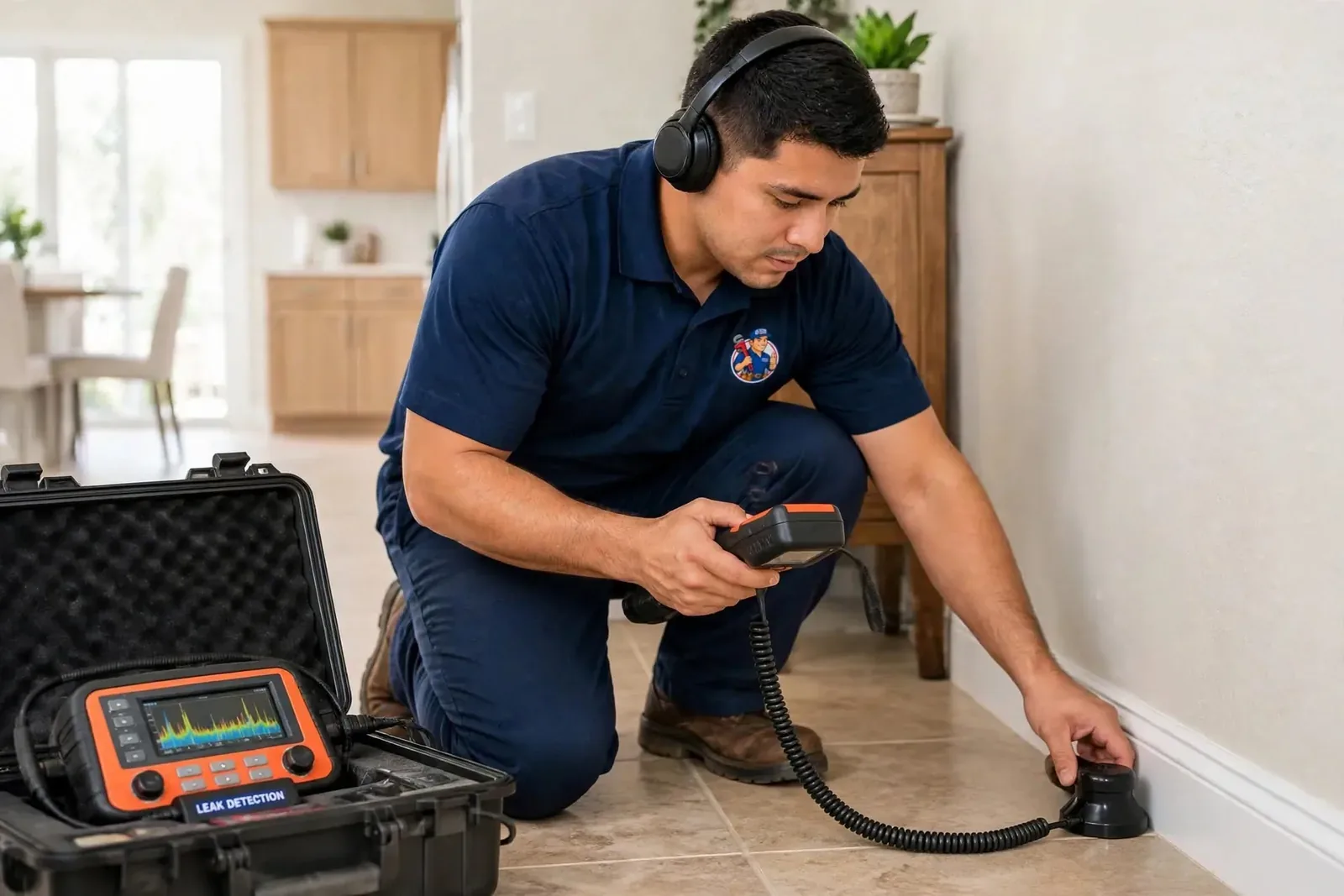
The material question comes first in Signal Hill. With a 1980 median, a meaningful share of the city falls inside the period when grey polybutylene supply pipe was used, and polybutylene fails at the fittings - often inside a wall rather than under the slab. Establishing what is installed narrows the search considerably before any acoustic or thermal work starts.
A water bill that jumped with no change in use, running water with every tap closed, a warm patch on the floor, or a stain with no obvious source.
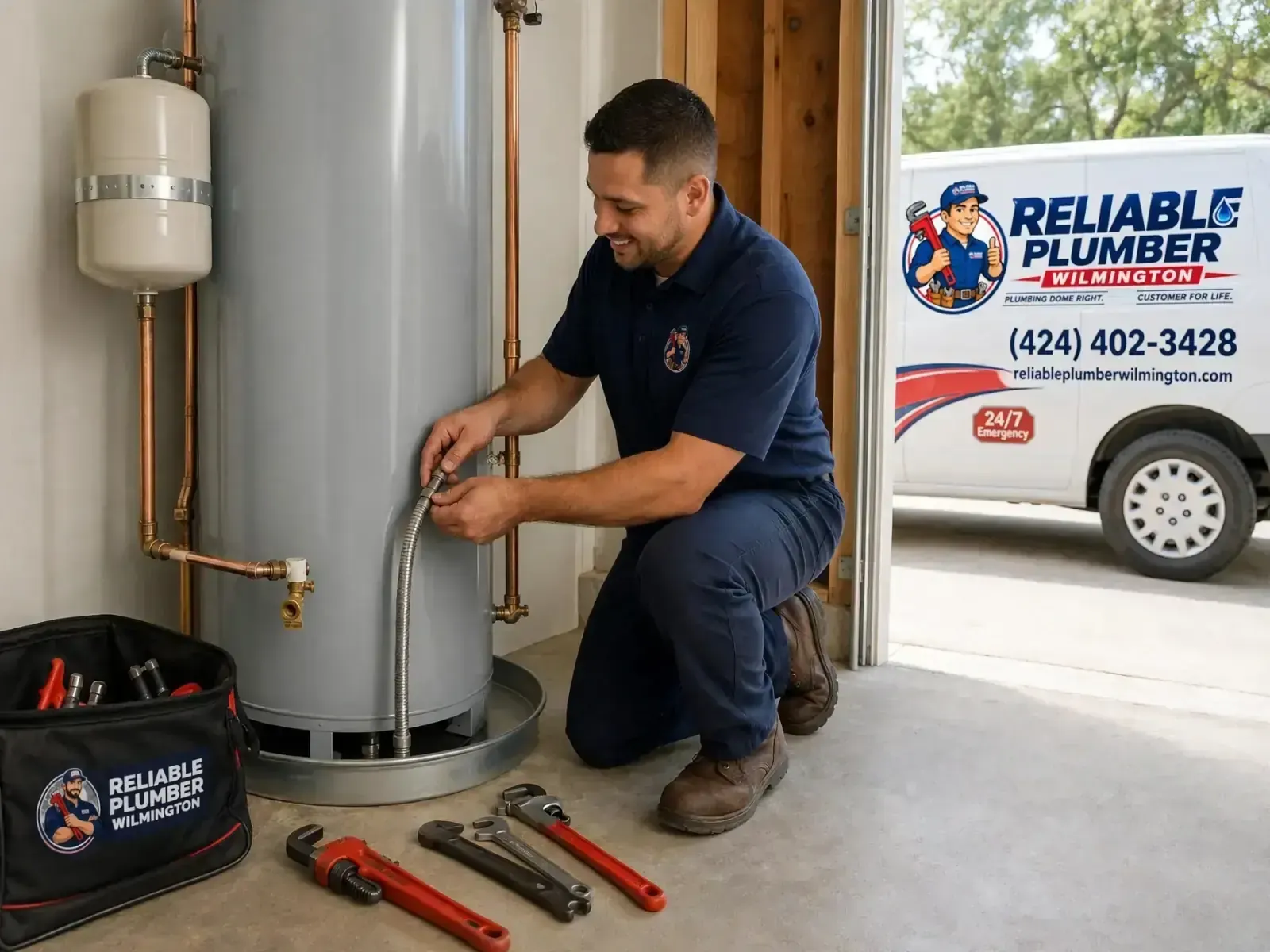
Permits come from the City of Signal Hill. Requirements are California state code and do not vary: two seismic straps at the upper and lower third anchored into framing rather than drywall, with the lower strap at least four inches above the gas control. Around 90% of the city's water is groundwater from wells about 1,000 feet deep, and well water leaves more sediment in a tank than a fully imported supply - so an annual flush is worth keeping up.
No hot water, rumbling or popping, water pooling at the base, or a unit past twelve years old that is worth replacing on your schedule rather than its own.
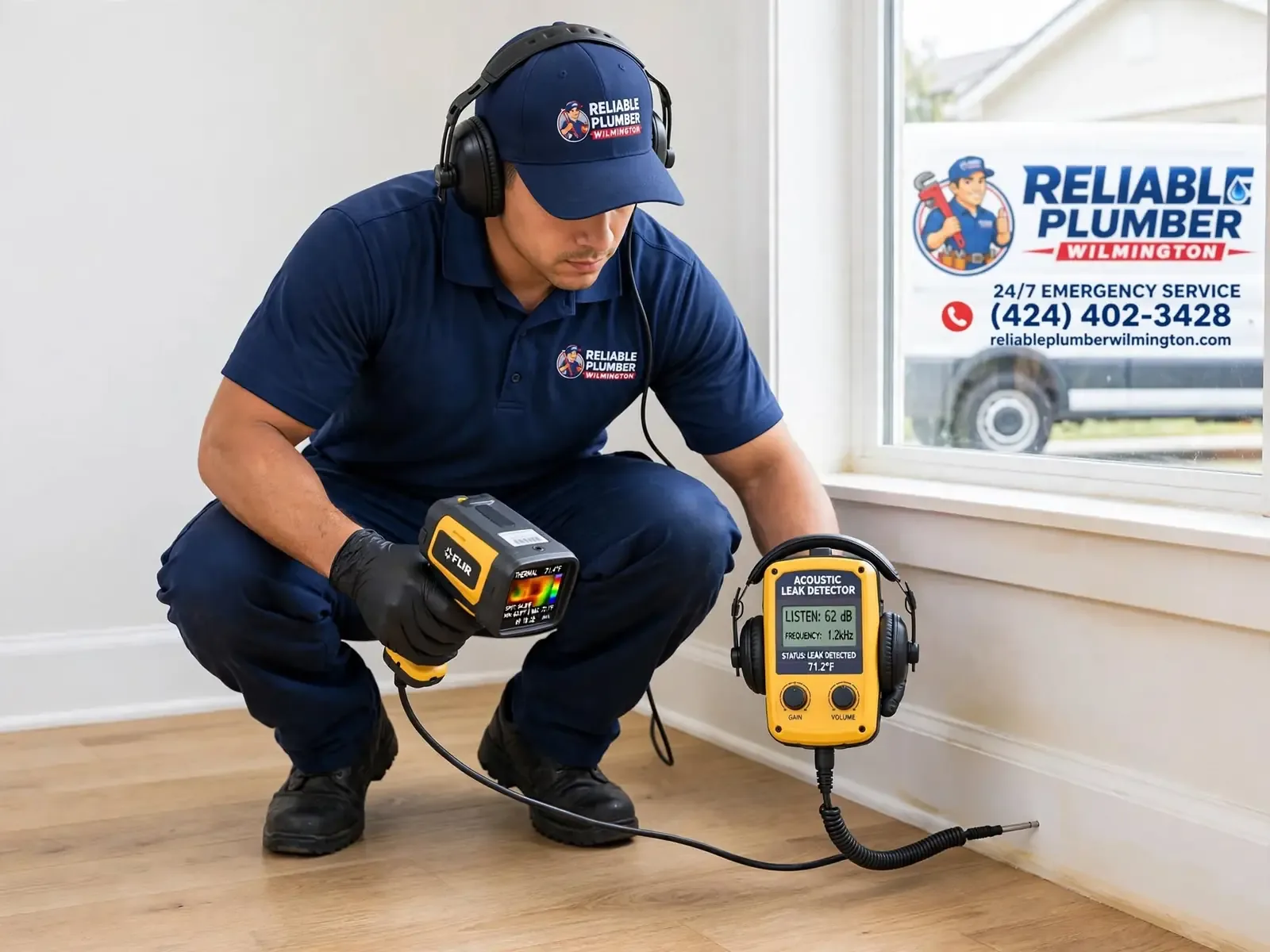
Galvanized steel is rare in Signal Hill because the city was built out too late for it, which sets this apart from every neighbouring area. The material worth checking is polybutylene, used from the late 1970s into the mid 1990s, which becomes brittle and lets go at the joints. The signal is several leaks arriving in close succession rather than one isolated failure - that is a system reporting its age, not bad luck.
Rust-tinted water, pressure falling across the whole house, or a second and third leak on the same ageing supply system.

The 1980-era housing here is slab-on-grade, so supply lines run through the concrete and a failure there is one of the more significant jobs in the city. Newer copper is not immune - soil movement and chemistry find a weak point eventually. On a hillside city, we also look at whether the failure sits where the ground has moved, because that changes whether you should expect a second one.
A warm patch on the floor, water audible with every fixture closed, or an unexplained bill increase on a slab-on-grade property.
ABS plastic takes jetting comfortably, so a sound Signal Hill lateral runs at the full 2,500 to 3,000 PSI and genuinely comes back to its original bore rather than merely being reopened. That is an advantage of the city's late build-out, and one of the few plumbing respects in which Signal Hill has an easier time than the streets immediately around it.
Blockages that keep returning, kitchen lines with a grease history, and scaled cast iron where cabling only bores a channel.

Signal Hill splits close to evenly at about 50.3% owner-occupied, so fixture calls come from owners, tenants and managers in similar measure and we write findings so they travel. Fixtures from the early 1980s still in service are typically flushing well above California's 1.28 gallon standard, and SB 407 brings replacement into scope during a remodel.
Running or phantom-flushing toilets, weak flush, water seeping at the base, or replacing a pre-1994 fixture using 3.5 gallons a flush.

Roughly nine tenths of Signal Hill's water is groundwater from the city's own deep wells, and basin groundwater carries dissolved mineral that shortens cartridge and valve seat life beyond what manufacturer guidance assumes. A tap rebuilt eighteen months ago that has started dripping again is usually reporting on the water rather than on the work.
Dripping spouts, stiff handles, leaking handle bases, or flow that has dropped at one fixture while the rest of the house is fine.

Signal Hill is minutes from our Harbor Area base. Shut the main off first, and tell the dispatcher roughly where on the hill you are - elevation affects pressure across the city's system, and it is genuinely useful for us to know before arriving. Confirm the address is Signal Hill rather than Long Beach, since the two interlock and the utilities differ.
Burst supply lines, sewage backing up, main line breaks, and water heater failures - anything where water is causing damage right now.

Covering a city properly means knowing what changes at its boundary. Here, several things do.
The hill was a working oilfield for decades after oil was found in 1921, so homes arrived late - a 1980 median, the newest anywhere we serve. That changes the whole failure list from rust and scale to plastic and pinholes.
Median build year 1980A 1980 median puts a real share of Signal Hill inside the era when grey polybutylene supply pipe was installed. It fails at fittings rather than along the run, so identifying it changes the repair entirely.
Late 1970s-1990s pipe checkSignal Hill is completely surrounded by Long Beach but is not part of it. City water, county sewer and city permits here - none of which match the arrangement a street away. We confirm the address first.
Enclave since 1924Three reservoir facilities across only fifty miles of pipe means the city manages pressure over real elevation change. Properties high on the hill and low on it can have quite different experiences of the same system.
3 reservoirs · 2 wellsCamera footage on sewer recommendations, acoustic and thermal on hidden leaks, findings written down so you can see what a recommendation actually rests on.
Camera · written findingsSignal Hill is compact, elevated and entirely enclosed by Long Beach, and we cover the surrounding streets with it.
The hill itself is the organising feature, and elevation runs through everything from the views to the water pressure - the city's Water Department keeps three reservoir facilities across only about fifty miles of pipeline to manage it. Residential development came late here because the ground was a working oilfield from the 1921 discovery onward, which is why 4,811 housing units carry a median construction year of 1980 while the Long Beach streets on every side are decades older. That contrast is sharp enough to matter on a service call: the same problem described by a customer on either side of the boundary usually has a different cause. Signal Hill is also close to evenly split between owners and renters, at about 50.3% and 49.7%, so we work with households and property managers in similar measure.
Licensed, bonded and insured · 24/7 dispatch · diagnosis before price · findings in writing
Five categories covering everything from a slow drain to a full repipe.
We reach Signal Hill from Wilmington 90744, and cover 30 cities across Los Angeles County and north Orange County. These are the communities closest to Signal Hill.
Coverage, permits, water and what is specific to this city.
Yes, and it is one of the quicker runs from our Harbor Area base. We cover the whole city, from the hilltop streets down to the boundary with Long Beach.
Because of the oil. The Signal Hill field was discovered on 23 June 1921 and the hill remained a working oilfield for decades, so residential development arrived far later than in surrounding Long Beach. The result is a median construction year of 1980 across 4,811 units - the newest housing stock anywhere we serve.
No, though it is completely surrounded by it. Signal Hill incorporated on 22 April 1924 so its founders could avoid Long Beach's per-barrel tax on oil, and it became one of the first cities in the country entirely enclosed by another. The utilities differ across that boundary.
The City of Signal Hill Water Department, serving about 3,150 accounts through roughly 50 miles of pipeline, three reservoir facilities and two wells. Around 90% of the supply comes from those groundwater wells - drilled to about 1,000 feet and located in north Long Beach, outside the city limits - with the remainder purchased from the Metropolitan Water District.
The Sanitation Districts of Los Angeles County own and maintain the sewer system serving the city. That catches people out, because a city running its own water department is often assumed to run its own sewers too. Building and plumbing permits do come from the City of Signal Hill.
It is worth checking. With a median construction year of 1980, a meaningful share of the city was built during the period when grey polybutylene supply pipe was installed, which ran from the late 1970s into the mid 1990s. It becomes brittle and fails at the fittings, so several leaks in close succession is the pattern to watch for.
It can. The city maintains three reservoir facilities across only about fifty miles of pipe precisely to manage pressure over the elevation change, so properties high on the hill and low on it may experience the same system differently. We test pressure on site rather than assuming, because a failing regulator and an elevation effect produce similar complaints.
No. Signal Hill is its own incorporated city, so there is no LASAN sewer lateral rebate and no LADWP billing adjustment. Water questions go to the city's Water Department and sewer questions to the Sanitation Districts of Los Angeles County.