A third of Seal Beach lives in Leisure World, where the building is owned by a Mutual Corporation rather than the resident. Knowing that before we arrive is the difference between a job that proceeds and one that stalls on approvals.









Seal Beach is really two plumbing markets in one small city. Leisure World, the active-seniors community that opened in 1962, holds 6,608 units across seventeen mutuals and is home to roughly 9,500 residents - about a third of the entire city. Sixteen of those seventeen mutuals are stock cooperatives, which means residents purchase shares in a Mutual Corporation rather than buying real estate outright, and the corporation owns the land, the building and the unit. Only Mutual 17 is deeded condominium. For plumbing that is not a technicality: it determines who authorises work, who pays for it, and which parts of a system are the resident's concern at all. We ask which mutual you are in before quoting, because the answer changes the process.
The other Seal Beach is the coastal city around it - Old Town near the pier, the hillside neighbourhoods, College Park and the Surfside stretch along the shore. This is a small municipal system by any measure. The city's water network runs to four wells, two reservoirs, two booster stations, roughly 75 miles of water main and about 5,350 service connections, and the city also owns and operates its wastewater collection system: some 34 miles of sewer pipeline, six pump stations and 800 manholes. Portions of the city fall under Golden State Water rather than the city system, so it is worth checking your bill before assuming which one supplies you.
The city incorporated on 24 October 1915, having been known as Bay City before that, and a good deal of the housing outside Leisure World dates from the decades that followed. Coastal exposure is the constant here that inland cities do not share: salt air is hard on exposed fittings, fixtures and water heater flues, and properties nearest the shore see it worst. Permits come from the City of Seal Beach, and as an Orange County city none of the Los Angeles programmes apply.
Reliable Plumber Wilmington covers Seal Beach across the coastal edge of Orange County. We handle drain cleaning, sewer line repair, leak detection, water heater work, repiping and the rest - diagnosis before price, camera evidence on sewer work, and the finding written down.
A note that matters more here than in most places: with a large seniors community in the city, a good share of our Seal Beach work involves accessibility rather than failure - comfort-height toilets, grab bar blocking, curbless or low-threshold showers, lever handles in place of knobs, and thermostatic mixing valves to cap outlet temperature and reduce scald risk. California requirements apply throughout regardless: SB 407 on fixture replacement during a remodel, the 80 psi pressure ceiling with a regulator above it, and seismic strapping on water heaters.
Seal Beach drain work splits by where you are. In Leisure World, units share building drainage, so a blockage in one unit is often not confined to it and the Mutual generally needs to be involved before anything is opened up. In Old Town and the hillside neighbourhoods it is conventional single-property drainage, where the pipe era decides whether a blockage is an obstruction or a bore that has narrowed.
Slow or blocked kitchen, bath, shower and laundry lines - and any drain that has already been cleared once and blocked again.
The City of Seal Beach owns and operates its own wastewater collection system - around 34 miles of sewer pipeline, six pump stations and 800 manholes - and issues its own permits. A city that runs six pump stations across a footprint this small tells you something about the terrain: low-lying coastal ground does not drain by gravity alone everywhere, and that is worth knowing before assuming a slow line is blocked.
Recurring backups, several fixtures slow at once, sewer odour, or a line a camera has shown to be cracked, offset or root-invaded.
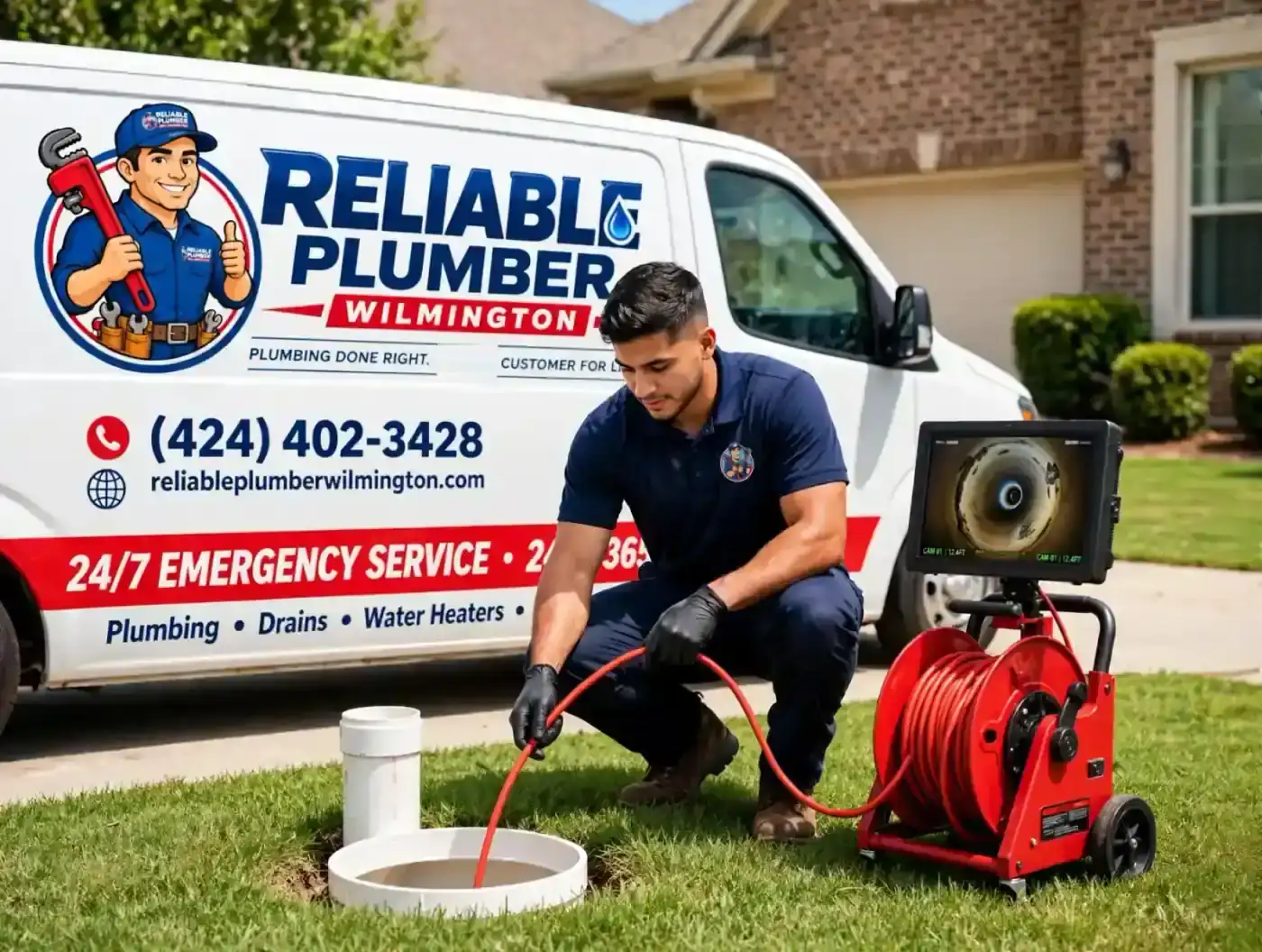
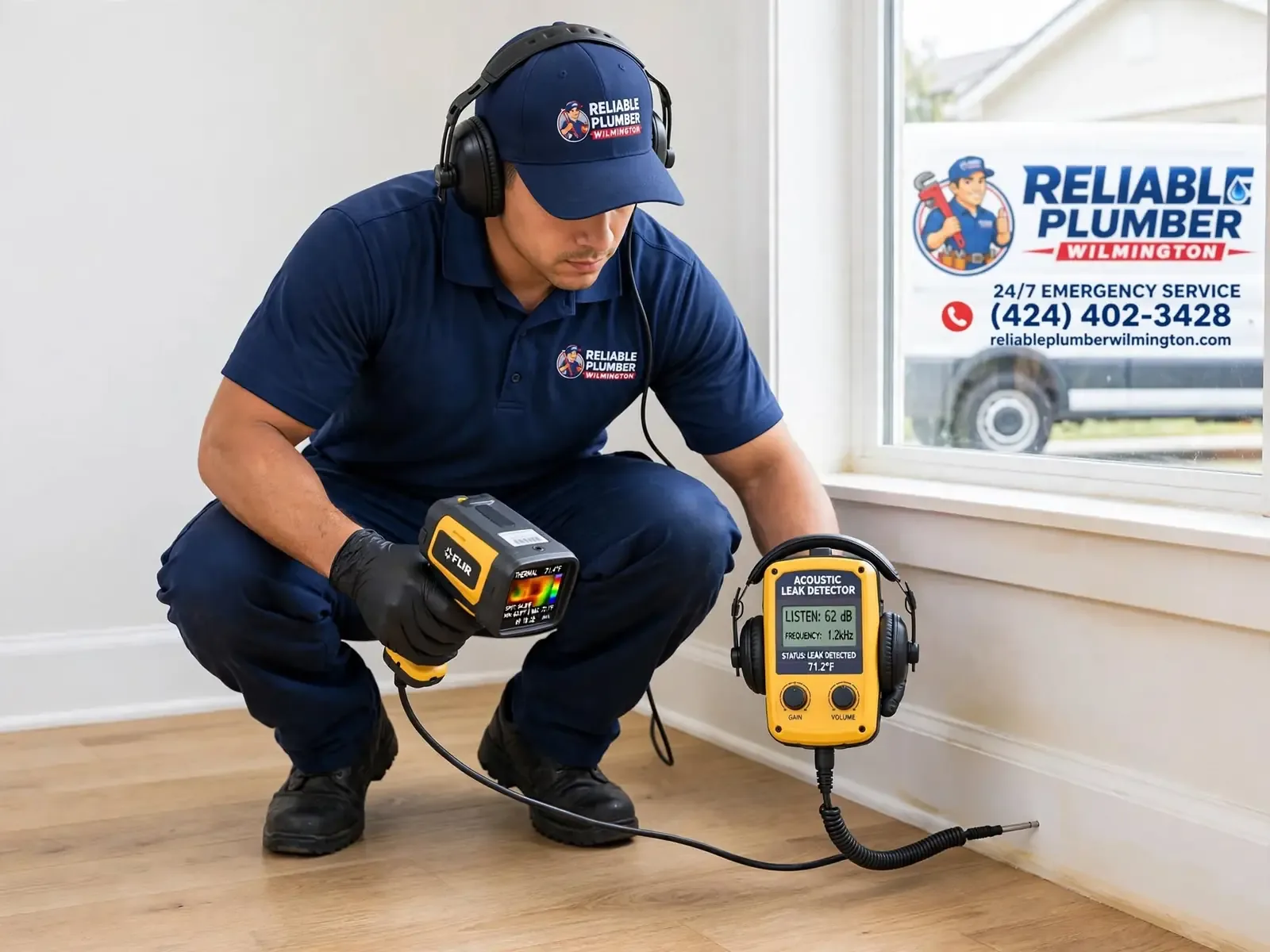
Coastal properties give us an extra variable. Salt air corrodes exposed fittings and hardware faster than inland conditions, so a leak at a visible connection is more common here than it would be a few miles inland, and it is worth ruling out before hunting for something hidden. Where a leak genuinely is concealed, acoustic listening and thermal imaging locate it without opening more than necessary.
A water bill that jumped with no change in use, running water with every tap closed, a warm patch on the floor, or a stain with no obvious source.
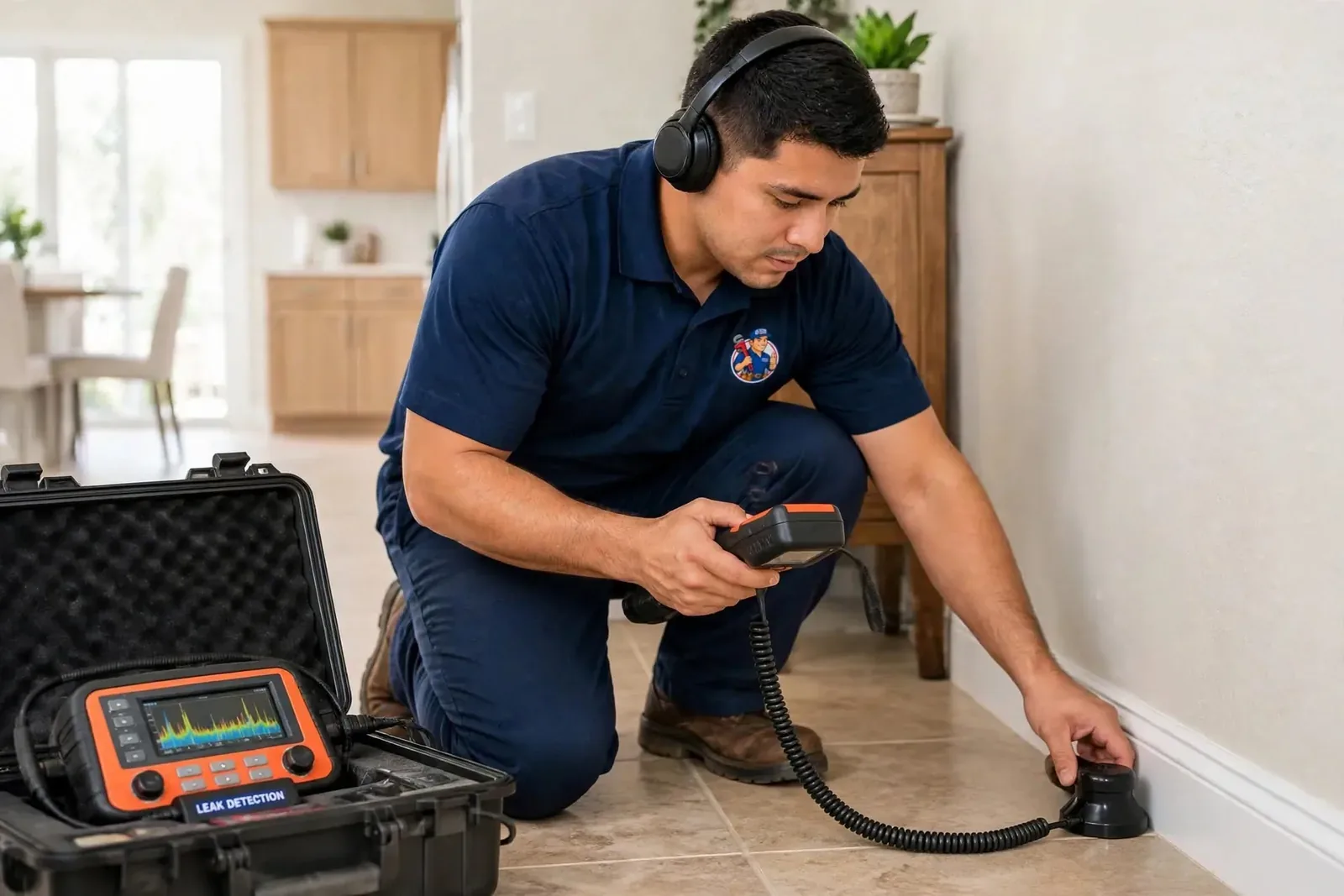
Two Seal Beach specifics. In Leisure World the Mutual normally has a say in what may be installed and how, so we confirm that before ordering rather than after. And near the shore, salt air is hard on flues and vent terminations, which is worth inspecting at the same time as the tank. Strapping is California state code either way: two straps at the upper and lower third into framing, the lower at least four inches above the gas control.
No hot water, rumbling or popping, water pooling at the base, or a unit past twelve years old that is worth replacing on your schedule rather than its own.
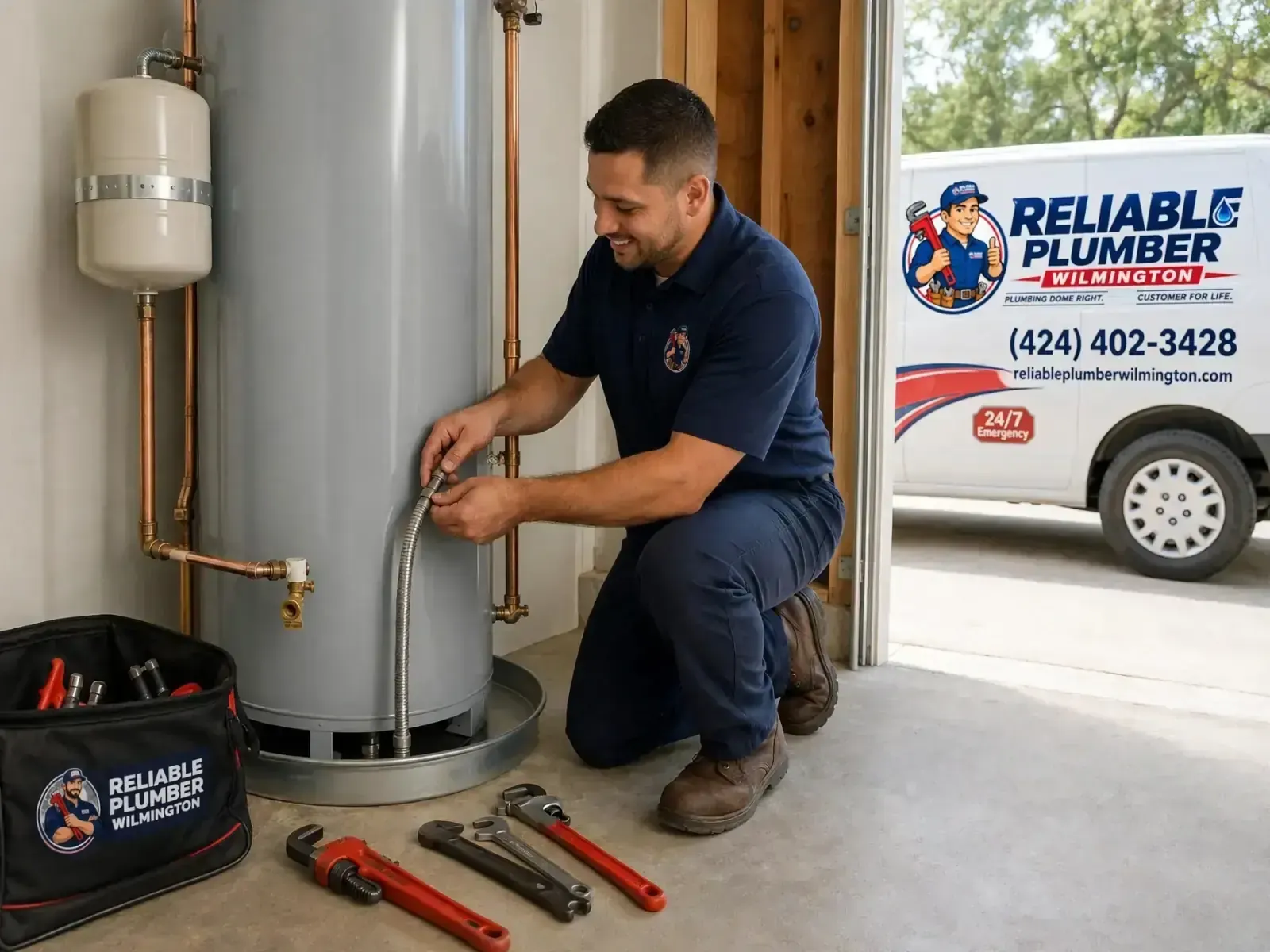
Full repipes are mostly an Old Town and hillside question here, since work inside a Leisure World co-op runs through the Mutual and is often handled at building level rather than unit by unit. In the conventional housing the signs are the familiar ones - rust-tinted water at first draw, pressure falling across the whole property, and repeat leaks arriving in quick succession once the first has been patched.
Rust-tinted water, pressure falling across the whole house, or a second and third leak on the same ageing supply system.
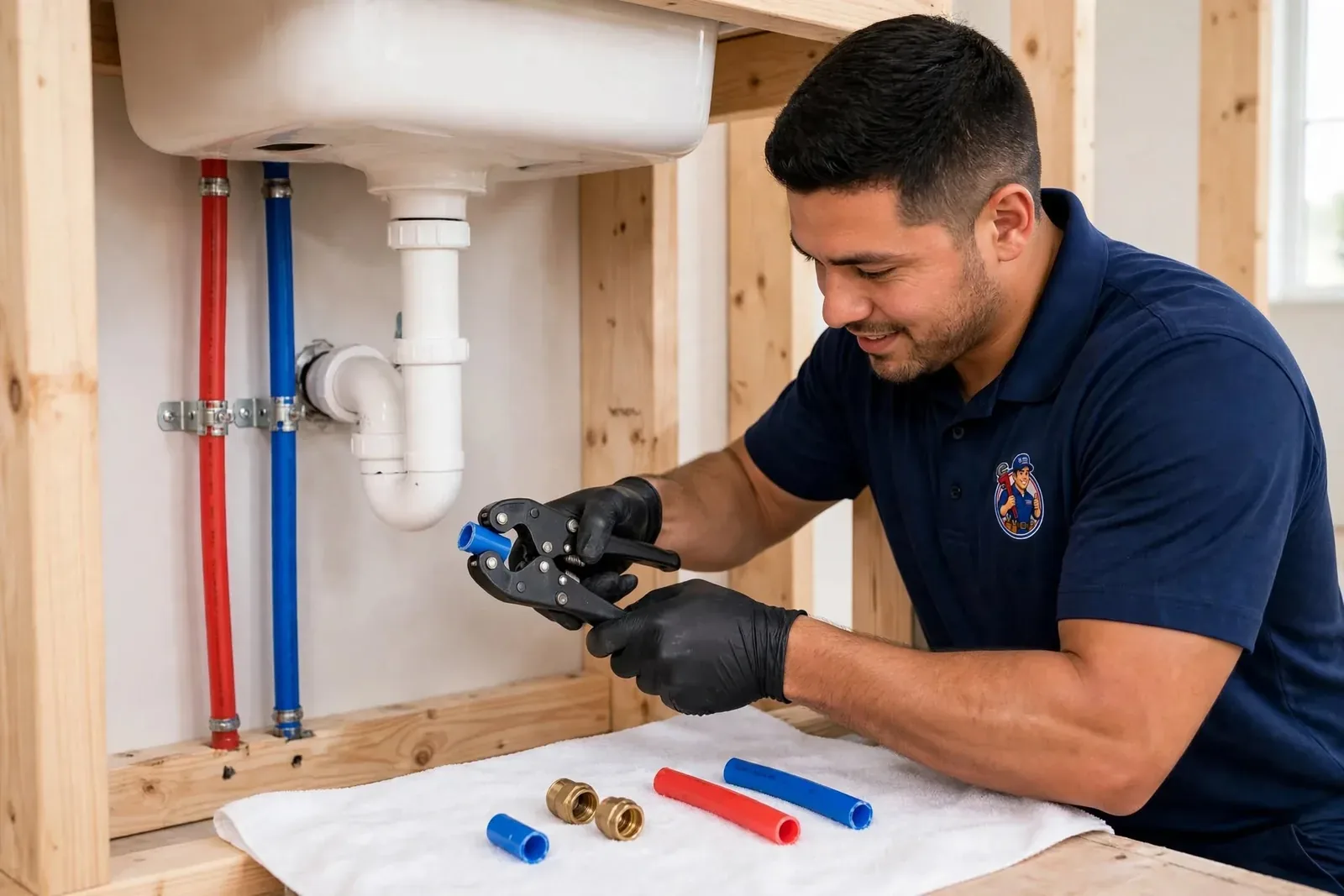
Whether a slab leak is even possible depends on which part of Seal Beach you are in, so the foundation type is the first thing we establish. Where a property does sit on slab, the usual signals apply: a warm patch on the floor, an unexplained rise in the bill, or water audible with every fixture closed. On low-lying coastal ground we locate precisely before opening concrete rather than working from the damp alone.
A warm patch on the floor, water audible with every fixture closed, or an unexplained bill increase on a slab-on-grade property.
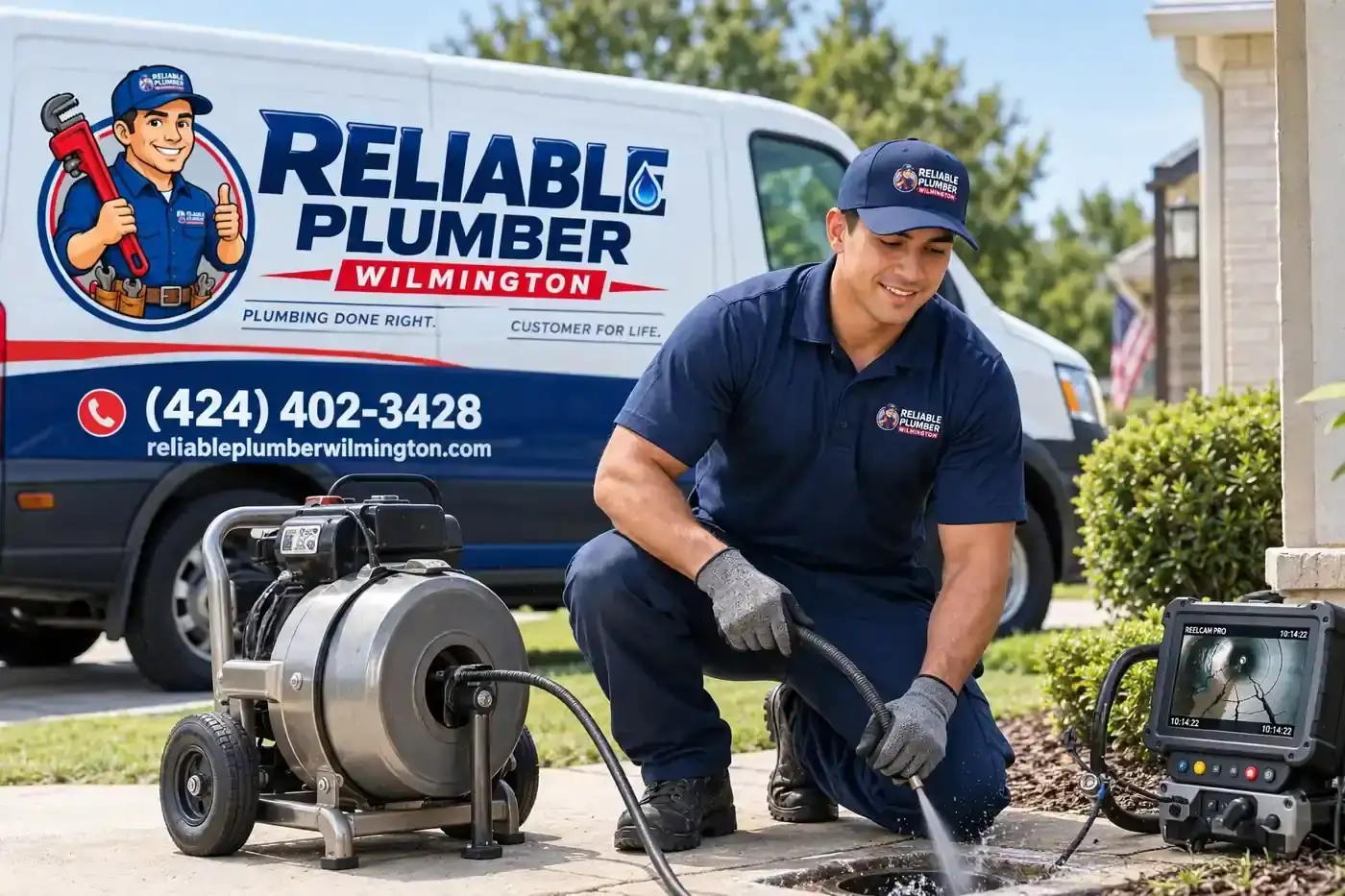
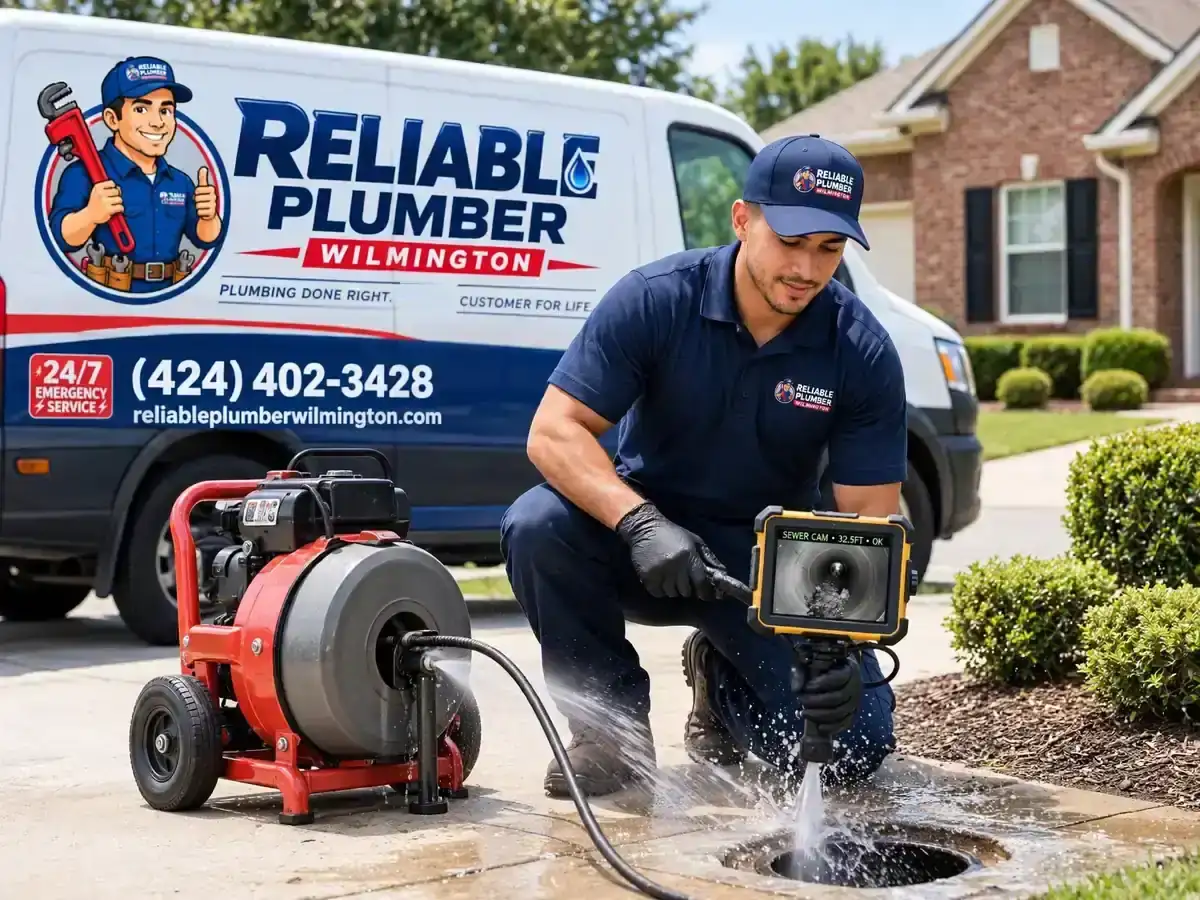
A camera sets the pressure. Sound modern lateral takes 2,500 to 3,000 PSI; older or compromised pipe is run at 1,500 to 2,000 PSI instead. In shared-drainage buildings the sequence matters as much as the pressure - clearing one branch without confirming the condition of the line it feeds into simply moves the problem somewhere else in the building.
Blockages that keep returning, kitchen lines with a grease history, and scaled cast iron where cabling only bores a channel.
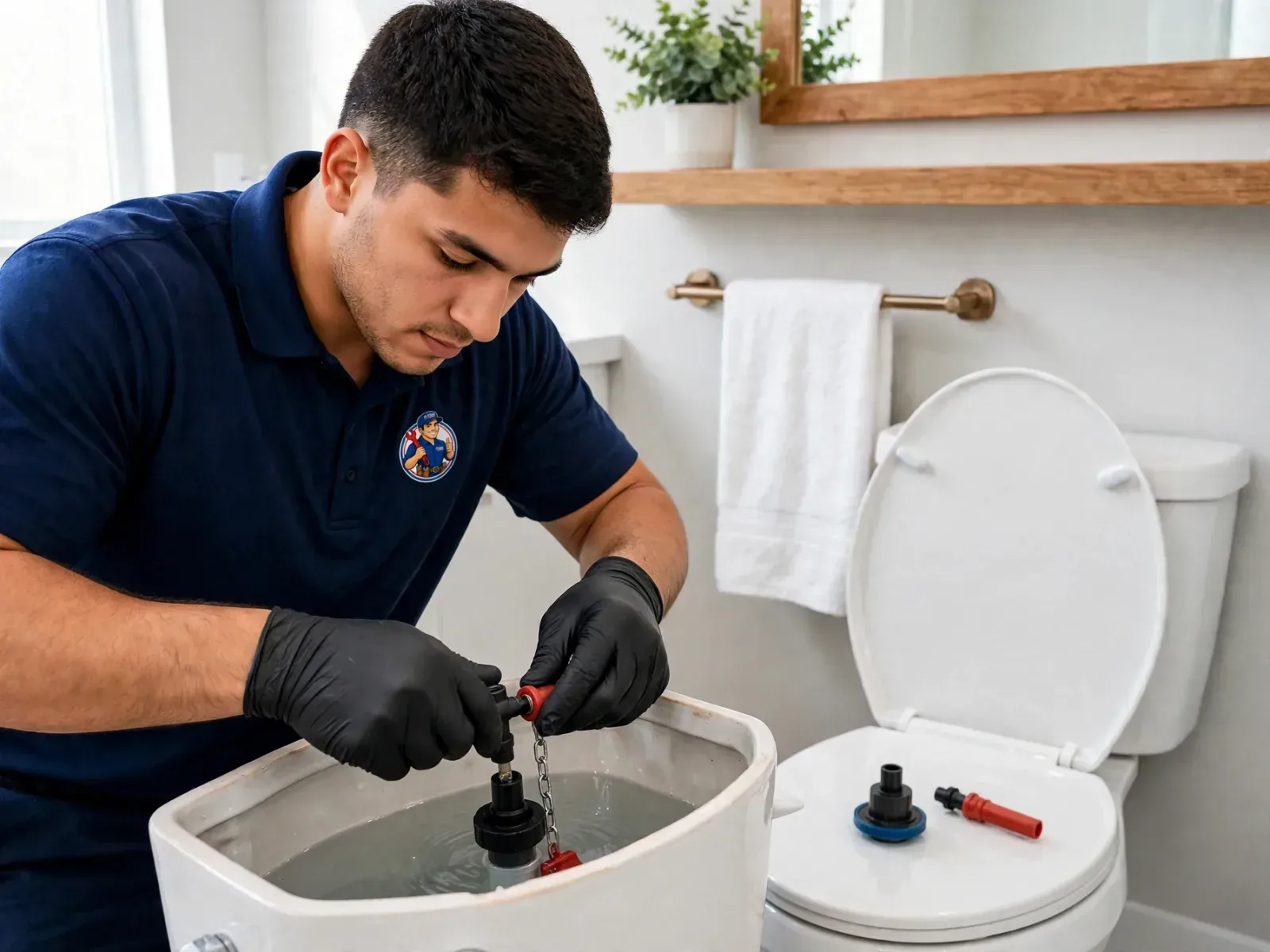
This is where accessibility work comes in most often. Comfort-height pans, lever or push-button flush in place of a stiff handle, and secure grab bar fixing that goes into blocking rather than plasterboard all make a real difference to daily use. On any fixture predating 1994 there is also the water side of it: 3.5 gallons a flush or more against California's 1.28 gallon standard, with SB 407 bringing replacement into scope during a remodel.
Running or phantom-flushing toilets, weak flush, water seeping at the base, or replacing a pre-1994 fixture using 3.5 gallons a flush.
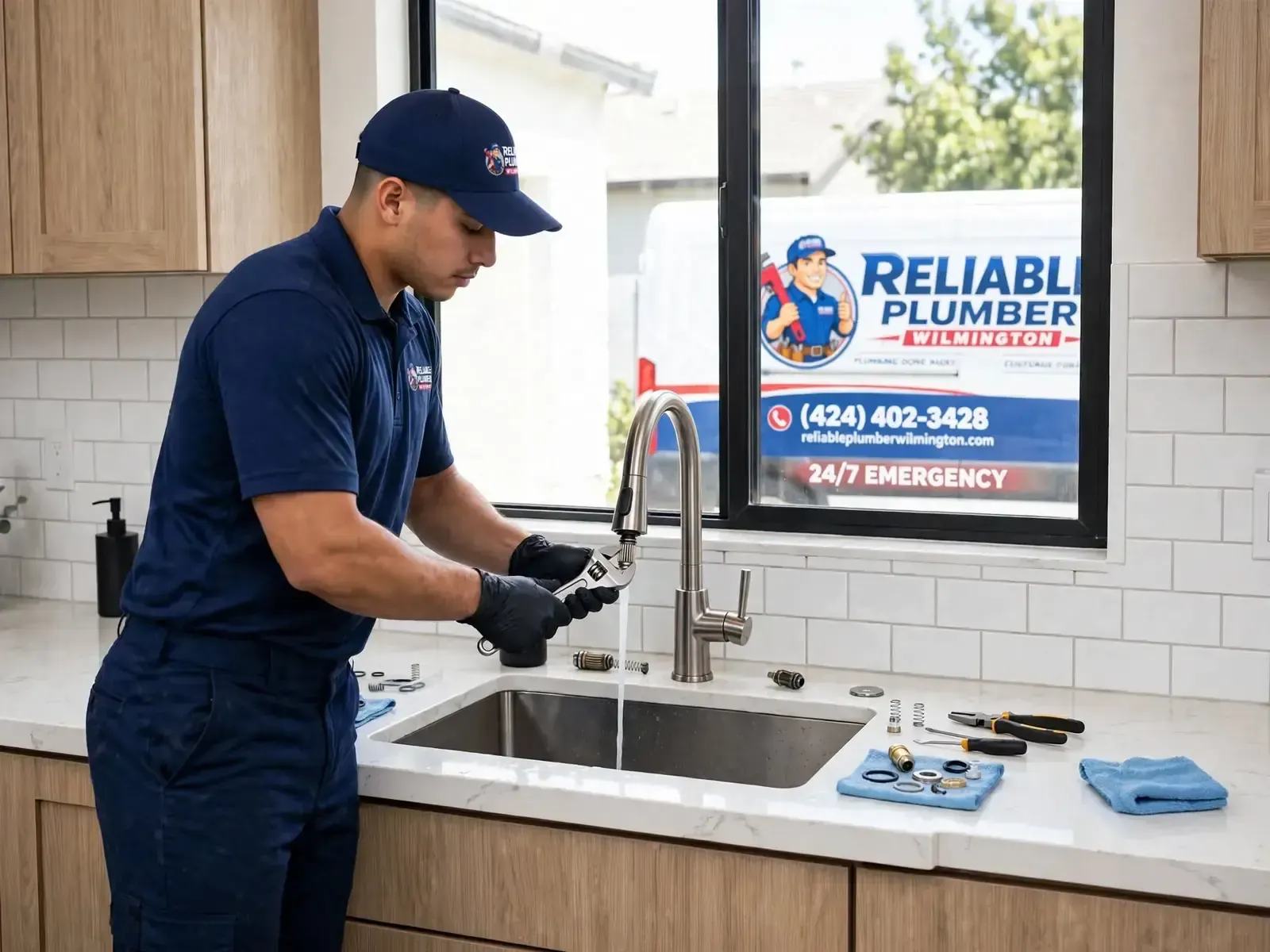
Two things shorten fixture life in Seal Beach. The water carries dissolved mineral that wears cartridges and valve seats, and salt air attacks the exposed metalwork from the outside. Lever handles are worth considering when a tap is being rebuilt anyway, since they take far less grip strength than a knob - a small change that matters a great deal to some households here.
Dripping spouts, stiff handles, leaking handle bases, or flow that has dropped at one fixture while the rest of the house is fine.
Seal Beach sits at the coastal edge of our Orange County coverage. Shut the main off first, and if you are in Leisure World tell the dispatcher your mutual number, because access and approvals run through the Mutual and knowing it up front saves time at the gate. Keep everyone clear of standing water anywhere near outlets or a panel.
Burst supply lines, sewage backing up, main line breaks, and water heater failures - anything where water is causing damage right now.

Covering a city properly means knowing what changes at its boundary. Here, several things do.
Sixteen of Leisure World's seventeen mutuals are stock cooperatives, so the Mutual Corporation owns the building and the unit rather than the resident. That decides who authorises and pays for work, and we sort it out before quoting.
6,608 units · 17 mutualsComfort-height pans, grab bar blocking, low-threshold showers, lever handles and thermostatic mixing valves to limit scald risk. In a city where a third of residents live in a seniors community, this is routine rather than specialist.
Scald-limiting valves fittedCoastal exposure corrodes exposed fittings, fixture hardware and water heater flues faster than inland conditions. On a Seal Beach call we check the visible connections before assuming a leak is hidden.
Coastal-exposure checksMost of Seal Beach is on the city system - four wells, two reservoirs and about 5,350 connections - but portions fall under Golden State Water instead. Which one you are on decides who to ask about supply and billing.
City system · Golden StateCamera footage on sewer recommendations, acoustic and thermal on hidden leaks, findings written down - which is exactly what a Mutual board needs to see before authorising work.
Camera · written findingsSeal Beach is small but unusually varied, running from a historic beach town to one of the largest seniors communities in the region.
Leisure World alone accounts for roughly 9,500 residents - about a third of the city - across 6,608 units in seventeen mutuals, and because sixteen of those are stock cooperatives the ownership structure shapes every job inside the gate. Old Town around the pier and Main Street is the historic beach neighbourhood, conventional single-property housing where the usual pipe-age questions apply. Surfside Colony sits right on the sand at the city's western end, with the heaviest salt exposure anywhere we work. College Park East and West are postwar tract housing set back from the coast, and The Hill and Marina Hill take in the higher ground where elevation change affects pressure and drainage. The city's own system covers most of this with about 5,350 water connections, six sewer pump stations and 34 miles of sewer main.
Licensed, bonded and insured · 24/7 dispatch · diagnosis before price · findings in writing
Five categories covering everything from a slow drain to a full repipe.
We reach Seal Beach from Wilmington 90744, and cover 30 cities across Los Angeles County and north Orange County. These are the communities closest to Seal Beach.
Coverage, permits, water and what is specific to this city.
Yes, across the city - Old Town, The Hill, College Park East and West, Surfside Colony and Leisure World. Seal Beach sits at the coastal edge of our Orange County coverage.
Yes, and we ask which mutual you are in when you call. Sixteen of the seventeen mutuals are stock cooperatives where the Mutual Corporation owns the land, building and unit, so approvals and responsibility work differently from a normal home. Knowing the mutual up front avoids a wasted visit.
In mutuals 1 to 16 the Mutual Corporation does. Residents purchase shares in that corporation rather than buying the real estate itself, so the corporation owns the land, the building and the unit. Mutual 17 is the exception and is deeded condominium.
Mostly the City of Seal Beach, which runs four wells, two reservoirs, two booster stations, around 75 miles of water main and about 5,350 service connections. Portions of the city are served by Golden State Water instead, so it is worth checking your bill.
The city owns and operates its own wastewater collection system - roughly 34 miles of sewer pipeline, six pump stations and 800 manholes. Plumbing permits also come from the City of Seal Beach.
Yes, and it is a routine part of our Seal Beach work. Comfort-height toilets, grab bars fixed into proper blocking rather than plasterboard, low-threshold or curbless showers, lever handles instead of knobs, and thermostatic mixing valves to cap outlet temperature and reduce scald risk.
The exposed parts of it, yes. Salt air corrodes visible fittings, fixture hardware and water heater flue and vent terminations faster than inland conditions, and it is worst closest to the shore. On a coastal call we check the visible connections before assuming a leak is hidden.
No. Seal Beach is in Orange County, so there is no LASAN sewer lateral rebate and no LADWP billing adjustment. Water and sewer questions go to the City of Seal Beach, or to Golden State Water if that is who bills you.