Leak Detection in Wilmington, CA - The Complete Guide
Detection is the step homeowners are most tempted to skip and the one that most reliably saves money. The reason is geometric rather than technical.
Start With the Meter - It Costs Nothing
Close every fixture in the house. Every tap, the washing machine, the dishwasher, the irrigation if you have it. Then look at the water meter and note the reading, or watch the low-flow indicator if yours has one.
Any movement means water is leaving the system with nothing drawing it. That is a supply-side leak, confirmed, before anyone has been called.
If the meter is still, the leak is on the drain side rather than the supply side - a very different search, because drain leaks only run when something is discharging. Knowing which of the two you have before a plumber arrives genuinely shortens the visit.
Acoustic Listening
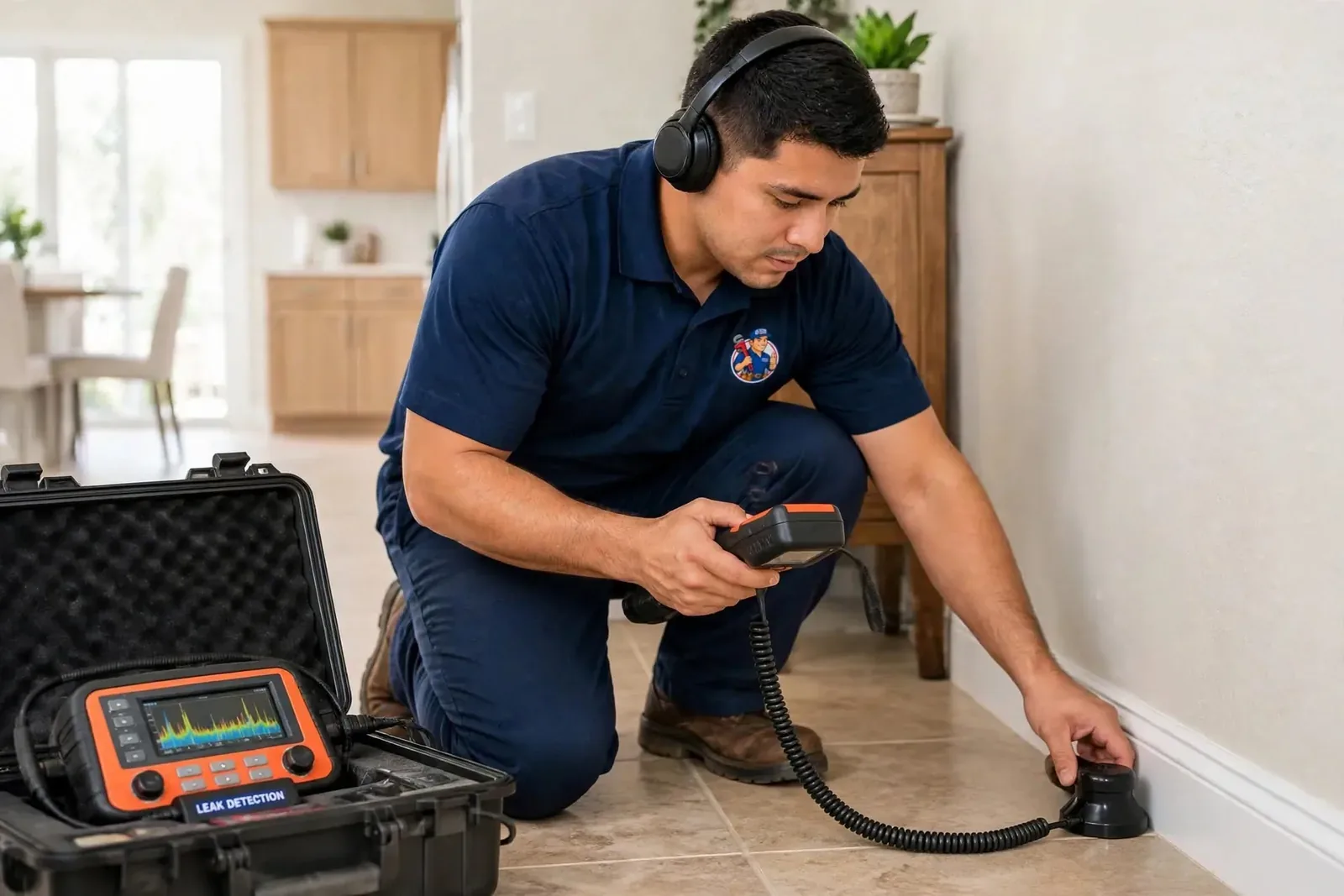
Water escaping a pressurised pipe makes a sound. It is not audible to you standing in the room, but with ground microphones and amplification it is distinct, and its intensity changes as the equipment moves closer to the source.
This is the workhorse method for pinhole leaks and slab leaks, and it is what allows a fix to within inches rather than a general area. It works through concrete, tile and hardwood.
Its limitation is that it needs the leak to be under pressure and running. A drain leak or an intermittent one gives it much less to work with, which is where the other methods come in.
Thermal Imaging and Why It Matters on a Slab
An infrared camera renders surface temperature. A hot-water line leaking beneath a concrete slab heats the concrete above it, producing a plume at the floor surface that is invisible to the eye and obvious to the camera.
That matters disproportionately here because Wilmington housing is largely slab-on-grade. There is no crawlspace to inspect, so the floor surface is frequently the only place evidence is available at all.
Thermal also finds behind-wall leaks by the same principle, and it maps the extent of moisture - useful for knowing how much material is affected, not just where the pipe failed.
Tracer Gas
The line is drained and charged with a safe tracer gas mixture, which escapes at the fault and rises through soil or building material to be picked up at the surface by a detector.
It is the most precise method available and the most expensive, which is why it is reserved for lines that are buried or otherwise inaccessible - where acoustic and thermal have narrowed the search but cannot finish it.
It is also the method that works when a line is not under pressure, which makes it valuable on services that have already been isolated.
What Happens Next
Detection ends with a location, not a repair. What follows depends entirely on where the leak turned out to be.
Accessible supply line, wall or ceiling: water leak repair. Beneath the slab: slab leak repair, where the options are a spot repair, a reroute or repiping. A failure in the pipe material itself rather than at a fitting: pipe repair.
And where detection finds more than one fault, or finds galvanized pipe that has thinned generally, the conversation shifts to whole-home repiping - because at that point you are not dealing with a leak, you are dealing with a system.
References