Water Leak Repair in Wilmington, CA - The Complete Guide
Almost every conversation about leak repair cost is really a conversation about access. Understanding that changes how you read a quote.
Accessible Leaks
Under-sink leaks are the most common call and the least expensive. The usual culprits are the angle stop, the flexible supply connector, the trap joints, or the connection at the tap tailpiece - all visible, all reachable, all replaceable in a single visit.
Flexible connectors deserve specific mention. They have a finite life, they fail without warning, and they are behind a meaningful share of sudden indoor water damage. Replacing ageing ones proactively while a plumber is already under the sink is one of the better-value decisions available.
Appliance connections - dishwasher, washing machine, refrigerator ice maker - are the same category. Accessible, cheap to fix, and disproportionately responsible for damage when ignored.
In-Wall Leaks
Once a leak is inside a wall, the repair splits into three parts: opening up, plumbing, and making good. The plumbing is often the smallest of the three.
This is where precise detection earns its cost most obviously. An accurate location means one controlled opening between two studs. A guess means several, and each one has to be patched, taped, textured and painted to match.
Tiled walls raise the stakes considerably, because matching tile is frequently impossible and removing it cleanly is slow. Where a leak sits behind tile, it is worth discussing whether access from the opposite side of the wall is viable.
Ceiling Leaks
Water appearing on a ceiling almost always originates above and to one side, because it travels along joists before finding a path down. The stain is the exit point, not the source.
That gives two access routes: open the ceiling from below, or lift flooring in the room above. The right choice is usually whichever surface is cheaper and easier to restore - plain painted drywall below often beats hardwood or tile above.
It is worth acting quickly here for a reason that is not about plumbing. Saturated ceiling drywall loses strength, and a ceiling that has held water for a while can come down in a single piece.
Underground Leaks and the Adjustment Nobody Claims
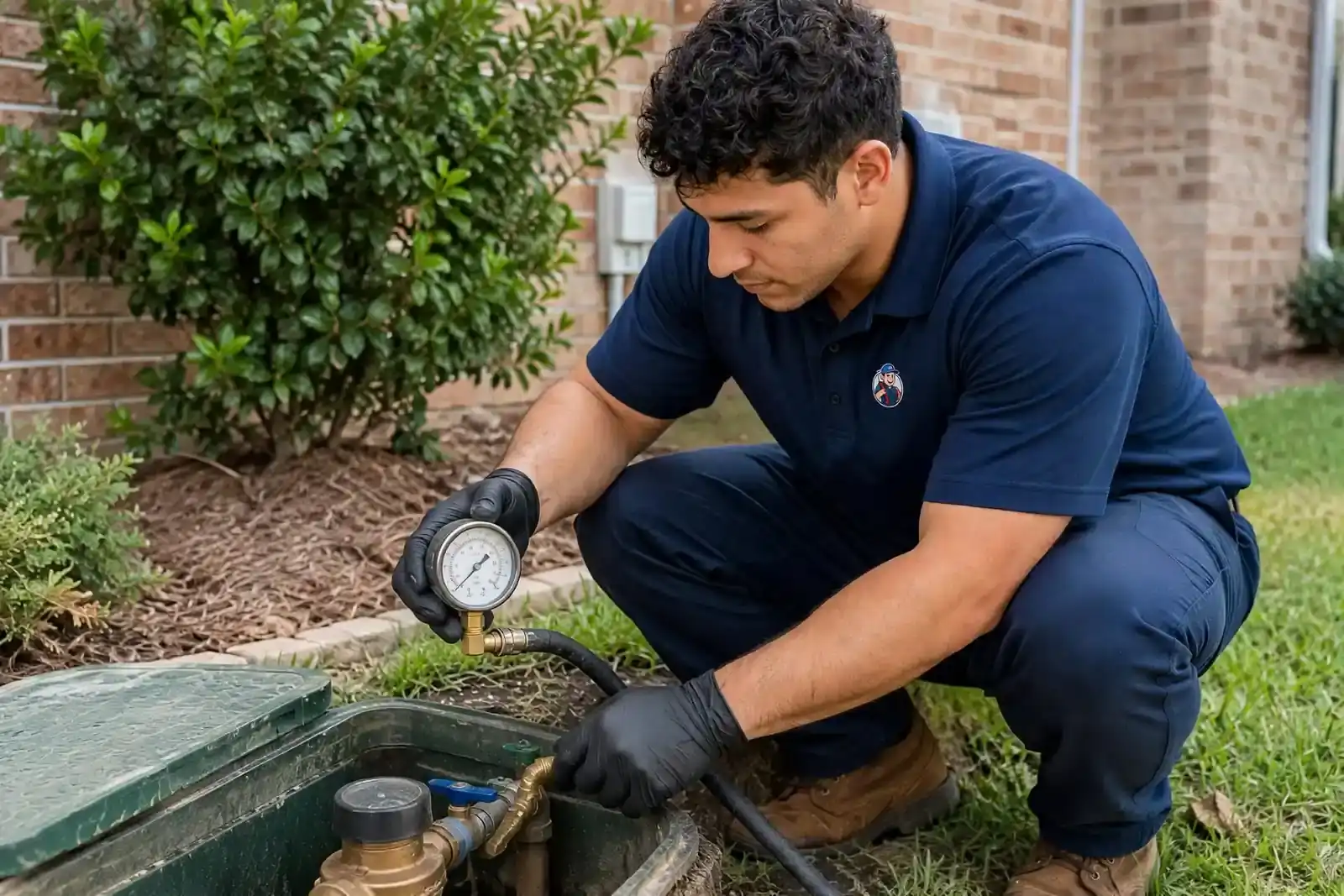
A leak on the buried supply line between the meter and the house shows as soft ground, an unexplained green patch, or simply a bill that has climbed with no change in use. It can run for weeks without surfacing.
Repair means excavating to the line, which makes it the most disruptive of the accessible categories - though still far simpler than working beneath a slab.
The financially important part: LADWP does not repair leaks on private property, but where an underground leak has been repaired you may be eligible for a billing adjustment assessed by their Field Investigations Unit. It applies to underground main line leaks, not toilet, sprinkler valve or pool leaks. A leak metered for weeks can produce a substantial bill, and the adjustment is worth claiming. Keep the paperwork.
When One Repair Is Not the Answer
Sometimes the honest finding is that repairing this leak solves this leak and nothing else. That is the case when the pipe material has failed generally rather than at one point.
Galvanized steel supply pipe - standard in Wilmington housing built before 1970 - corrodes from the inside along its whole length. Copper that has developed one pinhole from water chemistry or velocity will typically develop others, because the cause is systemic rather than local.
Where that is the finding, pipe repair explains the failure modes by material, and whole-home repiping covers the replacement decision. Being told this is not an upsell - it is the difference between one bill and five.
References