Water Pressure Repair in Wilmington, CA - The Complete Guide
Pressure problems divide cleanly into two categories, and the fixture count sorts them in about ten seconds.
One Fixture or All of Them
Low pressure at a single tap or shower is a fixture problem. The usual causes are a clogged aerator or shower head - very common on water at the harder end of the Los Angeles range - a partially closed angle stop beneath the fixture, or a failed cartridge.
Low pressure across the whole house is a supply problem, and there are three realistic candidates: a main shut-off valve not fully open, a failed or misadjusted pressure regulator, or supply pipe that has narrowed internally.
Establishing which before anyone starts work saves a great deal. It is also the difference between a fifteen-minute fix and a conversation about repiping.
The Galvanized Restriction
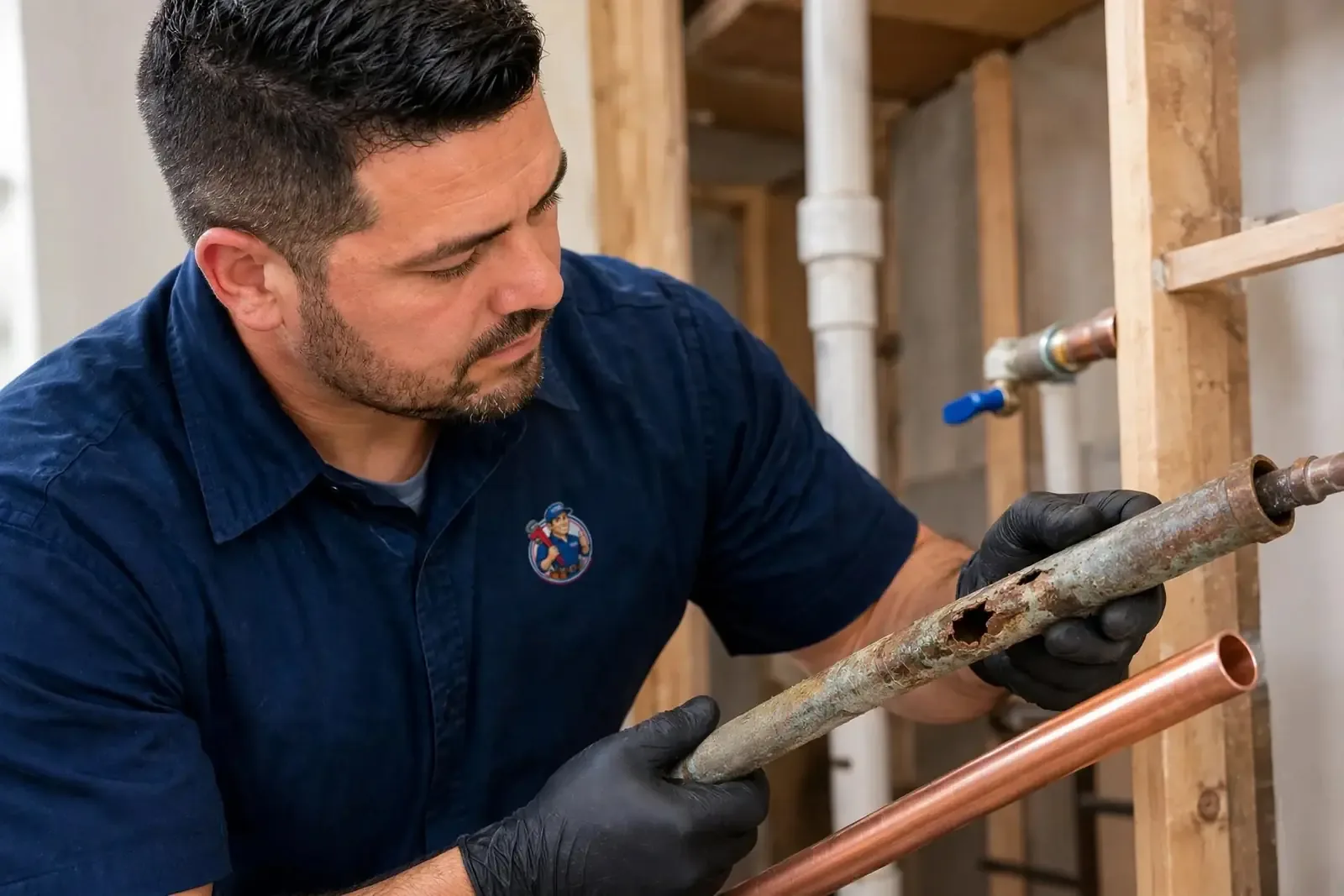
In this housing stock the third candidate is the most likely. Galvanized steel supply pipe corrodes from the inside, and rust builds inward rather than falling away. The internal diameter shrinks progressively over decades.
A pipe that started at three quarters of an inch and now runs at half delivers dramatically less flow, and no adjustment anywhere restores it. This is why low pressure and rust-tinted water arrive together - both are the same corrosion observed differently.
When that is the diagnosis, pressure is a symptom rather than the problem, and the answer is repiping rather than anything done at the regulator. A plumber who adjusts a PRV to compensate for a restricted supply is treating the gauge, not the house.
High Pressure Is the Expensive One
Excess pressure produces no obvious complaint. Showers feel good. Nothing appears wrong. Meanwhile every joint, valve, flexible connector, appliance inlet and fixture cartridge in the building is operating above its design condition continuously.
The visible consequences arrive as apparently unrelated events: a supply connector that lets go, a toilet fill valve that keeps failing, a water heater T&P valve that drips, taps that need re-servicing sooner than they should. Homeowners experience these as a run of bad luck or poor workmanship.
A gauge on a hose bib settles it in a minute. Where the reading exceeds 80 psi, the code answer is a pressure regulator - and the practical answer is that fitting one is far cheaper than the cumulative cost of everything failing early.
The Water Heater Connection
A pressure-reducing valve turns the plumbing into a closed system, because it does not allow backflow toward the main. Water heated in a tank expands and, in a closed system, has nowhere to expand into.
Pressure therefore rises on every heating cycle until something relieves it - and the thing that relieves it is the water heater's temperature and pressure relief valve. That is why a T&P valve dripping repeatedly is so often a pressure and expansion problem rather than a faulty valve.
The correct fix is a thermal expansion tank, which is required where a PRV or backflow preventer is fitted and is the second most commonly failed item on water heater inspections in the city. Detail on water heater installation.
References