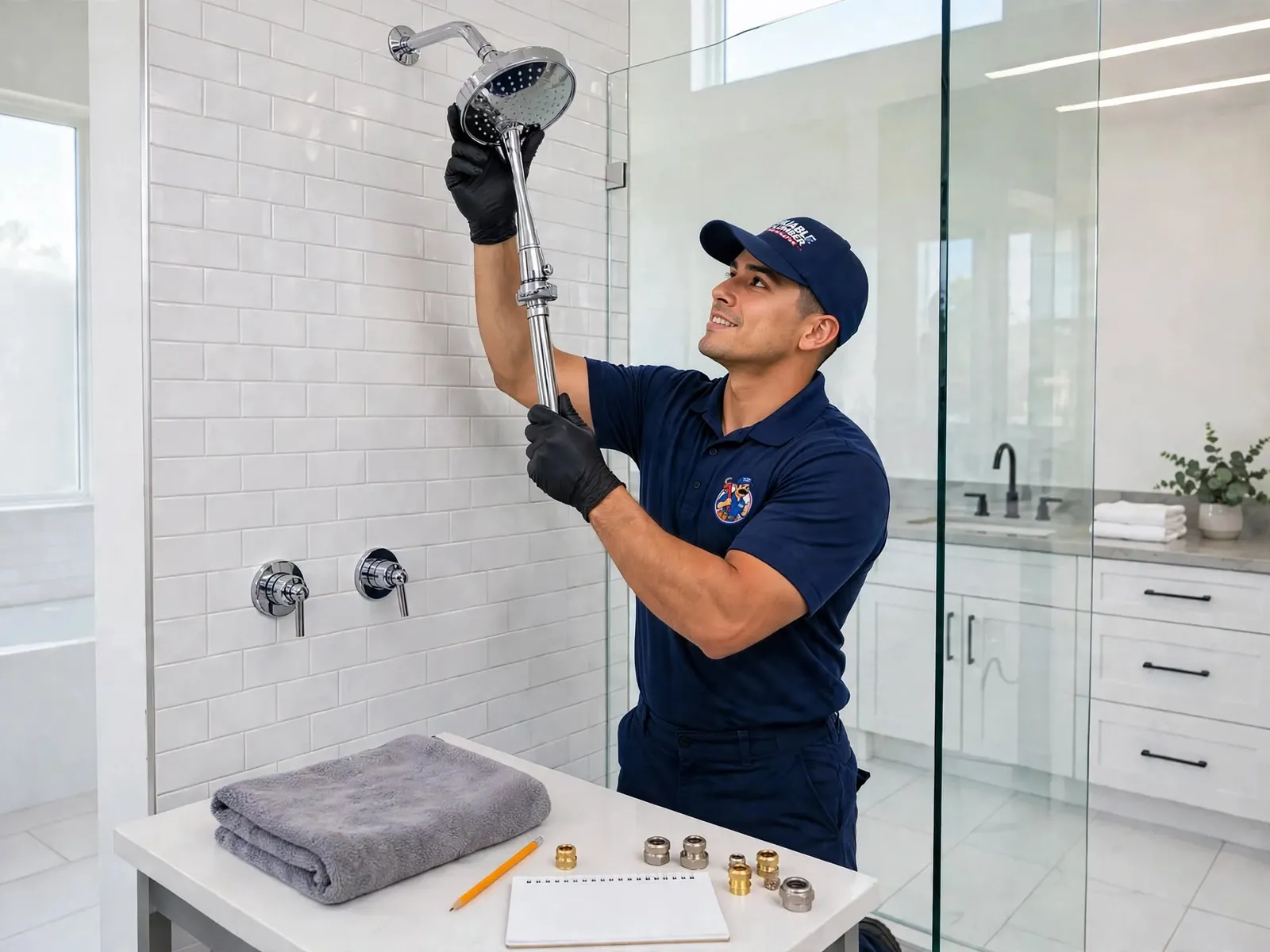
Shower Installation Wilmington CA

A shower valve in a 1950s house cannot be replaced like for like. California requires pressure-balancing or thermostatic valves capping the showerhead at 120°F, and valves of that age predate the requirement.

Reliable Plumber Wilmington review platform
Shower Installation in Wilmington, CA

The Requirement That Makes This Not a Swap

Homeowners expect replacing a shower valve to be like replacing a tap. It is not, and the reason is a safety standard that most housing in this neighbourhood predates.

California requires shower and tub-shower valves to be pressure-balancing, thermostatic, or a combination of both, meeting ASSE 1016 or ASME A112.18.1/CSA B125.1 - and the valve must limit water at the showerhead to a maximum of 120°F.

The purpose is preventing scalding when cold pressure drops suddenly, typically from a toilet flushing elsewhere in the house. Valves fitted before that requirement have no such element, so replacing one means fitting to a standard the original never met.

Wilmington 90744 note: housing here is largely 1940 to 1969, which puts most original shower valves well before the anti-scald requirement. It also puts the property inside SB 407, so a bathroom remodel triggers the obligation to fit water-conserving fixtures throughout - not just the ones you were planning to change. Both are much easier to budget for at the planning stage.

Which Valve Type Suits the Job

All three meet the requirement. They differ in how they achieve it and what they cost.

TypeHow it protectsTemperature controlNotes
Pressure-balancingHolds the hot-cold pressure ratio steadySet by handle position, found each timeMost common; the standard choice on a replacement
ThermostaticResponds to water temperature directlySet to a temperature and held thereMore precise; costs more
CombinationBoth mechanisms togetherSet temperature plus volume separatelyMost control; typically the most expensive

On a straight replacement in an existing bathroom, pressure-balancing is usually the sensible choice. Thermostatic earns its cost where several outlets share one valve, or where precise temperature matters for accessibility.

What a Compliant Shower Has to Do

Four requirements. The first two are about safety; the second two about water use.

120°F Maximum
The valve must cap water at the showerhead
Pressure-Balancing
Or thermostatic, or a combination of both
ASSE 1016
Or ASME A112.18.1 / CSA B125.1
1.8 gpm Showerhead
New residential construction, measured at 80 psi

All shower and tub-shower valves must provide scald and thermal shock protection, and must be pressure-balanced, thermostatic, or a combination of both in accordance with ASSE 1016 or ASME A112.18.1/CSA B125.1. The valve must limit maximum hot water temperature at the showerhead to 120°F.

A pressure-balancing valve responds to a change in the ratio between hot and cold supply pressure and adjusts to hold the mix steady. A thermostatic valve responds to temperature directly. Combination valves do both, and allow the temperature to be set rather than found.

Showerheads in new residential construction are limited to 1.8 gallons per minute at 80 psi. Combined with the 1.2 gallon per minute lavatory faucet limit and the 1.28 gallon per flush toilet limit, that is the current California fixture set.

SB 407 is the rule that pulls all of this together on an older property. It requires non-compliant fixtures in property built on or before 1 January 1994 to be replaced with water-conserving ones, triggered by alterations or improvements - which is what a bathroom remodel is.

Need Shower Installation in Wilmington?

Cause diagnosed before anything is quoted · price agreed before work starts · 24/7 dispatch

Shower Installation Price Ranges in Los Angeles County

Published Los Angeles ranges. Wall access is what moves these, not the valve.

WorkRangeWhat moves it
Shower valve replacement$170 - $625Los Angeles average around $398
Cartridge instead$100 - $350Where the existing valve is compliant and repairable
Standard hourly$95 - $200/hrPlus a $75 - $150 service call fee

Tile makes this considerably more involved, because matching it is often impossible. Where a leak or valve sits behind tile, access from the opposite side of the wall is worth investigating first.

Shower Installation in Wilmington, CA - The Complete Guide

A shower is the fixture where plumbing meets waterproofing meets a safety standard. Getting all three right is what separates a job that lasts from one that leaks in three years.

Why Anti-Scald Protection Exists

Domestic hot water is stored well above a safe skin-contact temperature. When cold supply pressure drops suddenly - someone flushes a toilet, a washing machine fills - the proportion of hot in the mix rises sharply, and the water reaching a person in the shower can jump dangerously within seconds.

Pressure-balancing valves detect that ratio change and compensate. Thermostatic valves measure the temperature itself and adjust. Either way, the mix is held steady rather than the person being expected to react.

The 120°F cap at the showerhead is the backstop. Regardless of what the water heater is set to, the valve limits what can reach the outlet. That is why the requirement is on the valve rather than on the heater.

What Replacement Involves in a 1950s Bathroom

Access first. The valve sits behind the wall, so either the wall is opened at the valve, or access is taken from the opposite side where a closet or hallway backs onto it. The second option is worth investigating whenever tile is involved, because matching tile is frequently impossible.

The old valve is removed and the new one fitted to the supply pipes, which on a house of this age may mean adapting from galvanized. Where the surrounding pipe is 60-plus-year-old galvanized, that is worth discussing rather than working around - see whole-home repiping.

Then trim, waterproofing where the enclosure has been disturbed, and testing. The temperature limit stop is set during commissioning, which is the step that actually delivers the 120°F cap.

Waterproofing Matters as Much as Plumbing

Most shower failures that present as leaks are not plumbing failures. They are water passing through the enclosure - failed grout, a compromised pan, or a membrane that was never continuous behind the tile.

That distinction matters when planning work. A new valve fitted into an enclosure with failing waterproofing solves nothing visible, because the damp on the ceiling below was never coming from the valve.

Where damp is present, locating the source before choosing the scope is the correct order. That is leak detection, and it prevents paying for a valve that was never the problem.

Remodels and SB 407

A bathroom remodel in a pre-1994 property is an alteration under SB 407, which triggers the obligation to replace non-compliant plumbing fixtures with water-conserving ones.

Practically that means the whole fixture set rather than the items you were focused on: toilet at 1.28 gpf, lavatory faucet at 1.2 gpm, showerhead at 1.8 gpm, and a compliant anti-scald shower valve.

None of these are expensive individually, and all of them are cheaper installed together during work that is happening anyway. The cost of meeting this rule mid-project - after tile is set, or when an inspection raises it - is what makes it worth knowing at the start. See toilet installation and faucet installation.

References

Shower Installation Questions

Answers specific to shower installation in Wilmington 90744.

California requires shower and tub-shower valves to be pressure-balancing, thermostatic or a combination meeting ASSE 1016 or ASME A112.18.1/CSA B125.1, capping the showerhead at 120°F. Valves in 1940s to 1960s homes predate that, so replacement is to the current standard.

Pressure-balancing holds the hot-cold pressure ratio steady, so temperature is set by handle position. Thermostatic responds to temperature directly, so you set a temperature and it holds it. Combination valves do both.

The valve must limit maximum hot water temperature at the showerhead to 120°F, regardless of the water heater setting. It is set during commissioning via the valve temperature limit stop.

1.8 gallons per minute at 80 psi in new residential construction, alongside 1.2 gpm lavatory faucets and 1.28 gpf toilets.

Yes. A remodel is an alteration or improvement, which triggers the obligation to replace non-compliant fixtures in a pre-1994 property - the whole fixture set, not only the items being changed.

Not always. Where a closet or hallway backs onto the valve wall, access from the opposite side avoids disturbing tile entirely. It is worth investigating first, because matching tile is frequently impossible.

Book Shower Installation in Wilmington

Licensed, bonded and insured · diagnosis before price · 30 cities across Los Angeles County