Water Heater Replacement in Wilmington, CA - The Complete Guide
Most water heaters are replaced in an emergency, which is the most expensive way to do it. The decision is worth making before the tank forces it.
Why Twelve Years Is the Threshold
A tank water heater typically runs eight to twelve years. Where in that range yours lands is decided mostly by water hardness and whether it was ever flushed - and on water at the harder end of the Los Angeles range, an unmaintained tank lands at the short end.
Past twelve years the economics invert. The tank is not failing because of the component that just broke; it is failing because the steel has been corroding since the anode rod was consumed. Money spent on parts is buying months against a shell that is already thinning.
This is the argument for replacing on your own schedule. A planned replacement is a booked appointment. An emergency replacement is the same appliance plus water damage, after-hours labour at 1.5 to 2 times standard rates, and whatever was stored near the tank.
The Half Rule
Where age is ambiguous - the eight-to-twelve window - compare the repair quote against the replacement cost. If the repair exceeds roughly half, replacement is the better purchase.
The logic is simple. A $400 repair on a ten-year-old tank buys perhaps three years of remaining life. The same $400 toward a $1,740 replacement buys a share of eight to twelve years, plus a new warranty, plus compliance with current code.
It is not a rule that survives every situation. A ten-year-old tank in a house being sold next year is a different calculation from one in a house being kept. But as a default it stops people spending repeatedly on an appliance in its last stage.
What Replacement Actually Includes
Draining and disconnecting the old unit, removing it from the property and disposing of it. Removal alone can run $500 or more depending on size and how it has to come out of the space.
Fitting the new unit to current code, which in the City of Los Angeles means two seismic straps anchored into framing, a thermal expansion tank where a pressure-reducing valve or backflow preventer is present, a working T&P relief valve and a drain pan.
The LADBS permit and the inspection that follows it. Around 80% of replacements qualify for an Express Plumbing Permit issued online, with inspection typically two to five business days after the install.
The mechanics of all of that are covered on water heater installation.
Should You Change Type or Size?
Replacement is the natural moment to reconsider both, because the labour is happening anyway.
On size, the honest answer is usually no if the current unit has kept up. Consistently running out of hot water is a real reason to go larger; wanting a bigger number is not, since a larger tank has more standby loss.
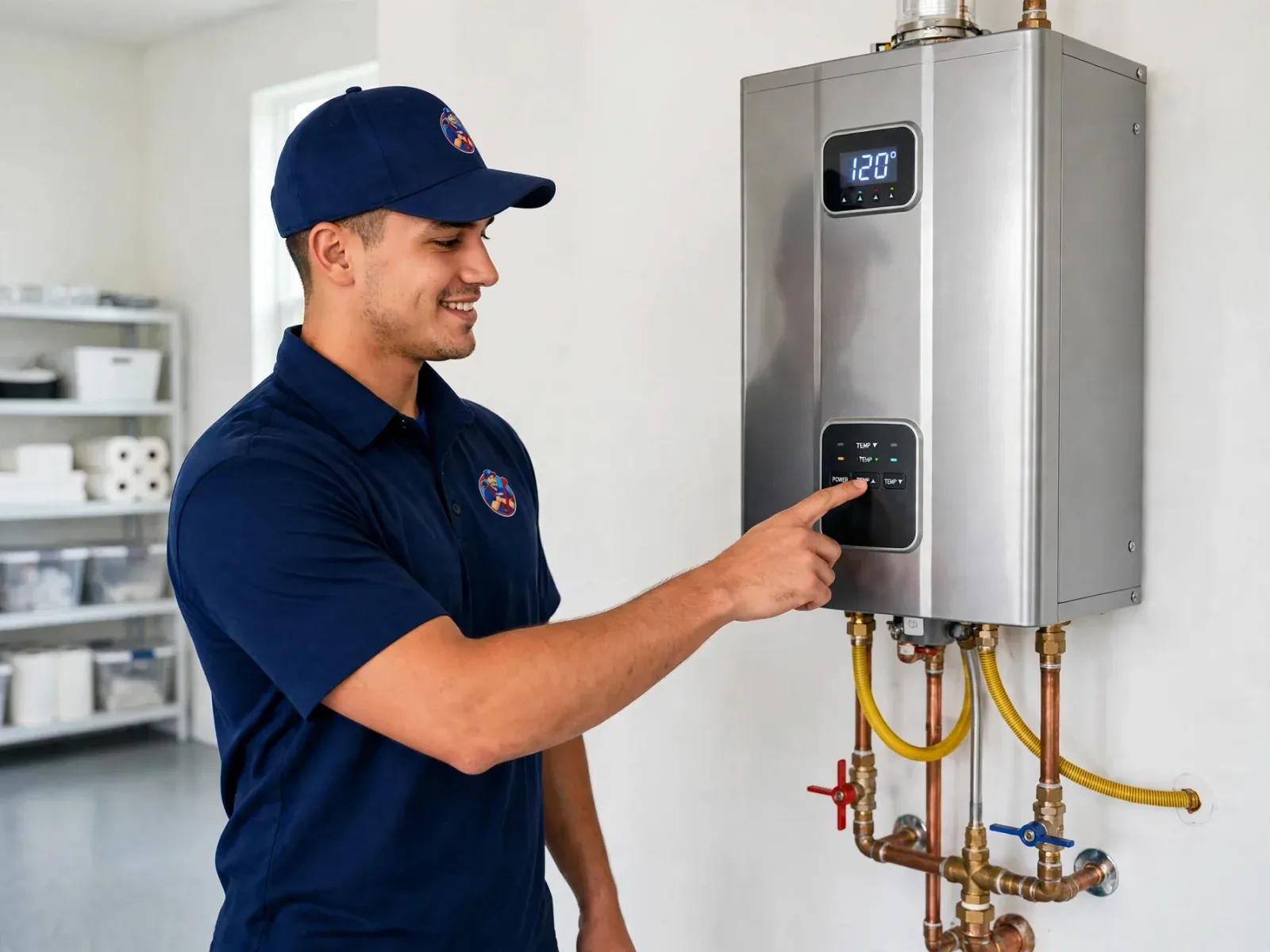
On type, a tankless conversion is worth evaluating but is not a like-for-like swap. It generally needs the gas line upsized and the venting replaced, and those two items rather than the appliance drive the cost difference. See tankless installation for the full comparison.
References